The Whispering Rings: Unraveling the Bronze Age Collapse Through Dendrochronology
For millennia, the mystery of the Bronze Age Collapse has captivated historians, archaeologists, and the public alike. Around 1200 BCE, a sweeping cataclysm brought about the downfall of once-mighty civilizations across the Eastern Mediterranean and Near East. Empires like the Mycenaeans in Greece, the Hittites in Anatolia, and the New Kingdom of Egypt faced widespread destruction, societal upheaval, and the collapse of established trade networks. The exact causes remain a subject of intense debate, with theories ranging from invasions by the enigmatic “Sea Peoples” and widespread warfare to internal rebellions, earthquakes, and the devastating effects of drought and famine. For centuries, evidence relied on textual accounts, often fragmented and biased, and archaeological findings that, while illuminating, could only offer glimpses into the past. However, a groundbreaking avenue of research has emerged, one that speaks not through written records but through the silent, enduring testimony of ancient trees: dendrochronology. The meticulous study of tree rings has begun to unlock unprecedented insights into the environmental pressures that may have contributed to, or even triggered, this profound historical turning point. By analyzing the growth patterns of ancient wood, scientists are piecing together a more nuanced understanding of climate variability and its potential role in the widespread societal collapse that marked the end of the Late Bronze Age.
The core principle behind dendrochronology is remarkably straightforward. Trees, in temperate climates, grow in distinct annual cycles. Each year, a tree produces a new layer of wood beneath its bark. This layer consists of two parts: a lighter, wider band of earlywood formed during the spring and early summer when growth is rapid, and a darker, narrower band of latewood formed in the late summer and autumn as growth slows. The width of each annual ring is influenced by a multitude of environmental factors, most notably precipitation and temperature. In years of favorable conditions – ample rainfall and suitable temperatures – trees grow more vigorously, producing wider rings. Conversely, in years of drought, extreme heat or cold, or other environmental stressors, growth is inhibited, resulting in narrower rings. By carefully measuring and comparing the widths of these rings in living trees and then cross-dating them with older, dead trees (including archaeological wood), scientists can construct a continuous chronology, a precise calendar stretching back thousands of years. This allows for the dating of wood artifacts to the exact year they were felled and, more importantly for historical understanding, provides a detailed record of past climatic conditions.
The study of tree rings has provided valuable insights into the environmental factors that may have contributed to the Bronze Age Collapse, revealing patterns of drought and climate change during that period. For a deeper understanding of how historical events can be influenced by environmental shifts, you can explore a related article discussing the implications of modern space exploration on geopolitics at this link.
The Climatic Fingerprint: Drought and the Demise of Empires
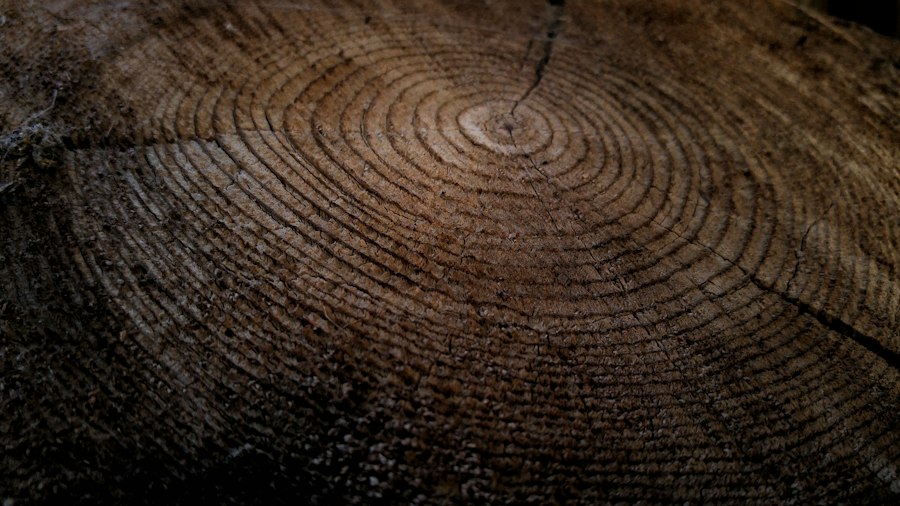
One of the most compelling revelations from recent dendrochronological studies concerns the prevalence and intensity of drought during the period leading up to and encompassing the Bronze Age Collapse. By examining tree ring data from various regions, including Anatolia, the Levant, and Greece, researchers have identified a significant and prolonged period of aridity that began to intensify around the late 13th century BCE and persisted for several centuries. This climatic shift, often referred to as the “Late Bronze Age Arid Phase” or similar designations, appears to have had a devastating impact on the agricultural systems that formed the bedrock of these complex societies.
Drought Intensification and its Regional Manifestations
The analysis of ancient tree rings has provided concrete, quantifiable evidence of widespread drought. Studies focusing on regions like Anatolia, the heartland of the Hittite Empire, have revealed a marked decrease in rainfall and a corresponding reduction in tree growth during this critical period. For example, researchers examining oak and pine wood from archaeological sites have meticulously cross-dated ring patterns, creating chronologies that highlight years of exceptionally narrow rings, indicative of severe water stress. These narrow rings are not isolated incidents but rather form distinct patterns, revealing a sustained period of diminished precipitation that would have severely impacted crop yields. Similarly, studies in the Levant, a region vital for trade and agriculture connecting the Mediterranean to Mesopotamia, have uncovered evidence of significant drying trends in tree ring data. The implications for societies reliant on rain-fed agriculture are profound. Reduced rainfall translates directly to lower cereal production, leading to food shortages, famine, and the potential for social unrest.
The Interconnectedness of Societies and Vulnerability to Climate
The Bronze Age was characterized by a remarkable degree of interconnectedness. Long-distance trade routes facilitated the exchange of goods, ideas, and technologies across vast distances. Empires depended on these networks for essential resources, from tin for bronze production to grain for feeding their burgeoning populations. While this interconnectedness fostered prosperity, it also created a systemic vulnerability. The dendrochronological evidence of widespread drought suggests that this environmental stress was not localized but rather affected multiple, interconnected regions simultaneously. This meant that when one area suffered crop failure due to lack of rain, its ability to export surplus food to neighboring regions was curtailed, exacerbating food insecurity across the entire system. The collapse of one civilization due to drought could have had cascading effects, destabilizing trading partners and creating a domino effect of societal breakdown. The intricate web of relationships that characterized the Late Bronze Age, so conducive to growth in favorable times, became a critical vulnerability in the face of prolonged environmental hardship.
Beyond Drought: Other Environmental Factors Revealed

While drought has emerged as a primary suspect, dendrochronological data, when combined with other paleoclimatic proxies and archaeological evidence, can also shed light on other environmental factors that may have contributed to the collapse. These include periods of increased temperature variability and potentially even seismic activity, though the latter is less directly quantifiable through tree rings alone.
Temperature Fluctuations and Agricultural Strain
Tree rings can also provide insights into temperature fluctuations, although the relationship is often more complex than with precipitation. While wide rings generally indicate favorable conditions, extreme temperatures, whether excessively hot or cold, can also lead to reduced growth. Evidence from some tree ring chronologies suggests periods of increased temperature variability or shifts towards warmer, drier conditions that would have further stressed agricultural systems. Higher temperatures can accelerate evaporation, reducing the effectiveness of any available rainfall, and can also impact the viability of certain crops. The combined stress of water scarcity and heat would have created an even more challenging environment for farmers, potentially pushing agricultural productivity beyond its breaking point.
The Role of Seismic Activity: A Complementary Perspective
While tree rings do not directly record earthquakes, their patterns can sometimes indirectly reflect the impact of major seismic events. For instance, a massive earthquake could cause widespread destruction, leading to the collapse of infrastructure and settlements. In the aftermath, if reconstruction efforts are hampered by or if the event triggers further environmental degradation (e.g., landslides affecting water sources), this could be reflected in subsequent tree growth patterns as a period of recovery or sustained stress. Moreover, archaeological evidence for widespread destruction by fire and collapse at numerous sites during the Late Bronze Age has led researchers to consider seismic activity as a potential contributing factor or trigger for the collapse, especially when combined with other environmental stressors. Dendrochronology, in this context, can help to precisely date the layers of destruction and recovery, providing a chronological framework for understanding the sequence of events and the environmental conditions that prevailed in the immediate aftermath of such potential catastrophes.
Reconstructing Chronologies: Precision and Predictive Power
The ability of dendrochronology to provide precise dating is a cornerstone of its contribution to understanding the Bronze Age Collapse. This accuracy allows for the correlation of environmental data with archaeological findings and historical events, moving beyond broad estimations to pinpoint specific periods of stress.
Pinpointing the Timing of Environmental Shifts
The meticulous cross-dating of tree ring sequences allows scientists to establish a master chronology for a given region. This chronology can then be used to precisely date wood samples recovered from archaeological excavations. By identifying the years in which particularly narrow rings (indicating drought) or other growth anomalies occur, researchers can pinpoint the exact timing of severe environmental events. This level of precision is invaluable. It allows scholars to ask, for example, if a period of intense drought directly preceded or coincided with the widespread destruction of a particular city or the collapse of a specific empire. This moves the study of the Bronze Age Collapse from a general understanding of a “dark age” to a more granular analysis of cause and effect, allowing for the testing of hypotheses about the direct impact of environmental stress on societal stability.
Correlating Climate with Historical Events
The precise dating afforded by dendrochronology enables a powerful form of correlation between environmental conditions and historical events. For instance, if a tree ring chronology from a specific region shows a severe drought beginning in a particular year, and archaeological evidence from that same region indicates a significant decline in settlement activity or evidence of abandonment around the same time, this provides compelling support for the hypothesis that drought played a significant role in the depopulation or societal breakdown of that area. Conversely, if a period of renewed growth in tree rings coincides with evidence of cultural resurgence or the establishment of new settlements, this suggests a return to more favorable environmental conditions facilitated recovery. This ability to link precise environmental data to tangible historical evidence allows for a much more robust and evidence-based understanding of the complex dynamics that led to the Bronze Age Collapse.
The Bronze Age collapse remains one of the most intriguing mysteries of ancient history, and recent studies have shed light on its possible causes, including climate change and drought. A fascinating article explores the connection between tree rings and ancient droughts, providing crucial archaeological evidence that may help explain the societal disruptions during this period. For more insights on this topic, you can read the article here. Understanding how environmental factors influenced human civilizations can deepen our comprehension of the past and its relevance to contemporary issues.
Beyond the Mediterranean: A Global Perspective on Societal Resilience
| Year (BCE) | Tree Ring Width (mm) | Climate Indicator | Region | Notes |
|---|---|---|---|---|
| 1200 | 0.5 | Severe Drought | Eastern Mediterranean | Significant reduction in growth indicating drought stress |
| 1190 | 0.4 | Severe Drought | Eastern Mediterranean | Continued drought conditions linked to societal stress |
| 1180 | 0.6 | Moderate Drought | Eastern Mediterranean | Some recovery but still below average growth |
| 1170 | 1.2 | Normal | Eastern Mediterranean | Return to more stable climate conditions |
| 1160 | 1.0 | Normal | Eastern Mediterranean | Stable growth rates |
While the most intensive dendrochronological research on the Bronze Age Collapse has focused on the Eastern Mediterranean and Near East, the principles and findings have broader implications for understanding societal resilience in the face of environmental challenges, both in the past and present.
Lessons from Past Environmental Shocks
The Bronze Age Collapse, as illuminated by dendrochronological data, serves as a stark reminder of the profound impact that climate variability can have on human societies. The ancient civilizations that flourished during the Bronze Age, despite their technological advancements and complex social structures, proved vulnerable to sustained environmental shocks. The insights gained from studying their downfall underscore the fundamental importance of climate in shaping human history. By understanding how past societies responded to, or failed to respond to, periods of drought, temperature extremes, and other environmental challenges, we can gain valuable perspectives on the factors that contribute to societal resilience and vulnerability. This historical perspective is crucial for informing contemporary efforts to adapt to climate change and build more resilient societies for the future.
Adapting to a Changing Climate: Insights from the Past
The challenges faced by Bronze Age civilizations are, in many ways, echoes of the challenges humanity faces today with accelerating climate change. The dendrochronological evidence of past droughts and their devastating consequences offers a historical precedent for the potential impacts of continued warming. However, the study also highlights the importance of adaptive strategies. Societies that may have been better able to adapt to changing conditions, perhaps through diversified agriculture, robust water management systems, or flexible social structures, may have fared better. While direct comparisons are complex, the study of past environmental crises provides a valuable lens through which to examine the effectiveness of different adaptation strategies. It emphasizes the need for foresight, long-term planning, and a deep understanding of environmental dynamics to ensure the sustainability and resilience of human civilization in the face of an uncertain climatic future. The whispers from ancient trees, once deciphered, offer a potent message for the present.
Your 401(k) Withdrawal Can Make More of Your Social Security Taxable
FAQs
What caused the Bronze Age Collapse?
The Bronze Age Collapse was likely caused by a combination of factors, including invasions by the Sea Peoples, droughts, earthquakes, and internal rebellions within various civilizations.
How do tree rings help us understand the Bronze Age Collapse?
Tree rings provide valuable information about past climate conditions, such as droughts and other environmental stressors, which may have contributed to the societal disruptions during the Bronze Age Collapse.
What role did trade networks play in the Bronze Age Collapse?
The disruption of trade networks, which were crucial for the exchange of goods and ideas among civilizations, likely played a significant role in the economic decline and eventual collapse of Bronze Age societies.
Were there any signs of societal stress in the tree ring data prior to the Bronze Age Collapse?
Some tree ring data suggest that there were periods of environmental stress, such as droughts, that may have put pressure on Bronze Age societies before the collapse, potentially contributing to the destabilization of these civilizations.
How did the Bronze Age Collapse impact future civilizations?
The Bronze Age Collapse led to the decline and eventual disappearance of several major civilizations in the Eastern Mediterranean region, paving the way for new powers to rise and shaping the course of history for centuries to come.