
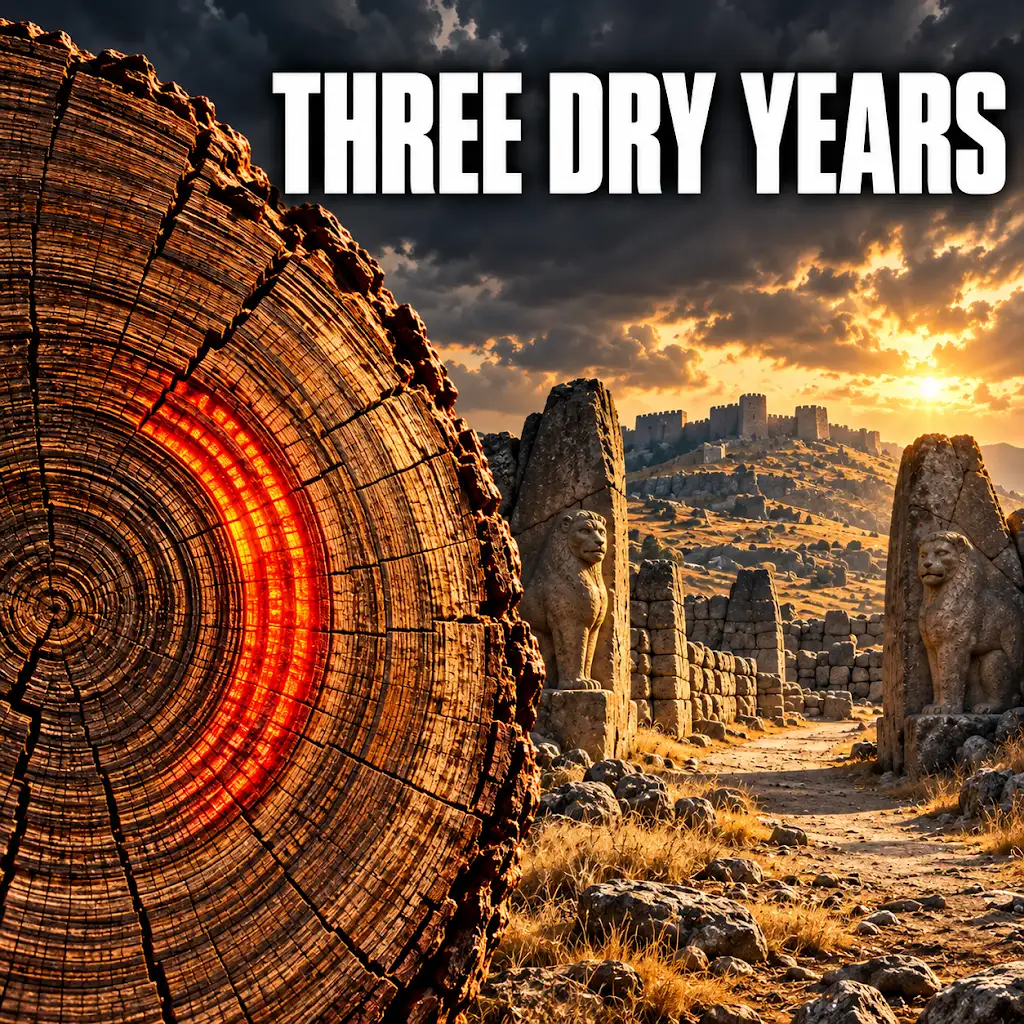
The scorched earth and the shattered remnants of pottery offer silent yet potent testimony to the final moments of Hattusa, the once-mighty capital of the Hittite Empire. For centuries, this vast city, perched on a rugged plateau in central Anatolia, stood as the administrative, religious, and military heart of one of the ancient world’s most influential civilizations. Its strategic location, commanding trade routes and fertile lands, facilitated its rise to prominence. However, the archaeological record now paints a vivid, albeit tragic, picture of its violent demise. Excavations have unearthed a wealth of evidence – from the widespread burn layers and collapsed walls to the scattered personal belongings of its inhabitants – all pointing towards a catastrophic destruction event that ultimately brought an end to the Hittite dominance. The story of Hattusa’s end is not merely one of conquest, but a complex interplay of internal strife, external pressures, and the inevitable ebb and flow of power in the ancient Near East.
The Smoking Ruins of a Lost Empire
The sheer scale of destruction at Hattusa is the most immediate and striking piece of evidence. Extensive archaeological surveys and excavations across the city have revealed a consistent pattern of intense fire damage. This is not a localized incident; it is a pervasive feature that affects nearly every excavated sector of the city, from the monumental temples and palaces in the Upper City to the residential areas in the Lower City. The very stones of the city bear the scars of the conflagration, fused and blackened by the intense heat. This widespread burning suggests a deliberate and systematic act of destruction, not simply the accidental spread of a fire. The architectural remains offer a stark glimpse into the final moments of the city’s life. Massive stone walls, once standing proud and tall, lie in chaotic heaps, their courses dislodged by the force of collapsing superstructures. Roof beams, often of timber, are reduced to charcoal, their charred remnants still visible within the debris.
Evidence of Deliberate Arson
The nature of the burn layers is crucial in understanding the intent behind the destruction. Archaeologists have identified distinct layers of ash and charcoal, often interspersed with melted lead and vitrified brick, indicative of extremely high temperatures. This suggests that fires were not only widespread but likely intentionally set and maintained. The presence of accelerants, though difficult to definitively prove in antiquity, is implied by the ferocity and speed of the conflagration. The meticulousness with which these fires were spread speaks to a determined effort to obliterate the city and its inhabitants. The meticulous excavation of these layers allows researchers to date the destruction event with a high degree of accuracy, anchoring the end of the Hittite Empire to a specific historical period.
The Silence of the Inhabitants
Perhaps the most poignant aspect of Hattusa’s destruction is the absence of its people. While the city was undoubtedly inhabited at the time of its demise, the archaeological record reveals a profound lack of human remains. This suggests that the inhabitants were either able to flee the city before its final destruction, or, more chillingly, were systematically removed or killed, with their bodies subsequently lost to the ravages of fire and time. The scattered personal belongings – fragments of jewelry, discarded tools, and broken pottery – found amongst the ruins paint a picture of a hasty departure, or perhaps a desperate struggle, where valuable possessions were left behind in the chaos. The absence of mass burials within the city walls, however, points towards an evacuation rather than a pitched battle within the city itself.
Recent archaeological studies have uncovered compelling evidence regarding the destruction of Hattusa, the ancient capital of the Hittite Empire. Researchers have analyzed remnants of fire and structural collapse, suggesting a violent end to this once-thriving city. For those interested in exploring more about historical events that may have parallels in modern society, an intriguing article discusses the implications of government actions on personal assets, which can be found here: Is the Government Coming for Your Gold?.
Unraveling the Layers of Collapse
The destruction of Hattusa was not a singular event but rather the culmination of various factors, both internal and external, that weakened the Hittite Empire in its final centuries. While the immediate cause of the city’s fiery end was likely an invasion, the underlying vulnerabilities of the empire created the conditions for such a devastating blow. Historical texts, albeit fragmentary, offer glimpses into a period of increasing instability, marked by succession disputes, economic hardship, and a growing threat from neighboring peoples. The archaeological evidence, when pieced together, provides a tangible narrative of this decline.
The Shadow of the Sea Peoples
The Late Bronze Age collapse, a period of widespread societal upheaval across the Eastern Mediterranean, is often cited as a primary factor in Hattusa’s downfall. Emerging from the chaos of this period were the enigmatic “Sea Peoples,” a confederation of diverse maritime raiders whose incursions are recorded in Egyptian inscriptions and other contemporary sources. While the exact origins and composition of the Sea Peoples remain a subject of scholarly debate, their impact on the Hittite Empire was undeniably catastrophic. Their raids are believed to have targeted coastal settlements, disrupting trade routes and weakening established powers, ultimately contributing to the destabilization that led to the destruction of major urban centers like Hattusa.
Internal Strife and Weakened Defenses
Beyond external threats, the Hittite Empire also faced internal challenges that may have contributed to its vulnerability. Dynastic struggles and succession crises are alluded to in Hittite texts, suggesting a period of internal instability. Such infighting would have undoubtedly weakened the empire’s ability to mount a cohesive defense against external enemies. Furthermore, the vastness of the empire, while a source of its strength, also presented logistical challenges for communication and troop deployment. A protracted internal conflict could have drained resources and attention away from crucial border defenses, leaving the heartland more susceptible to attack.
The Battlefield of the Citadel
The Upper City of Hattusa, with its imposing fortifications and grand structures, served as the administrative and religious core of the Hittite Empire. It is here that the most potent evidence of the final battle and subsequent destruction is found. The thick, cyclopean walls, designed to withstand sieges, ultimately proved to be no match for the destructive forces that assailed the city. Excavations within the citadel reveal a scene of desperate resistance followed by overwhelming defeat.
The Gates of Doom
The massive gates of the Upper City, once symbols of Hittite power and security, became points of entry for the invaders. Evidence suggests that these gates were either breached or systematically destroyed, allowing access to the inner sanctums of the Hittite administration. The debris surrounding these gateways often contains weapons fragments and evidence of intense fighting, indicating that these were likely scenes of fierce resistance. The strategic importance of the gates meant that their capture would have been a critical turning point in the siege.
The Royal Palace and Temple Complexes
Within the citadel, the Royal Palace and the Great Temple of the Storm God were the most significant structures. The archaeological remains of these complexes bear witness to the fury of the attackers. Burned royal archives, containing thousands of cuneiform tablets, were found within the palace ruins, their clay contents vitrified by the heat. These tablets, while providing invaluable insights into Hittite administration, religion, and history, also serve as a testament to the thoroughness of the destruction. The temple complexes, central to Hittite religious life, were similarly ravaged, their sacred artifacts likely looted or destroyed. The deliberate targeting of these key institutions suggests a desire to not only conquer but to erase the very identity of the Hittite Empire.
Echoes in the Rubble: Artifacts of a Final Stand
The artifacts unearthed from the ruins of Hattusa are not merely inanimate objects; they are fragments of lives, snapshots of a civilization in its death throes. Pottery shards, weapon remnants, personal adornments, and administrative seals all contribute to the narrative of the city’s destruction, offering clues about the people who lived there and the events that transpired during its final moments. Each item, meticulously recovered and analyzed, adds another layer of understanding to this ancient tragedy.
The Shattered Remains of Daily Life
Beneath the layers of ash and rubble, archaeologists have uncovered a wealth of everyday objects. Numerous pottery vessels, from simple cooking pots to elaborately decorated storage jars, lie in fragments, many still bearing traces of their last contents. This ceramic debris provides invaluable information about Hittite diet, trade, and culinary practices. Alongside the pottery, tools of various trades – bronze chisels, iron agricultural implements, and weaving tools – are found scattered throughout the residential areas, silent witnesses to the lives and livelihoods that were abruptly extinguished.
The Imprint of Authority
The administrative heart of Hattusa was its extensive archive, housed within the Royal Palace. The discovery of thousands of cuneiform tablets has been instrumental in our understanding of the Hittite Empire. These tablets, detailing everything from legal decrees and treaties to religious rituals and economic transactions, offer a detailed picture of Hittite society. The fact that these archives were burned, rather than simply abandoned, suggests a deliberate attempt to destroy the records and the knowledge contained within them. Among these tablets are also seals, used to authenticate documents and signify authority, further highlighting the systematic nature of the destruction aimed at dismantling the Hittite administration.
Personal Treasures and Tragic Losses
Among the more personal artifacts are fragments of jewelry, including beads made of semi-precious stones and bronze ornaments. These items, likely worn by the inhabitants, speak to the individual lives and personal losses experienced during the destruction. The presence of these personal belongings, often found in domestic settings, underscores the fact that this was not just the fall of a city, but the displacement and likely death of its people. The scattering of these items suggests a hurried departure, or perhaps even looting, where objects of value were either dropped or taken by the attackers.
Recent archaeological studies have shed light on the destruction of Hattusa, the ancient capital of the Hittite Empire, revealing evidence of a catastrophic event that led to its downfall. Researchers have uncovered remnants of fire and destruction, suggesting that warfare or natural disasters played a significant role in the city’s demise. For those interested in exploring how ancient civilizations faced challenges similar to modern ones, a related article discusses the exploitation of resources in different contexts. You can read more about this intriguing topic in the article on exploiting lunar resources, which highlights the ongoing quest for sustainable resource management in our own era. Check it out here.
The Legacy of a Devastated Capital
| Evidence Type | Description | Date/Period | Location | Significance |
|---|---|---|---|---|
| Burn Layers | Archaeological strata showing extensive burning and charring of buildings | Circa 1200 BCE | Hattusa, Turkey | Indicates violent destruction, likely from invasion or warfare |
| Collapsed Structures | Ruins of walls and buildings found toppled and broken | Late Bronze Age collapse period | Hattusa city center | Suggests sudden destruction rather than gradual decay |
| Weapon Remains | Arrowheads and other weapons found in destruction layers | Circa 1200 BCE | Hattusa defensive walls and gates | Supports theory of military attack causing destruction |
| Abandoned Artifacts | Tools, pottery, and personal items left in situ | End of Hittite Empire period | Residential areas of Hattusa | Indicates sudden evacuation or collapse of society |
| Written Records | Hittite cuneiform tablets referencing conflicts and disasters | 13th-12th century BCE | Hattusa archives | Provides historical context for destruction events |
The destruction of Hattusa marked the end of the Hittite Empire as a major political and military force in the ancient Near East. The vacuum left by its collapse contributed to a period of significant regional flux, paving the way for the rise of new powers. Yet, the story of Hattusa is not solely one of destruction and decline; it is also a story of resilience, as the memory of the Hittite civilization endured, influencing subsequent cultures and leaving an indelible mark on the historical landscape. The archaeological work at Hattusa continues to reveal new insights, constantly refining our understanding of this pivotal moment in ancient history.
The Dawn of New Powers
The fall of the Hittite Empire, with its capital Hattusa at its epicenter, created a power vacuum in Anatolia and the wider Near East. This period of instability saw the emergence of smaller, regional kingdoms and eventually the rise of new empires, such as the Neo-Assyrian Empire, which would come to dominate the region for centuries. The fragmentation of Hittite influence allowed for new cultural and political interactions, shaping the trajectory of the ancient world in profound ways. Hattusa’s destruction was not an isolated event but a catalyst for widespread geopolitical change.
The Enduring Echoes of Hittite Culture
Despite its violent end, the legacy of the Hittite civilization, embodied by its magnificent capital Hattusa, did not vanish entirely. The Hittites left behind a rich cultural heritage, evident in their language, their art, and their administrative innovations. Elements of Hittite culture are believed to have been absorbed and adapted by subsequent civilizations, ensuring that their influence continued to resonate through the centuries. The decipherment of the Hittite language and the ongoing study of their vast corpus of written records continue to illuminate their contributions to law, religion, and diplomacy, demonstrating that even in ruin, a civilization can leave an enduring legacy. The scientific investigation of Hattusa’s demise is thus not just an academic pursuit but an ongoing process of resurrecting the story of a powerful empire from its ashes.
Your 401(k) Withdrawal Can Make More of Your Social Security Taxable
FAQs
What evidence supports the destruction of Hattusa?
Archaeological excavations at Hattusa have uncovered evidence of widespread destruction, including burned buildings, collapsed walls, and layers of ash, indicating a violent event that led to the city’s downfall.
Who is believed to be responsible for the destruction of Hattusa?
The evidence suggests that the city of Hattusa was likely destroyed by an invading force, possibly the Sea Peoples or other enemy groups, as there are signs of warfare and deliberate destruction throughout the city.
When did the destruction of Hattusa take place?
The destruction of Hattusa is believed to have occurred around 1200 BC, during the late Bronze Age collapse, a period marked by widespread destruction and the decline of many civilizations in the Eastern Mediterranean region.
What impact did the destruction of Hattusa have on the Hittite Empire?
The destruction of Hattusa dealt a severe blow to the Hittite Empire, leading to its eventual collapse. The loss of the capital city and the disruption of trade routes and political stability contributed to the empire’s downfall.
Are there any theories about the reasons behind the destruction of Hattusa?
Some scholars believe that the destruction of Hattusa was a result of a combination of factors, including invasions by hostile forces, internal unrest, environmental changes, and economic pressures, all of which contributed to the city’s ultimate demise.