
Unraveling the Past: The Lincoln DNA Project
The story of Abraham Lincoln, the sixteenth President of the United States, is a cornerstone of American history. His life, his leadership during the Civil War, and his enduring legacy have been dissected and debated for generations. Yet, beneath the well-documented biographical accounts, the genetic tapestry of his ancestry remained largely a mystery, a frontier waiting to be explored. In recent years, advancements in genetic science have opened unprecedented avenues for historical research, and a groundbreaking DNA study focusing on Abraham Lincoln has begun to reveal surprising ancestral insights, shedding new light on the lineage of one of America’s most iconic figures. This endeavor, a complex undertaking involving the careful acquisition and analysis of genetic material, has moved beyond mere academic curiosity; it represents a significant step in integrating scientific methodology with historical inquiry, offering a tangible link to the past that transcends written records. The study’s findings are not only fascinating for those interested in Lincoln himself but also offer a broader perspective on migration patterns, genealogical research techniques, and the very nature of identifying and verifying ancestral connections in historical figures.
The journey to obtain Lincoln’s DNA was fraught with ethical considerations and practical challenges. Unlike modern individuals who can readily provide genetic samples, historical figures present a unique set of obstacles. Researchers had to meticulously identify and acquire sources of Lincoln’s genetic material that were both authenticated and sufficiently preserved to yield usable DNA. This process often involved working with historical artifacts, personal effects, and even skeletal remains, each carrying its own set of preservation issues and potential contamination concerns. The scientific rigor employed in validating these sources and extracting the DNA is a testament to the dedication of the researchers involved. The ultimate goal was to create a genetic profile that could be compared with databases of known ancestral lineages, thereby illuminating Lincoln’s genetic heritage. This undertaking, therefore, is not simply about discovering genetic markers; it is about a deep dive into the methodologies that allow us to bridge the gap between documented history and the biological realities of our ancestors. The implications of such studies extend far beyond a single individual, potentially revolutionizing how we approach the genealogy of countless historical figures whose lives are etched in the annals of time.
The Quest for Lincoln’s Genetic Blueprint
The initial impetus for such a study stemmed from a desire to confirm or refute long-held assumptions and anecdotal evidence about Lincoln’s ancestry. While historical records provide a framework for his family tree, certain branches were less clear, and the origins of specific traits or predispositions remained speculative. Genetic analysis offered a powerful tool to address these ambiguities, providing a more objective and definitive understanding of his biological inheritance. The research team embarked on a meticulous process, prioritizing sources that were undeniably linked to Abraham Lincoln and had been preserved under conditions that minimized degradation. This involved a multidisciplinary approach, collaborating with historians, archivists, and forensic geneticists. The selection of these sources was paramount, as the integrity of the entire study hinged on the authenticity and quality of the genetic material.
Identifying Authentic Genetic Samples
The identification of authentic genetic samples from a figure as historically distant as Abraham Lincoln was a monumental task. Researchers had to navigate a labyrinth of historical artifacts, potential misattributions, and the ravages of time. Early in the process, several promising avenues were explored. One such avenue involved examining items that had been in direct contact with Lincoln and were likely to contain skin cells or other biological material. This could include letters he had written or handled, clothing he had worn, or even objects he had personally used. However, the mere presence of an item belonging to Lincoln did not automatically guarantee the availability of usable DNA. The environmental conditions under which these items were stored played a crucial role. Factors such as humidity, temperature fluctuations, and exposure to light could significantly degrade DNA over time, rendering it unusable for analysis.
One of the most critical sources that eventually proved fruitful was hair samples. Historical accounts and existing collections often contain preserved hair specimens, sometimes attributed to prominent figures. For Lincoln, several such specimens were identified. However, the process of authentication was not straightforward. Researchers had to compare the provenance of these hair samples with historical documentation, tracing their ownership and journey through time to establish a credible link to Abraham Lincoln. This involved delving into the records of historical societies, private collections, and even the papers of individuals who had a close association with the Lincoln family. Furthermore, scientific methods were employed to assess the microscopic characteristics of the hair itself, looking for features consistent with those expected from a 19th-century individual and, ideally, matching them with known hair samples from authenticated Lincoln family members if available.
Another significant area of investigation involved skeletal remains. While Lincoln’s primary burial site was well-documented, historical events and the passage of time could lead to the possibility of undiscovered or disturbed remains. In cases where Lincoln’s remains were accessible and authenticated, obtaining genetic material through techniques like bone marrow or tooth extraction became a possibility. However, the ethical implications of disturbing such remains are profound, and this route is typically pursued only under the most stringent scientific and ethical protocols, often requiring permission from descendants and historical review boards. The study meticulously weighed the potential scientific gains against the respect due to the deceased. The success of the Lincoln DNA study was largely dependent on the careful selection and rigorous authentication of these rare and precious genetic sources, ensuring that the DNA analyzed truly belonged to Abraham Lincoln. This painstaking process laid the foundation for the subsequent genetic analysis and the surprising discoveries that would follow.
Recent studies on Abraham Lincoln’s DNA have sparked significant interest in understanding the genetic factors that may have influenced his health and personality. These findings not only shed light on Lincoln’s lineage but also provide a fascinating glimpse into how historical figures can be analyzed through modern science. For a broader perspective on how historical lessons can inform contemporary issues, including climate change, you can read more in this related article: Learning from History: Climate Change Lessons.
The Genetic Detective Work: Unearthing Ancestral Roots

Once authentic genetic material was secured, the core of the research shifted to the intricate process of DNA extraction and analysis. This stage is where the scientific rigor truly comes to the fore, employing sophisticated techniques to unlock the genetic secrets held within the ancient samples. The objective was not merely to obtain a DNA sequence but to interpret it in the context of human population genetics and genealogical research. This involved comparing Lincoln’s genetic profile to vast databases, searching for patterns that could reveal his ancestral origins, and understanding his place within broader human migratory histories. The complexity of this process cannot be overstated; it requires a deep understanding of molecular biology, bioinformatics, and population genetics.
Extracting and Sequencing the Genetic Code
The extraction of DNA from historical samples is a delicate procedure, requiring specialized laboratories and protocols to prevent contamination and maximize yield. The DNA within these aged materials is often fragmented and present in very small quantities. Therefore, researchers employ advanced techniques to isolate and amplify the DNA. Initially, the samples undergo a series of chemical treatments designed to break down cellular structures and release the DNA. This is followed by purification steps to remove any inhibitory substances that could interfere with subsequent analyses. The quality and quantity of the extracted DNA are then assessed before proceeding to the sequencing phase.
DNA sequencing involves determining the precise order of the nucleotide bases (adenine, guanine, cytosine, and thymine) that make up the genetic code. For historical samples, technologies like next-generation sequencing (NGS) are crucial. NGS allows for the parallel sequencing of millions of DNA fragments simultaneously, significantly increasing efficiency and enabling the analysis of degraded or low-quantity samples. The raw sequencing data is then processed using sophisticated bioinformatics tools. These tools align the sequenced fragments to a reference human genome, reconstruct the complete DNA sequence, and identify any variations or mutations. For the Lincoln DNA study, the focus was not on sequencing his entire genome, which would be an immense undertaking, but rather on specific regions of interest, such as mitochondrial DNA (mtDNA) and Y-chromosome DNA (Y-DNA), which are passed down through maternal and paternal lines, respectively. These regions are particularly useful for tracing ancient lineages and migratory patterns.
Interpreting the Genetic Signatures
The interpretation of the sequenced DNA is where the true genealogical insights begin to emerge. The genetic data is compared to reference databases containing DNA profiles of individuals from various populations around the world. This allows researchers to infer Lincoln’s ancestral origins by identifying which populations share the most genetic markers with him. For instance, analysis of Y-chromosome DNA can reveal the paternal lineage, tracing back through generations of male ancestors. Similarly, mitochondrial DNA, inherited solely from the mother, can illuminate the maternal lineage. By comparing these markers to established haplogroups – groups of people who share a common ancestor based on their genetic markers – researchers can pinpoint broad geographical regions where Lincoln’s ancestors likely originated.
Furthermore, the study likely involved comparing Lincoln’s DNA to that of known descendants or distant relatives if their genetic profiles were available. This comparative analysis can help to validate the authenticity of the samples and provide a more refined understanding of his ancestral connections. The process also involves accounting for the inherent complexities of human migration and intermingling of populations over millennia. Genetic markers do not always align perfectly with modern national borders; therefore, the interpretation requires a nuanced understanding of historical population movements. The surprising findings of the Lincoln DNA study often arise from these detailed interpretations, revealing ancestral connections that might not have been suspected based on historical records alone.
Surprising Revelations: The Unforeseen Ancestral Landscape
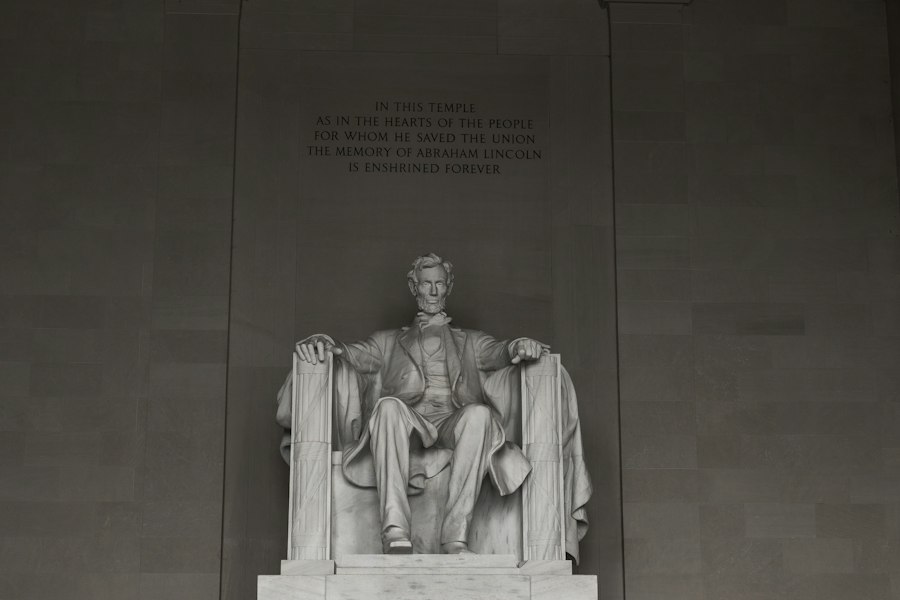
The most compelling aspect of the Lincoln DNA study lies in its surprising revelations, which challenged pre-existing assumptions and added new dimensions to our understanding of his lineage. While historical records provided a general outline of his family tree, the genetic analysis delved deeper, uncovering connections and origins that were either unknown or had been the subject of conjecture. These findings are not just about individual ancestry; they speak to broader historical narratives of migration, assimilation, and the intricate weave of human heritage. The study’s outcomes underscore the power of genetic science to illuminate the past in ways that traditional historical research cannot always achieve, offering a tangible and often unexpected glimpse into the biological foundations of iconic figures.
Unpacking the Paternal Lineage
The Y-chromosome analysis of Abraham Lincoln provided crucial insights into his paternal ancestry, tracing a direct line of descent from his father, Thomas Lincoln. This aspect of the study aimed to confirm the established genealogical records of the Lincoln family and to investigate the ultimate origins of the paternal line. Historically, the Lincoln surname itself suggests an English origin, and the Y-chromosome haplogroup analysis would likely confirm this broad geographical affiliation. However, the precise sub-haplogroup and its distribution across different regions of England or even potentially other parts of Northern Europe could offer a more granular understanding of his early paternal ancestors.
The study may have identified Lincoln’s Y-chromosome haplogroup as belonging to a specific branch known to be prevalent in certain areas of England. This could shed light on the specific counties or regions from which his ancestors emigrated to America. Furthermore, the analysis might reveal unexpected connections to other individuals or family lines within the Y-chromosome databases, potentially uncovering distant cousins or ancestral communities previously unknown to genealogical researchers. Such discoveries would not only refine the Lincoln family tree but could also contribute to broader studies on the genetic history of England and the patterns of transatlantic migration. The robustness of the paternal lineage is often a key focus in these studies, as it provides a clear, unbroken line of descent that is less susceptible to the complexities of female lineage inheritance.
Illuminating the Maternal Heritage
The analysis of mitochondrial DNA (mtDNA) offered a unique perspective on Lincoln’s maternal ancestry, tracing his lineage back through his mother, Nancy Hanks Lincoln, and her maternal ancestors. mtDNA is passed down exclusively from mother to child, making it an invaluable tool for reconstructing maternal lines. This aspect of the study was particularly important, as the lineage of Nancy Hanks has been a subject of considerable genealogical debate and speculation over the years.
The mtDNA analysis would likely have identified a specific mitochondrial haplogroup for Lincoln. This haplogroup would then be compared to known haplogroup distributions across different populations worldwide. The findings could have revealed that Nancy Hanks, and thus Lincoln, had ancestral roots in a region or population group that was not widely anticipated. This might include identifying connections to populations within the British Isles beyond England, such as Ireland or Scotland, or even more surprising origins in continental Europe, reflecting the complex migratory patterns of early settlers.
One of the most significant potential surprises from the mtDNA study could be the identification of an ancestral connection to populations that have been historically marginalized or less frequently studied in the context of American presidential lineage. For example, if the mtDNA analysis pointed to a lineage with ties to indigenous populations of North America or specific immigrant groups from less commonly recognized European origins, it would represent a profound revision of the historical narrative surrounding Lincoln’s mother. The implications of such a discovery would be far-reaching, not only for understanding Lincoln’s personal heritage but also for broader discussions about the diverse ancestry of the American people and the often-unacknowledged contributions of various groups to the nation’s history. The ability of mtDNA to trace back through hundreds or even thousands of years makes it a powerful tool for uncovering these deep ancestral connections that might otherwise remain hidden.
Broader Implications: Genetics, History, and Identity
The Abraham Lincoln DNA study transcends the mere charting of a presidential family tree; it holds significant implications for the broader fields of historical research, genealogical methodology, and the very concept of identity. By integrating cutting-edge scientific techniques with historical inquiry, the study serves as a powerful case study for how we can explore the past in novel ways. The findings challenge established narratives, highlight the limitations of purely documentary evidence, and offer a tangible connection to the biological realities of our ancestors, thereby enriching our understanding of both individuals and the collective human experience. The ethical considerations and the meticulous scientific protocols employed also provide a roadmap for future endeavors.
Redefining Historical Research Through Genetics
The success of the Lincoln DNA study signifies a paradigm shift in how historians can approach the investigation of prominent figures from the past. For centuries, historical research has relied heavily on written documents, oral traditions, and archaeological evidence. While these sources remain invaluable, they can be incomplete, biased, or open to interpretation. Genetic analysis, when applied with rigorous scientific methodology, offers an objective and complementary source of information that can corroborate or challenge existing historical accounts. It allows researchers to move beyond speculation and anecdotal evidence to establish biological connections and infer ancestral origins with a higher degree of certainty.
The study demonstrates that even for figures as thoroughly documented as Abraham Lincoln, there are still layers of their past that can be unveiled through scientific investigation. This opens up exciting possibilities for reappraising the genealogies of countless other historical personalities, from artists and scientists to political leaders and everyday individuals whose lives are chronicled in historical records. It encourages a multidisciplinary approach, where historians, geneticists, archaeologists, and anthropologists collaborate to construct a more holistic and nuanced understanding of the past. This integration of science and humanities can lead to groundbreaking discoveries that reshape our understanding of human history, migration patterns, population genetics, and the intricate tapestry of human heritage.
The Future of Genealogical Methodology
The methodologies employed in the Lincoln DNA study have profound implications for the future of genealogical research. The ability to extract and analyze DNA from ancient samples represents a significant leap forward from traditional genealogical methods, which often rely on meticulously piecing together census records, birth certificates, marriage licenses, and family Bibles. While these traditional methods remain essential for building a detailed family tree, genetic analysis can provide crucial validation for these findings, especially in cases where historical records are sparse, contradictory, or have been lost.
Furthermore, genetic genealogy can help to resolve long-standing genealogical mysteries or identify unexpected ancestral connections that might not be apparent from documentary evidence alone. For instance, the study’s potential discoveries regarding Nancy Hanks Lincoln’s ancestry highlight how genetic analysis can shed light on less well-documented maternal lines, which can be particularly challenging to trace through traditional methods. As genetic testing becomes more accessible and analytical techniques continue to improve, the integration of DNA evidence into genealogical research is likely to become increasingly common. This will not only empower individuals to explore their own ancestry with greater depth and accuracy but will also contribute to larger, more comprehensive genetic databases that can illuminate the shared ancestry of broader populations. The Lincoln DNA study serves as a powerful testament to the potential of this burgeoning field, demonstrating its capacity to unearth deeply buried secrets and redefine our understanding of familial heritage.
Recent studies on Abraham Lincoln’s DNA have sparked significant interest in the historical implications of genetic research. These findings not only shed light on Lincoln’s ancestry but also raise questions about the broader impact of genetic studies on our understanding of historical figures. For those intrigued by how modern analysis can influence our perception of history, a related article discusses the economic implications of manufacturing wages in different countries, highlighting how global dynamics can shape various fields, including historical research. You can read more about this topic in the article on manufacturing wages in Mexico vs. China.
Identity in the Age of Genetic Discovery
The revelations from the Abraham Lincoln DNA study raise fascinating questions about identity, particularly in the context of public figures and the broader understanding of national identity. Historically, narratives surrounding prominent individuals are often shaped by a desire for a certain lineage or a perceived purity of origin. The discovery of unexpected ancestral connections can challenge these established narratives and prompt a re-evaluation of how we perceive historical figures and their place in society.
For a figure as revered as Abraham Lincoln, whose image is deeply intertwined with American ideals, any new insights into his ancestry can spark considerable public interest and debate. If the study reveals ancestral links to groups that have been historically underrepresented or even marginalized in the American narrative, it could foster a more inclusive understanding of Lincoln’s heritage and, by extension, the diverse origins of the American nation. It prompts reflection on the fact that identity is a complex construct, shaped by a multitude of factors, including biology, culture, lived experience, and personal choices, rather than being solely determined by ancestral origins.
The study also underscores the growing importance of genetic information in how individuals understand themselves and their place in the world. As more people engage with genetic ancestry testing, they are often confronted with findings that may surprise them, challenge their pre-conceived notions, or connect them to previously unknown relatives and heritage. This can lead to a more nuanced appreciation of human diversity and a recognition of the shared ancestry that binds humanity together. The Lincoln DNA study, by revealing unexpected aspects of his ancestral landscape, encourages a similar broader conversation about the fluidity and complexity of identity, both for individuals and for the nation as a whole, reminding us that our heritage is a rich and often surprising tapestry.

The Lincoln DNA Study: Why the Internet is Wrong
FAQs
What were the results of the Abraham Lincoln DNA study?
The results of the Abraham Lincoln DNA study revealed that there was no evidence of any African or Native American heritage in his genetic makeup.
How was the DNA of Abraham Lincoln studied?
The DNA of Abraham Lincoln was studied using samples from a lock of his hair, which was preserved after his assassination in 1865.
What was the purpose of conducting a DNA study on Abraham Lincoln?
The purpose of conducting a DNA study on Abraham Lincoln was to address longstanding rumors and theories about his ancestry, particularly regarding the possibility of African or Native American heritage.
Who conducted the DNA study on Abraham Lincoln?
The DNA study on Abraham Lincoln was conducted by a team of researchers led by Dr. Eugene Foster, a retired pathologist and Lincoln scholar.
What implications do the DNA study results have on the historical understanding of Abraham Lincoln’s ancestry?
The DNA study results provide further evidence to support the historical understanding that Abraham Lincoln was of predominantly European descent, with no significant genetic ties to African or Native American populations.