
The Maternal Line’s Reach: Understanding Mitochondrial DNA in Genealogical Research
Mitochondrial DNA (mtDNA) is a powerful tool in the genealogist’s arsenal, offering a unique window into an individual’s maternal lineage. Unlike the vast majority of our DNA, which is inherited from both parents, mtDNA is passed down almost exclusively from mother to child. This distinct inheritance pattern makes it invaluable for tracing ancestry far back in time, often beyond the reach of traditional paper records. However, like any scientific tool, mtDNA analysis comes with its own set of limitations that every genealogist should be aware of to ensure accurate and comprehensive family history research. Understanding these constraints is crucial for interpreting results correctly and avoiding potential pitfalls.
## Tracing the Unbroken Thread: The Power of mtDNA Inheritance
Mitochondrial DNA, found within the mitochondria – the powerhouses of our cells – is a small, circular molecule separate from the nuclear DNA residing in the cell’s nucleus. Its primary function is to generate energy for the cell. During fertilization, the sperm contributes its nuclear DNA to the egg, but its mitochondria, along with their mtDNA, are typically excluded or degraded. This ensures that the vast majority of the offspring’s mtDNA originates solely from the mother’s egg cell. This consistent, unbroken maternal inheritance makes mtDNA a remarkably stable marker for tracking a direct maternal line. Every individual shares the exact same mtDNA as their mother, their maternal grandmother, their maternal great-grandmother, and so on, stretching back through generations. This direct lineage allows genealogists to identify distant maternal cousins, explore deep ancestral migrations, and even connect with ancient populations.
The implications for genealogical research are profound. While nuclear DNA can become fragmented and mixed with each generation, creating a complex tapestry of inheritance, mtDNA remains remarkably intact. This allows for the tracing of a single, specific ancestral line over thousands of years. For individuals who have exhausted traditional genealogical research methods, or who are seeking to understand their origins from continents away where historical records are sparse or non-existent, mtDNA testing can provide invaluable insights. It offers a tangible link to a matriarchal past, connecting the present to a lineage that predates written history.
## The Nuances of Maternal Ancestry: What mtDNA Reveals and Doesn’t Reveal
While the power of mtDNA lies in its singular maternal inheritance, this also defines its inherent limitation: it can only trace one specific line of ancestry. This means that mtDNA analysis will only reveal information about your mother, your mother’s mother, your mother’s mother’s mother, and so forth. It provides no information about your father, your paternal grandmother, your maternal grandfather, or any other branch of your family tree. This is a critical distinction that many new genealogists might overlook.
### The Maternal Line Only: A Singular Focus
Consider a family tree. Nuclear DNA accounts for roughly 50% of your genetic makeup from your father and 50% from your mother. This genetic contribution then branches out, with each parent contributing roughly 25% from their respective parents, and so on. Autosomal DNA tests, which analyze a significant portion of your nuclear DNA, can therefore explore your ancestral contributions from many different lines simultaneously, albeit with decreasing reliability the further back you go.
Mitochondrial DNA, however, is like having a magnifying glass focused exclusively on one single thread within that intricate tapestry. It will tell you about your maternal grandmother’s mother, but nothing about your maternal grandmother’s father. It will reveal information about your mother’s maternal lineage, but absolutely nothing about your father’s maternal or paternal lines, or your mother’s paternal line. This exclusivity is its strength for tracing a single line, but its weakness for a holistic view of one’s ancestry.
### Limited Geographic Scope of “Deep Ancestry”
When DNA testing companies discuss “deep ancestry” or “ancient origins,” it’s important to understand how this applies to mtDNA. mtDNA can trace a lineage back tens of thousands of years, even hundreds of thousands. However, this ancient lineage is specifically tied to the maternal line. While your mtDNA haplogroup might indicate a deep ancestral origin in a particular region of Africa or Eurasia, this only reflects the migratory patterns and origins of your direct maternal ancestors. It does not necessarily reflect the geographic origins of the majority of your ancestral population. For example, if your paternal ancestors migrated from Asia to Europe thousands of years ago, but your maternal ancestors remained in Africa, your mtDNA will reflect an African origin, even though a significant portion of your ancestry might be Asian. This can lead to a skewed perception of one’s overall ancestral background if not understood in conjunction with other DNA tests or historical research.
### Lack of Familial Relationship Clues Beyond Maternal Cousins
Because mtDNA is passed down unchanged, individuals with the same mtDNA haplogroup are either direct maternal descendants of each other or share a very distant common maternal ancestor. This makes it excellent for identifying individuals within your direct maternal line. However, it is not useful for identifying relationships with paternal cousins, maternal cousins through a male ancestor, or any other collateral relatives. If you receive a DNA match with someone who shares your mtDNA, you know you share a common maternal ancestor. However, if you have a Y-DNA match (which traces the direct paternal line) or an autosomal DNA match, the relationship could be through any number of ancestral lines. The specificity of mtDNA for maternal relationships means it has a very narrow scope for identifying the breadth of familial connections.
Mitochondrial DNA (mtDNA) has become a popular tool in genealogy for tracing maternal lineage, yet it comes with certain limitations that can impact the accuracy and depth of ancestral research. For instance, mtDNA is inherited only from the mother, which means it can provide a narrow view of one’s ancestry, often overlooking paternal lines. This limitation is discussed in detail in the article “Unlocking the Antikythera Mechanism’s Ancient Functions,” which explores how historical artifacts can inform our understanding of lineage and heritage. To read more about the intersection of ancient technology and genealogy, you can visit the article here: Unlocking the Antikythera Mechanism’s Ancient Functions.
The Evolution of mtDNA: Mutations and Haplogroups
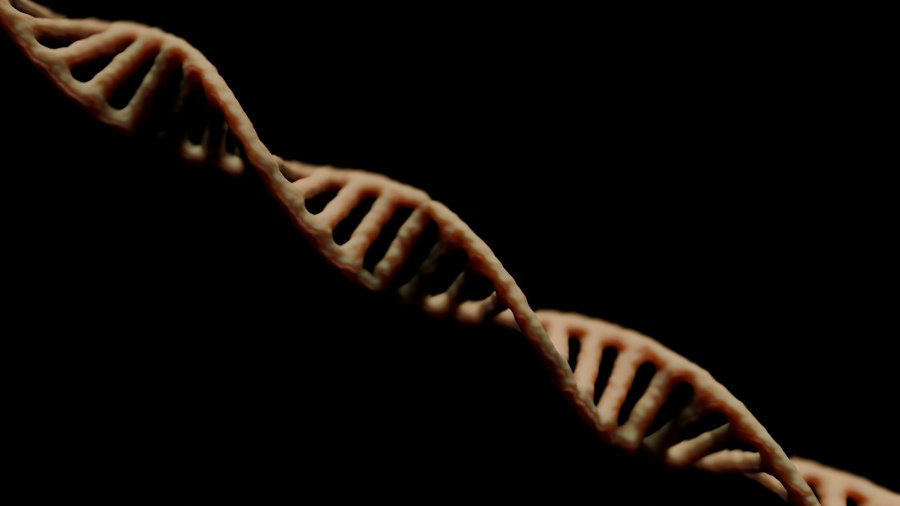
Mitochondrial DNA, while passed down faithfully, is not entirely static. Over vast periods of time, random mutations occur in the mtDNA sequence. These mutations are rare but accumulate gradually. By analyzing the patterns of these mutations, scientists can create a genetic “timeline” and group individuals into classifications called haplogroups.
### Understanding Haplogroups: A Maternal Genetic Passport
Haplogroups are large groups of people who share a common set of mutations in their mtDNA. They are named using a system of letters and numbers (e.g., H, U, L, K, J). These haplogroups can be traced back to specific geographical regions and migrations of ancient populations. For example, certain haplogroups are predominantly found in Europe, while others are more common in Asia or Africa. By determining your mtDNA haplogroup, you can gain insights into the ancient origins of your maternal line and the migratory paths your ancestors may have taken.
### The Slow Pace of Mutation: A Double-Edged Sword
The relatively slow rate of mtDNA mutation is what makes it useful for tracing deep ancestry over millennia. However, it also means that within recent genealogical timeframes (the last few hundred years), significant differences in mtDNA are unlikely to have accumulated. This is a critical limitation for tracing recent ancestors. If you are trying to identify a maternal ancestor who lived only a few generations ago, relying solely on mtDNA might not be sufficient. The mtDNA of you and your maternal cousin might be identical, even if you are not closely related, because the mutations that would distinguish your maternal lines have not yet occurred.
### Pseudogenes and Recombination: Potential for Confusion
While mtDNA is primarily passed down maternally, there are rare instances of “homoplasmic” transmission, where paternal mtDNA is also inherited, or recombination events. Furthermore, the human genome contains pseudogenes – inactive copies of genes – that can sometimes resemble mtDNA. These can, in very rare cases, lead to misinterpretations in mtDNA analysis or create challenges in interpreting specific genetic markers. Modern testing protocols are designed to mitigate these issues, but it’s a reminder of the complexity of genetic inheritance.
Limitations in Time and Scope: When mtDNA Falls Short

As discussed, mtDNA’s primary strength – its direct maternal inheritance – is also the source of its significant limitations, particularly when it comes to the timeframe and the breadth of genealogical inquiry. For many genealogists, the goal is to trace ancestors back to the point where historical records are available, and then to connect these lines to broader populations. mtDNA excels at the former but is less effective at the latter in a comprehensive way.
### Recent Ancestry: The Challenge of Subtle Differences
If your goal is to identify a maternal ancestor who lived in the 18th or 19th century, or even earlier, mtDNA might not provide the precise answers you’re seeking. The mutations that define mtDNA haplogroups occur over thousands of years. Within a few hundred years, the mtDNA sequence passed down from your maternal great-great-grandmother to you is likely to be identical or very nearly so. This makes it difficult to distinguish between very close maternal relatives if their shared maternal ancestor is recent. Autosomal DNA, which analyzes a much broader spectrum of your inherited DNA, is far more effective for identifying relationships within the last few centuries, as it looks at a wider array of genetic markers that change and recombine more frequently.
### Identifying Specific Individuals: A Needle in a Haystack
While mtDNA can confirm a shared maternal ancestor, it’s generally not precise enough to pinpoint a specific individual in recent generations. You might discover that you share a maternal haplogroup with a distant cousin, confirming you both descend from a common maternal matriarch. However, determining which maternal great-grandmother is the common ancestor, or differentiating between multiple branches of maternal cousins, often requires additional genealogical research or the use of autosomal DNA. The lack of detailed, readily distinguishable markers within recent maternal lines makes mtDNA a less potent tool for identifying specific recent familial connections compared to other DNA testing methods.
### Geographic Specificity: Broad Strokes, Not Fine Details
While mtDNA haplogroups can indicate broad ancestral regions, they rarely provide the granular detail needed to pinpoint a specific village or town of origin for recent ancestors. For instance, a haplogroup might suggest an ancient origin in the British Isles, but it won’t tell you if your maternal ancestors came from Cornwall, Yorkshire, or Scotland. To achieve that level of detail, you would need to combine mtDNA findings with documentary research and potentially autosomal DNA analysis, which can identify closer relatives who might have more specific ancestral clues.
Complementary Tools: Integrating mtDNA with Other Genealogical Methods
Recognizing the limitations of mtDNA is not a reason to discard it as a genealogical tool. Instead, it highlights the importance of using mtDNA in conjunction with other methods to build a comprehensive and accurate family history. The most effective genealogical research often involves a multi-pronged approach.
### The Power of Paper Trails: Combining DNA with Records
Documentary research – birth certificates, marriage licenses, census records, wills, and family Bibles – remains the bedrock of traditional genealogy. mtDNA can be an invaluable supplement to these records. If you have identified a potential maternal ancestor in historical documents, an mtDNA test can help confirm if you share a maternal lineage with descendants of that individual. Conversely, if an mtDNA test suggests a very old maternal origin in a specific region, this can guide your documentary research to focus on that area. However, relying solely on mtDNA to find a specific ancestor in a specific location without supporting documentation is often a futile endeavor.
### Autosomal DNA: The Broader Picture
Autosomal DNA testing analyzes DNA from all 23 pairs of chromosomes and is the most popular type of DNA test for genealogy. It can identify relationships with relatives on any branch of your family tree within the last five to seven generations. While it doesn’t trace a single line as far back as mtDNA, it provides a much broader and more detailed picture of your recent ancestry. Combining mtDNA results with autosomal DNA results can be incredibly powerful. mtDNA can confirm a deep maternal lineage, while autosomal DNA can identify closer maternal relatives and help flesh out the family tree on all sides.
### Y-DNA: Completing the Maternal-Paternal Dichotomy
For men, Y-DNA testing offers a parallel to mtDNA, tracing the direct paternal line (father, father’s father, father’s father’s father, etc.). By combining mtDNA, Y-DNA, and autosomal DNA testing, genealogists can gain a more complete genetic picture of their ancestry, exploring both maternal and paternal lines across different time depths. This holistic approach allows for the identification of a wider range of relatives and a deeper understanding of ancestral migrations and origins.
While mitochondrial DNA offers valuable insights into maternal lineage, it also has its limitations in genealogy research. For a deeper understanding of how ancient techniques, such as those used in revolutionary Roman concrete, can inform modern scientific practices, you can explore this fascinating article on self-healing wonders. The intersection of historical knowledge and contemporary science can shed light on the complexities of our genetic heritage. To read more about this intriguing topic, visit this article.
Conclusion: Strategic Use of Mitochondrial DNA in Genealogy
| Limitation | Description | Impact on Genealogy | Mitigation Strategies |
|---|---|---|---|
| Maternal Inheritance Only | mtDNA is passed exclusively from mother to offspring without recombination. | Limits tracing lineage to maternal line only; paternal ancestry is not revealed. | Combine mtDNA analysis with Y-DNA and autosomal DNA testing for comprehensive genealogy. |
| Low Mutation Rate | mtDNA mutates slowly compared to nuclear DNA. | Reduces resolution for distinguishing between closely related individuals or recent ancestors. | Use additional markers or whole mitochondrial genome sequencing for higher resolution. |
| Heteroplasmy | Presence of more than one type of mtDNA within an individual. | Can complicate interpretation of mtDNA results and lineage assignments. | Perform multiple tests and deep sequencing to detect and understand heteroplasmy. |
| Population Bottlenecks | Historical events reducing genetic diversity in mtDNA lineages. | May cause misleading conclusions about ancestry and population history. | Integrate archaeological and historical data with genetic findings. |
| Limited Genetic Markers | mtDNA contains fewer markers compared to nuclear DNA. | Limits the amount of genealogical information obtainable from mtDNA alone. | Use combined DNA testing approaches for more comprehensive data. |
Mitochondrial DNA is a remarkable genetic marker, offering a unique and powerful way to explore the deep maternal past. Its unbroken inheritance pattern allows genealogists to trace a single lineage back thousands of years, uncovering connections to ancient populations and migratory routes that would otherwise remain hidden. However, it is crucial to approach mtDNA analysis with a clear understanding of its limitations. Its singular focus on the maternal line means it provides no insight into paternal ancestry or other branches of the family tree. Furthermore, the slow rate of mutation makes it less effective for identifying close relatives within the last few centuries and for pinpointing specific ancestral locations with precision.
Therefore, the most successful genealogical endeavors employing mtDNA will integrate it strategically with other research methods. By combining mtDNA findings with meticulous documentary research, the broad insights of autosomal DNA, and the paternal focus of Y-DNA testing (for males), genealogists can build a more comprehensive, accurate, and nuanced understanding of their family history. mtDNA is not a replacement for traditional genealogical research or other forms of DNA testing; rather, it is a specialized tool that, when used wisely and in conjunction with other resources, can unlock profound insights into our maternal heritage and the deep ancestral journeys that have shaped us. Its true value lies in its ability to complement, rather than supersede, the multifaceted process of genealogical discovery.

The Lincoln DNA Study: Why the Internet is Wrong
FAQs
What is mitochondrial DNA (mtDNA) and how is it inherited?
Mitochondrial DNA is a small circular piece of DNA found in the mitochondria of cells. It is passed down from mothers to their offspring, both male and female, but only females pass it on to the next generation.
How can mitochondrial DNA be used in genealogy research?
Mitochondrial DNA can be used to trace maternal ancestry back through generations, as it remains relatively unchanged over time. It can help identify common ancestors and track migration patterns of maternal lineages.
What are the limitations of using mitochondrial DNA in genealogy?
One limitation is that mitochondrial DNA only traces the direct maternal line, so it does not provide information about the paternal side of the family. Additionally, it can be challenging to find matches due to the smaller pool of people who have tested their mtDNA compared to autosomal DNA.
Can mitochondrial DNA testing determine specific relationships between individuals?
Mitochondrial DNA testing can confirm or rule out direct maternal relationships, such as mother-daughter or siblings through the maternal line. However, it cannot determine more distant relationships or provide detailed information about the exact connection between individuals.
Are there any privacy concerns associated with mitochondrial DNA testing for genealogy?
Privacy concerns may arise with mitochondrial DNA testing, as it involves sharing genetic information that could potentially be used for purposes beyond genealogy research. It is important to consider the implications of sharing this data and to understand the privacy policies of the testing company before proceeding.