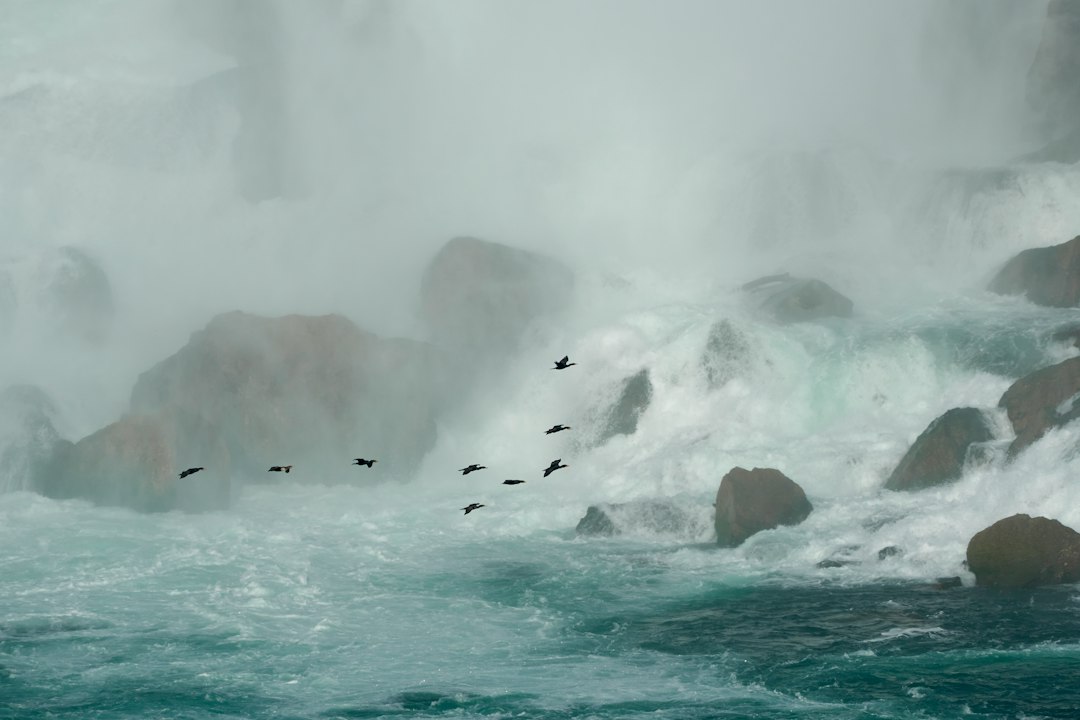
The sight of a powerful waterfall is often associated with an impassable barrier, a cascading torrent that seems to defy any upward movement. Yet, for many fish species, these formidable spectacles are not dead ends but rather challenging passages, conquered through an array of remarkable adaptations and behaviors. The natural world presents a constant series of puzzles, and how fish navigate and surmount waterfalls is a testament to evolution’s intricate and ingenious solutions. It is a story of physical prowess, sensory acuity, and a deep-seated instinct to follow the flow of life, often upstream.
The Physics of Ascent: Overcoming Gravity’s Pull
The sheer force and volume of water plunging over a waterfall represent a formidable obstacle rooted in fundamental physics. Gravity relentlessly pulls the water downwards, creating an immense downward force that would easily sweep any creature caught in its path away. For fish, overcoming this gravitational pull requires a multifaceted approach, involving both brute strength and refined hydrodynamics. The challenges are not uniform across all waterfalls; the height, width, gradient, and water velocity all play significant roles in determining the difficulty of ascent. A gentle cascade might pose a minor inconvenience, while a sheer drop with turbulent, high-speed water presents a significant hurdle.
Muscle Power and Streamlined Design
At the most basic level, many fish possess the muscular development necessary to fight strong currents. Species that regularly encounter upstream migration barriers, such as salmon and trout, are renowned for their powerful swimming capabilities. Their streamlined bodies are hydrodynamically optimized, allowing them to cut through water with minimal resistance. This streamlining is not just about efficiency; it’s crucial for generating the thrust needed to propel themselves against powerful currents. The musculature of their caudal fin (tail) and body allows for rapid, forceful strokes, essential for gaining even small increments of progress against the relentless downward flow. This is not a leisurely swim; it’s an intense burst of energy expended with precision and determination.
Maneuvering Through Turbulence and Spray
The area immediately around a waterfall is often characterized by extreme turbulence, churning water, and a fine mist. Fish must not only possess the strength to swim upwards but also the agility to navigate these chaotic conditions. They often utilize the spray and the calmer pockets of water that can form near the edges or behind the main plunge. By hugging the banks or seeking out eddies, they can find temporary respite from the most violent currents, allowing them to conserve energy and plan their next surge. The ability to sense subtle changes in water flow and pressure is paramount in these environments, enabling them to avoid being swept downstream. Some fish have developed specialized fins that can provide extra grip or stability in turbulent water, acting like small anchors or rudders.
The Importance of Water Depth and Flow Dynamics
While it might seem counterintuitive, the depth of the water at the base of a waterfall can be as crucial as the height of the drop. Deeper water allows fish to build up momentum before attempting to ascend. Furthermore, the flow dynamics of the water itself can create opportunities. Fish don’t typically swim directly into the main, roaring cataract. Instead, they look for pathways of less resistance. This might involve finding a shallower, faster-moving section where they can use the increased speed to their advantage, or a section with more rocks and ledges that break up the flow, offering “steps” or resting places. Understanding these subtle variations in water flow is a sophisticated form of environmental navigation.
In exploring the fascinating ways fish have adapted to their environments, one intriguing aspect is how they manage to ascend waterfalls naturally. This phenomenon highlights the resilience and ingenuity of aquatic life in overcoming physical barriers. For a deeper understanding of how organisms thrive in extreme conditions, you might find it interesting to read about the unique ecosystems found in subglacial lakes in Antarctica. These isolated bodies of water provide insights into survival strategies in harsh environments, much like how fish navigate challenging terrains. You can read more about this in the article Uncovering the Secrets of Subglacial Lakes in Antarctica.
Sensory Acuity: Reading the Currents and Navigating the Unknown
Beyond sheer physical power, fish possess an array of sensory capabilities that allow them to perceive and interpret their environment in ways humans can only imagine. These senses are finely tuned to detect the subtle cues that signal pathways through seemingly impassable aquatic terrain. The ability to “read” the water, to understand its currents, its composition, and its direction, is as vital as muscular strength in their quest to overcome waterfalls.
The Lateral Line: Feeling the Water’s Pulse
One of the most critical sensory organs for fish in navigating turbulent waters is the lateral line. This is a system of sensory organs that detect water movement and pressure changes. It runs along each side of the fish’s body and extends to the head. The lateral line can detect vibrations in the water, allowing fish to sense nearby objects, predators, and, crucially, changes in current direction and intensity. When approaching a waterfall, the lateral line provides an immediate, tactile map of the chaotic water. It helps fish identify areas of reduced turbulence, potential eddies, and the overall direction of the main flow, guiding them towards viable ascent routes. It’s like having an invisible sonar system that constantly updates them on their surroundings.
Olfactory Cues: The Scent of Home
For many anadromous fish, such as salmon, their journey is not just about reaching new feeding grounds; it’s about returning to their natal waters to spawn. This incredible feat relies heavily on their sense of smell, or olfaction. As they approach their home river system, even with the formidable barrier of a waterfall, they can detect the unique chemical signature of their birth stream. This olfactory map, imprinted from their early days as fry, becomes an irresistible lure, driving them forward. The scent of their home river can provide a powerful motivation, overriding the instinct for self-preservation in the face of danger. They are driven by a biological imperative, a deep-seated call to return.
Vision: Spotting the Gaps and Gradients
While their vision might not be as acute as ours in all conditions, fish possess excellent eyesight, particularly for detecting movement and patterns in the water. As they approach a waterfall, they use their vision to identify potential pathways. They can spot breaks in the curtain of water, areas where the flow is less intense, or even submerged rocks that might offer footholds or resting places. The ability to discern subtle differences in water color and clarity can also indicate depth and the presence of underwater structures. In some cases, their vision allows them to see the spray patterns, which can indirectly reveal the contours of the waterfall and the surrounding terrain.
Electroreception: Sensing Hidden Currents
Some fish species possess electroreception, the ability to detect weak electrical fields. While less common in the fish that typically undertake waterfall ascents, this sense can be incredibly useful in murky waters or at night, where visual cues are limited. It allows them to sense the electrical fields generated by their own movements and those of other organisms, as well as subtle variations in the Earth’s magnetic field. This can aid in orientation and navigation, especially in complex underwater environments where currents are not easily discernible by other means.
Behavioral Strategies: The Art of the Leap and the Lunge
The physical and sensory adaptations are only part of the story. Fish also employ a range of learned and instinctive behaviors to tackle waterfalls. These strategies are honed over generations, passed down through the population as effective methods for overcoming these natural barriers. It’s a remarkable display of problem-solving in action, demonstrating how creatures can adapt their behaviors to exploit the very forces that seem designed to impede them.
The Leaping Ascent: A Burst of Aquatic Acrobatics
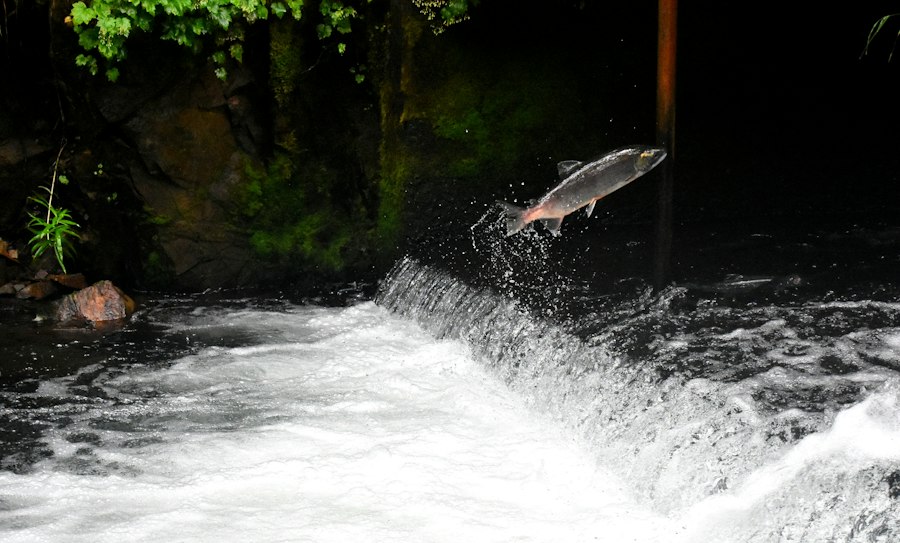
Perhaps the most iconic image of fish overcoming waterfalls is the salmon leaping upstream. This is not a single, continuous swim but rather a series of powerful leaps. Fish will position themselves in the water below the waterfall, gathering momentum. They then launch themselves upwards, often at an angle, aiming for points where the water is less turbulent or where there are ledges or pools. Their powerful bodies generate the thrust for these leaps, and their fins are used for steering and for gripping onto wet surfaces upon landing. A successful leap is followed by a scramble to gain purchase, often with pectoral fins, before the next attempt.
The “Climbing” Technique: Utilizing Surface Tension and Adhesion
In some cases, fish employ a technique that resembles climbing. When the water is not too deep or the drop is not too steep, they can use their pectoral fins and mouths to grip onto wet rocks or vegetation at the edge of the waterfall. They then use their body muscles to pull themselves upwards, often in a series of wriggling motions. This method relies on the surface tension of the water and a degree of adhesion between their bodies and the wet surfaces. It’s a slower, more arduous process than leaping but can be effective in certain circumstances, particularly for smaller fish or in less severe cascades.
Resting and Reconnaissance: Patience as a Virtue
Fish do not typically attempt a waterfall ascent in a single, determined push. They understand the need for rest and reconnaissance. They will seek out calmer pools or eddies below the obstacle to conserve energy and observe the flow. During these periods, they are assessing the best routes, the timing of the strongest currents, and the opportune moments to make their move. This patience is a crucial behavioral trait; a rushed or ill-timed attempt can be fatal. They are strategic thinkers, even without conscious thought.
Cooperative Efforts: The Power of the School
While many waterfall ascents are individual efforts, in some species, there can be elements of cooperative behavior. A stronger fish might lead the way, or a school of fish might move in unison, creating a more significant disturbance that breaks up the water flow, potentially creating easier passages for those following. While not as organized as a pack hunt, the collective presence and movement of multiple fish can influence the dynamics of the water in subtle ways that benefit the group.
Environmental Influences: Water Levels, Seasons, and Habitat Connectivity
The success of fish in surmounting waterfalls is not solely dependent on their individual capabilities. A complex interplay of environmental factors significantly influences their ability to migrate. These external forces can either present insurmountable challenges or create windows of opportunity, highlighting the delicate balance of ecosystems.
Seasonal Rains and Increased Flow: Friend or Foe?
The amount of water flowing over a waterfall is a critical determinant of its passage. During periods of heavy rainfall or snowmelt, river levels rise, and the volume of water cascading over a waterfall increases dramatically. This can make the ascent significantly more difficult, and potentially impossible, as the currents become stronger and more unpredictable. However, increased water levels can also sometimes create deeper pools at the base, allowing for better momentum before leaping, or submerge rocks and ledges, creating more continuous pathways. The timing of migration often coincides with periods of favorable water flow.
Drought and Low Water Levels: A Different Kind of Barrier
Conversely, during periods of drought, water levels can drop significantly. While this might seem to make waterfalls easier to cross, it can create new problems. Shallow water can expose fish to predators and can also lead to the formation of shallow, stagnant pools where oxygen levels are low. Furthermore, a dramatically reduced flow might mean that the waterfall becomes less of a distinct feature and more of a gradual incline, but the remaining water might be too shallow to allow for the necessary momentum for leaping. In extreme cases, a waterfall might become a complete dry barrier.
The Role of Habitat Connectivity: Maintaining Migration Routes
The ability of fish to reach waterfalls in the first place depends on the connectivity of their habitats. If their upstream or downstream environments are degraded or blocked by other barriers, their populations may dwindle, and their ability to undertake migrations may be compromised. Maintaining healthy river systems, with minimal human-made obstructions, is crucial for preserving natural migration routes and allowing fish to encounter these natural challenges and opportunities. The long-term survival of many fish species hinges on the integrity of these aquatic highways.
Fish have developed remarkable adaptations that allow them to navigate challenging environments, including the ascent of waterfalls. A fascinating exploration of such natural phenomena can be found in an article that discusses the evolutionary strategies of various species. For those interested in the broader implications of adaptation in nature, you can read more about it in this insightful piece on nearshoring and its impact. Understanding how fish overcome obstacles in their habitats can provide valuable lessons in resilience and survival.
The Evolutionary Significance: Driving Biodiversity and Ecosystem Health
| Factor | Description | Example Species | Mechanism | Estimated Success Rate (%) |
|---|---|---|---|---|
| Jumping Ability | Fish use powerful leaps to overcome waterfall heights. | Salmon (Oncorhynchus spp.) | Strong muscular tail thrusts propel fish upward. | 70 |
| Water Flow Variation | Lower water flow during dry seasons reduces waterfall height. | Trout (Salmo trutta) | Fish time their ascent during low flow periods. | 50 |
| Natural Ramps and Pools | Rocks and ledges create resting spots for fish to regain energy. | Steelhead (Oncorhynchus mykiss) | Fish use pools to rest and jump in stages. | 65 |
| Evolutionary Adaptations | Species develop stronger muscles and streamlined bodies. | American Shad (Alosa sapidissima) | Enhanced swimming endurance and jumping power. | 60 |
| Assisted Passage | Natural debris or fallen trees create bridges or easier routes. | Various freshwater fish | Fish use alternative paths to bypass waterfalls. | 40 |
The remarkable ability of fish to overcome waterfalls is not merely an interesting biological phenomenon; it holds profound ecological and evolutionary significance. These migrations play a vital role in maintaining the health and diversity of aquatic ecosystems, shaping both the fish themselves and the environments they inhabit.
Gene Flow and Population Resilience
The movement of fish between different parts of a river system, facilitated by their ability to surmount obstacles like waterfalls, is essential for gene flow. This exchange of genetic material prevents inbreeding within isolated populations and introduces new genetic variations. This genetic diversity is crucial for a population’s ability to adapt to changing environmental conditions, diseases, and other challenges, thus enhancing its long-term resilience and survival. Waterfalls, therefore, act as conduits, not just barriers, for genetic exchange.
Nutrient Distribution and Ecosystem Dynamics
When fish migrate upstream to spawn and then die, they carry with them nutrients accumulated from their feeding grounds downstream. Their carcasses decompose, releasing these vital nutrients into the upstream environment, which may be nutrient-poor. This process of nutrient transfer enriches the entire river ecosystem, supporting plant growth, insect populations, and other aquatic life. The energetic effort of climbing waterfalls thus contributes to the broader health and productivity of the river.
Driving Speciation and Adaptation
Over long evolutionary timescales, the challenges posed by waterfalls can also act as selective pressures that drive the evolution of new species. Populations of fish that become isolated above or below a significant waterfall may diverge genetically over time, adapting to their distinct environments. This can eventually lead to the formation of new species with specialized traits. The waterfall, in this context, becomes an engine of biodiversity, a natural experiment in evolution.
A Symphony of Interdependence
Ultimately, the story of fish overcoming waterfalls is a compelling narrative of nature’s ingenuity. It demonstrates how life finds a way, adapting and evolving to meet the challenges presented by the physical world. It underscores the intricate interdependence of species and their environments, where seemingly insurmountable obstacles can become pathways for life, contributing to the richness and resilience of the planet’s aquatic realms. The constant push and pull of water and life create a dynamic system where survival is a testament to remarkable adaptation.

The 7,000-Year-Old Secret Hidden Under a Lake
FAQs
1. How do fish naturally get above waterfalls?
Fish can navigate around waterfalls by using their natural swimming abilities. Some fish species are able to jump or leap out of the water to overcome obstacles like waterfalls.
2. What physical adaptations do fish have to help them get above waterfalls?
Some fish have evolved powerful muscles that allow them to swim against strong currents and leap out of the water. Additionally, certain fish species have specialized fins that help them navigate through turbulent waters.
3. Are there any specific fish species known for their ability to navigate above waterfalls?
Salmon are well-known for their incredible ability to leap up waterfalls during their annual migration to spawn. Other fish species such as trout and eels also have adaptations that help them overcome obstacles like waterfalls.
4. How do fish know how to navigate above waterfalls?
Fish have an innate sense of direction and are able to detect changes in water flow and pressure. They use these sensory abilities to navigate around obstacles like waterfalls and continue their journey upstream.
5. Can fish get above waterfalls in all types of water bodies?
Fish are more likely to navigate above waterfalls in rivers and streams where they have space to build up speed and momentum. In smaller bodies of water or areas with particularly strong waterfalls, fish may face greater challenges in getting above the obstacles.