
The Evolving Art of the Catch: Mesolithic Adaptations to Aquatic Resources
The Mesolithic period, often referred to as the “Middle Stone Age,” represents a crucial transitional phase in human prehistory. Spanning roughly from the end of the last Ice Age (around 10,000 BCE) to the advent of agriculture (around 4,000 BCE in some regions), it was a time of significant environmental change and human adaptation. As glaciers retreated and landscapes transformed, human societies diversified their subsistence strategies, moving beyond the large game hunting that characterized the preceding Paleolithic. Among the most significant of these shifts was the increased reliance on aquatic resources. This essay will explore the remarkable advancements in Mesolithic fishing technology, examining the innovations in early tools that allowed humans to efficiently exploit the bounty of rivers, lakes, and coastal waters. These developments were not merely incremental improvements; they represented a sophisticated understanding of fish behavior, aquatic environments, and the application of material science to solve complex challenges.
Recent advancements in Mesolithic fishing technology have shed light on the innovative methods employed by early humans to enhance their fishing practices. These developments not only illustrate the ingenuity of our ancestors but also highlight the importance of fishing in their daily lives. For a deeper understanding of ancient technology and its applications, you may find it interesting to explore the article on the Antikythera mechanism, which discusses the complexities of ancient engineering and its functions. You can read more about it here: Unlocking the Antikythera Mechanism’s Ancient Functions.
Early Nets and the Weaving of Opportunity

The development of fishing nets stands as one of the most transformative innovations of the Mesolithic era. While direct archaeological evidence for organic nets from this period is rare due to their ephemeral nature, the presence of numerous bone and antler netting needles, spindle whorls, and even impressions of woven materials in archaeological contexts strongly suggests their widespread use. These tools indicate that Mesolithic peoples possessed the skills and materials to create complex mesh structures, a testament to their growing mastery of fiber technology. The implications for fishing were profound, allowing for more passive and efficient capture methods compared to earlier, more labor-intensive techniques.
The Rise of Netting Needles: Precision in Every Stitch
Netting needles, typically crafted from bone, antler, or sometimes wood, were essential instruments for net construction. These elongated, pointed tools, often with an eye at one end, allowed for the intricate weaving of plant fibers – likely derived from reeds, grasses, or bast fibers from trees. The size and shape of these needles varied, suggesting different mesh sizes and types of nets were being produced. Larger needles might have been used for coarse nets designed to catch larger fish or for sealing off sections of waterways, while smaller, finer needles would have facilitated the creation of more delicate meshes for smaller fish. The consistent presence of these artifacts across numerous Mesolithic sites points to a standardized and highly developed craft. This technology allowed for the creation of nets of varying dimensions and mesh sizes, tailored to specific target species and fishing environments. The ability to produce nets of substantial size also enabled group fishing efforts, enhancing efficiency and communal food security.
Spindle Whorls and Fiber Preparation: The Foundation of Fine Meshes
Complementing netting needles were spindle whorls, often made from stone, bone, or clay. These weights were used to impart spin to fibers, twisting them together to create stronger, more durable threads and cords. The process of spinning fibers was fundamental to creating the materials needed for net construction. By twisting individual fibers, Mesolithic craftspeople could produce cords of varying thicknesses and strengths, from fine threads for delicate nets to robust ropes for larger fishing apparatus. The presence of spindle whorls indicates a deliberate and skilled process of fiber preparation, moving beyond the simple use of naturally occurring fibers. This enhanced thread strength and durability were crucial for nets that needed to withstand the strain of hauling in catches and the abrasive conditions of aquatic environments. The mastery of spinning also allowed for the production of nets with consistent and predictable mesh sizes, a critical factor in controlling what species and sizes of fish were caught.
Netting Techniques and Their Ecological Impact: A Revolution in Exploitation
The invention and widespread use of nets fundamentally altered Mesolithic fishing strategies. Nets offered a method of passive fishing, requiring less active pursuit and allowing for the capture of fish in larger quantities. Different net types likely emerged, including drift nets, seines, and possibly fixed nets set in place. Drift nets, allowed to float freely in currents, would have been effective for open water fishing, while seine nets, often used in conjunction with boats or by teams of people, could be drawn through shallower waters to encircle schools of fish. Fixed nets, anchored in strategic locations, would have been particularly effective in constricting natural fish migration routes or in sheltered bays. The ability to create such a diverse array of netting technologies allowed Mesolithic communities to exploit a wider range of aquatic habitats and fish species, significantly increasing their food security and contributing to population growth and stability in resource-rich areas.
The Spear and the Harpoon: Precision Strikes in the Water
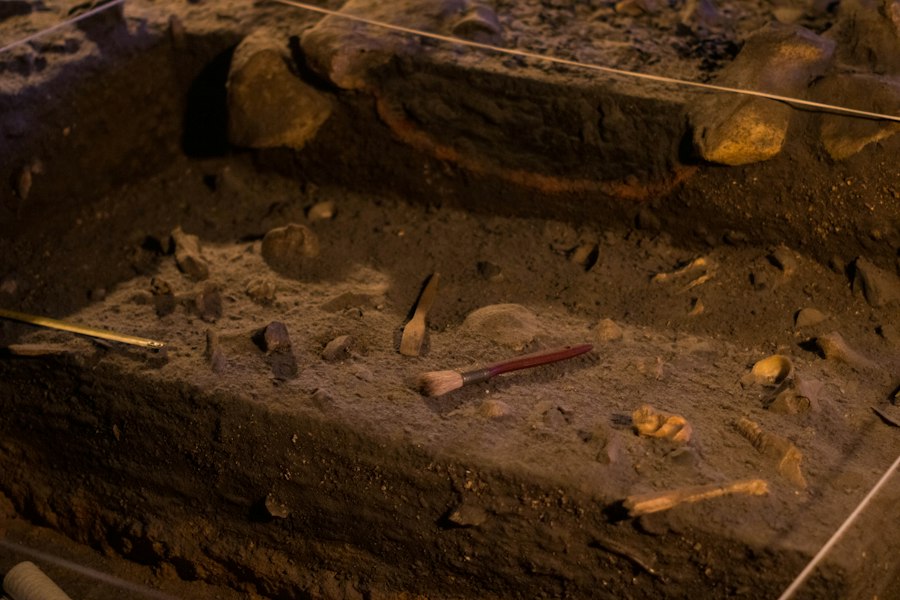
While nets offered a passive approach, Mesolithic fishing also retained and refined more active hunting methods. The spear and harpoon, honed over millennia, became increasingly sophisticated tools for the direct capture of fish. These weapons, often made from wood with carefully worked bone, antler, or stone points, allowed for accurate and efficient strikes, particularly in shallower waters or when targeting larger, more mobile prey. The evolution of these tools reflects a deeper understanding of fish anatomy and behavior, enabling hunters to maximize their chances of a successful catch.
The Evolution of Spear Points: From Simple Sharpening to Sophisticated Attachments
Early spears likely featured simple sharpened wooden points. However, Mesolithic innovations saw the development of more complex points, often made from bone or antler. These points were typically barbed, a crucial feature that prevented fish from easily escaping once impaled. The barbs, carved inwards, would catch in the flesh, making it exceedingly difficult for the prey to wrash free. Furthermore, Mesolithic peoples developed the technique of hafting, attaching these points securely to wooden shafts using adhesives like birch tar and lashing materials. This not only increased the durability of the weapon but also allowed for the creation of longer, more powerful spears. Some spear points were also designed to be detachable, connected to the shaft by a cord, allowing the wounded fish to be retrieved even if the spear shaft itself became dislodged. This ingenuity significantly increased the efficiency of individual fishing efforts.
The Harpoon: A Specialized Tool for Agile Prey
The harpoon represents a specialized advancement of the spear, particularly suited for larger, more agile prey like seals, large fish, or even marine mammals. The defining characteristic of a harpoon is its barbed point, often designed to detach from the main shaft upon impact. This detachable head was typically connected to the shaft by a strong cord made from animal sinew or plant fibers. When the harpoon struck its target, the barbed head would embed itself, and the shaft would fall away. The cord would then allow the hunter to control and eventually retrieve the wounded animal, even if it attempted to dive or flee. This innovation was particularly important in marine environments where prey could be fast and powerful. The development of reliable detachment mechanisms and strong connecting cords showcases a sophisticated understanding of mechanics and material properties. The success rate of harpoon fishing would have been significantly higher, providing valuable protein and fat sources.
Hunting Strategies and Environmental Knowledge: A Symbiotic Relationship
The effective use of spears and harpoons required considerable skill and an intimate knowledge of aquatic environments and fish behavior. Mesolithic hunters would have understood seasonal fish migrations, breeding grounds, and feeding patterns. They would have learned to stalk their prey, utilizing camouflage and stealth to approach close enough for an accurate strike. The choice of weapon and hunting location would have been dictated by the target species and the prevailing conditions. For instance, harpoons might have been used from boats or from rocky outcrops overlooking feeding grounds, while spears were likely employed in shallower rivers and lakes. This active hunting approach, honed through generations of experience, demonstrates a deep respect for and understanding of the natural world, where human ingenuity was applied in harmony with ecological rhythms.
Hooks and Lines: Mastering the Art of Enticement
Perhaps one of the most universally recognized fishing tools, the hook and line, also saw significant development during the Mesolithic period. While early forms of hooks might have existed in earlier times, Mesolithic innovations focused on improving their design, materials, and the methods of their deployment, allowing for more subtle and effective capture of a wide range of fish. The development of gorges and bent hooks, often made from bone, antler, or even wood, represents a significant leap in passive fishing technology.
The Humble Gorge: A Simple Yet Effective Design
The gorge is a type of fishing hook characterized by its straight, often cylindrical shape, with sharpened ends and a groove in the middle for attaching the line. When a fish swallowed a gorge baited at both ends, the gorge would lodge sideways in the throat or stomach, making it difficult to dislodge. This simple yet ingenious design was highly effective for catching smaller to medium-sized fish. The materials used for gorges were readily available, and their production required less complex craftsmanship than some other fishing tools. However, their effectiveness relied heavily on successful baiting and the willingness of the fish to swallow the entire gorge. The simplicity of the gorge made it a versatile tool, suitable for use in a variety of freshwater and coastal environments.
The Evolution of Bent Hooks: Mimicking Natural Prey
As the Mesolithic period progressed, more sophisticated bent hooks began to appear. These hooks, crafted from bone, antler, shell, or even tough wood, were shaped into a distinct curve, designed to catch the fish by piercing its mouth or jaw once it had taken the bait. The development of true bent hooks marked a significant advance, as they were more reliable in securing a catch than the gorge. The shape of the hook could be varied to suit different bait types and target species, with finer hooks for smaller fish and sturdier ones for larger prey. The ability to consistently produce curved shapes from organic materials demonstrates a growing mastery of shaping and finishing techniques. This allowed for a more efficient and less labor-intensive method of fishing, expanding the dietary possibilities for Mesolithic communities.
Line Materials and Baiting Techniques: The Supporting Cast of Captures
The effectiveness of hooks and lines was inextricably linked to the quality of the fishing line and the skill of the angler in baiting. Mesolithic lines were likely made from twisted plant fibers or animal sinew, similar to those used for nets. The strength and durability of these lines were crucial for landing larger fish. The art of baiting was also paramount. Mesolithic anglers would have experimented with various natural baits, such as insects, worms, small crustaceans, or pieces of fish, to entice different species. The selection of the right bait for the right fish, coupled with an understanding of when and where to cast, would have been key to successful fishing with hooks and lines. This integrated approach to fishing, combining tool technology with ecological knowledge and behavioral understanding, highlights the sophistication of Mesolithic subsistence practices.
Recent studies on Mesolithic fishing technology advancements have shed light on how early humans adapted their techniques to exploit aquatic resources more effectively. These innovations not only reflect a significant leap in tool-making but also illustrate the relationship between environmental changes and human ingenuity. For a deeper understanding of how such advancements may have been influenced by shifting landscapes, you can explore the article on isostatic rebound and Antarctic topography, which discusses the changing environments that shaped human activities. This connection highlights the intricate interplay between technology and the natural world. You can read more about it in this related article.
Traps and Enclosures: Engineering Aquatic Containment
| Advancement | Description | Estimated Time Period | Impact on Fishing Efficiency | Materials Used |
|---|---|---|---|---|
| Microlithic Barbed Points | Small, sharp stone points used as barbs on fishing spears and arrows | 10,000 – 7,000 BCE | Increased catch rate by improving spear penetration and retention | Flint, chert |
| Fish Traps and Weirs | Structures built in rivers and estuaries to funnel and trap fish | 9,000 – 6,000 BCE | Allowed passive fishing, increasing yield with less effort | Wood, stone, reeds |
| Bone and Antler Hooks | Hooks crafted from bone and antler for line fishing | 8,000 – 5,000 BCE | Enabled targeted fishing of specific species | Bone, antler |
| Fishing Nets | Woven nets made from plant fibers for catching multiple fish | 7,000 – 4,000 BCE | Significantly increased volume of fish caught | Plant fibers, sinew |
| Boats and Dugout Canoes | Watercraft used to access deeper fishing areas | 9,000 – 6,000 BCE | Expanded fishing range and access to diverse fish populations | Wood, bark |
Beyond individual tools, Mesolithic peoples also developed more complex, engineered solutions for capturing fish, particularly through the construction of traps and enclosures. These innovations allowed for large-scale, passive capture of fish, often by manipulating natural water flows or by creating barriers that guided fish into contained areas. This approach maximized efficiency, requiring less direct human intervention once constructed, and could provide a sustained source of food.
Fish Traps: Guiding the Flow to a Fuller Catch
Fish traps, often constructed from woven reeds, branches, or stone, were designed to funnel fish into a confined space from which they could not escape. Different types of traps existed, including V-shaped funnel traps that directed fish into a basket or chamber, and pound nets or weirs that created enclosures in rivers or coastal areas. These structures would have been strategically placed in areas of high fish activity, such as narrow channels, river mouths, or tidal zones. The effectiveness of these traps relied on understanding water currents and fish migration patterns. Mesolithic communities would have meticulously chosen locations that naturally channeled fish, thus maximizing the yield of their engineered solutions. The construction of such elaborate structures also suggests a degree of social organization and cooperative labor.
Stone Weirs and Enclosures: Building Dams for Abundance
In many coastal and riverine Mesolithic sites, the remains of stone weirs and enclosures have been discovered. These structures, built from carefully placed stones, served to create artificial barriers that either trapped fish at low tide or channeled them into designated areas. In tidal zones, large stone walls could be built to retain water and fish as the tide receded. In rivers, weirs could be constructed to impede fish movement upstream or downstream, forcing them into accessible areas. The scale and complexity of some of these stone structures indicate significant engineering knowledge and a sustained effort to manage aquatic resources. They represent a deliberate attempt to “farm” fish, ensuring a more predictable and abundant food supply. This also had the potential to influence fish populations, leading to a more sustainable exploitation of aquatic ecosystems.
The Impact of Engineered Solutions: Sustainable Harvesting and Sedentism
The development of fish traps and enclosures had a profound impact on Mesolithic societies. These passive capture methods allowed for the accumulation of significant food surpluses, which could be stored and consumed over longer periods. This increased food security likely contributed to greater sedentism, with communities establishing more permanent settlements in resource-rich areas, particularly along coastlines and major river systems. The ability to reliably harvest large quantities of fish also had implications for population dynamics, potentially supporting larger and more stable communities. Furthermore, these engineered solutions represent a significant step towards a more managed and sustainable form of resource exploitation, laying some of the groundwork for later agricultural practices.
Recent studies on Mesolithic fishing technology advancements highlight the innovative methods early humans employed to enhance their fishing techniques. These developments not only improved their ability to catch fish but also played a crucial role in their overall survival and societal growth. For a broader understanding of how modern economic shifts, such as nearshoring, can impact various industries, you might find it interesting to explore this article on the effects of nearshoring on inflation. The connections between historical advancements and contemporary economic trends can provide valuable insights into human adaptation and resource management. You can read more about it here.
The Legacy of Mesolithic Fishing: Foundations for Future Innovation
The advancements in Mesolithic fishing technology represent a pivotal chapter in human ingenuity and adaptation. From the intricate weaving of nets to the precise strike of a harpoon, and from the subtle enticement of a hook to the large-scale engineering of traps, Mesolithic peoples demonstrated a remarkable capacity for innovation. These technological leaps were not isolated developments; they were deeply intertwined with a growing understanding of the natural world, a sophisticated knowledge of materials, and the development of complex social structures required for large-scale endeavors.
The Interplay of Technology, Environment, and Society: A Holistic Approach
The success of Mesolithic fishing technologies was not solely due to the tools themselves but also to the holistic approach Mesolithic societies took towards their environments. They learned to observe, understand, and predict the behavior of their aquatic prey and the nuances of their habitats. This knowledge allowed them to select the most appropriate tools and techniques for specific situations, optimizing their efficiency and success rates. Furthermore, the development of some of the more complex fishing technologies, such as large nets or elaborate stone weirs, suggests a level of social organization and cooperation that allowed for the pooling of labor and resources. This communal effort was essential for constructing and maintaining these larger-scale projects, underscoring the interconnectedness of technological advancement, environmental knowledge, and social complexity.
A Stepping Stone to Later Developments: The Seeds of Future Progress
The innovations born in the Mesolithic fishing realm laid the groundwork for future developments in fishing and broader subsistence strategies. The mastery of fiber technology, the principles of mechanics applied to tools like the harpoon, and the understanding of basic engineering for traps and enclosures all contributed to a cumulative body of knowledge. As human societies transitioned into the Neolithic and beyond, these foundational principles were adapted and refined. The principles of weaving and knotting developed for nets were applied to other crafts, while the understanding of baiting and hook design continued to evolve. The concept of managing and manipulating aquatic environments, as seen in Mesolithic weirs, foreshadowed later forms of aquaculture and more intensive resource management. The legacy of Mesolithic fishing is thus not just about the tools they created, but also about the fundamental understanding of the natural world and the ingenuity that allowed them to thrive in a changing post-glacial landscape, a legacy that continues to resonate in human endeavors to this day.

The 7,000-Year-Old Secret Hidden Under a Lake
FAQs
What were some advancements in Mesolithic fishing technology?
Some advancements in Mesolithic fishing technology included the development of fishing hooks, harpoons, and nets made from materials such as bone, antler, and plant fibers. These tools allowed for more efficient and effective fishing methods.
How did Mesolithic people improve their fishing techniques?
Mesolithic people improved their fishing techniques by experimenting with different tools and materials to create more specialized fishing equipment. They also developed new methods for catching fish, such as using traps and weirs to corral fish into a confined area.
What role did boats play in Mesolithic fishing technology?
Boats played a crucial role in Mesolithic fishing technology, as they allowed people to access deeper waters and travel further distances to find fish. Mesolithic boats were typically small and made from materials like bark or animal skins.
How did Mesolithic fishing technology contribute to the diet of ancient people?
Mesolithic fishing technology significantly contributed to the diet of ancient people by providing a reliable source of protein and nutrients. Fish and other aquatic resources were a staple food source for Mesolithic communities, supplementing their diet of wild game and foraged plants.
Were there regional variations in Mesolithic fishing technology?
Yes, there were regional variations in Mesolithic fishing technology based on factors such as available resources, environmental conditions, and cultural practices. Different Mesolithic communities developed unique fishing tools and techniques suited to their specific needs and surroundings.