
The allure of uncovering one’s genetic heritage has captivated many, thanks to the proliferation of direct-to-consumer DNA ancestry testing. These kits, often as simple as spitting into a tube or swabbing the inside of a cheek, promise to unlock a person’s ancestral past, tracing lineage back through generations and continents. The results can be astonishing, revealing unexpected ethnic admixtures, long-lost cousins, and even predispositions to certain health conditions. However, beneath the surface of these exciting discoveries lie crucial limitations and complexities that users must understand. While DNA ancestry testing offers a powerful glimpse into our genetic tapestry, it is not a definitive historical record. Its insights are probabilities, interpretations, and snapshots of a dynamic and often incompletely understood human migration and intermingling.
The Science Behind the Ancestry Report
At its core, DNA ancestry testing relies on the comparison of an individual’s genetic material to vast reference databases compiled by testing companies. These databases are built by collecting DNA samples from individuals who self-report their ethnic origins or whose family history is well-documented. The algorithms employed by these companies then analyze specific regions of a person’s DNA, primarily autosomal DNA (found in the 22 pairs of non-sex chromosomes), looking for patterns and markers that are statistically more common in certain geographic populations.
Autosomal DNA: The Primary Ancestral Map
Autosomal DNA is the most commonly used type of DNA for ancestry testing because it is inherited from both parents, and thus from all ancestors in roughly equal proportions. This means it provides a broad overview of a person’s genetic inheritance from all branches of their family tree. The testing companies identify Single Nucleotide Polymorphisms (SNPs), which are variations in a single DNA building block. By examining hundreds of thousands or even millions of these SNPs across an individual’s genome, the software can identify segments of DNA that are shared with individuals in the reference populations.
The greater the number and length of shared segments, the stronger the statistical likelihood that an individual shares a common ancestor with that reference population. The results are typically presented as percentages, indicating the estimated proportion of ancestry from different geographic regions. For example, a report might state that an individual is 40% European, 30% West African, and 30% East Asian. These percentages are not exact measurements but rather estimates based on the current state of the reference databases and the algorithms used.
Mitochondrial DNA and Y-Chromosome DNA: Deeper, but Narrower, Journeys
Beyond autosomal DNA, some tests also offer analysis of mitochondrial DNA (mtDNA) and Y-chromosome DNA (Y-DNA). mtDNA is inherited solely from the mother, passed down through the egg cell. Therefore, mtDNA analysis traces a person’s maternal lineage exclusively. It can reveal deep ancestral migrations along the maternal line, often tracing back tens of thousands of years. Similarly, Y-DNA is passed down from father to son, making it a tool for tracing paternal lineage exclusively.
While mtDNA and Y-DNA can offer insights into very ancient ancestral migrations, their scope is limited. They only represent a single ancestral line – the maternal or paternal. This means they will not reflect the vast majority of an individual’s genetic heritage, which comes from autosomal DNA. Furthermore, the geographic resolution of mtDNA and Y-DNA can sometimes be broader than autosomal DNA, with larger regions sometimes being assigned to ancient haplogroups rather than specific modern countries.
DNA ancestry testing has gained popularity in recent years, but it is important to understand its limitations and potential inaccuracies. For a deeper exploration of the implications and challenges surrounding genetic testing, you can read the article titled “Unearthed: The Lost Tech They Hid,” which discusses various aspects of technology and its impact on our understanding of ancestry. To learn more, visit this article.
Unpacking the Geographic Percentages: Probabilities, Not Certainties
The percentages of ancestry provided by these tests are powerful, but they are also inherently probabilistic. The accuracy and specificity of these results are heavily dependent on the quality and comprehensiveness of the reference databases.
The Influence of Reference Databases
Imagine trying to identify the origin of a single grain of sand without knowing anything about the beaches it could have come from. This is analogous to how ancestry testing works. The testing companies have built their databases by gathering DNA from people who identify with specific regions. However, these databases are not exhaustive. They are a collection of snapshots, and the more diverse and representative these snapshots are, the more accurate the picture becomes.
If a particular region has a large representation in the database, the likelihood of an individual being assigned ancestry from that region will be higher. Conversely, if a region is underrepresented, an individual with genuine ancestry from that area might be assigned to a broader, neighboring region or have their ancestry diluted among other groups. This can lead to discrepancies between different testing companies, as they may use different reference populations and algorithms.
The Fluidity of Migration and Intermingling
Human history is a story of constant movement, migration, and intermingling. For millennia, populations have moved across continents, interbreeding and exchanging genes. This complex history means that many modern populations are a mosaic of ancestries, often far more intricate than a simple percentage can convey.
For instance, what might be labeled as “Italian” ancestry today is the result of millennia of migrations, including ancient Roman expansion, Germanic invasions, and Arab influences in the south. Similarly, “British” ancestry is a complex blend of Celtic, Anglo-Saxon, Viking, and Norman influences. The testing companies simplify this complex history into broad geographic categories, which may not always align with the nuanced historical realities of specific ancestral regions. The percentages represent the likelihood that segments of your DNA are more common in a particular modern-day population group that has contributed to that region’s gene pool.
The Specter of “Recent” vs. “Distant” Ancestry

A common distinction made in ancestry reports is between recent and distant ancestry. This distinction is important for understanding what the tests are actually revealing about your lineage.
Recent Ancestry: The Observable Tree
Recent ancestry generally refers to the last few hundred years, typically within the last 5-10 generations. Autosomal DNA is particularly effective at identifying recent ancestral connections. This is because autosomal DNA is passed down in chunks, and these chunks are gradually broken down and shuffled with each generation. Therefore, longer shared segments of DNA are more likely to indicate a recent common ancestor.
The ethnicity estimates often reflect this recent ancestry. If a person has a significant amount of DNA that is common among individuals from Ireland, it is highly probable that they have ancestors from Ireland within the last few hundred years who contributed significantly to their autosomal DNA. This is often the most relatable and immediately understandable aspect of an ancestry report.
Distant Ancestry: The Deep Past and Haplogroups
Distant ancestry, particularly when revealed through mtDNA and Y-DNA, can trace lineages back tens of thousands of years. These analyses focus on haplogroups, which are groups of people who share a common ancestor based on specific genetic markers that have passed down largely unchanged for millennia.
For example, a specific Y-DNA haplogroup might have originated in a particular region of Africa and then spread with human migration across the globe. Knowing your haplogroup can tell you about the deep ancestral origins of your paternal (Y-DNA) or maternal (mtDNA) line and the ancient migratory routes your ancestors took. However, it’s crucial to remember that this only represents a single line and may not reflect the overall genetic makeup of your entire ancestral population from that distant time. The percentage estimates for these deep ancestral journeys are often broader, referring to large continents or ancient population movements rather than specific modern countries.
The “Relative Finder” Feature: A Double-Edged Sword
Many DNA ancestry testing services offer a “relative finder” or “matches” feature, which allows users to connect with other individuals who have also tested with the same company and share a significant amount of DNA. This feature has led to many heartwarming reunions and the discovery of long-lost family members. However, it also comes with significant privacy considerations.
Uncovering Unexpected Connections
The ability to find genetic matches has been a boon for genealogists and individuals seeking to understand their family tree. It can provide clues to previously unknown relatives, helping to fill in gaps in family records and resolve genealogical mysteries. For some, it has been a path to discovering half-siblings, estranged family members, or even the existence of entirely unknown branches of their family.
This feature is particularly powerful for individuals who were adopted or who have limited knowledge of their biological family history. The genetic connections can offer a starting point for rebuilding relationships and understanding their origins.
Privacy and Data Security Concerns
The sharing of genetic data, even for the purpose of finding relatives, raises serious privacy concerns. Users often agree to terms of service that grant the testing companies broad rights to use their data, sometimes for research purposes or for improving their algorithms. There is also the risk of data breaches, which could expose sensitive genetic information to unauthorized parties.
Furthermore, the discovery of genetic relatives can sometimes lead to unexpected and unwelcome revelations. For instance, someone might discover that a close relative has a significantly different genetic ancestry than they believed, or they might uncover information about their family history that they were not prepared for. The implications of these discoveries, both personal and familial, need to be carefully considered. It is also important to be aware that your genetic data could potentially be accessed by law enforcement agencies through legal requests, depending on the company’s policies and jurisdiction.
While DNA ancestry testing has gained popularity for uncovering familial connections, it is essential to consider its limitations. Many individuals may not realize that these tests can sometimes provide misleading results due to the complexity of genetic inheritance and the potential for misinterpretation. For a deeper understanding of how technology influences our perception of identity, you might find the article on lost high technology quite intriguing. It explores the nuances of how advancements can shape our understanding of history and heritage, which can be relevant when interpreting DNA results. You can read more about it here.
Limitations and Misinterpretations: What DNA Tests Don’t Tell You
| Limit | Description | Impact on Results | Example |
|---|---|---|---|
| Reference Database Size | The number and diversity of DNA samples in the company’s database. | Smaller or less diverse databases can lead to less accurate or incomplete ancestry estimates. | Underrepresentation of certain ethnic groups may cause misclassification or vague results. |
| Genetic Overlap Between Populations | Many populations share common genetic markers due to historical migrations and intermixing. | Difficulty distinguishing closely related populations or regions. | Confusing ancestry between neighboring countries or ethnic groups. |
| Resolution of Geographic Regions | Some tests can only identify broad regions rather than specific countries or tribes. | Results may be generalized, lacking fine detail. | Identifying “Northern European” rather than “Swedish” or “Norwegian.” |
| Admixture and Recent Ancestors | Complex ancestry from recent mixed heritage can be difficult to parse accurately. | May underestimate or overestimate certain ancestries. | Mixed heritage individuals receiving skewed percentages. |
| Mutation and Genetic Drift | Random genetic changes over generations can obscure ancestral signals. | Potential inaccuracies in tracing deep ancestry. | Misinterpretation of ancient lineage due to drift. |
| Interpretation and Reporting | Companies use different algorithms and thresholds for reporting results. | Variability in results between different testing services. | Same sample yielding different ancestry percentages from two companies. |
| Non-Paternity Events and Adoption | Family history events like adoption or undisclosed paternity affect accuracy. | Mismatch between genetic ancestry and known family history. | Unexpected ethnicities appearing in results. |
Despite the impressive technological advancements, DNA ancestry testing is not a perfect science. Several limitations mean that users should approach their results with a critical and informed perspective.
The “Paper Trail” vs. the “Genetic Trail”
DNA ancestry tests reveal your genetic inheritance, but they do not provide a direct historical narrative or a definitive genealogical chart. Your genetic inheritance is a probabilistic reflection of the populations your ancestors belonged to. Genealogical records, such as birth certificates, marriage licenses, census data, and historical documents, provide a more direct, albeit often incomplete, account of your family’s movements and relationships.
A DNA test might tell you that you have a significant percentage of Irish ancestry. This suggests that your ancestors likely originated from or lived in Ireland for a substantial period. However, it won’t tell you their names, their occupations, where they lived in Ireland, or their specific migration story. To understand that, you need to complement your genetic results with traditional genealogical research. The genetic trail shows who your ancestors likely were in terms of broad population groups, while the paper trail aims to show who they were as individuals and how they lived.
The Absence of Specific Nationalities and Exact Birthplaces
While ancestry tests can assign percentages to broad geographic regions (e.g., Scandinavia, West Africa, East Asia), they generally cannot pinpoint exact modern-day nationalities or specific birthplaces with certainty, especially for more distant ancestry. The populations that make up a modern country are often a blend of ancestries that have migrated in and out of that region over centuries.
For example, if your results show a percentage of “French” ancestry, it doesn’t mean all your ancestors were definitively citizens of modern France. It means that your DNA contains genetic markers that are statistically common in populations residing in the region of France today, which has been shaped by various migrations and historical events. The concept of national borders and distinct national identities is a relatively recent historical development, and genetic ancestry reflects much older, broader population movements.
Genetic Predispositions and Health Information: A Caveat
Some DNA ancestry tests also offer health-related reports, identifying genetic predispositions to certain conditions. While this can be empowering for some, it is crucial to understand the limitations. These tests typically look at common genetic variants, not the full spectrum of genetic influences on health.
Genetic predispositions are just one factor influencing whether a person develops a particular health condition. Lifestyle, environment, and other genetic factors play significant roles. These health reports should not be considered a diagnosis. Individuals concerned about their health should always consult with a qualified healthcare professional for personalized advice and medical evaluations. The results are often based on population-level associations and may not be as definitive for an individual as clinical genetic testing.
In conclusion, DNA ancestry testing is a fascinating tool that can offer valuable insights into one’s heritage. It has demystified family trees for many and provided a tangible connection to the past. However, it is essential for users to approach these results with a healthy dose of skepticism and an understanding of their inherent limitations. By recognizing that these tests provide probabilities based on evolving databases and the complexities of human migration, individuals can better interpret their findings and use them as a starting point for further exploration, rather than an absolute definitive answer. The journey of understanding one’s ancestry is a continuous process, a blend of genetic clues and the rich tapestry of human history.
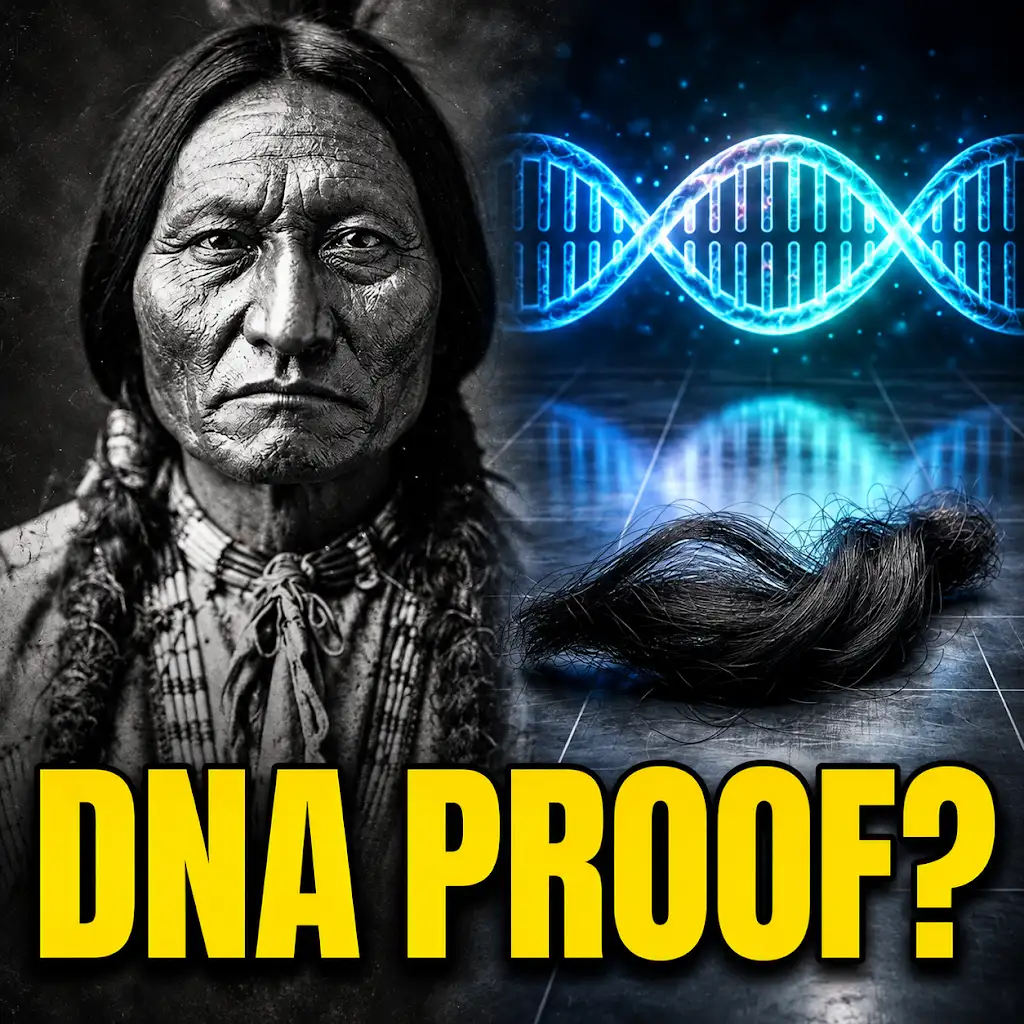
The Sitting Bull DNA Test: What Did It Actually Prove?
FAQs
1. Can DNA ancestry testing determine my exact ethnicity?
No, DNA ancestry testing can provide estimates of your ethnic background based on genetic markers, but it is not an exact science. Results can vary between different testing companies and may not always be completely accurate.
2. Are there limitations to the geographical regions that DNA ancestry testing can identify?
Yes, DNA ancestry testing is more accurate for some populations than others. Testing companies may have more data for certain regions, leading to more detailed results for those areas. Some regions may have limited data available, resulting in less precise estimates.
3. Can DNA ancestry testing determine specific tribal affiliations or Native American heritage?
While DNA ancestry testing can sometimes identify Native American ancestry, it is often challenging to pinpoint specific tribal affiliations. Many Native American tribes have not participated in genetic studies, making it difficult to establish direct connections through DNA testing alone.
4. How accurate are the estimates provided by DNA ancestry testing companies?
The accuracy of DNA ancestry testing results can vary depending on the company and the reference populations used for comparison. Estimates are typically more reliable at the continental level (e.g., European, African, Asian) than at the country or regional level.
5. Can DNA ancestry testing determine health-related information or predispositions?
Most DNA ancestry testing services focus on providing information about your genetic heritage and ethnicity. They are not designed to diagnose health conditions or provide detailed information about genetic predispositions to diseases. For health-related concerns, it is best to consult with a healthcare professional or genetic counselor.