The Smithsonian Institution, a beacon of knowledge and a repository of humanity’s most treasured artifacts, harbors an astonishingly diverse collection that extends far beyond the glittering jewels and ancient fossils commonly associated with its name. Within its hallowed halls, and in the meticulous archives of its many museums and research centers, lies a less visible, yet equally significant, scientific treasure: a vast and invaluable collection of human hair samples. This archive, meticulously curated over decades, offers an extraordinary lens through which to view the history of science, human migration, health, and environmental change. Unveiling the secrets held within these seemingly mundane strands requires sophisticated scientific analysis, revealing a tapestry of human existence woven from genetic codes, isotopic signatures, and trace elemental compositions. The Smithsonian’s hair sample history is not merely a collection of biological material; it is a living testament to human lives, a silent witness to the past, and a powerful tool for understanding our present and future.
The Genesis of a Microscopic Archive
The establishment and growth of the Smithsonian’s hair sample collection is a testament to the evolving nature of scientific inquiry and the foresight of its researchers. While the idea of collecting biological specimens for study has a long history, the deliberate accumulation of human hair as a distinct archival resource gained momentum with advancements in forensic science, genetics, and environmental monitoring. Early collections, often gathered for anthropometric studies or as part of broader anthropological surveys, provided foundational data. However, the true scientific potential of hair as an archival medium began to be recognized as analytical techniques became more sensitive, allowing for the extraction of increasingly detailed information.
Early Anthropological and Forensic Motivations
The initial impetus for collecting human hair at the Smithsonian often stemmed from the burgeoning fields of anthropology and forensic science in the late 19th and early 20th centuries. Anthropologists sought to understand human variation, racial classifications, and the physical characteristics that defined different populations. Hair, with its varying textures, colors, and densities, was a readily observable and measurable trait. Collectors, often embedded in expeditions to diverse regions of the globe, would document the provenance of samples, noting the donor’s ethnicity, geographical location, and sometimes even social status. These early collections, while perhaps lacking the rigorous scientific protocols of today, provided a critical baseline for later comparative studies. Similarly, the nascent field of forensic science recognized the potential of hair in identification. While microscopic comparison was the primary tool then, the establishment of reference collections was crucial for developing expertise and training future forensic examiners. These early efforts, though driven by different scientific questions, laid the groundwork for a more comprehensive and scientifically robust collection.
The Rise of Genetic and Isotopic Analysis
The 20th century witnessed a revolution in analytical chemistry and biology, profoundly impacting the utility of biological samples. The discovery of DNA and the subsequent development of techniques for its extraction, sequencing, and analysis transformed hair from a purely morphological subject into a rich source of genetic information. Researchers at the Smithsonian, attuned to these advancements, began to see the immense potential of their hair holdings. Beyond individual identification, DNA analysis could reveal deep ancestral lineages, migration patterns, and even susceptibility to certain genetic diseases. Concurrently, the development of mass spectrometry and other isotopic analysis techniques opened up entirely new avenues of research. Hair, growing incrementally from the scalp, acts as a chronological record of an individual’s environment and diet. Different isotopes of elements like carbon, nitrogen, oxygen, and strontium are incorporated into the hair shaft as it grows, reflecting the food consumed and the water ingested. This made hair a unique bio-archivist, capable of revealing historical dietary habits, geographical movements, and exposure to environmental contaminants. The Smithsonian’s collections, already established, became prime candidates for re-examination with these powerful new tools.
The history of hair samples and their significance in forensic science is a fascinating topic that sheds light on the evolution of investigative techniques. For those interested in exploring the intersection of technology and defense, a related article discusses the role of artificial intelligence in autonomous space defense systems. You can read more about it in this insightful piece at AI’s Role in Autonomous Space Defense.
Unlocking the Genetic Tapestry
The human genome, encoded within the DNA found in hair follicles, represents a profound reservoir of information about our ancestry, evolutionary history, and individual uniqueness. The Smithsonian’s hair sample collection, when subjected to modern genetic analysis, provides an unparalleled resource for tracing human migration patterns, understanding population genetics, and even identifying individuals in historical contexts. The ability to extract ancient DNA from preserved samples, though challenging, offers a glimpse into the genetic makeup of past populations, bridging the gap between historical records and biological reality.
Tracing Ancestral Journeys and Population Dynamics
The genetic material contained within the hair follicle, specifically the mitochondrial DNA and nuclear DNA, can be analyzed to reconstruct complex ancestral lineages. By comparing the DNA sequences from hair samples with known genetic markers, researchers can identify similarities and differences that point to shared ancestry and subsequent divergence. This allows for the mapping of ancient human migrations across continents, revealing how populations spread and intermingled over millennia. The Smithsonian’s collection, with samples from diverse geographical regions and historical periods, is invaluable for this purpose. It provides a tangible link to the past, allowing scientists to empirically test hypotheses about human dispersal, such as the peopling of the Americas or the spread of agriculture. Furthermore, by analyzing the frequency of certain genetic variants within populations represented in the collection, researchers can study population dynamics, including bottlenecks, gene flow, and adaptation to different environments. This genetic blueprint offers a profound understanding of our shared humanity and the intricate history of our species.
Forensic Applications and Historical Identification
Beyond broad genealogical studies, the genetic information within hair samples holds immense significance for forensic science and historical identification. For contemporary forensic investigations, hair remains a critical source of DNA evidence, particularly when other biological materials are scarce. The Smithsonian’s collection, containing meticulously documented samples from individuals of known provenance, can serve as a valuable reference standard for calibrating and validating forensic DNA analysis techniques. In a historical context, genetic analysis of hair samples can offer definitive identification of individuals whose remains may be ambiguous or whose identities have been lost to time. For instance, if a historical artifact is found alongside skeletal remains, or if there is uncertainty about the identity of a mummy or a famous historical figure, DNA extracted from a hair sample could provide a conclusive answer, resolving long-standing historical debates and offering a direct connection to the individual. The ability to link a hair sample to a known individual through DNA also allows for the verification of the authenticity of historical documents or artifacts associated with that person.
The Isotopic Fingerprint of Life
Hair, as it grows, incorporates elements and isotopes from an individual’s diet and environment. This process transforms each strand into a unique bio-archivist, recording dietary habits, geographical movements, and even exposure to toxins over the period of its growth. The Smithsonian’s collection, when analyzed for isotopic composition, provides a powerful tool for reconstructing past lifestyles and understanding environmental changes.
Reconstructing Diets and Lifestyle Patterns
The stable isotopes of carbon and nitrogen, for example, are directly influenced by the types of food consumed. Different food sources, such as terrestrial plants versus marine organisms, or grains versus animal products, have distinct isotopic signatures. By analyzing the carbon and nitrogen isotope ratios in different segments of a hair sample, scientists can create a chronological profile of an individual’s diet throughout the hair’s growth period. This allows for the reconstruction of dietary shifts over time, revealing information about changes in food availability, agricultural practices, or cultural food preferences. For example, a shift in nitrogen isotopes might indicate a move from a predominantly plant-based diet to one rich in animal protein, or vice-versa. Similarly, strontium isotopes can reveal geographical movements, as the strontium signature in soil and water varies by region. By analyzing strontium isotopes in hair, researchers can determine if an individual spent their childhood in one location and later moved to another, offering insights into migration patterns and trade routes. These isotopic analyses provide a level of detail about past human lives that is often unattainable through traditional historical records.
Environmental Monitoring and Toxin Detection
Beyond diet and migration, hair’s ability to incorporate environmental elements makes it a sensitive indicator of pollution and exposure to toxins. Elements such as lead, mercury, arsenic, and cadmium can be absorbed into the body and subsequently deposited in hair as it grows. The concentration of these elements in different segments of a hair sample can therefore provide a historical record of an individual’s exposure to environmental contaminants. This is particularly valuable for studying historical pollution events, understanding the impact of industrialization on human health, and assessing the long-term effects of exposure to specific toxins. The Smithsonian’s collection, with samples spanning different historical periods and geographical locations, can be used to track the rise and fall of certain pollutants in the environment. For instance, analyzing lead levels in hair samples from different centuries could reveal periods of increased lead exposure, perhaps linked to the use of leaded paints or the widespread use of lead in plumbing and cookware. This environmental detective work, enabled by isotopic analysis of hair, offers crucial insights into the complex interplay between human activity and environmental health.
The Microscopic Landscape Within
Long before the advent of sophisticated genetic and isotopic analysis, the microscopic examination of hair provided valuable scientific insights. The physical characteristics of hair – its structure, morphology, and pigmentation – offered clues about an individual’s biology, health, and even environmental exposures. The Smithsonian’s historical collections, rich in such morphological data, continue to inform our understanding of hair as a biological tissue.
Microscopic Morphology and Forensic Significance
The study of hair under a microscope, known as trichology, has a long-standing history in both scientific research and forensic investigation. Variations in hair shaft diameter, cuticle patterns (the outer layer of the hair), medullary structure (the central core), and pigment distribution can all be characteristic of different species, races, and even individuals. Forensic scientists have historically relied on microscopic hair analysis to link suspects to crime scenes. The Smithsonian’s collections, containing meticulously documented hair samples, serve as an invaluable repository of these microscopic variations. Researchers can use these historical samples to develop and refine microscopic identification techniques, train new forensic examiners, and conduct comparative studies. Furthermore, observing changes in hair morphology can sometimes indicate underlying health conditions. For example, certain diseases can cause hair to become brittle, thinning, or to exhibit unusual growth patterns, all of which can be observed microscopically.
Trace Elements and Their Implications
Beyond the major elemental composition revealed by isotopic analysis, the presence of trace elements within the hair shaft can also hold significant scientific information. These trace elements, often present in minute quantities, can be indicative of dietary deficiencies or excesses, exposure to specific industrial processes, or even the presence of certain medical conditions. Early analytical techniques might have focused on more abundant elements, but as analytical sensitivity has increased, the study of trace elements in hair has become more precise. The Smithsonian’s archives provide a historical baseline for understanding trace element concentrations in human populations over time. Comparing trace element profiles in hair samples from different eras could reveal changes in dietary mineral intake, shifts in environmental exposure to specific metals due to industrial development, or the impact of public health interventions aimed at addressing mineral deficiencies. This microscopic world of trace elements, captured within the hair shaft, offers another layer of scientific revelation.
The history of hair samples in the context of scientific research is a fascinating topic that intersects with various fields, including anthropology and chemistry. A related article explores the intriguing properties of Egyptian blue pigment, which has captivated researchers for centuries. This pigment not only reveals insights into ancient art but also sheds light on the materials and techniques used by early civilizations. For a deeper understanding of this subject, you can read more about it in the article on Egyptian blue pigment found here: Egyptian blue pigment.
Preserving a Legacy of Scientific Discovery
| Year | Sample Type | Origin | Purpose | Notable Findings |
|---|---|---|---|---|
| 1890 | Human Hair | Native American Tribes | Anthropological Study | Documented hair texture and color variations among tribes |
| 1925 | Animal Hair | North American Wildlife | Taxonomy and Species Identification | Helped classify new species based on hair morphology |
| 1950 | Human Hair | Global Collection | Genetic and Chemical Analysis | Early insights into population migration patterns |
| 1980 | Hair Samples | Archaeological Sites | Historical and Environmental Research | Revealed diet and environmental exposure of ancient peoples |
| 2005 | Human Hair | Modern Populations | Forensic and Toxicology Studies | Advanced understanding of pollutant accumulation in hair |
The long-term preservation and accessibility of the Smithsonian’s hair sample collection are paramount to its continued scientific value. Rigorous archival practices, coupled with ongoing digitization and data management efforts, ensure that these invaluable resources remain available for future generations of researchers. The very act of preserving these samples is a commitment to ongoing scientific inquiry and a recognition of the profound historical and biological insights they contain.
Archival Best Practices and Specimen Integrity
Maintaining the integrity of a biological collection as diverse and historical as the Smithsonian’s hair samples requires a sophisticated understanding of archival science and conservation. Specialized storage conditions, including controlled temperature and humidity, are essential to prevent degradation of the DNA, proteins, and other molecular components within the hair. Proper labeling, cataloging, and documentation are crucial, ensuring that each sample is accurately identified, its provenance is recorded, and its associated metadata is readily accessible. This includes detailed information about the donor, the date and location of collection, and any relevant contextual data. The Smithsonian employs rigorous protocols for specimen handling, pest control, and environmental monitoring to safeguard the collection from damage or contamination. These practices are not merely administrative; they are fundamental to the scientific utility of the collection, ensuring that the data derived from these samples is reliable and reproducible.
Digital Curation and Research Accessibility
In the digital age, the accessibility of historical collections is greatly enhanced through digitization and robust data management systems. The Smithsonian is actively engaged in creating digital records for its hair sample collection, which can include high-resolution images, genetic data, isotopic analyses, and detailed descriptive information. This digital curation allows researchers from around the globe to access and analyze the collection without the need for physical travel, thereby accelerating the pace of scientific discovery. Databases are developed to facilitate searching and querying the collection based on various criteria, such as geographical origin, historical period, or specific analytical data. Furthermore, the Smithsonian often collaborates with external researchers, providing access to samples and data under established protocols. This commitment to open science and data sharing ensures that the legacy of scientific discovery embedded within the hair sample collection continues to benefit the broader scientific community and contribute to our understanding of humanity and its place in the world.
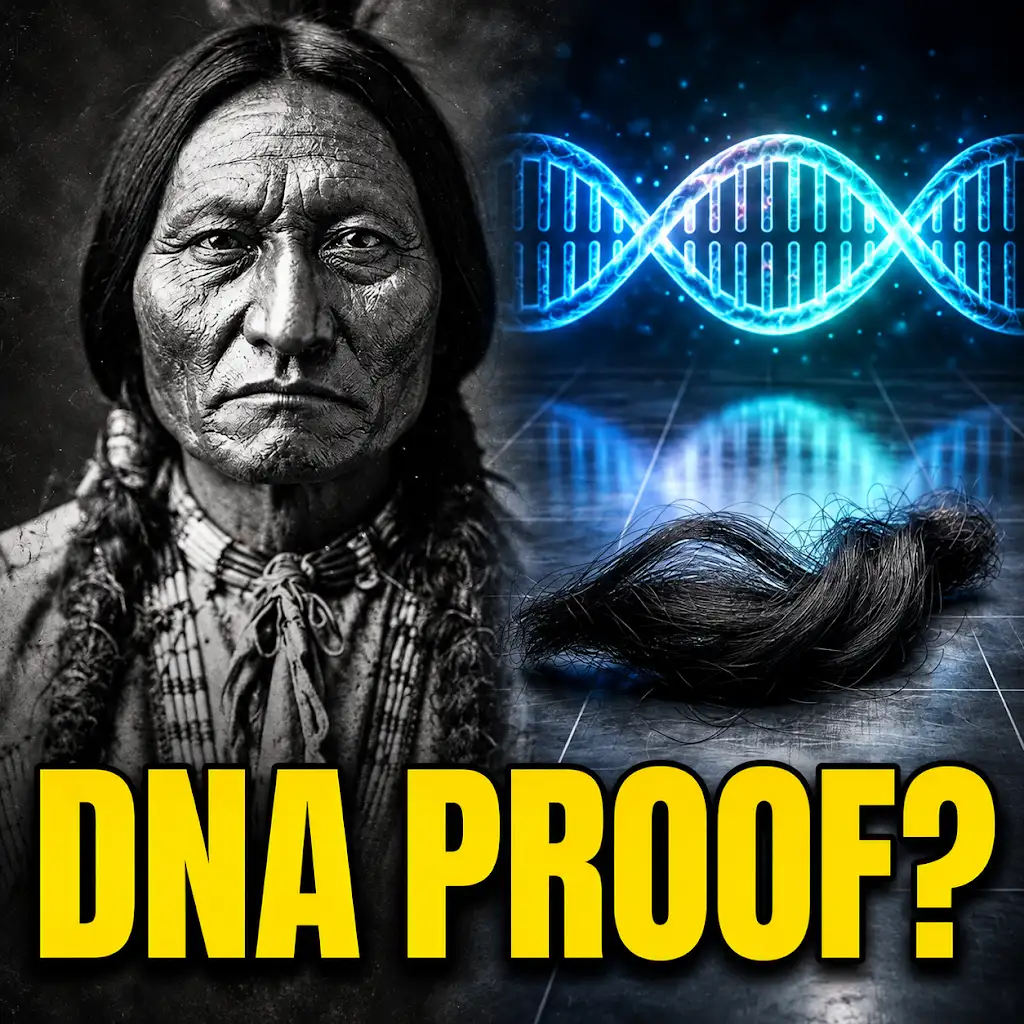
The Sitting Bull DNA Test: What Did It Actually Prove?
FAQs
What is the significance of hair samples in the Smithsonian’s collection?
Hair samples in the Smithsonian’s collection provide valuable information about historical figures, including their diet, health, and exposure to environmental factors.
How are hair samples preserved and stored at the Smithsonian?
Hair samples at the Smithsonian are typically stored in a controlled environment with low humidity and temperature to prevent degradation. They are often sealed in airtight containers to protect them from light and oxygen.
Can researchers request access to study hair samples in the Smithsonian’s collection?
Yes, researchers can request access to study hair samples in the Smithsonian’s collection for scientific purposes. However, access is typically granted under strict guidelines to ensure the preservation of the samples.
What famous historical figures’ hair samples are included in the Smithsonian’s collection?
The Smithsonian’s collection includes hair samples from notable figures such as Abraham Lincoln, George Washington, and Thomas Jefferson, providing insights into their lives and health.
How do hair samples contribute to our understanding of history and science?
Hair samples offer a unique perspective on historical figures by revealing details about their lifestyle, diet, and exposure to toxins. They also provide valuable data for scientific research on topics such as genetics and environmental impact.