The allure of uncovering one’s ancestry has captivated individuals for generations. For many, the journey begins with family stories, old photographs, and dusty census records. However, in the modern age, a powerful new tool has emerged that promises to revolutionize the way family historians approach their research: DNA testing. These tests, once confined to forensic science and medical diagnostics, are now readily available to the public, offering a scientific approach to genealogical proof that can complement and, in some cases, definitively confirm traditional research. This article will explore the multifaceted role of DNA testing in family research, delving into its strengths, limitations, and the critical considerations for utilizing its findings to build reliable genealogical proof.
The Science Behind Ancestry DNA Testing
The foundation of genealogical DNA testing lies in understanding the unique patterns of our genetic code. Our DNA, a blueprint for life, is passed down from parents to offspring with remarkable consistency, yet with subtle variations that accumulate over time and across generations. These variations, particularly in segments of DNA inherited from our ancestors, form the basis for identifying ancestral origins and relationships.
Mitochondrial DNA (mtDNA): Tracing the Maternal Line
Mitochondrial DNA, as its name suggests, resides within the mitochondria of our cells, separate from the nuclear DNA that makes up the bulk of our genetic material. A crucial characteristic of mtDNA is that it is almost exclusively inherited from the mother. This means that an individual’s mtDNA sequence can be traced directly back through their maternal ancestors – mother, maternal grandmother, maternal great-grandmother, and so on – without the intermingling of paternal genetic material.
The utility of mtDNA lies in its ability to provide a long-term perspective on maternal lineage. Because it mutates at a relatively slow rate, mtDNA can be used to track deep ancestral migrations and identify broad haplogroups that represent ancestral populations from tens of thousands of years ago. For genealogists, this can be invaluable for understanding the ancient origins of their maternal line and connecting with communities of individuals who share the same ancient maternal ancestor. However, mtDNA does not provide specific names or dates of individual maternal ancestors beyond the immediate maternal line. Its strength is in establishing deep ancestral connections rather than pinpointing specific familial relationships in recent centuries.
Y-Chromosome DNA (Y-DNA): Unraveling the Paternal Thread
In contrast to mtDNA, Y-chromosome DNA is found exclusively on the Y chromosome, which is present only in biological males. This chromosome is passed down directly from father to son, much like a surname. Therefore, Y-DNA testing can trace an individual’s direct paternal lineage – father, paternal grandfather, paternal great-grandfather, and so forth.
Y-DNA testing is particularly powerful for surname research. If a particular surname is associated with a distinct Y-DNA haplogroup, then individuals sharing that haplogroup are highly likely to share a common paternal ancestor and, therefore, a common surname. This can be instrumental in breaking through “brick walls” in research, confirming or refuting surname origins, and identifying previously unknown paternal relatives. Like mtDNA, Y-DNA mutates at a relatively slow rate, allowing for the tracing of ancient paternal migrations and the identification of deep ancestral haplogroups. However, it is important to remember that Y-DNA is only applicable to males and only traces the paternal line.
Autosomal DNA (atDNA): The Broadest Ancestral Picture
Autosomal DNA is the most abundant type of DNA in our cells and is inherited equally from both parents. It constitutes approximately 99% of an individual’s DNA and is present in 22 pairs of chromosomes, excluding the sex chromosomes (X and Y). Because we inherit half of our autosomal DNA from our mother and half from our father, atDNA tests provide a comprehensive overview of our entire ancestry, encompassing all lines of descent.
The key advantage of autosomal DNA testing is its ability to identify relatives across all branches of the family tree, typically within the last five to seven generations. When two individuals share a segment of autosomal DNA, it is a strong indication that they share a common ancestor. Genetic genealogy companies analyze these shared DNA segments and provide a list of potential genetic relatives, along with estimates of the genealogical distance between them (e.g., second cousin, third cousin once removed). This makes atDNA testing the most versatile tool for contemporary genealogical research, enabling the discovery of living relatives, corroboration of paper trails, and the identification of new avenues for investigation.
If you’re interested in exploring the implications of DNA testing for genealogical proof, you might find it insightful to read an article that discusses the importance of safeguarding personal assets and information in today’s world. This article highlights various strategies for protecting what is rightfully yours, which can be particularly relevant when considering the sensitive nature of genetic data. You can read more about this topic in the article titled “Protecting Your Gold: Safeguarding Against Government Seizure” at this link.
Leveraging DNA Matches for Genealogical Proof
The raw data generated by a DNA test is only the starting point. The real power of DNA in genealogical research lies in interpreting the results, particularly the matches to other individuals who have also tested. Building reliable genealogical proof requires a systematic approach to analyzing these matches and integrating them with traditional research methods.
Understanding the Significance of DNA Matches
When a DNA testing company provides a list of genetic matches, it’s important to understand what this signifies. A DNA match indicates that you and another individual share a common ancestor. The length and number of shared DNA segments are key indicators of the closeness of the relationship. Longer and more numerous shared segments generally suggest a more recent common ancestor.
Genetic genealogy platforms often provide estimates of the genealogical relationship based on these shared segments. For instance, a match might be categorized as a “first cousin,” “second cousin,” or “third cousin.” It’s crucial to remember that these are estimations and can sometimes be slightly off due to the inherent variability in DNA inheritance. A match estimated as a “second cousin” could, in reality, be a first cousin once removed, or vice versa. Therefore, these estimations should be treated as valuable clues rather than definitive pronouncements.
Deducing Relationships with Close Matches
For close matches, such as those estimated as first or second cousins, the process of confirming the relationship can be relatively straightforward. If you share a significant amount of DNA with someone and they are identified as a potential first cousin, the next step is to compare your known family trees. If your trees align to reveal a shared set of grandparents or great-grandparents, the relationship is likely confirmed.
Sometimes, even with close matches, there might be an initial disconnect. This is where the power of collaborative genealogy comes into play. By communicating with your DNA matches, you can share information about your known ancestors. Often, a match might have documentation or family stories that can help bridge the gap and clarify the precise relationship. For example, if you both share a grandparent, but one of you has a different maternal grandmother listed in your tree, this discrepancy can become a focus for further investigation, potentially uncovering an undocumented adoption, a remarriage, or even an error in previous genealogical work.
Strategies for Identifying Common Ancestors with Distant Matches
Working with distant DNA matches presents a greater challenge but can be incredibly rewarding. When you have a large number of distant matches, the key is to identify a common ancestor among them. This is where the use of surname and location information becomes critical.
One effective strategy is to examine the shared matches between your DNA matches. If you and another match both share DNA with a third individual, and you can both identify a common ancestral couple in your respective family trees, this provides strong evidence of a shared ancestor between you and that third individual. This process is often referred to as “triangulation.”
Another powerful technique is to examine the ancestral surnames and locations reported in the family trees of your matches. If several distant matches who share DNA with you also have ancestors with the same uncommon surname from the same small village, this is a significant clue pointing towards a common ancestral line. By systematically comparing the surnames and locations in the trees of your matches, you can begin to identify clusters of individuals who likely descend from a particular ancestral couple.
The Importance of Shared Ancestral Surnames and Locations
While DNA itself indicates a genetic link, ancestral surnames and geographic locations act as the genealogical keys that unlock the identity of the common ancestor. When a DNA match provides access to a family tree, meticulously examining the surnames and the geographic origins of ancestors is paramount.
An uncommon surname appearing in multiple family trees of your DNA matches, especially if those individuals all share DNA with you, is a strong indicator of a shared paternal or maternal line. Similarly, a cluster of matches with ancestors from a specific, historically isolated village or region can point to a common ancestral couple who lived and married within that area. This information, when combined with the DNA evidence, can significantly narrow down the possibilities and guide traditional research efforts towards specific individuals and time periods.
Integrating DNA Evidence with Traditional Genealogy
The most robust genealogical proof is achieved when DNA evidence is seamlessly integrated with traditional research methods. DNA is a powerful tool for identifying potential relationships and suggesting new research avenues, but it rarely stands alone as definitive proof of a specific genealogical claim without corroboration.
Cross-Referencing DNA with Documented Records
The cornerstone of reliable genealogical proof is the cross-referencing of DNA findings with historical documents. Once DNA testing suggests a particular ancestor or relationship, the next crucial step is to find documentary evidence that supports this hypothesis. This evidence can include birth, marriage, and death certificates, census records, wills, land deeds, obituaries, and family Bibles.
For instance, if a DNA match suggests a particular maternal grandmother, the genealogist would then search for records related to that grandmother. Finding her birth record, marriage license, and death certificate, and ensuring that these records align with the expected family structure, would provide strong documentary support for the DNA-informed hypothesis. Conversely, if the documentary evidence contradicts the DNA findings, it necessitates a deeper investigation into potential errors in either the DNA interpretation or the existing documentation.
Utilizing DNA to Break Through “Brick Walls”
One of the most significant contributions of DNA testing to genealogy is its ability to overcome “brick walls” – those genealogical puzzles that traditional research methods cannot solve. When all documentary avenues have been exhausted and an ancestor’s parentage remains unknown, DNA testing can provide invaluable clues.
By testing with multiple individuals who share a common, documented ancestor, and then comparing their DNA results, genealogists can often identify other individuals in the DNA database who share DNA with multiple members of that documented family. This suggests that these new individuals also descend from the same unknown ancestor. By examining the surnames and locations associated with these new matches, researchers can formulate hypotheses about the identity of the missing parent or grandparents and then embark on a targeted documentary search to confirm these theories.
The Role of DNA in Verifying or Refuting Family Trees
Family trees, passed down through generations or painstakingly constructed by researchers, can contain errors, omissions, or even fabrications. DNA testing offers an objective means of verifying the accuracy of these trees. When a DNA match is identified, and the corresponding family trees are compared, any discrepancies can be highlighted.
If a DNA match appears to be a second cousin, but the family trees indicate a relationship of fifth cousin once removed, this discrepancy signals a potential error in one of the trees. By investigating the point of divergence in the trees and focusing research on the ancestors involved in that specific branch, the genealogist can pinpoint the error and correct the family tree. Similarly, if a DNA match strongly suggests a specific paternal lineage, but the documented family tree claims a different paternal ancestor, the DNA evidence can prompt a thorough re-evaluation of the existing documentation and potentially lead to the discovery of the correct paternal line.
Ethical Considerations and Best Practices in DNA Genealogy
As with any powerful tool, the use of DNA testing in genealogy comes with ethical considerations and requires adherence to best practices to ensure responsible and accurate research. Understanding these aspects is crucial for both the individual testing and for the broader genealogical community.
Privacy and Data Security
The genetic information contained within a DNA sample is highly personal and sensitive. When submitting a DNA sample to a commercial testing company, individuals are entrusting their genetic data to that organization. It is therefore imperative to understand the privacy policies of the chosen testing service. Key questions to consider include:
- Data Ownership: Who owns the genetic data submitted? Is it the individual, or does it transfer ownership to the company?
- Data Usage: How will the company use the genetic data? Will it be used for research purposes? Will it be shared with third parties?
- Data Security: What measures are in place to protect the genetic data from unauthorized access or breaches?
- Data Deletion: Is it possible to request the deletion of genetic data and the physical sample?
Choosing companies with robust privacy policies and a commitment to data security is essential. Furthermore, individuals should be mindful of the information they share when communicating with DNA matches.
Respecting the Privacy of DNA Matches
When a DNA test reveals a match, it signifies a genetic connection to another individual. However, this connection does not grant unrestricted access to that individual’s personal information or their family history. It is crucial to approach DNA matches with respect for their privacy.
When contacting a DNA match, it is advisable to:
- Introduce yourself clearly: State your name and that you are a fellow DNA tester.
- Explain your purpose: Briefly mention that you are researching your family tree and noticed you are a genetic match.
- Ask for permission: Before sharing any information about their family or requesting details, ask if they are comfortable with this exchange.
- Be transparent about your own tree: Share relevant parts of your family tree to help them identify the potential common ancestor.
- Respect their boundaries: If a match is unwilling to share information or participate in research, respect their decision.
Remember, your DNA match has the same rights to privacy as you do. Building collaborative relationships based on mutual respect is key to successful genealogical research.
Navigating Consanguineous Relationships and Sensitive Discoveries
DNA testing can sometimes reveal unexpected or sensitive information, such as consanguineous relationships (relationships between closely related individuals) or the presence of genetic markers associated with certain health conditions. It is important to be prepared for these possibilities.
- Consanguinity: In some family trees, particularly in isolated communities or historical periods, it was not uncommon for cousins to marry. DNA testing can sometimes reveal closer relationships than expected, indicating a degree of shared DNA from multiple lines of descent. This is not necessarily a cause for alarm but requires careful interpretation and may necessitate further research to understand the specific family structures involved.
- Sensitive Discoveries: DNA testing can also uncover information about unknown parentage, adoptions, or even predispositions to certain genetic conditions. It is vital to approach such discoveries with empathy and sensitivity. If you are the one making a sensitive discovery about someone else’s family tree, consider the impact of sharing this information and proceed with caution and respect. If a DNA match reveals such information about your own lineage, it may be beneficial to seek support from genetic counselors or experienced genealogists to help process and understand the findings.
DNA testing has become an increasingly popular method for individuals seeking genealogical proof of their ancestry, providing insights that traditional records may not reveal. For those interested in exploring the complexities of historical narratives and how they intertwine with personal lineage, a related article delves into the intricacies of understanding our past. You can read more about this fascinating topic in the article Cracking the Hidden Rulebook of History, which offers a deeper perspective on the connections between genetics and historical events.
The Future of DNA in Genealogical Research
| Metric | Description | Typical Range/Value | Relevance to Genealogical Proof |
|---|---|---|---|
| Test Type | Type of DNA test used for genealogy | Autosomal, Y-DNA, mtDNA | Determines lineage and relationship type |
| Markers Tested | Number of genetic markers analyzed | Autosomal: 700,000+ SNPs; Y-DNA: 37-111 STRs; mtDNA: Full sequence or HVR regions | Higher marker count increases accuracy of matches |
| Match Confidence | Probability that a DNA match is a true relative | Typically 90-99% for close relatives | Supports genealogical relationship claims |
| Centimorgans Shared (cM) | Amount of DNA shared between two individuals | Ranges from 0 to 3400+ cM | Helps estimate degree of relatedness |
| Generations to Most Recent Common Ancestor (MRCA) | Estimated number of generations back to shared ancestor | 1 to 10+ generations | Key for placing DNA evidence in genealogical context |
| False Positive Rate | Likelihood of a DNA match being coincidental | Less than 1% for close matches | Important for validating genealogical proof |
| Database Size | Number of individuals in the testing company’s database | Millions of profiles | Increases chance of finding relevant matches |
| Ethnicity Estimate Accuracy | Precision of ancestral origin percentages | Varies; generally 70-90% accuracy | Provides context but less critical for proof |
The field of genetic genealogy is constantly evolving, with advancements in technology and analysis methods continually expanding the possibilities and improving the accuracy of DNA testing for family research.
Advancements in DNA Analysis and Interpretation
The technology behind DNA testing is becoming more sophisticated. Companies are continuously refining their algorithms for DNA matching, improving the accuracy of relationship estimations, and developing new tools for analyzing complex genetic data. These advancements are leading to:
- More precise relationship predictions: Future algorithms are likely to provide even more accurate estimations of genealogical relationships, reducing the ambiguity and improving the efficiency of research.
- Enhanced haplogroup analysis: Deeper understanding of haplogroup mutations and distributions will allow for more granular insights into deep ancestral migrations and origins.
- Improved tools for endogamy and inbreeding detection: As the databases grow, companies are developing better tools to help users navigate research in endogamous populations (where ancestors married within a relatively small group) and to identify potential instances of inbreeding.
The Growing Importance of DNA Databases
The power of DNA testing for genealogical research is directly proportional to the size and diversity of the DNA databases. As more individuals submit their DNA, the chances of finding meaningful matches increase exponentially. This growth fuels a virtuous cycle: larger databases lead to more matches, which in turn encourages more people to test, further expanding the databases.
The increasing size of these databases also allows for more refined phylogenetic analysis. By comparing the DNA of millions of individuals, researchers can gain a more comprehensive understanding of human migration patterns, genetic variation across populations, and the intricate relationships between different ancestral groups. For genealogists, this translates to more potential connections and a richer tapestry of ancestral discovery.
The Symbiotic Relationship Between DNA and Traditional Genealogy
The future of genealogical research is not one of DNA replacing traditional methods, but rather one of symbiosis. DNA testing will continue to serve as a powerful catalyst, guiding researchers toward specific ancestral lines and providing objective evidence. Traditional documentary research will remain essential for confirming these findings, providing names, dates, and the rich narrative of our ancestors’ lives.
The most successful genealogists will be those who embrace both approaches. They will use DNA to identify potential relationships and break through barriers, and then employ meticulous documentary research to build a solid foundation of genealogical proof. This integrated approach ensures that the stories we uncover about our families are not only scientifically supported but also deeply and historically grounded. The journey of genealogical discovery, enhanced by the scientific precision of DNA testing, promises to be more insightful, accurate, and ultimately, more fulfilling than ever before.
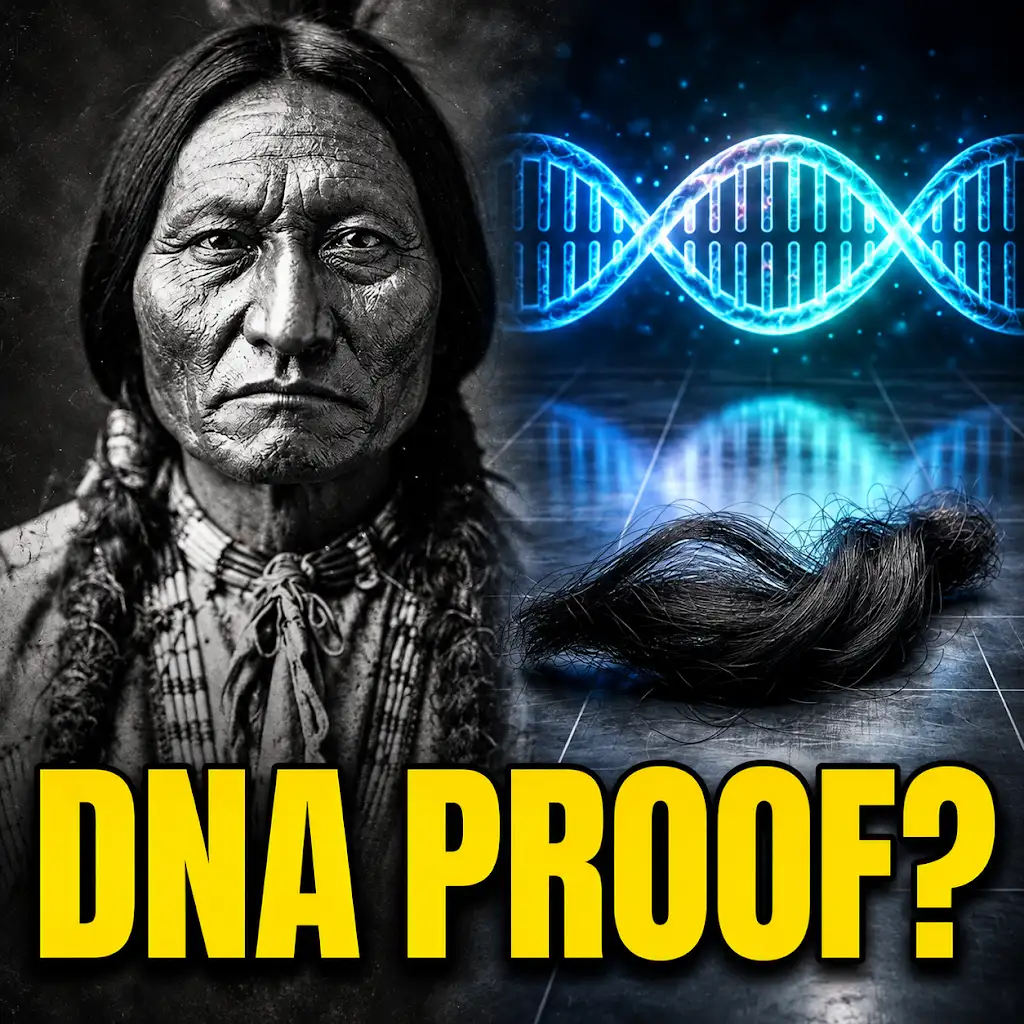
The Sitting Bull DNA Test: What Did It Actually Prove?
FAQs
What is a DNA test for genealogical proof?
A DNA test for genealogical proof is a test that analyzes an individual’s DNA to provide information about their ancestry and genealogy. It can help confirm relationships, uncover ethnic origins, and connect with distant relatives.
How does a DNA test for genealogical proof work?
A DNA test for genealogical proof typically involves collecting a sample of saliva or cheek cells from the individual. The DNA is then analyzed to identify specific markers that are compared to databases to determine genetic matches with other individuals.
What can a DNA test for genealogical proof reveal?
A DNA test for genealogical proof can reveal information about an individual’s ethnic background, ancestral origins, and potential genetic relatives. It can also confirm or refute relationships with known family members and help trace family migration patterns.
Are DNA tests for genealogical proof accurate?
DNA tests for genealogical proof are generally considered to be accurate, especially when conducted by reputable companies using reliable testing methods. However, the accuracy of the results can vary depending on the quality of the testing company and the size of their DNA database.
What are the benefits of taking a DNA test for genealogical proof?
Some benefits of taking a DNA test for genealogical proof include discovering unknown relatives, confirming or disproving family stories or legends, breaking through genealogical brick walls, and gaining a deeper understanding of one’s genetic heritage.