
The ingenuity of ancient civilizations often surfaces in their remarkable feats of engineering, none more vital to their survival and prosperity than their ability to manage water. Among the most sophisticated and enduring of these water management systems are the qanats, a testament to human ingenuity in arid and semi-arid regions. These underground aqueducts, stretching for miles, represent a profound understanding of hydrology, geology, and social organization, a system that not only delivered water but fostered community and sustained life for millennia. The concept of the qanat, originating in Persia, has spread across continents, adapted and modified by various cultures, yet retaining its core principle: gravity-driven water transport from subterranean sources to the surface, minimizing evaporation and contamination.
The Genesis of the Qanat: A Response to Arid Landscapes
The historical and geographical context surrounding the development of the qanat system is crucial to understanding its significance. Many of the regions where qanats flourished, such as Iran, the Arabian Peninsula, North Africa, and parts of Central Asia, are characterized by low rainfall and scarce surface water resources. The challenge of sustaining agriculture and urban populations in such environments necessitated innovative solutions, and the qanat emerged as a particularly effective one. Its development was not a sudden invention but rather a gradual refinement of existing water-gathering techniques, building upon a long tradition of water management that likely began with simple wells and surface channels. The transition to underground channels provided a significant advantage by protecting the precious water from the harsh desert sun, which would otherwise lead to substantial evaporation losses.
Early Water Management Practices
Before the advent of the qanat, communities relied on more rudimentary methods for water acquisition. These included digging wells to tap into shallow groundwater tables, collecting rainwater in cisterns, and constructing open-air canals to divert surface water from rivers and springs. While these methods could be effective in areas with more abundant water, they were vulnerable to drought, contamination, and significant water loss through evaporation, especially in hot climates. The limitations of these traditional approaches created a compelling need for a more reliable and efficient water supply system, laying the groundwork for the development of more complex technologies.
The Persian Cradle of Innovation
The most widely accepted theory places the origin of the qanat system in ancient Persia, likely around the 8th century BCE, during the Achaemenid Empire. The Persian plateau, with its vast desert expanses and high mountain ranges, presented ideal conditions for the development of such an engineering marvel. The mountains acted as natural catchments, accumulating rainfall and snowmelt that would then seep into the ground, forming underground aquifers. The Persians, with their advanced understanding of engineering and their imperative to cultivate arable land in otherwise inhospitable terrain, developed the qanat as a means to tap into these hidden water reserves. This innovation was not merely technological; it also involved sophisticated social and administrative structures to manage the construction, maintenance, and equitable distribution of water.
The ancient qanat water distribution system has been a remarkable engineering achievement that allowed civilizations to thrive in arid regions by transporting water from underground aquifers to the surface. For a fascinating exploration of innovative resource management and defense strategies in extreme environments, you can read the article on lunar base defense systems, which discusses how similar principles of resource distribution might be applied in extraterrestrial settings. Check it out here: Securing the Moon: Lunar Base Defense Strategies and Systems.
The Architecture of an Underground River: How Qanats Function
At its core, a qanat is a masterpiece of passive hydraulic engineering. It leverages the simple, yet profound, principle of gravity to move water from its underground source to where it is needed, typically for irrigation or domestic use. The system’s design is elegant in its simplicity, yet complex in its execution, requiring meticulous planning and construction. Each component plays a vital role in the successful operation of the entire network, ensuring a continuous and reliable water flow. The underground nature of the qanat is its most significant distinguishing feature, offering protection from the elements and preventing water loss.
Tapping the Water Table: The Mother Well and Tunnels
The construction of a qanat begins with identifying an aquifer, usually located in elevated terrain where groundwater accumulates. This is achieved through careful geological observation and exploration. Once a suitable location is found, a vertical shaft, known as a “mother well” or “wellhead,” is dug to reach the water table. This mother well serves as the starting point of the qanat and is often the deepest of the vertical shafts. From this initial well, construction proceeds horizontally, digging a gently sloping tunnel called a “gallery” or “qanat tunnel.” This tunnel is carefully graded to ensure a continuous flow of water downhill, driven solely by gravity. The gradient is critical; too steep, and the water flows too quickly, causing erosion and potential collapse; too shallow, and the water will not flow at all.
The Network of Vertical Shafts: Ventilation and Maintenance
Interspersed along the length of the qanat tunnel are numerous vertical shafts, often referred to as “access wells” or “ventilation shafts.” These shafts serve multiple crucial purposes. Firstly, they provide ventilation to the workers digging the tunnel, allowing for air circulation and preventing suffocation in the confined underground space. Secondly, they are essential for the removal of excavated soil and debris during construction. Thirdly, and perhaps most importantly, these shafts facilitate the ongoing maintenance and repair of the qanat. Without them, cleaning out sediment accumulation, repairing collapsed sections, or inspecting the integrity of the tunnel would be virtually impossible. The spacing of these shafts is determined by factors such as the depth of the tunnel, the geology of the surrounding soil, and the need for efficient debris removal.
The qanat water distribution system, an ingenious method developed in ancient times, showcases the remarkable engineering skills of early civilizations in arid regions. This ancient technique, which involves a series of underground channels to transport water from aquifers to the surface, has been crucial for agriculture and settlement in dry areas. For a deeper understanding of how such advanced systems were part of broader ancient innovations, you can explore this related article that delves into the evidence of ancient advanced civilizations. Check it out here.
The Outlet and Distribution: Bringing Water to the Surface
The qanat tunnel terminates at an outlet or discharge point on the surface, typically in an agricultural area or a settlement. This outlet is often a well-like structure from which the water emerges. From this point, the water is then channeled, usually through smaller open surface ditches or a series of secondary underground pipes, to irrigate fields, fill cisterns, or supply homes. The system is designed to deliver water in a controlled manner, with mechanisms in place to regulate the flow and ensure equitable distribution among users, a vital aspect for community harmony and agricultural productivity.
The Social and Economic Fabric Woven by Qanats
The construction and maintenance of a qanat were not solely technical endeavors; they were deeply intertwined with the social and economic structures of the communities they served. The massive undertaking required significant labor, coordination, and long-term commitment, fostering a unique sense of collective responsibility and interdependence. The equitable distribution of water was a cornerstone of qanat management, directly impacting the prosperity and stability of the society.
Collective Effort and Community Ownership
Building a qanat was a monumental undertaking that demanded the cooperation of an entire community or a consortium of landowners. The initial investment in labor and resources was immense, often spread over many years. This shared endeavor naturally led to a sense of collective ownership and responsibility for the qanat’s upkeep. The success of the entire system depended on the diligent work of all involved, from the well-diggers to the maintenance crews. This shared commitment fostered strong social bonds and a deep respect for the water source that sustained their lives.
Water Rights and Equitable Distribution
The equitable distribution of water was perhaps the most crucial aspect of qanat management, often formalized through intricate water laws and customs. Since water was a scarce and precious resource, disputes over its allocation could easily arise. To prevent conflict and ensure fairness, communities developed sophisticated systems for dividing water rights. These systems were often based on factors such as the proportion of land owned, the amount of labor contributed to the qanat’s construction and maintenance, or historical precedent. Water was often allocated in specific time slots or quantities, and elaborate mechanisms, such as water wheels or measuring devices, were used to ensure adherence to these agreements. This meticulous management of water rights was fundamental to the long-term sustainability and social harmony of qanat-dependent communities.
Agricultural Productivity and Economic Flourishing
The reliable supply of water provided by qanats transformed arid landscapes into fertile agricultural lands. This allowed for the cultivation of a wider range of crops, leading to increased food production, population growth, and economic prosperity. Qanats enabled settled agriculture in areas that would otherwise have been limited to pastoralism or sporadic rainfall-dependent farming. This increased agricultural output not only sustained the local population but also generated surpluses that could be traded, contributing to the development of regional economies and the growth of towns and cities. The ability to control and distribute water effectively was a key factor in the rise of many ancient civilizations.
The Legacy of the Qanat: Enduring Influence and Modern Relevance
Despite the advent of modern irrigation technologies, qanats continue to play a vital role in many parts of the world. Their enduring presence is a testament to their ingenious design and their ability to function sustainably with minimal energy input. Moreover, the principles behind qanat construction and management offer valuable lessons for contemporary water resource challenges, particularly in arid regions facing increasing water scarcity and the impacts of climate change.
Surviving the Test of Time: Enduring Structures
Many qanats, even those constructed centuries ago, are still in operation today, a remarkable feat of ancient engineering. Their resilience is a testament to the quality of their construction, the careful selection of materials, and the ongoing efforts of communities to maintain them. While some have fallen into disrepair due to neglect, conflict, or the introduction of more modern infrastructure, a significant number remain functional, providing a critical water source for millions. These surviving qanats are not just historical relics; they are living examples of sustainable water management practices.
Qanats in the Modern World: Adaptation and Challenges
In contemporary times, qanats face a complex array of challenges. The expansion of modern irrigation technologies, such as electric pumps and large-scale canal systems, has sometimes led to the abandonment of traditional qanats. However, in many instances, qanats are being recognized for their sustainability, particularly in areas where energy costs for pumping are high or where large-scale infrastructure is not feasible. Efforts are underway in countries like Iran and Oman to preserve, restore, and even revitalize qanat systems. These initiatives often involve modernizing aspects of maintenance and distribution while respecting the traditional engineering and social structures. Challenges include securing funding for maintenance, managing competing water demands, and addressing potential contamination issues from overlying land use.
Lessons for Sustainable Water Management
The qanat system offers invaluable lessons for modern water management, especially in the face of global water scarcity and climate change. Their reliance on gravity means they are inherently low-energy systems, making them environmentally sustainable. The meticulous planning and community-based management required for their operation highlight the importance of social cohesion and equitable resource distribution in ensuring water security. Furthermore, the ability of qanats to tap into deep groundwater reserves without depleting surface water sources provides a model for integrated water resource management. As we seek more resilient and sustainable solutions to water challenges, understanding and, where appropriate, adapting the principles of qanat technology holds significant promise. The qanat stands as a timeless symbol of human ingenuity and a vital reminder of the enduring power of sustainable resource management.
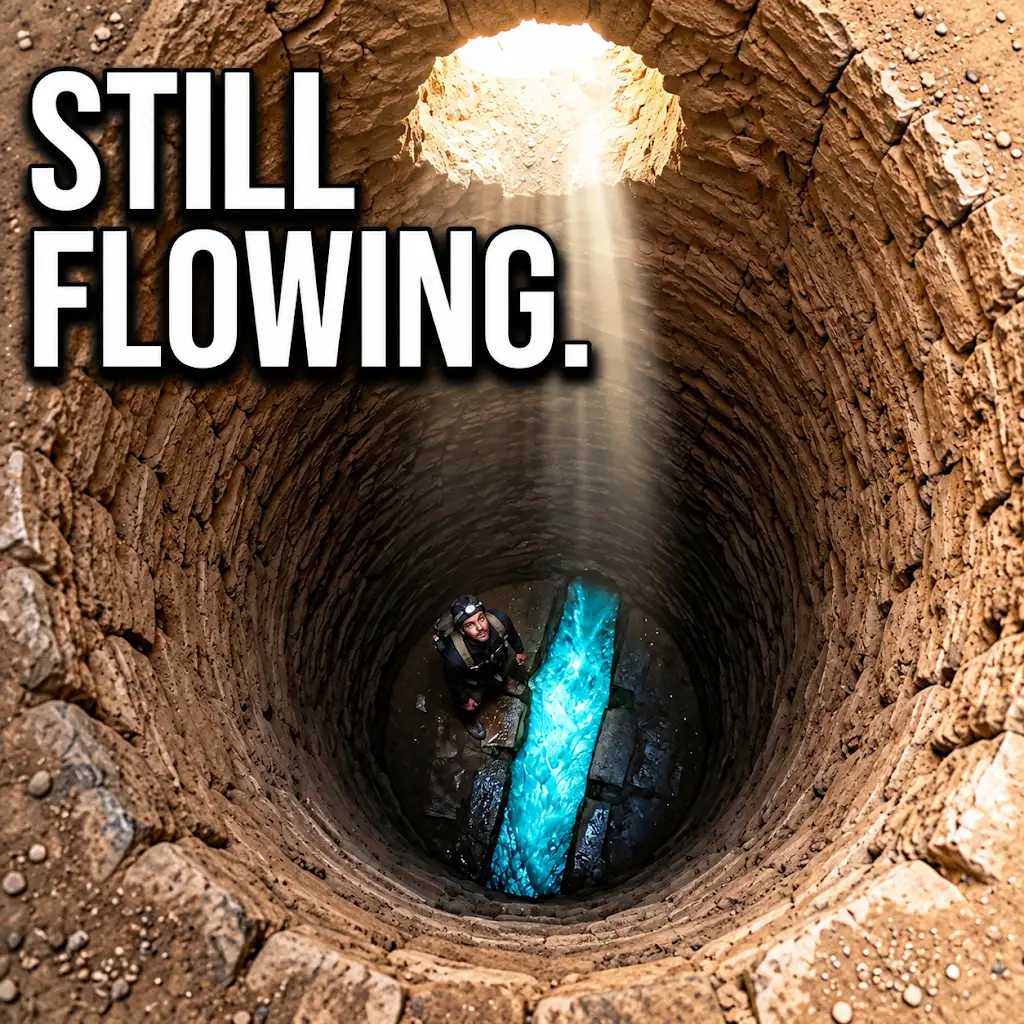
They Dug Water Tunnels Under the Desert… And They Still Flow
FAQs
What is a qanat system for water distribution?
A qanat is an underground water management system used to transport water from an aquifer under a hill to the surface for irrigation and drinking purposes.
Where were qanat systems historically used?
Qanat systems were historically used in arid and semi-arid regions such as Iran, North Africa, and Central Asia to provide a reliable source of water for agriculture and human consumption.
How do qanat systems work?
Qanat systems work by tapping into an underground water source at the bottom of a hill, using a series of gently sloping tunnels to transport the water to the surface at a lower elevation where it can be accessed for various purposes.
What are the advantages of using qanat systems for water distribution?
Some advantages of using qanat systems include efficient water transportation without the need for pumps, reduced evaporation losses compared to surface canals, and a more reliable water supply in arid regions.
Are qanat systems still in use today?
While qanat systems have been largely replaced by modern technologies in many regions, some communities still rely on qanats for their water supply, particularly in areas where access to water is limited or unreliable.