The Silent Sentinels of Hydration
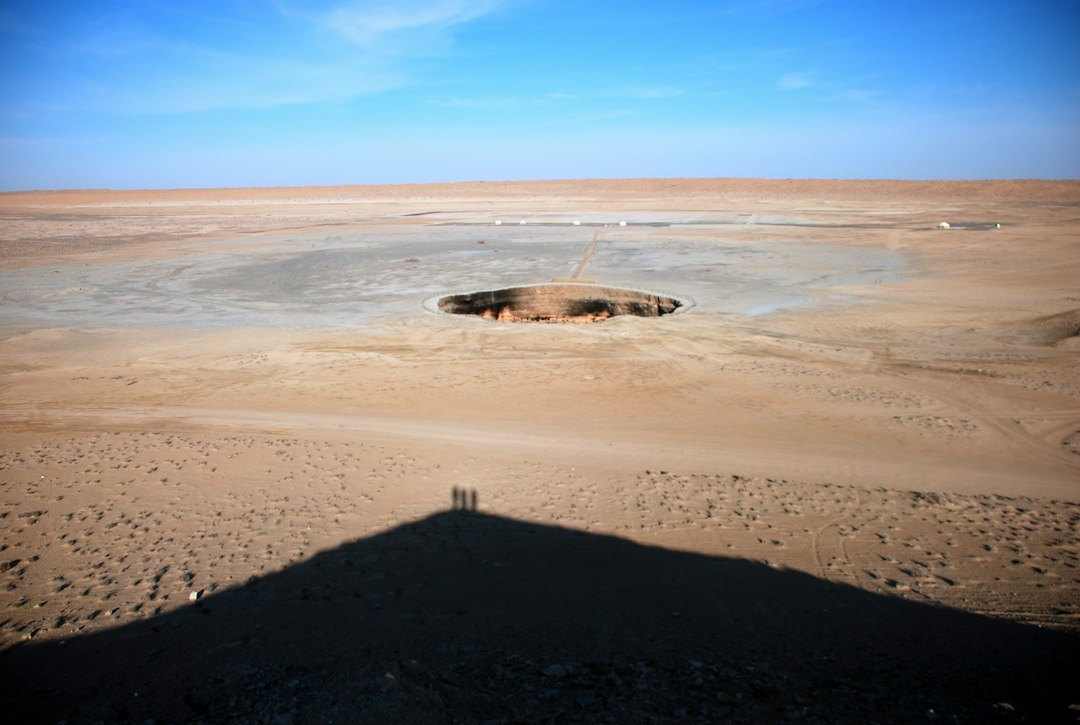
The arid and semi-arid regions of the world, historically and presently, have been defined by their scarcity of water. For millennia, human ingenuity has grappled with this fundamental challenge, leading to the development of sophisticated systems to capture, transport, and distribute precious water resources. Among the most remarkable and enduring of these achievements are the ancient qanats, subterranean aqueducts that represent an extraordinary feat of engineering and water management. While the qanat itself – the underground tunnel – is the star of the show, the ubiquitous and often overlooked spoil mounds that mark their presence on the surface are equally compelling. These mounds, composed of the earth excavated during the construction of the qanat, are not mere piles of debris. Instead, they are silent sentinels, tangible evidence of immense human effort, and crucial indicators of a complex and ingenious system that sustained ancient civilizations. Their presence on the landscape is a constant reminder of the vital role water played, and the extraordinary lengths to which people went to secure it.
Qanat spoil mounds, which are the remnants of ancient underground water management systems, offer fascinating insights into historical irrigation practices. These structures not only reflect the ingenuity of past civilizations but also highlight the importance of sustainable water management in arid regions. For a deeper understanding of ancient engineering and its relevance today, you can explore the related article on the topic in this documentary, which uncovers various ancient secrets and technologies.
Genesis of the Qanat and Its Surface Signatures

The origins of the qanat system are shrouded in the mists of time, with evidence suggesting its development in ancient Persia (modern-day Iran) possibly as early as the 8th century BCE. The fundamental principle of a qanat is elegantly simple, yet its construction was incredibly demanding. It involves a gently sloping underground tunnel that taps into an aquifer, typically located in foothills or mountainous regions, and carries water by gravity to lower-lying settlements or agricultural lands. The brilliance lies in its subsurface nature, which minimizes evaporation, a critical advantage in hot, dry climates. However, creating these lengthy tunnels required a systematic and labor-intensive process of excavation. This is where the spoil mounds, or “tapons” as they are known in some regions, enter the narrative.
The Excavation Process and Spoil Formation
The construction of a qanat was a monumental undertaking, often spanning several kilometers and descending hundreds of meters from its origin point to its outlet. The process typically began with the digging of vertical access shafts, known as “wells” or “manholes,” at regular intervals. These shafts served multiple purposes: they provided ventilation for the workers, allowed for the removal of excavated material, and enabled access for inspection and maintenance. As the workers tunneled horizontally between these shafts, the excavated earth and rock – the spoil – had to be brought to the surface. This material was then deposited around the opening of each shaft, gradually forming distinct conical or elongated mounds. The size and regularity of these spoil mounds are directly proportional to the depth of the access shaft and the length of the qanat section being excavated. Deeper shafts and longer tunnels naturally resulted in larger and more numerous spoil piles.
Variations in Spoil Mound Morphology
The appearance of qanat spoil mounds can vary significantly depending on a multitude of factors. The geological composition of the terrain being excavated plays a crucial role. Hard rock would yield denser, more angular spoil, creating more rugged mounds, while softer soil would result in finer, more easily eroded material, leading to smoother, gentler slopes. The method of spoil removal also influenced their shape. If baskets or rudimentary carts were used, the deposition might be more localized. Conversely, if the spoil was simply shoveled or tipped from the shaft, it would naturally form a more conical heap. Furthermore, the longevity of the qanat system and the forces of erosion – wind, rain, and the passage of time – have dramatically reshaped many of these mounds. Some may appear as mere bumps on the landscape, while others retain their distinct conical form, testament to their relatively recent creation or the protective nature of the excavated material.
Engineering Prowess Embedded in Earth
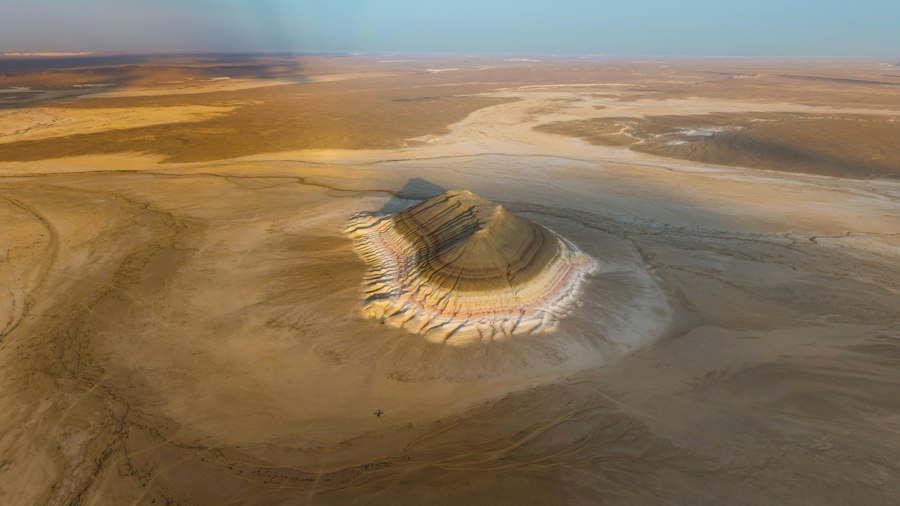
The construction of qanats was not merely a matter of digging; it was a sophisticated engineering endeavor that demanded a deep understanding of hydraulics, geology, and surveying. The spoil mounds, in their very existence, bear witness to this profound knowledge and the immense human capital invested in their creation. They are a physical manifestation of the meticulous planning and execution required to harness a subterranean water source.
The Art of Gradient and Gravity
The success of a qanat hinges on maintaining a precise and consistent gradient. Too steep, and the water would flow too quickly, potentially eroding the tunnel. Too shallow, and the water would stagnate or fail to reach its destination. Surveyors of ancient times, without modern tools, employed remarkable methods to achieve this delicate balance. They likely used water levels and plumb bobs, carefully observing the flow of water down a pilot channel or even a stretched rope to gauge the correct slope. The spoil mounds serve as a visible record of the vertical shafts that facilitated this precise surveying. Each mound represents a point where engineers and laborers accessed the subsurface to ensure the tunnel’s alignment and gradient were maintained throughout its entire length. The regularity of the spacing between these mounds often reflects a calculated approach to managing the excavation process and ensuring a consistent water flow.
Understanding Aquifers and Water Table Management
The construction of a qanat required an intimate knowledge of local hydrology and the behavior of groundwater. Engineers had to identify locations where an accessible aquifer existed, typically in alluvial fans at the base of mountains. They needed to understand the depth of the water table and the geological formations that would best hold and transmit water. The spoil mounds mark the points of entry into these aquifers. The depth of the associated shaft is a direct indicator of how deep the engineers had to dig to reach the water-bearing stratum. This knowledge was not acquired through abstract scientific study but through generations of observation and practical experience in arid environments. The spoil mounds are thus a legacy of this accumulated wisdom, demonstrating an empirical understanding of the earth’s water systems.
The Socio-Economic Fabric Woven by Qanats
Qanat systems were more than just feats of engineering; they were the lifeblood of ancient societies, enabling the growth of agriculture, the development of settlements, and the flourishing of civilizations in otherwise inhospitable regions. The spoil mounds, by their very existence, are intrinsically linked to this socio-economic fabric, representing the labor, resources, and collective effort that underpinned these water-dependent communities.
Enabling Agricultural Flourishing and Settlement Growth
Without reliable water sources, agriculture in arid lands is impossible. Qanats provided a consistent and controlled supply of water that allowed for the cultivation of crops, transforming barren landscapes into fertile oases. This agricultural surplus supported larger populations, leading to the development of permanent settlements and the growth of cities. The spoil mounds are tangible proof of the immense effort expended to create these life-sustaining systems. The sheer volume of material removed to construct a qanat indicates a significant investment of labor, resources, and time. This investment was only made possible by the promise of abundant water for farming and sustenance. The location of settlements was often dictated by the proximity to qanat outlets, with the spoil mounds forming characteristic features in the vicinity of ancient towns and villages.
A Testament to Collective Labor and Social Organization
The construction of a qanat was rarely a solitary endeavor. It required a coordinated effort involving a diverse range of skills: surveyors, excavators, water managers, and laborers. This undertaking fostered a strong sense of community and required sophisticated social organization to manage the workforce, allocate resources, and maintain the system over time. The spoil mounds are a testament to this collective endeavor. They represent the combined output of hundreds, if not thousands, of individuals who contributed to the creation of these vital lifelines. The maintenance of a qanat also required ongoing labor, with spoil mounds often associated with repair shafts that allowed access for clearing debris and addressing tunnel collapses. This continuous need for upkeep reinforced social bonds and the importance of communal responsibility.
The study of qanat spoil mounds offers fascinating insights into ancient irrigation systems and their impact on agriculture in arid regions. These mounds, formed from the excavation of underground channels, reveal much about the engineering skills of past civilizations. For a deeper understanding of how historical factors influenced societal development, you might find it interesting to explore the decline of literacy after the Dark Ages, which is discussed in this article on literacy and its consequences. This connection highlights the broader context of how technological advancements and societal changes are intertwined throughout history.
Enduring Legacies and Modern Relevance
| Metric | Description | Typical Values | Units |
|---|---|---|---|
| Height of Spoil Mound | Vertical height from ground level to top of spoil mound | 1 – 3 | meters |
| Length of Spoil Mound | Linear extent of spoil mound along qanat tunnel | 10 – 50 | meters |
| Width of Spoil Mound | Average width across the spoil mound | 3 – 10 | meters |
| Volume of Excavated Material | Estimated volume of soil and rock removed to create qanat | 50 – 500 | cubic meters |
| Distance Between Mounds | Spacing between consecutive spoil mounds along qanat | 20 – 40 | meters |
| Age of Qanat | Estimated age of qanat system associated with spoil mounds | 500 – 3000 | years |
| Soil Composition | Dominant soil types in spoil mounds | Sandy, Loamy, Clayey | N/A |
Despite the passage of millennia, many ancient qanat systems and their associated spoil mounds continue to endure, a testament to the robustness of their construction and the enduring human need for water management. In the modern era, these ancient marvels offer valuable insights for contemporary engineers and policymakers grappling with water scarcity.
Resilience Through Time and Eroding Landscapes
The remarkable longevity of many qanat systems is a testament to the skill of their ancient builders. Constructed from durable materials and situated underground, they were remarkably resistant to the ravages of time and the elements. The spoil mounds, while more susceptible to erosion, often persist for centuries, their shapes gradually softening and blending with the surrounding landscape. In some regions, the outlines of these mounds are still discernible, even if their original conical form has been significantly altered. Their survival in diverse geological and climatic conditions highlights the inherent resilience of this water management technology.
Lessons for Contemporary Water Resource Management
In an era of increasing water stress and climate change, the ancient qanat system offers a wealth of practical lessons. The principle of minimizing evaporation by transporting water underground is a highly efficient strategy for water conservation. The gravity-fed nature of qanats also represents a low-energy approach to water distribution, contrasting sharply with the energy-intensive pumping systems common today. Furthermore, the long-term sustainability of qanat systems, which often involved integrated approaches to water allocation and maintenance, provides valuable models for community-based water management. Studying the construction techniques, gradient management, and aquifer interaction associated with these ancient systems can inform the design of modern, sustainable water infrastructure, particularly in arid and semi-arid regions facing similar challenges. The spoil mounds, as visible markers of these forgotten giants of engineering, serve as tangible reminders of a time when human ingenuity, in concert with the environment, found remarkably effective solutions to the perennial problem of water scarcity. They are not just piles of earth; they are invaluable historical documents etched into the landscape, whispering tales of innovation and perseverance.

They Dug Water Tunnels Under the Desert… And They Still Flow
FAQs
What are qanat spoil mounds?
Qanat spoil mounds are the piles of excavated material that are created when digging underground water channels known as qanats.
How are qanat spoil mounds formed?
Qanat spoil mounds are formed when workers dig underground tunnels to create qanats, and the excavated soil and rocks are piled up on the surface near the entrance of the tunnel.
What is the purpose of qanat spoil mounds?
Qanat spoil mounds serve as indicators of the presence of underground water channels and can help in locating and maintaining qanats for water supply and irrigation purposes.
Where are qanat spoil mounds commonly found?
Qanat spoil mounds are commonly found in arid and semi-arid regions where qanats have been historically used as a sustainable water management system.
Are qanat spoil mounds considered archaeological sites?
Yes, qanat spoil mounds are considered archaeological sites as they provide valuable insights into ancient water management techniques and the history of human settlement in the region.