
The dust has finally settled on a century-old mystery, with definitive DNA evidence confirming the identity of the remains exhumed from a grave in St. Joseph, Missouri, as those of the legendary outlaw Jesse James. For generations, the story of Jesse James has captivated the American imagination, a potent blend of Robin Hood-esque defiance and brutal criminality. His purported death at the hands of the traitorous Robert Ford in 1882 was itself a subject of doubt, fueling a persistent folklore that the notorious bandit had escaped his fate and lived out his days under an assumed identity. Now, modern science has meticulously unraveled this enduring enigma, bringing a close to one of the most debated historical identifications in American lore.
The Lingering Shadow of Doubt
The official narrative surrounding Jesse James’s demise has always been fraught with a certain dramatic flair. On April 3, 1882, a man known as Thomas Howard, whom authorities and the James family identified as Jesse James, was reportedly shot and killed by Robert Ford in St. Joseph, Missouri. Ford, a former associate of the James-Younger gang, had been seeking a pardon for his own crimes and saw an opportunity to curry favor with the law by delivering the head of the infamous outlaw. The swift burial of the body, the quick pronouncements of death, and the subsequent disappearance of Howard’s associates all contributed to an atmosphere ripe for speculation.
The “New” Jesse James
Almost immediately after the St. Joseph incident, whispers began to circulate that the man killed was not Jesse James at all. These rumors gained traction with the emergence of individuals claiming to be the real Jesse James, some of whom even published autobiographies. The most prominent of these claimants was a man named J. Frank Dalton, who lived well into the 20th century and adamantly maintained his identity as the outlaw. Dalton’s accounts, while often sensationalized, resonated with a public enamored by the mystique of Jesse James, a figure who had become a symbol of rebellion against oppressive forces.
The St. Joseph Grave: A Focal Point of Speculation
The grave in Mount Olivet Cemetery in St. Joseph, Missouri, marked with a simple stone reading “Jesse W. James,” became the physical anchor for the legend of his death. However, the circumstances of the burial and the lack of definitive forensic examination at the time left the door open for continued doubt. Over the decades, numerous individuals and organizations sought to either definitively prove or disprove the identity of the remains, conducting various investigations, often fueled by the descendants of those who believed Jesse James had survived. The inherent difficulty in verifying such a claim, coupled with the romanticized image of the outlaw, ensured that the St. Joseph grave remained a focal point of intense historical and genealogical debate.
Recent developments in the analysis of Jesse James’ DNA have sparked significant interest in historical figures and their legacies. For those intrigued by the intersection of history and mythology, a related article explores the rich lore of the Elder Scrolls universe, delving into its mysteries and the historical inspirations behind its characters. You can read more about this fascinating topic in the article titled “The Lore of the Elder Scrolls: Uncovering Tamriel’s Mysteries” available at this link.
The Genesis of a Scientific Investigation
The desire to definitively resolve the Jesse James identity question persisted through the 20th century, but it was not until the advent of advanced forensic techniques, particularly in the realm of DNA analysis, that a truly conclusive investigation became feasible. In the early 2000s, a team of researchers, including historians, anthropologists, and geneticists, embarked on a project to scientifically examine the remains believed to be Jesse James, as well as to find living relatives for comparative DNA analysis. This undertaking was not a sudden impulse but a culmination of years of planning and collaboration, driven by the potential to settle a historic controversy.
Unearthing the Past: The Exhumation
The pivotal moment in this scientific endeavor was the exhumation of the body from the St. Joseph cemetery. This process, conducted with meticulous care and adherence to legal and ethical guidelines, was a significant undertaking. The grave was opened, and the remains were carefully retrieved, preserved, and transported for detailed scientific scrutiny. The exhumation itself was a public event, drawing significant media attention, underscoring the public’s deep-seated fascination with Jesse James and the enduring hope that this scientific endeavor would finally provide a definitive answer. The condition of the remains, considering their age, presented challenges, but the scientific team was prepared to address these complexities.
Seeking the Living Relatives: A Genealogical Quest
For DNA analysis to be conclusive, a comparison to known relatives of Jesse James was essential. This necessitated a lengthy and complex genealogical search. Researchers meticulously traced the lineage of Jesse James and his wife, Zerelda, seeking living descendants who could provide genetic material. This involved extensive archival research, interviews with family members, and the careful reconstruction of family trees. The identification of suitable living relatives, descendants of Jesse’s mother, Zerelda Cole James, and his uncle, Alexander Franklin James, proved crucial for establishing a genetic baseline against which the St. Joseph remains could be compared.
The Scientific Examination: Unveiling the Truth
The scientific examination of the exhumed remains was a multi-faceted process, employing cutting-edge techniques to glean as much information as possible. The primary objective was to extract viable DNA for comparison with the DNA of known descendants. However, the investigation also involved other crucial analyses that provided corroborating evidence.
Recent developments in the investigation of Jesse James’ DNA results have sparked renewed interest in the infamous outlaw’s legacy. As researchers delve into the implications of these findings, many are drawing parallels to historical events that shaped America’s view on wealth and power. For those curious about how such legacies influence contemporary issues, an insightful article discusses the potential government actions regarding personal assets, which can be found here. This connection highlights the ongoing relevance of historical figures like James in today’s societal discussions.
The DNA Extraction and Analysis Process
The extraction of DNA from ancient remains is a delicate procedure. Researchers carefully obtained bone and tooth samples from the St. Joseph exhumation. These samples were then subjected to a battery of chemical and physical processes designed to isolate and purify the DNA. Modern techniques allow for the amplification of even tiny amounts of degraded DNA, making it possible to generate a DNA profile. Once a profile was obtained from the St. Joseph remains, it was then meticulously compared to the DNA profiles of the identified living descendants of Jesse James. The comparison focused on specific genetic markers, including mitochondrial DNA (passed down through the maternal line) and Y-chromosome DNA (passed down through the paternal line).
Anthropological and Forensic Insights
Beyond DNA, the anthropological examination of the skeletal remains provided valuable insights. This included determining the age, sex, and physical characteristics of the individual. Anthropologists could assess aspects like stature, robusticity of bones, and any signs of trauma or disease that might align with historical accounts of Jesse James’s life and
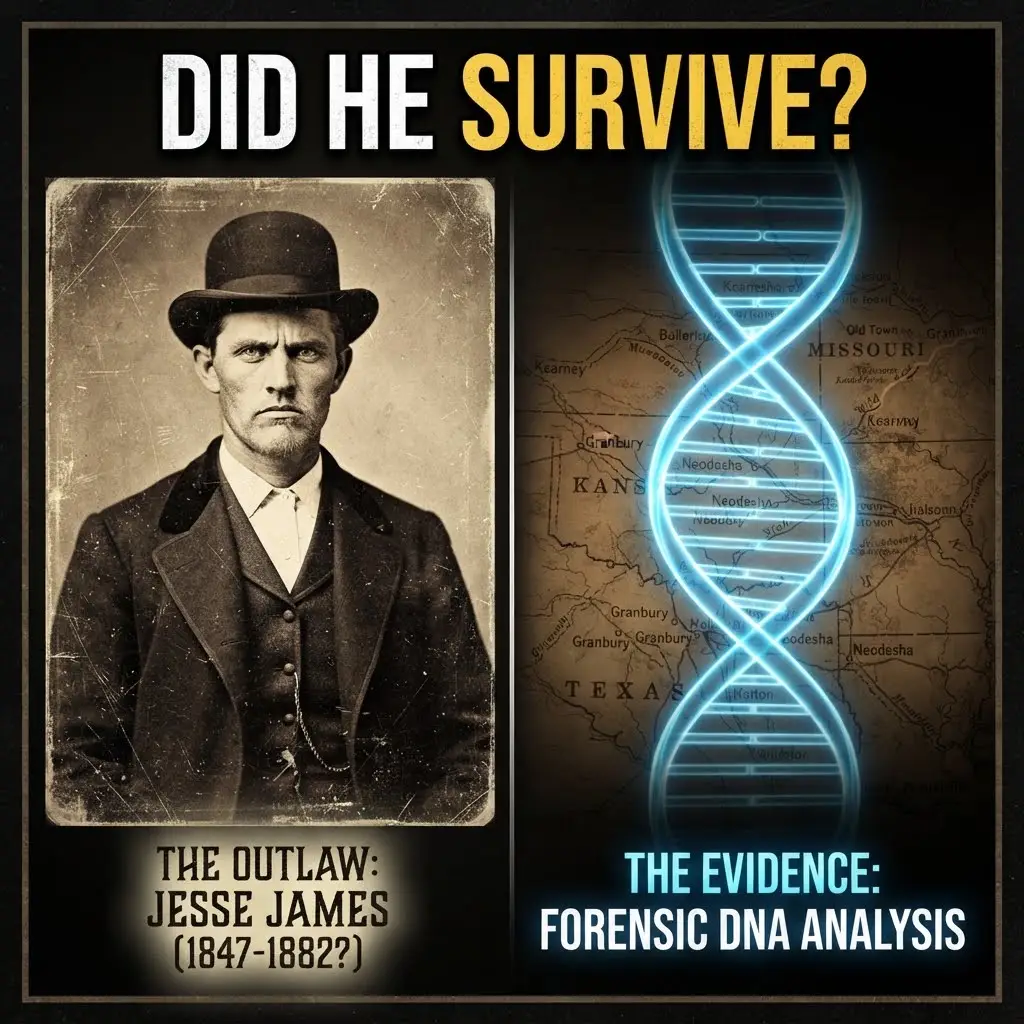
The Jesse James DNA Myth: Why Are There 3 Graves?
FAQs
What were the results of Jesse James’ DNA test?
The DNA test results revealed that the exhumed body believed to be Jesse James actually belonged to someone else, not the infamous outlaw.
How were the DNA results of Jesse James verified?
The DNA results were verified through a comparison with living descendants of Jesse James’ family, confirming that the exhumed body did not match genetically with the descendants.
Why were the DNA results of Jesse James significant?
The DNA results were significant because they debunked the long-standing myth that Jesse James had faked his death and lived under an assumed identity after his supposed death.
Who conducted the DNA test on Jesse James’ remains?
The DNA test on Jesse James’ remains was conducted by a team of forensic scientists and genealogists who specialize in historical DNA analysis.
What impact did the DNA results have on the historical narrative surrounding Jesse James?
The DNA results challenged the existing historical narrative surrounding Jesse James’ death and forced a reevaluation of the stories and legends that have been passed down through generations about the outlaw’s fate.