The legend of Jesse James, the infamous outlaw, has long been etched into the American consciousness. His daring train robberies, his romanticized image as a Robin Hood figure, and ultimately, his dramatic death at the hands of Robert Ford, have fueled countless books, movies, and campfire stories. However, the official narrative, the one that has dominated historical accounts for over a century, is increasingly being challenged by a wealth of forensic evidence and a persistent undercurrent of doubt. These clues, meticulously re-examined and interpreted through modern scientific lenses, paint a far more complex and potentially contradictory picture of the events that transpired on April 3, 1882, in St. Joseph, Missouri.
The Official Account: A Bullet in the Back
The widely accepted history dictates that Jesse James, weary of life on the run, was shot and killed by his own gang member, Robert Ford, in his rented home. Ford, seeking a pardon and a reward from the governor, ambushed the outlaw while James was reaching up to adjust a picture on the wall, thus presenting his back to his supposed ally. This act of betrayal, brutal and swift, brought an end to the life of one of America’s most notorious figures. The body, allegedly identified by Jesse’s mother and wife, was displayed for public viewing, solidifying the narrative of his demise. The immediate aftermath was a flurry of sensationalized news reports, solidifying the image of a fallen outlaw, his reign of terror finally concluded. This story, steeped in drama and perceived finality, became the bedrock of Jesse James’s historical legacy.
The Ambiguity of Identification
Despite the public display and the pronouncements of his family, lingering questions about the identification of the body have persisted for decades. The circumstances of the alleged death – a surprise attack, a single gunshot to the head – made positive identification in the late 19th century a challenging endeavor, even with the body present. Witnesses to the shooting, primarily members of the James family, were deeply entangled in the narrative and potentially influenced by the desire to see James definitively declared dead. The swiftness with which the body was handled, prepared for burial, and then exhumed for forensic examination adds another layer of complexity, raising concerns about potential contamination or mishandling of evidence.
The Double Life Theory
Perhaps the most compelling, and certainly the most controversial, challenge to the official story is the theory that Jesse James did not die in 1882. This hypothesis, often referred to as the “double life theory,” suggests that the man shot in St. Joseph was not Jesse James at all, but rather a body double or a different individual altogether, used to fake his death and allow the outlaw to escape further prosecution or retribution. Proponents of this theory point to a multitude of inconsistencies and anomalies within the historical record, suggesting that Jesse James lived on for many more years, potentially under an assumed identity, escaping the clutches of the law and the notoriety that had defined his life.
The mysterious death of Jesse James has long been a topic of intrigue, with numerous conspiracy theories surrounding the circumstances of his demise. For those interested in delving deeper into the complexities of historical narratives and forensic investigations, a related article titled “Uncovering Untold Histories: A Revealing Documentary” provides an insightful exploration of how modern forensics can shed light on past events. You can read more about it by following this link: Uncovering Untold Histories.
Forensic Revelations: Bones of Contention
The 20th century brought with it advancements in forensic science, tools that could offer a dispassionate analysis of physical evidence, untainted by the biases and legends of the past. It was this scientific progress that began to offer tangible, albeit contested, challenges to the long-accepted historical account of Jesse James’s death. The exhumation of the body alleged to be Jesse James, and the subsequent application of modern forensic techniques, provided a critical opportunity to re-evaluate the evidence and potentially uncover truths that had been obscured by time and narrative.
The St. Joseph Skull Examination
In 1995, a groundbreaking event occurred: the exhumation of the remains believed to be Jesse James from the old family cemetery in Granbury, Texas. This was not the first time these remains had been subjected to scrutiny, but this occasion was marked by the application of cutting-edge forensic technology. Among the most significant findings was the examination of the skull. Forensic anthropologists, utilizing sophisticated imaging techniques such as CT scans, analyzed the bullet trajectory and the nature of the cranial wound.
The results of this examination presented a significant divergence from the official account. The angle of the bullet entry and the subsequent damage to the skull did not perfectly align with the description of the shooting as depicted in the historical record, particularly the idea that James was shot while reaching up. The angle of impact, as suggested by the skull’s reconstruction, implied a different posture for the victim at the moment of the fatal shot. While not definitively disproving the official story, these findings introduced a significant element of doubt, suggesting that the details of the assassination might have been embellished or misrepresented.
DNA Analysis: A Genetic Puzzle
The most potent forensic weapon in the modern arsenal is DNA analysis. The 1995 exhumation provided the opportunity to extract DNA from the skeletal remains. This DNA was then compared with genetic material from known relatives of Jesse James. The initial hope was that a definitive match or mismatch would settle the debate once and for all. However, the reality proved to be far more complex.
The DNA extracted from the St. Joseph remains showed a genetic profile. When this profile was compared to samples from descendants of Jesse James’s sister, Susan James, the results were ambiguous. While there were some similarities, the degree of relatedness did not definitively confirm or deny that the remains belonged to Jesse. Furthermore, the quality and quantity of the extracted DNA, coupled with the potential for contamination over the decades, added further complications. The pursuit of a conclusive DNA match became a drawn-out and often frustrating process, highlighting the challenges of working with ancient samples and the inherent difficulties in definitively establishing familial links in the absence of pristine reference material.
The mysterious death of Jesse James has sparked numerous conspiracy theories, particularly regarding the forensics surrounding his demise. Many believe that the circumstances of his death were not as straightforward as they appeared, leading to speculation about his possible survival and continued life under a different identity. For those interested in exploring how historical narratives can be shaped by such mysteries, a fascinating article discusses the Piri Reis map and its implications for understanding ancient secrets. You can read more about it here.
Dental Records and Anthropological Assessments
Beyond DNA, other forensic avenues were explored. Comparisons were made between the dental records of the St. Joseph remains and any available records or descriptions of Jesse James’s teeth. While detailed dental records from that era were not as comprehensive as they are today, any existing information was meticulously scrutinized for points of congruence or discrepancy. Similarly, anthropological assessments of the skeletal structure – height, bone density, and the presence of any anomalies or healed injuries – were undertaken. These assessments aimed to build a physical profile of the individual and compare it against known biographical details of Jesse James. Any significant deviations from the established physical characteristics of the outlaw would further fuel the suspicions surrounding the official narrative.
The Legacy of Robert Ford and the Shifting Sands of Testimony
The role of Robert Ford in the death of Jesse James is central to the historical narrative. His actions, driven by a complex mix of ambition, fear, and perhaps a sense of self-preservation, are the linchpin of the accepted story. However, even Ford’s testimony and the accounts of his co-conspirators are not without their own internal inconsistencies and external challenges, further contributing to the miasma of doubt that surrounds the events of 1882.
Ford’s Shifting Account
Robert Ford, the alleged assassin, provided numerous accounts of the events leading up to and including the shooting of Jesse James. Over time, and under varying degrees of pressure and scrutiny, his story evolved. While the core elements of the ambush remained, certain details concerning the sequence of events, the dialogue exchanged, and the precise actions of both James and Ford were subject to modification. These shifts in testimony, while perhaps understandable given the trauma and legal ramifications of the event, make it difficult to ascertain a completely reliable and consistent narrative from Ford himself. Historians have noted that Ford’s accounts often served to solidify his own position and justify his actions, which may have led to a degree of self-serving embellishment.
The Influence of Rewards and Pardons
It is crucial to acknowledge the powerful motivators behind Robert Ford’s actions. The promise of a significant reward from the governor of Missouri, coupled with the prospect of a pardon for his own past transgressions, provided a strong incentive for him to ensure Jesse James’s demise. This potent combination of reward and clemency could have influenced not only Ford’s actions but also the way he presented those actions to the authorities and the public. The desire to secure these benefits may have subtly shaped his narrative, prioritizing details that underscored his bravery or necessity, while potentially downplaying any hesitations or alternative possibilities.
The “Confession” of Other Outlaws
Over the years, other individuals who were associated with the James-Younger gang, or who claimed to have knowledge of their activities, have offered their own perspectives on Jesse James’s death. Some of these accounts, often emerging years or even decades after the fact, have corroborated aspects of the official story, while others have introduced new theories or cast doubt on existing ones. The reliability of these “confessions” is often questionable, as they can be influenced by a desire for notoriety, a need to settle old scores, or a simple misremembering of events. However, taken collectively, these scattered testimonies contribute to the complex tapestry of the Jesse James legend, highlighting the enduring fascination with his life and death.
Unanswered Questions and Alternative Scenarios
The forensic evidence, while not definitively disproving the official narrative, has opened the door to a multitude of unanswered questions and plausible alternative scenarios. The inconsistencies uncovered by modern science invite a re-examination of the historical record, pushing beyond the established dogma and encouraging a more nuanced understanding of the events of April 3, 1882.
The Case of the “Other Jesse”
The double life theory, while speculative, finds some of its strongest support in the very inconsistencies that forensic science has highlighted. If the man shot was not Jesse James, then who was he? Various theories have emerged, suggesting a close associate or a willing participant who took on the role of the fallen outlaw. The absence of definitive proof in the DNA analysis also lends credence to the idea that the remains might not belong to the notorious outlaw. If the St. Joseph body was not Jesse, then where did Jesse James go, and how did he manage to disappear so completely from public life?
The Possibility of a Deliberate Deception
The prospect of a deliberate deception, orchestrated by Jesse James himself or with his complicity, is a recurring theme in the alternative theories. The outlaw was known for his cunning and his ability to evade capture. Could he have orchestrated his own “death” to escape the constant threat of arrest and retribution? This scenario would explain the discrepancies in the forensic evidence and the lack of a definitive genetic link. It would also align with the image of a masterful strategist, capable of pulling off one last, grand deception. The lack of subsequent sightings or definitive proof of Jesse James’s later life becomes less of a mystery and more of a testament to his successful disappearance.
The Enduring Power of the Myth
Ultimately, the enduring power of the Jesse James myth plays a significant role in the ongoing debate. The romanticized image of the outlaw, a figure of defiance and rebellion, is deeply ingrained in American folklore. The idea of him being definitively shot and killed, particularly in such a dramatic fashion, provides a satisfying conclusion to his story. Conversely, the notion that he might have escaped, that the legend lived on, adds another layer of intrigue and continues to fuel the imagination. The forensic clues, rather than simply settling the question, have instead become part of this ongoing narrative, a testament to the enduring fascination with Jesse James and the unresolved mysteries that surround his legacy. The battle between historical fact and enduring legend continues, with forensic science playing a pivotal, albeit often ambiguous, role in shaping our understanding.
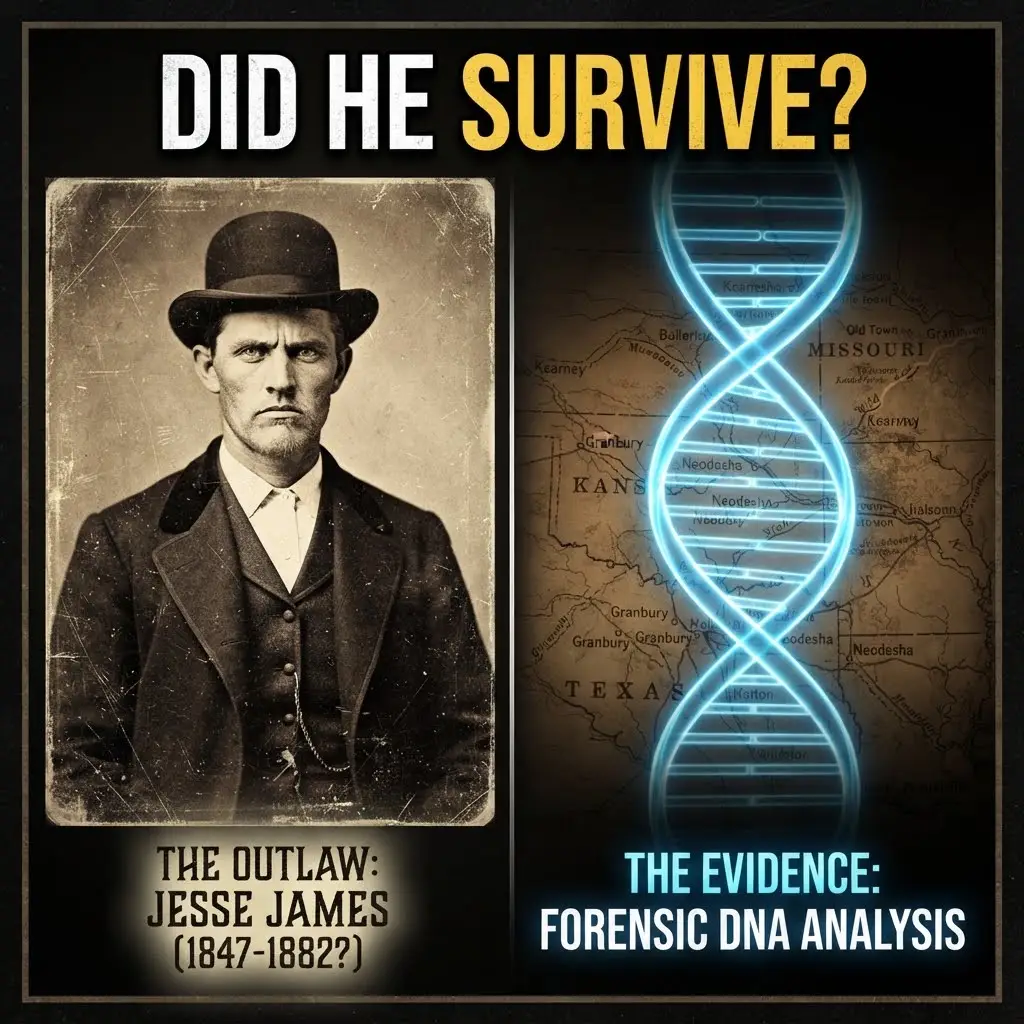
The Jesse James DNA Myth: Why Are There 3 Graves?
FAQs
1. Was Jesse James actually killed in 1882 as history suggests?
Yes, historical records indicate that Jesse James was killed by Robert Ford on April 3, 1882, in St. Joseph, Missouri.
2. What are some theories surrounding Jesse James’ death?
Some conspiracy theories suggest that Jesse James faked his own death and lived under an assumed identity for years after the reported killing.
3. How has modern forensic science been used to investigate Jesse James’ death?
Modern forensic techniques, such as DNA analysis and facial recognition technology, have been used to examine historical evidence and artifacts related to Jesse James’ death to determine its authenticity.
4. What have forensic experts concluded about the death of Jesse James?
Forensic experts have analyzed the available evidence and generally support the historical account that Jesse James was killed in 1882, dismissing most conspiracy theories as lacking substantial proof.
5. Are there any ongoing investigations or new developments in the Jesse James death conspiracy?
While there may be occasional claims or new theories proposed, the majority of forensic experts and historians consider the case of Jesse James’ death to be closed based on the available evidence and historical records.