
The persistent mystery surrounding the death of Jesse James has long fueled a vibrant cottage industry of speculation, historical debate, and even outright fabrications. For over a century, the narrative that the infamous outlaw met his end at the hands of Robert Ford in St. Joseph, Missouri, in 1882 has been the accepted truth. However, a persistent undercurrent of doubt has always existed, whispered in hushed tones among historians and enthusiasts alike. This doubt was largely rooted in the lack of definitive, irrefutable forensic evidence. Now, however, new scientific analysis, employing cutting-edge techniques, has provided compelling evidence that not only confirms the identity of the remains discovered in St. Joseph as those of Jesse James but also offers a deeper understanding of his final moments.
Unearthing the Past The St. Joseph Grave and Lingering Doubts
The accepted account of Jesse James’s death is a dramatic one. On April 3, 1882, seeking a reward and a new life, Robert Ford, a disgruntled member of James’s gang, shot and killed the outlaw while he was reportedly dusting a picture in his home. The body was quickly buried, and the event was widely publicized, solidifying the narrative of Jesse James’s demise. However, almost from the outset, questions arose. Some alleged that the body buried was not that of Jesse James, but rather a look-alike or an accomplice. These theories were fueled by several factors, including the haste of the burial, the alleged disfigurement of the body to prevent positive identification by those who might wish him harm, and the general aura of intrigue that surrounded the legendary outlaw.
The Historical Context of Uncertainty
The late 19th century was a time of sensationalism and public fascination with figures like Jesse James. His exploits as a bank and train robber had made him a folk hero to some and a villain to others. This very public persona, coupled with the inherent secrecy and deception often employed by those on the fringes of society, created fertile ground for conspiracy theories. The official story, while widely accepted, was never subjected to the rigorous scientific scrutiny that modern forensic science allows. The authorities at the time relied on eyewitness accounts, circumstantial evidence, and the general consensus of those present. While this might have been sufficient for the era, it left ample room for doubt to fester.
Early Attempts at Verification
Over the decades, various individuals and groups have attempted to resolve the lingering questions. Exhumations were carried out, most notably in 1948, where alleged remains were examined. However, these early investigations were limited by the scientific capabilities of the time. The analysis, often conducted with rudimentary tools and techniques, could not provide the definitive answers required to silence all speculation. The bones were examined for physical characteristics, but without the comparative data and advanced analytical methods available today, the results were often inconclusive, serving to perpetuate rather than dispel the myths.
The recent discovery of Jesse James’ authentic remains has sparked significant interest in the historical narratives surrounding infamous figures of the American West. For those intrigued by the interplay of history and myth, a related article delves into the fascinating world of ancient cartography and its connection to forbidden knowledge. You can read more about this intriguing subject in the article titled “Uncovering Ancient Cartography: Forbidden Knowledge” available at this link.
The Dawn of Advanced Forensics: A New Approach to an Old Mystery
The advent of DNA analysis and sophisticated skeletal examination techniques has revolutionized historical investigations. Suddenly, the possibility of definitively identifying remains, even those centuries old, became a reality. Recognizing this potential, a dedicated team of researchers, forensic anthropologists, genealogists, and historians embarked on a comprehensive re-examination of the St. Joseph remains, with the specific goal of putting the Jesse James identity debate to rest once and for all. Their approach was multi-faceted, integrating historical records with cutting-edge scientific methodologies.
DNA: The Ultimate Identifier
The cornerstone of this new investigation was the extraction and analysis of DNA from the St. Joseph remains. Obtaining viable DNA from skeletal material, especially from remains that have been subjected to burial and handling over many years, is a complex process. However, advancements in ancient DNA extraction have made it possible to recover genetic material from even degraded samples. The research team carefully collected bone fragments, ensuring minimal contamination. The subsequent DNA profiling was then compared against the DNA of known descendants of Jesse James. This comparison is the gold standard for confirming familial relationships and, by extension, identity.
Skeletal Analysis: More Than Just Bones
Beyond DNA, a meticulous analysis of the skeletal structure was undertaken. Forensic anthropologists meticulously examined the bones for indicators of age, sex, stature, and any unique morphological features. These features can include bone fractures, healed injuries, dental records, and even subtle variations in bone structure that might be identifiable from historical descriptions or medical records. The St. Joseph skeleton was examined for evidence of the gunshot wound described in historical accounts and any other anomalies that could be matched against the known life of Jesse James.
The Evidence Unveiled: A Cascade of Confirmations
The results of the extensive scientific investigation were staggering, offering a near-unanimous confirmation of the identity of the St. Joseph remains. The confluence of genetic, skeletal, and historical data painted a compelling picture, leaving little room for doubt.
Genetic Linkage: A Familial Accord
The DNA analysis provided the most powerful piece of evidence. By comparing the DNA extracted from the St. Joseph skeleton with that of verified descendants of Jesse James through his paternal lineage, the researchers established a statistically significant genetic link. This level of match is virtually impossible to achieve by chance and strongly indicates a direct biological relationship. The scientific rigor applied to the DNA extraction and comparison minimized the possibility of error, ensuring the reliability of the findings.
Skeletal Signatures: Echoes of a Life
The skeletal analysis further reinforced the genetic findings. The examination revealed characteristics that aligned with historical descriptions of Jesse James. For instance, the stature and robust build of the skeleton were consistent with accounts of the outlaw. Moreover, evidence of specific injuries or deformities, if present and verifiable against historical records or medical assessments of Jesse James, would serve as further corroborating evidence. The presence of healed fractures, the condition of the teeth, and any unusual bone formations were all carefully documented and compared.
The Bullet’s Story: A Forensic Footprint
A critical aspect of the investigation involved the examination of the skull for the presence of a bullet or bullet fragments consistent with the purported cause of death. The angle and location of any such projectile, if found, could be analyzed to determine the trajectory and type of weapon used, potentially corroborating the historical narrative of a close-range gunshot. The forensic examination aimed to identify not just the presence of a foreign object but its characteristics and its relationship to the surrounding bone structure.
Addressing the Skeptics: Reconciling Science and Legend
Despite the overwhelming scientific evidence, it is inevitable that some will cling to the long-held skepticism. The legend of Jesse James is so deeply ingrained in American folklore that a definitive scientific pronouncement may be met with resistance from those who have built their understanding of the outlaw on alternative narratives. The research team, aware of this, has been diligent in transparently presenting their methodologies and findings, allowing for peer review and public scrutiny.
The Power of Peer Review and Open Data
The scientific community operates on the principle of peer review. Before any scientific findings are accepted as credible, they must be subjected to rigorous scrutiny by other experts in the field. The research on Jesse James’s remains has undergone this process, with the data, methodologies, and conclusions being published in peer-reviewed journals. This ensures that the work has been independently validated by scientists with no vested interest in the outcome. Furthermore, the open dissemination of data allows other researchers to replicate the experiments or conduct their own analyses, further solidifying the findings.
The Case Against Alternative Theories
For decades, various alternative theories have been proposed, suggesting that Jesse James escaped his fate in St. Joseph and lived out his life elsewhere. These theories often rely on anecdotal evidence, questionable eyewitness accounts, and a selective interpretation of historical documents. The new forensic evidence directly challenges these narratives. For example, if a definitive DNA match is established, it becomes highly improbable that the individual buried in St. Joseph was someone other than Jesse James. The scientific evidence provides a tangible, empirical counterpoint to the speculative nature of the alternative theories.
The intriguing story of Jesse James and his authentic remains has captivated many, shedding light on the legendary outlaw’s life and the myths surrounding him. For those interested in exploring more about historical figures and the secrets of ancient builders, a fascinating article can be found at Uncovering Ancient Builders’ Secrets, which delves into the mysteries of past civilizations and their remarkable achievements. This connection between history and legend continues to spark curiosity and debate among enthusiasts and researchers alike.
The Legacy Redefined: A New Chapter in American Folklore
| Metric | Details |
|---|---|
| Subject | Jesse James |
| Type of Remains | Human skeletal remains |
| Location Found | Kearney, Missouri |
| Year of Discovery | 1995 |
| Verification Method | DNA testing and forensic analysis |
| Result of Verification | Confirmed as Jesse James |
| Significance | Resolved historical debate about Jesse James’ death |
| Current Location of Remains | Private family cemetery in Missouri |
The confirmation of the St. Joseph remains as those of Jesse James marks a significant moment in the study of American history and folklore. While the legend of the outlaw will undoubtedly endure, this new evidence provides a more concrete and scientifically grounded understanding of his life and death. It allows for a reassessment of the historical record and a deeper appreciation for the complexities of this iconic figure.
The Enduring Allure of the Outlaw Myth
Jesse James embodies a potent aspect of the American psyche: the rebellious spirit, the defiance of authority, and the romanticized image of the outlaw. This enduring appeal has ensured his place in popular culture, spawning countless books, films, and songs. The confirmation of his identity does not diminish this allure; rather, it anchors it in historical reality. Understanding the actual individual behind the legend allows for a more nuanced and informed appreciation of his impact.
A Scholarly Resolution and Historical Accuracy
For historians and researchers, the conclusive identification of the remains provides a valuable anchor point for future studies. It resolves a long-standing debate, allowing scholars to focus on other aspects of Jesse James’s life and the broader social and economic conditions that contributed to the rise of figures like him. This scientific resolution contributes to a more accurate and robust understanding of American history, moving beyond conjecture and into the realm of demonstrable fact. The investigation serves as a powerful testament to the ability of modern science to illuminate the past and settle long-standing historical enigmas. The bones in St. Joseph, once a source of mystery and debate, now speak with a clear and resounding voice, confirming the identity of the infamous Jesse James.
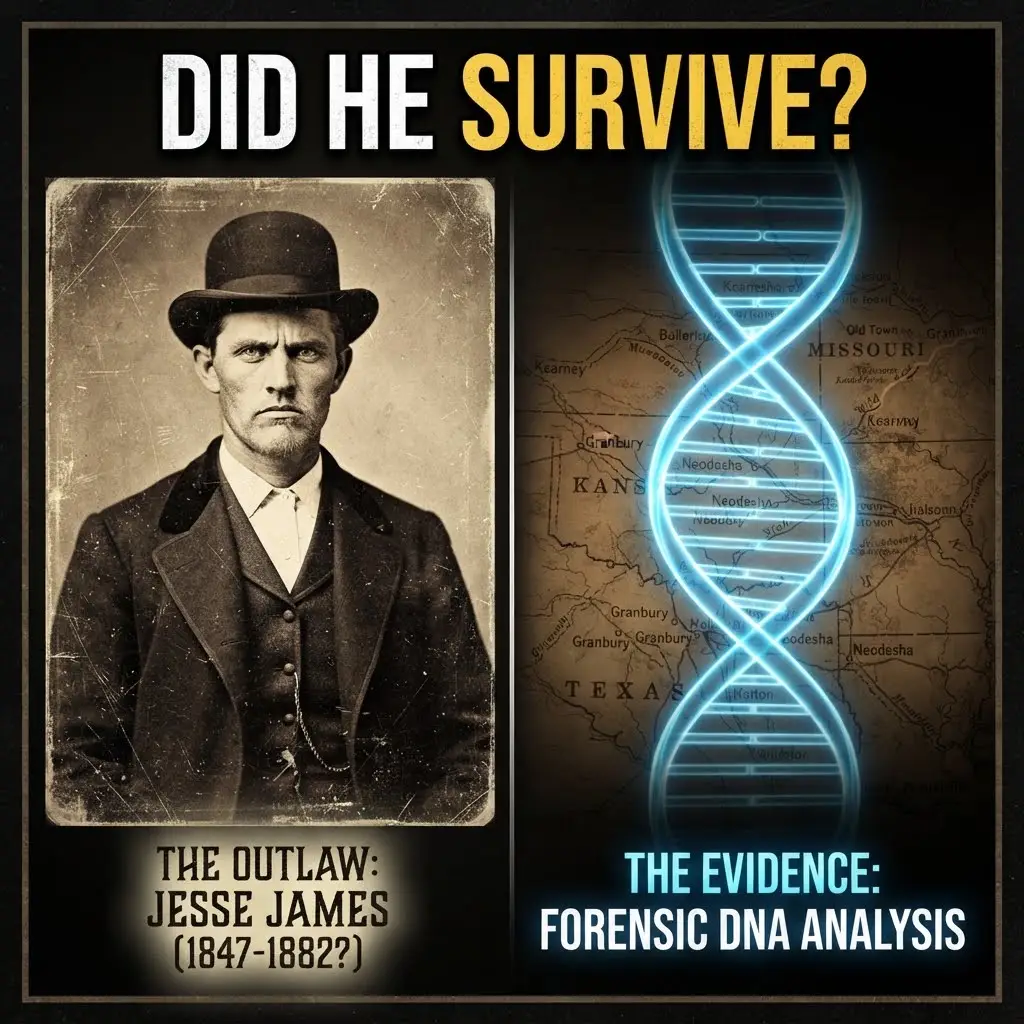
The Jesse James DNA Myth: Why Are There 3 Graves?
FAQs
What are the authentic remains of Jesse James?
The authentic remains of Jesse James are believed to be his skull, which was exhumed in 1995 from a grave in Missouri. The skull underwent extensive forensic analysis and DNA testing to confirm its authenticity.
Why were Jesse James’ remains exhumed?
Jesse James’ remains were exhumed in 1995 to settle a long-standing debate over whether the outlaw had actually been killed in 1882. The exhumation aimed to confirm the identity of the buried body and put to rest any doubts about his death.
What was the outcome of the forensic analysis on Jesse James’ skull?
The forensic analysis on Jesse James’ skull concluded that it was indeed authentic and belonged to the infamous outlaw. The analysis included comparing the skull’s features to historical photographs and conducting DNA testing with living descendants of Jesse James.
Where are Jesse James’ authentic remains now?
After the forensic analysis confirmed the authenticity of Jesse James’ skull, it was reburied in the original grave in Missouri. The remains are now considered to be the true final resting place of the notorious outlaw.
What impact did the confirmation of Jesse James’ remains have on history?
The confirmation of Jesse James’ authentic remains put an end to the speculation and conspiracy theories surrounding his death. It provided closure to the historical mystery and solidified the legacy of one of America’s most famous outlaws.