The Lingering Shadow of a Legend
The year 1882. A dusty, wind-swept landscape. A farmhouse in St. Joseph, Missouri. A violent confrontation. And the purported death of Jesse James, the infamous outlaw. For over a century, this narrative has been the accepted historical account, etched into the annals of American folklore. But legends, especially those as potent as Jesse James, rarely fade away neatly. The story of his demise, like so many aspects of his life, is shrouded in a persistent fog of doubt and speculation, fueled by tantalizing clues and the enduring human fascination with the man who dared to defy the law. Did Jesse James truly breathe his last in that St. Joseph room, a bullet from the gun of his own gang member, Robert Ford, ending his reign of terror? Or did something far more complex, far more cunning, transpire, allowing the outlaw to slip through the fingers of justice and into a life of anonymity? The truth, as it often does, lies somewhere in the murky depths between fact and fiction, a tantalizing puzzle that continues to captivate historians and enthusiasts alike.
The question of whether Jesse James died in 1882 has intrigued historians and enthusiasts alike for years, leading to various theories and discussions surrounding his life and legacy. For those interested in exploring more about historical figures and their impact on society, you might find the article on the revival of ancient engineering fascinating. It discusses the restoration of the Assyrian aqueduct of Jerwan, showcasing how historical achievements continue to influence modern engineering practices. You can read more about it here: Reviving the Ancient Assyrian Aqueduct of Jerwan.
The Official Account and Its Unraveling
The prevailing narrative of Jesse James’s death is a dramatic, almost theatrical, conclusion to a life lived on the edge. On April 3, 1882, Robert Ford, a member of James’s own gang, shot Jesse James in the back of the head as he was removing a picture from the wall. This act, motivated by a desire for a reward and a chance at freedom, was presented as the definitive end to the outlaw’s career. The body, identified as Jesse James, was displayed, photographed, and buried, seemingly cementing the event in history. However, even in the immediate aftermath, whispers of doubt began to circulate. The speed with which the body was identified, the eagerness of the authorities, and the sheer improbability of such a public figure meeting such an ignoble end at the hands of a trusted associate all contributed to a growing sense of unease.
The Trial and the “Confession”
Following the shooting, Robert and Charles Ford were arrested and tried for the murder of Jesse James. Their defense hinged on the claim that they had acted in self-defense, a story that strained credulity given the circumstances. They were convicted and sentenced to hang, but this sentence was commuted by the governor, ultimately leading to their release and a share of the bounty money. The Fords’ testimony, presented as a confession and a corroborated account of the event, became the cornerstone of the official story. However, questions arose about the thoroughness of the investigation and the potential for coercion or fabrication in their statements. The speed of their trial and commutation, combined with the significant reward offered for Jesse’s capture, raised suspicions that the authorities might have been more interested in closing the case than in uncovering the absolute truth.
The Questionable Identification
A significant point of contention revolves around the identification of the body. Many who knew Jesse James intimately, including his mother and wife, expressed doubts about the corpse. The body was described as being of a different height and build than Jesse, and its teeth, when examined, did not perfectly match his known dental records. While the ravages of time and poor preservation techniques of the era could account for some discrepancies, the persistent nature of these doubts, voiced by those closest to him, could not be easily dismissed. The photographs of the deceased, though widely circulated, also showed a man whose features were difficult to definitively identify as the legendary Jesse James.
The Rise of the “Man Who Wasn’t Jesse” Theories
The seeds of doubt sown by the initial inconsistencies blossomed into a full-blown conspiracy that proposed Jesse James had, in fact, survived the St. Joseph incident and lived out his days in obscurity. These theories, often fueled by anecdotal evidence and the tantalizing possibility of a daring escape, gained traction over the years, adding layers of intrigue to the already complex legend. The idea that Jesse James, a man who had eluded capture for so long, could be so easily cornered and killed seemed, to many, a less plausible narrative than one of elaborate deception.
The “Other Jesse” Claims
Several individuals, throughout the 20th century, claimed to be Jesse James, or to have known him after 1882. The most prominent of these was a man named J. Frank Dalton, who, in the 1930s and 1940s, asserted he was the real Jesse James. He recounted tales of his life after his supposed death, describing how he had faked his demise to escape the authorities and live a peaceful life. While his claims were met with skepticism and eventually debunked through genealogical research and examination of his physical characteristics, the very fact that such claims could gain a following speaks to the enduring power of the “Jesse lived” narrative. These individuals, whether genuine believers or elaborate hoaxers, tapped into the public’s desire to believe that their hero had outsmarted the system.
The “Double” Hypothesis
Another variation on the “Jesse lived” theory suggests that Jesse James, sensing impending betrayal, orchestrated his own death by having a look-alike or a willing accomplice take his place. This individual, the theory posits, would be killed in his stead, allowing the real Jesse to disappear and begin a new life under an assumed identity. This would explain the discrepancies in the body’s identification and the Fords’ eagerness to collect the reward. The complexities of such a plan, however, would require an immense level of trust and meticulous planning, making it a challenging theory to prove conclusively.
The Ballistics and Bloodline Enigma
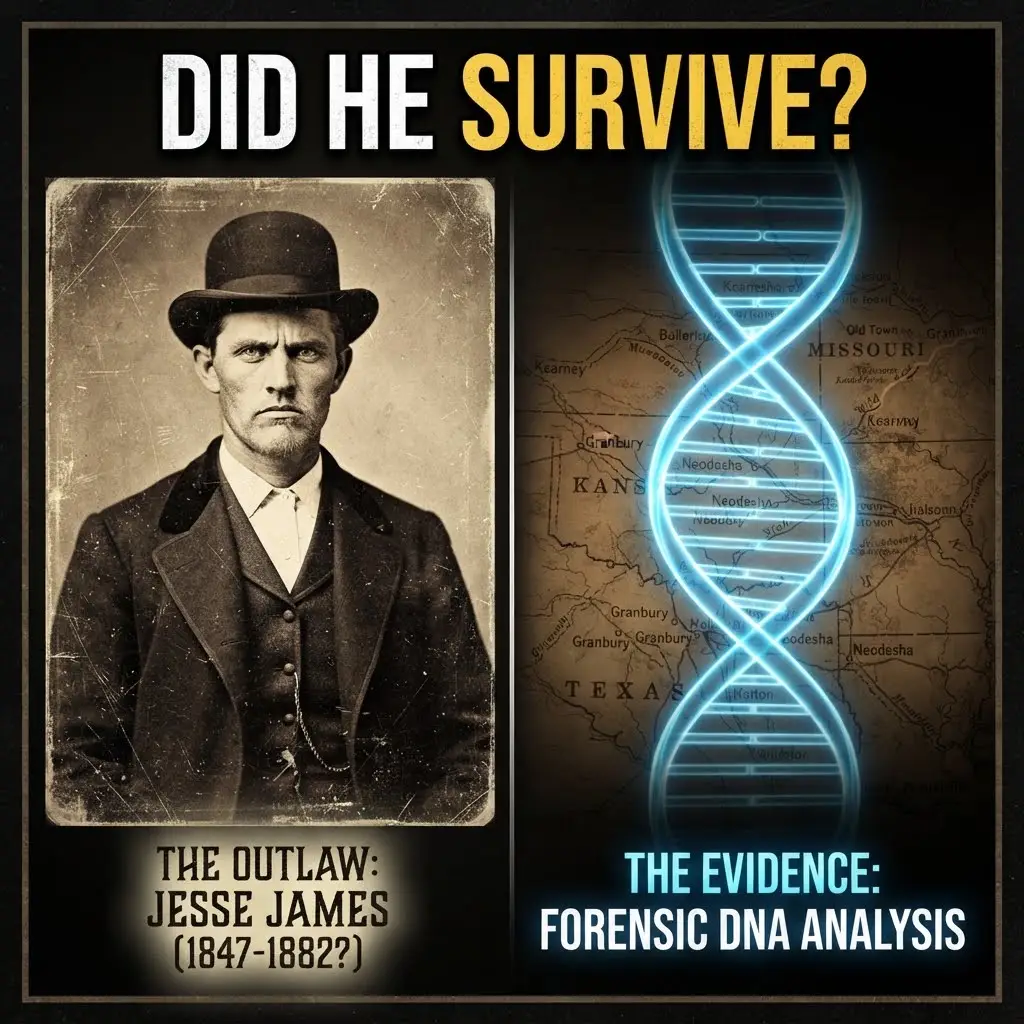
Scientific advancements have offered new avenues for investigating historical mysteries, and the Jesse James case is no exception. DNA analysis, in particular, has provided a potential tool to finally settle the debate, though its application has been fraught with its own set of challenges and controversies. The hope is that by comparing DNA from skeletal remains purported to be Jesse James with DNA from his known descendants, a definitive answer can be reached.
DNA Evidence and its Interpretations
In 1995, the skeletal remains of Jesse James, exhumed from the original burial site in Granbury, Texas, were subjected to DNA analysis. The initial findings were presented as inconclusive, unable to definitively confirm or deny the identity. Later re-examinations, however, using more advanced techniques, have suggested a higher probability that the remains do, in fact, belong to Jesse James. Yet, the interpretation of DNA evidence can be complex, and the debate continues among experts. The accuracy of the samples, the potential for contamination, and the statistical probabilities involved all contribute to the ongoing discussion.
The Search for Definitive Proof
The pursuit of definitive proof extends beyond DNA. Researchers have meticulously examined historical documents, diaries, letters, and local records, searching for any inconsistencies or overlooked clues. The ongoing efforts to piece together the true narrative involve a multidisciplinary approach, combining historical research, forensic science, and genealogical investigation. The ultimate goal is to find a piece of evidence so compelling that it can no longer be ignored, a smoking gun that finally resolves the lingering questions surrounding Jesse James’s fate.
The mystery surrounding the death of Jesse James in 1882 has intrigued historians and enthusiasts alike for generations. Many have speculated about the circumstances of his demise and whether he truly met his end at the hands of Robert Ford. For a deeper understanding of historical events and their implications, you might find it interesting to explore the dynamics of modern conflicts in a different context, such as the ongoing tensions in global politics, which are discussed in this article on the new space cold war. You can read more about it here.
The Persistent Allure of the Outlaw
| Metric | Data |
|---|---|
| Subject | Jesse James |
| Death Year | 1882 |
| Date of Death | April 3, 1882 |
| Cause of Death | Assassination (shot in the back) |
| Location of Death | St. Joseph, Missouri, USA |
| Age at Death | 34 years old |
| Occupation | Outlaw, bank and train robber |
| Historical Significance | Famous American outlaw and folk hero |
Regardless of whether Jesse James died in 1882 or lived to see another day, his legend continues to exert a powerful hold on the American imagination. He has become a symbol of rebellion, defiance, and a romanticized vision of the Wild West. His story, intertwined with themes of justice, retribution, and the pursuit of freedom, resonates deeply with a public often disillusioned with authority.
Jesse James in Popular Culture
The image of Jesse James has been immortalized in countless books, films, songs, and even video games. From the early penny dreadfuls to Hollywood blockbusters, his exploits have been dramatized and sensationalized, shaping the public’s perception of him. These portrayals, while entertaining, often blur the lines between fact and fiction, further contributing to the mystique surrounding his life and death. The enduring popularity of these narratives suggests a deep-seated need to believe in figures who embody a spirit of rugged individualism and a challenge to the established order.
The Enduring Mystery and its Appeal
The very ambiguity surrounding Jesse James’s death is perhaps what makes him such a captivating figure. The unresolved questions allow for continuous speculation and debate, keeping his story alive and relevant. The possibility that he might have escaped his fate, that the outlaw might have lived to tell his own tale in private, adds a layer of intrigue that a simple, definitive end could never provide. The mystery of Jesse James is not just about the man himself, but also about our enduring fascination with the unknown, with the stories that refuse to be neatly packaged and concluded. The shadow of Jesse James, whether that of a ghost or a man living in hiding, continues to linger, a testament to the power of legend and the unquenchable thirst for truth.
The Jesse James DNA Myth: Why Are There 3 Graves?
FAQs
1. Did Jesse James die in 1882?
Yes, Jesse James was killed on April 3, 1882, by Robert Ford, a member of his own gang, in St. Joseph, Missouri.
2. How old was Jesse James when he died?
Jesse James was 34 years old when he was shot and killed in 1882.
3. What was the cause of Jesse James’ death?
Jesse James died from a gunshot wound to the back of his head inflicted by Robert Ford while James was adjusting a picture on the wall in his home.
4. Where was Jesse James when he was killed?
Jesse James was killed at his residence in St. Joseph, Missouri, where he had been living under the alias Thomas Howard.
5. What was the aftermath of Jesse James’ death?
After Jesse James’ death, Robert Ford was charged with murder but later pardoned. James’ legacy as a notorious outlaw and folk hero continued to grow after his death.