
The Enduring Mystery of Jesse James’ Final Resting Place
The legend of Jesse James, the notorious outlaw of the American West, is steeped in myth and speculation. While his exploits as a bank and train robber are well-documented, his death and burial have been the subject of persistent debate for over a century. The official account states that James was shot and killed by Robert Ford in 1882, and subsequently buried in an unmarked grave in his family’s cemetery in St. Joseph, Missouri. However, a persistent undercurrent of doubt has fueled various theories, with some claiming that the man buried in St. Joseph was not the infamous outlaw at all. This article delves into the historical evidence, the scientific investigations, and the enduring folklore surrounding who truly lies in Jesse James’ grave.
The mystery surrounding the grave of the infamous outlaw Jesse James has intrigued historians and enthusiasts alike for years. Many have speculated about the true identity of the person buried in his grave, with various theories and claims emerging over time. For those interested in exploring more about historical figures and their legacies, a related article can be found at Lost Inventions: History’s Game Changers, which delves into the fascinating stories of individuals who have shaped history in unexpected ways.
Unraveling the Official Narrative of Jesse James’ Death
The most widely accepted account of Jesse James’ demise paints a grim picture of betrayal. On April 3, 1882, Jesse James, along with his brother Frank, was residing at a house in St. Joseph, Missouri, under the alias of Mr. Thomas Howard. He had been contemplating his next move, reportedly planning to surrender to authorities. According to the historical record, James asked his associate, Robert Ford, to fetch a gun from a nearby table, believing it to be cleaned. While James was reaching for it, Ford, who had been secretly conspiring with Missouri Governor Thomas Crittenden to collect a reward for James’ capture, drew his own pistol and shot James in the back of the head. The assassination was swift and, according to most contemporary accounts, definitive.
The Immediate Aftermath and the Public Spectacle
Following the shooting, the Ford brothers quickly surrendered to the authorities. The body of Jesse James, or at least the man believed to be him, was displayed publicly in his home before being taken to the James family cemetery on the property of Zerelda Samuel, Jesse’s mother, in Kearney, Missouri. The intention was to quell any rumors of his survival and to solidify the bounty claims. The swiftness of the public display and the apparent lack of extensive forensic examination by modern standards, however, laid the groundwork for future doubts. The body was reportedly identified by his mother and wife, both of whom might have been under duress or had reasons to corroborate the official story. The grave was initially marked with a simple wooden cross, which has since been replaced by a more permanent monument, albeit still a modest one.
The Ford Brothers’ Confession and the Reward
Robert and Charles Ford were tried for the murder of Jesse James. Robert pleaded guilty, while Charles was acquitted. Robert Ford was sentenced to life imprisonment for his role in the assassination, a sentence that was famously commuted by Governor Crittenden within a matter of months, allowing Ford to walk free. This swift commutation, coupled with the significant reward offered for James’ capture, has always fueled suspicion that the Fords were motivated by greed and that the entire event might have been orchestrated or misrepresented. The public perception of the Fords as opportunistic killers, rather than heroic lawmen, further contributed to the lingering skepticism.
The Seeds of Doubt: Whispers of a Substitute
The official story, while seemingly complete, contained enough inconsistencies and motivations for foul play that it was not long before whispers of doubt began to circulate. The rapid end to the Fords’ imprisonment, the potential for financial gain, and the very nature of Jesse James’ outlaw persona—a man adept at evasion and disguise—all contributed to the fertile ground for alternative theories. If Jesse James were still alive, who might have been buried in his place? The most prevalent theory suggests that the body in the St. Joseph grave was not Jesse but rather a look-alike, or perhaps even a deceased confederate or associate whose death could be conveniently passed off as that of the infamous outlaw.
The Case for “John Doe” and Other Imposters
Over the decades, several individuals have been put forward as potential candidates for the man buried in St. Joseph. One prominent theory involved a man named Johnnie “Jim” Kelly, a former confederate soldier who bore a striking resemblance to Jesse James. Stories circulated that Kelly, dying of illness, was convinced or coerced into taking Jesse’s place, allowing the real Jesse to disappear and live out his life in anonymity. Another line of speculation points to the possibility that the body was that of a less famous criminal, or even an unidentified individual whose death could be used to settle the bounty and close the book on Jesse James. These theories often rely on anecdotal evidence, secondhand accounts, and the romantic notion of a cunning outlaw outsmarting his pursuers to the very end.
The “Confederate Connection” and Faked Deaths
The deep ties between Jesse James and his confederate past also played a role in the enduring mystery. Many of his former comrades were skilled in deception and survival. It is conceivable that a network of loyalists could have conspired to fake Jesse’s death, thereby protecting him from further prosecution and allowing him to escape the notoriety that had become a constant threat. The idea of a secret rendezvous, a staged assassination, and a clandestine escape all contribute to the allure of these alternative narratives. These theories, however, often lack concrete evidence and are built upon conjecture and the desire for a more dramatic conclusion to the outlaw’s saga.
Scientific Scrutiny: DNA and the St. Joseph Remains
As scientific advancements progressed, the possibility of definitively answering the question of who was buried in Jesse James’ grave became more tangible. DNA analysis, in particular, offered the promise of settling the long-standing debate. In 1995, the remains interred in the St. Joseph cemetery were exhumed for scientific investigation, a move that was met with both anticipation and trepidation by those invested in the legend. The objective was to extract DNA from the remains and compare it to that of known relatives of Jesse James.
The 1995 Exhumation and DNA Extraction
The exhumation was a carefully managed event, overseen by forensic scientists and historians. The body, found to be in a remarkably well-preserved state, was carefully examined. Samples were collected from the bones, including teeth and long bones, which are known to yield good quality DNA. The process of extracting usable DNA from ancient remains is complex and requires meticulous attention to detail to avoid contamination. The initial findings from this exhumation were promising, suggesting that a genetic analysis was indeed feasible.
The Comparison with Jesse’s Descendants
The critical step in the scientific investigation was the comparison of the DNA extracted from the St. Joseph remains with that of authenticated descendants of Jesse James. Researchers obtained DNA samples from Jesse’s great-grandchildren, ensuring a direct genetic link. The results of these comparisons were eventually published, and they provided a significant piece of the puzzle. The analysis concluded that the DNA from the remains in St. Joseph was not a match for the known descendants of Jesse James. This finding, while not definitively proving that the man was an imposter, cast considerable doubt on the official narrative.
Implications of the DNA Findings
The implications of the DNA evidence were profound. It suggested that the widely accepted account of Jesse James’ death and burial might be incorrect. If the man buried in St. Joseph was not Jesse James, then the outlaw must have survived his supposed assassination and lived out his days elsewhere. This re-opened the floodgates for speculation and fueled further investigation into the possibility of a life lived in hiding. The scientific consensus, at least based on the 1995 analysis, leaned heavily towards the man in the grave being someone other than the legendary outlaw.
The mystery surrounding the grave of the infamous outlaw Jesse James has intrigued many for years, leading to various theories about his final resting place. Some believe that he was buried in a secret location, while others argue that his grave is in the town of Kearney, Missouri. For those interested in exploring more historical enigmas, a fascinating article discusses the Piri Reis map and its connection to ancient mysteries, which can be found here. This exploration of history not only sheds light on forgotten tales but also highlights the enduring allure of uncovering the past.
The Case for Survival: Jesse James in Hiding
| Metric | Information |
|---|---|
| Person Buried | Jesse James |
| Location | Kearney, Missouri, USA |
| Grave Site | Mount Olivet Cemetery |
| Date of Burial | April 4, 1882 |
| Notable Fact | Jesse James was a famous outlaw and bank robber in the American Old West. |
| Controversy | Some theories suggest Jesse James was not actually buried there, but these are not widely accepted. |
The findings from the DNA analysis significantly bolstered the theories that Jesse James had not died in 1882. If he wasn’t buried in St. Joseph, then he must have lived on. This led to renewed interest in various anecdotal accounts and claims of sightings of the outlaw in his later years, living under assumed identities. The romantic appeal of Jesse James escaping his pursuers and living a quiet life, free from the constraints of his outlaw past, proved irresistible to many.
The “Oklahoma Jesse” and Other Persistent Claims
Over the years, numerous individuals have claimed to be Jesse James, or have offered evidence suggesting the outlaw lived a long life. One of the most persistent claims involves an elderly man named J. Frank Dalton, who died in Oklahoma in 1951. Supporters of the “Oklahoma Jesse” theory point to his deathbed confession, his striking resemblance to Jesse James, and the existence of a distinctive scar on his hand that allegedly matched one described on Jesse. They argue that Dalton was indeed the real Jesse James, having faked his death in Missouri and moved to Oklahoma. Other claims, though less well-documented, also emerged, painting a picture of an outlaw who masterfully evaded capture and the consequences of his actions.
The Unresolved Questions and the Appeal of the Enigma
Despite the scientific evidence suggesting the St. Joseph remains were not Jesse James, definitive proof of his survival and subsequent life remains elusive. The lack of concrete, verifiable evidence supporting any of the survival theories leaves the question hanging in the air. The enduring appeal of the Jesse James enigma lies precisely in this ambiguity. He represents the archetype of the rebellious spirit, the charismatic outlaw who defied authority. The idea that he might have outsmarted everyone, faked his own death, and lived to see another day, unburdened by his past, is a captivating narrative that continues to resonate.
The mystery surrounding the final resting place of notorious outlaw Jesse James has intrigued many, leading to various theories and investigations over the years. For those interested in exploring more about historical figures and their hidden stories, a fascinating article on ancient cartography and forbidden knowledge can provide a unique perspective on how history is often shaped by the narratives we choose to believe. You can read more about this intriguing subject here.
The Enduring Legacy: Myth, Reality, and the Unsettled Grave
The story of Jesse James is a complex tapestry woven from historical fact, folklore, and enduring speculation. The official account of his death and burial has been challenged by scientific evidence and the persistent allure of alternative narratives. While DNA analysis has cast significant doubt on the identity of the person interred in St. Joseph, the question of Jesse James’ ultimate fate remains a compelling mystery.
The St. Joseph Cemetery: A Focal Point of Contention
The cemetery in St. Joseph, Missouri, continues to be a focal point of this historical debate. While the DNA evidence suggests the remains are not Jesse James, the monument still stands, and many continue to believe it marks his grave. This disconnect highlights the power of legend and the human tendency to cling to the most dramatic or romanticized version of events. The cemetery serves as a tangible reminder of the unresolved questions surrounding the outlaw’s life and death.
The Unanswered Question: Where Did Jesse James Truly Rest?
Ultimately, the question of who is buried in Jesse James’ grave may never be definitively answered to everyone’s satisfaction. The official record points to Robert Ford’s assassination and a burial in St. Joseph. Scientific evidence suggests otherwise. The possibility that Jesse James lived out his life in anonymity, perhaps under a new name, remains a tantalizing prospect. The legacy of Jesse James is not just in his crimes, but in the enduring mystery that surrounds him, a testament to the power of a legendary figure to transcend his own mortal existence and become a permanent fixture of American folklore. The truth, it seems, may forever be buried with the outlaw himself, or perhaps, it is still out there, waiting to be discovered in some forgotten corner of the American West.
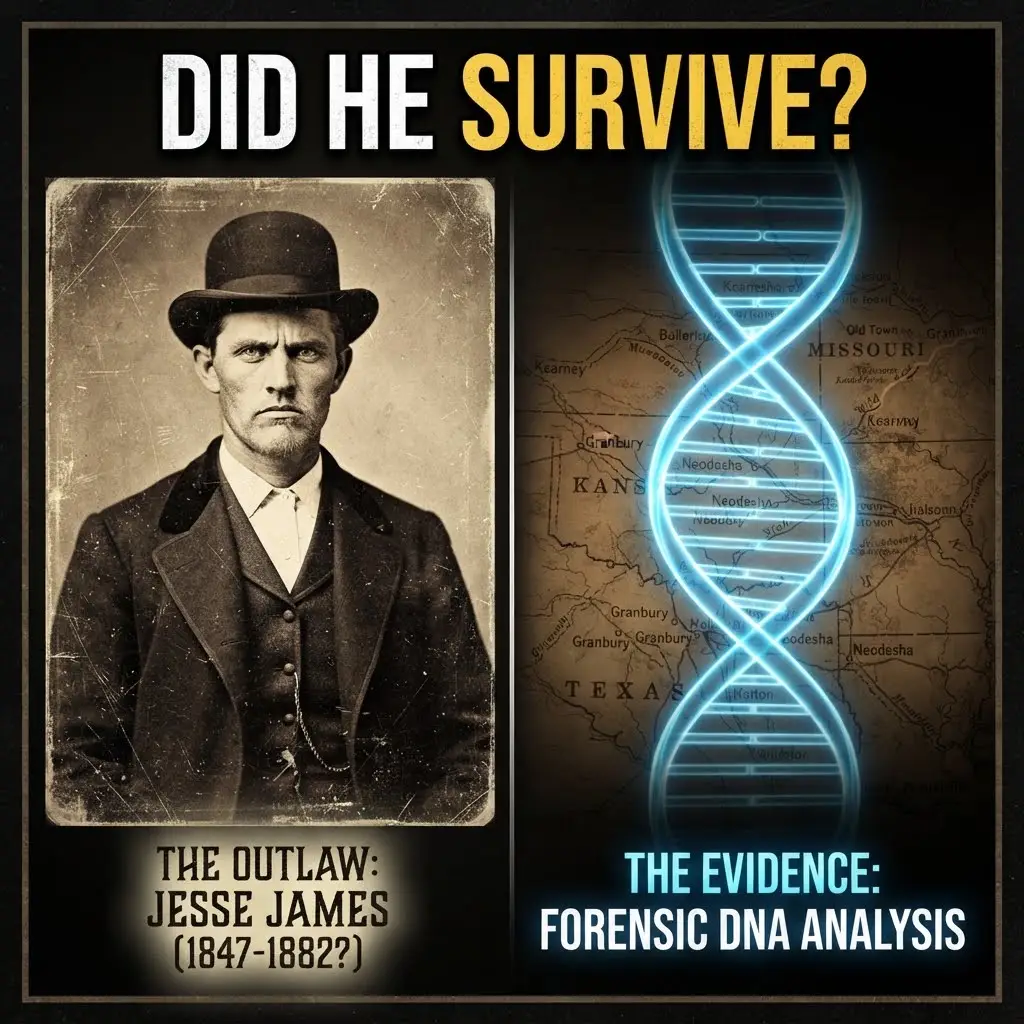
The Jesse James DNA Myth: Why Are There 3 Graves?
FAQs
1. Who is buried in Jesse James’ grave?
Jesse James, the infamous American outlaw, is buried in his grave. He was killed on April 3, 1882, and laid to rest in Kearney, Missouri.
2. How did Jesse James die?
Jesse James was shot and killed by Robert Ford, a member of his own gang, on April 3, 1882. Ford shot James in the back of the head while James was adjusting a picture on the wall in his home.
3. Where is Jesse James’ grave located?
Jesse James’ grave is located in Kearney, Missouri, at the Mount Olivet Cemetery. The cemetery is a popular tourist attraction for those interested in the history of the American West.
4. Is Jesse James’ grave a popular tourist destination?
Yes, Jesse James’ grave is a popular tourist destination for history enthusiasts and fans of the Wild West. Visitors can pay their respects at his grave and learn more about his life and infamous outlaw activities.
5. Are there any controversies surrounding Jesse James’ grave?
There have been some controversies surrounding Jesse James’ grave, including claims of mistaken identity and conspiracy theories suggesting that he faked his death. However, historical evidence and DNA testing have confirmed the authenticity of his burial site.