The human genome, a complex tapestry of genetic information, serves as a blueprint for life. While the vast majority of our DNA resides within the nucleus of our cells, a significant and distinct component exists elsewhere: mitochondrial DNA (mtDNA). Understanding the differences between nuclear DNA, often referred to in a conceptual sense as an “individual genetic nametag,” and mtDNA is crucial for comprehending inheritance, evolutionary history, and the diagnosis of certain diseases. This article will delve into the key distinctions between these two vital genetic entities.
The Nuclear Genome: The Architect of Individuality
The nuclear genome is the primary repository of an individual’s genetic code, containing the instructions for building and maintaining an entire organism. It is organized into chromosomes, which are found in the nucleus of virtually every cell in the body. This genetic material is the product of a unique combination of parental contributions, making it the foundation of an individual’s unique identity.
Maternal Inheritance: The Uniparental Thread
A defining characteristic of mitochondrial DNA is its exclusively maternal inheritance. Unlike nuclear DNA, which is a fifty-fifty blend inherited from both mother and father, mtDNA is passed down solely from the mother to her offspring. This occurs because the egg cell contributes virtually all of the cytoplasm, including the mitochondria, to the zygote, while the sperm’s contribution is primarily its nucleus. This uniparental inheritance pattern makes mtDNA a powerful tool for tracing maternal lineage. Scientists can analyze mtDNA from ancient remains or across populations to reconstruct family trees and understand migration patterns stretching back thousands of years, all through the lens of maternal ancestry. This contrasts sharply with nuclear DNA, where tracing ancestry requires sifting through a much more complex inheritance pattern from both sides of a family.
Gene Content and Function: Blueprint for the Whole Organism
The nuclear genome is remarkably vast, comprising approximately 3 billion base pairs and encoding tens of thousands of genes. These genes are responsible for a staggering array of functions, from determining physical traits like eye color and height to regulating complex biological processes such as metabolism, immune response, and neural development. The sheer number and diversity of genes within the nucleus allow for the intricate complexity and individuality that characterize each person. Each gene, through its unique sequence, dictates the production of specific proteins or functional RNA molecules, ultimately shaping an individual’s phenotype. The nucleus, therefore, acts as the central command center, housing the comprehensive instruction manual for the entire organism.
Recombination: Shuffling the Genetic Deck
A key process in the inheritance of nuclear DNA is recombination, also known as crossing over. During meiosis, the process of gamete formation, homologous chromosomes exchange genetic material. This shuffling of genetic information creates new combinations of alleles, leading to increased genetic diversity within a population. Recombination ensures that offspring are not simply clones of their parents but possess a unique blend of their parents’ genetic material. This evolutionary advantage promotes adaptation and survival by providing a wider range of traits for natural selection to act upon. The presence of recombination in nuclear DNA is a critical factor in the continuous evolution of species.
Evolutionary Significance: A Story of Adaptation and Diversity
The nuclear genome’s ability to recombine and its vast number of genes facilitate rapid adaptation to changing environments. Natural selection favors individuals with advantageous gene combinations, leading to the diversification of life forms and the emergence of new species over evolutionary timescales. The vastness of the nuclear genome also allows for the development of complex traits and behaviors that are essential for survival and reproduction in diverse ecological niches. Its dynamic nature, shaped by mutation, selection, and recombination, is the engine driving the incredible biodiversity observed on Earth.
Mitochondrial DNA plays a crucial role in understanding maternal lineage and evolutionary biology, while individual genetic nametags provide insights into personal ancestry and genetic predispositions. For a deeper exploration of how genetic factors can influence environmental interactions, you might find the article on coastal erosion particularly interesting. It discusses how human activities and genetic diversity can impact shoreline stability, highlighting the interconnectedness of genetics and environmental science. You can read more about it here: Coastal Erosion: The Threat to Shoreline Stability.
Mitochondrial DNA: The Powerhouse’s Legacy
Mitochondrial DNA, or mtDNA, is a small, circular molecule found within the mitochondria, the organelles responsible for cellular respiration and energy production. While its genetic content is far less extensive than that of the nuclear genome, mtDNA plays a vital role in cellular function and offers unique insights into our evolutionary past.
Maternal Inheritance: The Uniparental Thread
A defining characteristic of mitochondrial DNA is its exclusively maternal inheritance. Unlike nuclear DNA, which is a fifty-fifty blend inherited from both mother and father, mtDNA is passed down solely from the mother to her offspring. This occurs because the egg cell contributes virtually all of the cytoplasm, including the mitochondria, to the zygote, while the sperm’s contribution is primarily its nucleus. This uniparental inheritance pattern makes mtDNA a powerful tool for tracing maternal lineage. Scientists can analyze mtDNA from ancient remains or across populations to reconstruct family trees and understand migration patterns stretching back thousands of years, all through the lens of maternal ancestry. This contrasts sharply with nuclear DNA, where tracing ancestry requires sifting through a much more complex inheritance pattern from both sides of a family.
Gene Content and Function: The Energy Factory’s Instructions
Mitochondrial DNA is significantly smaller than nuclear DNA, typically comprising around 16,500 base pairs in humans. It contains a limited number of genes, generally around 37, which are primarily involved in essential aspects of cellular respiration. These genes encode components of the electron transport chain and ATP synthase, the molecular machinery responsible for generating most of the cell’s energy in the form of ATP. While the nucleus houses the complete blueprint for an organism, mtDNA focuses specifically on the operational instructions for the mitochondria, ensuring the cell has the power it needs to function. Without functional mitochondria, cells and, consequently, the organism, cannot survive.
Lack of Recombination: A Faithful Transmission
A crucial difference between mtDNA and nuclear DNA is the absence of recombination in mtDNA. Since it is inherited from a single parent and replicates independently, mtDNA does not undergo the shuffling of genetic material seen in nuclear DNA. This means that mtDNA is passed down from mother to child with relatively little alteration, except for occasional mutations. This lack of recombination makes mtDNA a highly stable marker for tracing maternal lineages over long periods. Any variations observed in mtDNA are therefore likely due to accumulated mutations, providing a record of genetic drift and divergence within maternal lines.
Evolutionary Significance: Tracing Ancient Migrations and Maternal Ancestry
The unique properties of mtDNA, particularly its maternal inheritance and lack of recombination, make it an invaluable tool for evolutionary studies. By analyzing variations in mtDNA across different populations, scientists can reconstruct ancient migration patterns and estimate divergence times between groups. This has provided profound insights into human evolution, revealing the origins of modern humans in Africa and their subsequent dispersal across the globe. mtDNA analysis has allowed us to trace our maternal lineage back tens of thousands of years, offering a direct link to our ancestral mothers and their journeys. This contrasts with nuclear DNA, which, due to recombination, provides a more complex picture of ancestry involving contributions from many ancestors over shorter timescales.
Comparing the Nametags: Key Differentiating Factors
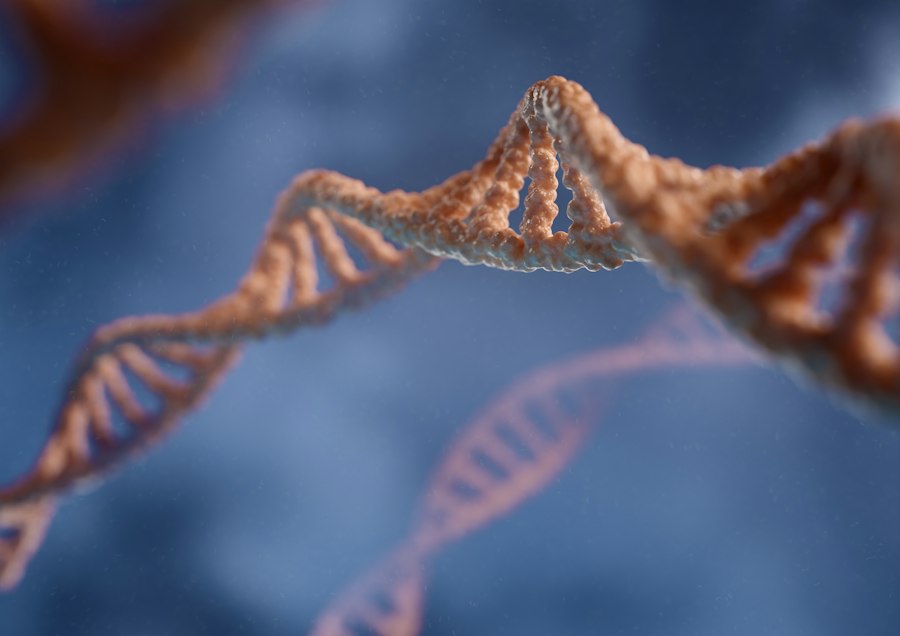
The differences between mitochondrial DNA and the conceptual “individual genetic nametag” represented by nuclear DNA are profound and have significant implications for genetics, anthropology, and medicine.
Inheritance Patterns: One Parent vs. Both
The most striking difference lies in their inheritance. Nuclear DNA is biparental, meaning an individual receives half of their nuclear genetic material from their mother and the other half from their father. This biparental inheritance creates a unique combination of genes that forms the basis of an individual’s distinct genetic makeup. In contrast, mtDNA is strictly maternal. An individual inherits their entire mtDNA complement from their mother. This uniparental inheritance simplifies the tracking of maternal lineages but means that information about paternal ancestry is not encoded in mtDNA. This fundamental difference in inheritance is the primary reason for their distinct applications in genealogical and evolutionary studies.
Size and Complexity: A Grand Library vs. a Specialized Manual
The sheer scale of the genetic information is another major differentiator. The human nuclear genome is a massive library, containing billions of base pairs and tens of thousands of genes that orchestrate every aspect of an organism’s development and function. It’s the complete instruction manual for building and operating a human being. Mitochondrial DNA, on the other hand, is a slim, specialized manual. Its much smaller size and limited number of genes are focused on a very specific set of tasks: the efficient production of cellular energy. While it’s essential for life, its scope is far narrower than that of the nuclear genome.
Evolutionary Information: Broad Historical Record vs. Focused Maternal Lineage
The implications of these differences for evolutionary studies are significant. Nuclear DNA, with its recombination, provides a comprehensive but complex picture of ancestry, reflecting contributions from all ancestors over recent generations. It is invaluable for understanding population genetics, genetic variation within a species, and the evolutionary history of specific genes. mtDNA, due to its lack of recombination and maternal inheritance, acts as a direct and relatively undisturbed record of maternal lineage. It excels at tracing deep maternal ancestry, reconstructing ancient migration routes, and understanding the peopling of continents. While nuclear DNA tells the story of a multitude of ancestors across time, mtDNA tells the focused story of one’s direct maternal line, back into the mists of prehistory.
Mutation Rates and Accumulation: Speed of Change
Mitochondrial DNA generally exhibits a higher mutation rate compared to nuclear DNA. This is partly due to the less efficient DNA repair mechanisms within mitochondria and the higher exposure to reactive oxygen species produced during cellular respiration. While a higher mutation rate can lead to faster accumulation of genetic changes, which is useful for dating evolutionary events over shorter timescales, it also means that mtDNA can accumulate deleterious mutations that contribute to aging and certain diseases. Nuclear DNA, with its more robust repair systems and slower mutation rate, provides a more stable genetic blueprint, although mutations here can also have significant consequences.
Applications in Science and Medicine: Harnessing the Differences
The distinct characteristics of mtDNA and nuclear DNA have led to their independent and complementary applications across various scientific disciplines and in clinical settings.
Genealogy and Anthropology: Tracing Roots and Migrations
In genealogy and anthropology, mtDNA is a powerful tool for tracing maternal lineage. By comparing mtDNA sequences, individuals can identify individuals who share a common maternal ancestor, even if they are separated by vast distances or time. This has been instrumental in reconstructing ancient human migrations, understanding the genetic diversity of populations, and establishing familial relationships in cases where conventional records are absent. For instance, mtDNA studies have provided strong evidence for the Out of Africa theory of human origins and have helped map the dispersal of various ethnic groups across the globe. Nuclear DNA, while more complex to interpret for deep ancestry, is crucial for understanding recent familial relationships and establishing paternity or maternity in forensic investigations.
Forensic Science: Identification and Kinship Analysis
Forensic science utilizes both nuclear and mitochondrial DNA for identification and kinship analysis. Nuclear DNA, with its high degree of variability, is the gold standard for individual identification. Short tandem repeat (STR) analysis of nuclear DNA can create a unique genetic profile for each individual, allowing for definitive identification from crime scene samples. In cases where nuclear DNA is degraded or scarce, mtDNA analysis becomes invaluable. Because there are many mitochondria per cell and mtDNA is more resilient, it can often be recovered from challenging samples such as ancient bones, hair shafts without roots, and teeth. While mtDNA cannot definitively identify an individual on its own due to its lower variability and shared maternal inheritance, it can effectively exclude suspects or link individuals to a common maternal line, significantly narrowing down investigative possibilities.
Disease Diagnosis and Research: Unraveling Genetic Disorders
Dysfunctions in mitochondria, often stemming from mutations in mtDNA, are implicated in a growing number of diseases, particularly those affecting energy-demanding tissues like the brain, heart, and muscles. Mitochondrial diseases can manifest with a wide range of symptoms, from neurological disorders and muscle weakness to vision and hearing problems. The strict maternal inheritance of mtDNA means that these diseases are typically passed down from mother to child. Analyzing mtDNA can aid in the diagnosis of these conditions and help genetic counselors assess the risk of transmission within families. Furthermore, research into mtDNA mutations is shedding light on the roles of mitochondria in aging and neurodegenerative diseases like Parkinson’s and Alzheimer’s, opening avenues for new therapeutic strategies. Nuclear DNA also plays a crucial role in diagnosing genetic disorders, but these are often inherited in more complex Mendelian patterns or are associated with gene mutations within the vast nuclear genome.
Mitochondrial DNA plays a crucial role in tracing maternal lineage, providing insights into our ancestral roots, while individual genetic nametags offer a more comprehensive view of one’s entire genetic makeup. Understanding these differences can illuminate various aspects of human history and identity. For a deeper exploration of how environmental factors can influence genetic diversity and displacement, you might find this article on climate refugees particularly enlightening. It discusses the growing crisis of displacement and its implications on genetic heritage, which can be found here.
The Interplay Between Nuclear and Mitochondrial Genomes: A Collaborative Effort
| Feature | Mitochondrial DNA (mtDNA) | Individual Genetic Nametag (Nuclear DNA) |
|---|---|---|
| Source | Inherited maternally from the mother | Inherited from both parents (50% mother, 50% father) |
| Genome Size | Approximately 16,569 base pairs | Approximately 3 billion base pairs |
| Number of Genes | 37 genes (13 protein-coding, 22 tRNA, 2 rRNA) | About 20,000-25,000 protein-coding genes |
| Inheritance Pattern | Strictly maternal inheritance | Recombination from both parents |
| Mutation Rate | Higher mutation rate compared to nuclear DNA | Lower mutation rate compared to mtDNA |
| Use in Genetic Identification | Useful for tracing maternal lineage and ancestry | Used for individual identification and forensic analysis |
| Copy Number per Cell | Multiple copies per mitochondrion, many mitochondria per cell | Two copies per diploid cell (one from each parent) |
| Genetic Variation | Less variation within individuals, more variation between populations | High variation between individuals, basis for unique genetic fingerprint |
While distinct, the nuclear and mitochondrial genomes do not function in isolation. They engage in a complex and crucial interplay to ensure the proper functioning of the cell and the organism as a whole.
Co-evolution and Interdependence: A Partnership for Life
Despite their separate origins and inheritance patterns, the nuclear and mitochondrial genomes have co-evolved and are highly interdependent. A small number of genes originating from the mitochondria have been transferred to the nucleus over evolutionary time, meaning that some proteins essential for mitochondrial function are actually encoded in the nuclear DNA. Conversely, the majority of mitochondrial proteins are synthesized under the direction of nuclear genes. This intricate interdependence highlights a remarkable evolutionary partnership. Disruptions in this coordinated effort, whether due to mutations in mtDNA or nuclear genes affecting mitochondrial function, can have severe consequences for cellular health and organismal well-being. This demonstrates that while mtDNA provides the powerhouse’s instructions, the nuclear genome is the architect that designs and maintains this vital cellular component.
Mitochondrial Dysfunction and Aging: A Cellular Power Crisis
The accumulation of mtDNA mutations over an individual’s lifespan is thought to contribute significantly to the aging process. As mitochondria become less efficient due to accumulating damage, cellular energy production declines, leading to impaired tissue function and an increased susceptibility to age-related diseases. This “cellular power crisis” can manifest in various ways, affecting everything from cognitive function to physical resilience. Understanding the interplay between mtDNA integrity and the aging process is a key area of research, with potential implications for developing interventions to promote healthy aging and combat age-related decline. The constant demand on mitochondria for energy production, coupled with their less robust repair mechanisms, makes them a critical factor in the wear and tear of the organism over time.
The Future of Genetic Research: Unlocking Synergistic Insights
The continued exploration of both mitochondrial and nuclear DNA promises to unlock even deeper insights into human biology, evolution, and disease. Advances in sequencing technology are making it increasingly feasible to analyze entire genomes, both nuclear and mitochondrial, with greater speed and affordability. This will enable more comprehensive studies that can uncover the complex relationships between these two genetic systems. Future research will likely focus on understanding how variations in mtDNA interact with variations in nuclear DNA to influence disease susceptibility, predict treatment responses, and further refine our understanding of human evolutionary history. The synergistic insights gained from studying these two distinct yet interconnected genetic entities will undoubtedly lead to significant breakthroughs in personalized medicine, evolutionary biology, and our fundamental understanding of life itself.

The Jesse James DNA Myth: Why Are There 3 Graves?
FAQs
What is mitochondrial DNA?
Mitochondrial DNA (mtDNA) is a small circular genome found in the mitochondria, which are organelles within cells that are responsible for producing energy. Unlike nuclear DNA, which is inherited from both parents, mtDNA is inherited exclusively from the mother.
How does mitochondrial DNA differ from individual genetic nametag?
Mitochondrial DNA is a specific type of genetic material found in the mitochondria, while an individual genetic nametag refers to the unique combination of genes that make up an individual’s genetic profile, including both nuclear DNA and mtDNA.
Can mitochondrial DNA be used to trace maternal lineage?
Yes, mitochondrial DNA is commonly used in genetic genealogy to trace maternal lineage because it is passed down unchanged from mother to offspring. This allows researchers to track maternal ancestry through generations.
What are the advantages of using mitochondrial DNA in genetic studies?
One advantage of using mitochondrial DNA in genetic studies is its high copy number per cell, making it easier to extract and analyze compared to nuclear DNA. Additionally, mtDNA is more stable and less prone to mutations, which can be beneficial for certain types of genetic research.
How does individual genetic nametag provide a more comprehensive view of an individual’s genetic makeup?
Individual genetic nametag, which includes both nuclear DNA and mtDNA, provides a more comprehensive view of an individual’s genetic makeup by capturing genetic information from both parents. This can offer insights into a wider range of genetic traits and characteristics compared to analyzing mtDNA alone.