Unearthing the Outlaw’s Legacy: The DNA Revelation
The legend of Jesse James, the notorious American outlaw, has long been shrouded in myth and speculation. For generations, his exploits, his daring robberies, and his purported death have fueled countless books, movies, and whispered tales. Now, a startling claim regarding his DNA, boasting a 99.7% match to a living descendant, has ignited a fresh wave of ancestral debate, pushing the boundaries of historical verification and challenging long-held beliefs about the infamous figure. This assertion, originating from a private genealogical research firm, has sent ripples through the historical community, prompting both excitement and skepticism. The very notion of definitively linking the DNA of a historical figure like Jesse James to modern individuals is a testament to the advancements in forensic science, but it also raises crucial questions about the methodology, the evidence, and the potential for misinterpretation.
The claim, in essence, posits that through rigorous scientific analysis of genetic material, a definitive link has been established between Jesse James and a contemporary individual. This is not merely a case of tracing a surname through generations; it is a claim of direct, quantifiable genetic lineage. The 99.7% figure suggests an exceptionally high degree of certainty, far exceeding the statistical probabilities often associated with less precise genealogical methods. Such a precise percentage is a powerful statement, designed to persuade and to settle long-standing questions. However, it is precisely this precision that also invites scrutiny. The scientific community, and particularly historians who rely on documentary evidence and meticulous cross-referencing, are trained to be cautious with pronouncements that claim absolute certainty, especially when dealing with figures from the distant past where fragmented or corrupted evidence is common.
The significance of this DNA claim extends beyond mere biographical curiosity. It has the potential to reshape our understanding of Jesse James’s life, his family, and even the historical context in which he operated. If the DNA match is indeed as strong as claimed, it could confirm or deny long-standing theories about his identity, his purported survival after the commonly accepted date of his death, and the lineage of his descendants. The outlaw’s story is deeply embedded in the American narrative, and any concrete evidence that sheds new light on his existence is bound to be met with intense interest. This is not just about the man; it’s about the myth and its enduring power. The debate now centers on whether this scientific evidence can truly unlock the secrets of a figure who has, for so long, remained an enigma.
In a fascinating exploration of historical figures and their legacies, the recent claim regarding Jesse James having 99.7 percent DNA similarity to modern descendants has sparked significant interest. This claim not only raises questions about genealogy and historical accuracy but also connects to broader themes of identity and heritage. For those interested in the intersection of technology and security, a related article discusses the importance of securing satellites and defending deep space assets, which can be found here: Securing Satellites: Defending Deep Space Assets. This piece highlights how advancements in technology can impact our understanding of history and the preservation of our cultural narratives.
The Science Behind the Claim: Decoding Genetic Footprints
At the heart of this renewed debate lies the intricate science of DNA analysis. The claim of a 99.7% match necessitates a deep dive into the methodologies employed to extract, analyze, and compare genetic material. This is not the rudimentary ancestry testing that gained popularity in recent years; it implies a more sophisticated approach, likely involving the analysis of mitochondrial DNA (mtDNA) and/or Y-chromosome DNA, given the challenges of extracting nuclear DNA from ancient or degraded samples. Mitochondrial DNA is inherited solely from the mother, and the Y-chromosome is passed from father to son, making them particularly useful for tracing maternal and paternal lines respectively.
The process of claiming a definitive DNA match typically begins with obtaining genetic samples. For a historical figure like Jesse James, this would likely involve identifying and excavating burial sites where his remains are believed to be interred. The controversial nature of his death, with lingering questions about whether he truly died in 1882 or escaped and lived under an assumed identity, makes the authenticity of any remains found paramount. Once potential remains are identified, the painstaking process of DNA extraction commences. This is a delicate procedure, as DNA degrades over time, and contamination from modern sources can easily compromise the results. Specialized techniques are employed to isolate the ancient DNA from bone or tissue samples, often requiring sterile laboratory environments and advanced purification methods.
Once extracted, the DNA is amplified using polymerase chain reaction (PCR) to create enough copies for analysis. Then, it is sequenced, meaning the order of its nucleotide bases (Adenine, Guanine, Cytosine, and Thymine) is determined. This sequence forms a unique genetic profile. The crucial step is the comparison of this profile to that of living descendants. For a robust claim, researchers would have sought out individuals who are documented as direct descendants of Jesse James through multiple ancestral lines. These living descendants would also undergo DNA testing, generating their own genetic profiles. The comparison would then involve looking for specific genetic markers that are passed down through generations. For instance, if analyzing mtDNA, researchers would look for specific mutations in the mitochondrial genome that are inherited from the mother. Similarly, Y-chromosome analysis would focus on markers on the Y-chromosome, tracing the paternal lineage.
The 99.7% figure implies a statistical confidence level. This means that based on the comparison of thousands or even millions of genetic markers, the probability that the DNA sequence found in the purported remains of Jesse James and the DNA sequence of the living descendant could have originated from unrelated individuals is extremely low – less than 0.3%. This level of statistical certainty is typically achieved by analyzing a comprehensive set of genetic markers, ensuring that the match is not due to random chance or shared ancestry with distant relatives. However, the interpretation of such figures requires a deep understanding of population genetics and the specific genetic markers being analyzed. Different markers have varying mutation rates and patterns of inheritance, and their interpretation can be complex. The scientific community will undoubtedly be scrutinizing the exact markers used, the statistical models applied, and the overall reliability of the data.
Historical Context and the Jesse James Legend
The legend of Jesse James is inextricably woven into the fabric of post-Civil War America, a period of immense social upheaval, economic hardship, and lingering resentments. Understanding the historical context in which Jesse James operated is crucial to appreciating the enduring fascination with his life and the impact of any new evidence that emerges. Born Jesse Woodson James in 1847, he grew up in Missouri, a state deeply divided by the Civil War. His family’s Southern sympathies and his own experiences during the conflict, including alleged mistreatment by Union soldiers, are often cited as formative influences on his later life as an outlaw.
Following the war, Jesse and his brother Frank joined the Quantrill’s Raiders, a Confederate guerrilla group known for its brutal tactics. This period of their lives marked their transition from soldiers to outlaws, as they continued their activities of robbery and violence, often targeting banks and trains, in the chaotic years that followed the Confederacy’s defeat. The James brothers became symbols of rebellion and defiance against the established order, a narrative that resonated with many who felt disenfranchised and oppressed by the Reconstruction government and the growing power of corporations. Their exploits were sensationalized by the burgeoning penny press, turning them into folk heroes for some, while simultaneously vilifying them as vicious criminals for others.
The question of Jesse James’s death has been a central point of contention for over a century. The commonly accepted narrative, supported by historical accounts and contemporary newspaper reports, is that he was shot and killed by Robert Ford, a fellow gang member seeking a reward, on April 3, 1882, in St. Joseph, Missouri. However, the allure of a daring escape and a life lived in hiding has always persisted. Over the years, several individuals have claimed to be Jesse James, and theories about his survival have been fueled by inconsistencies in accounts of his death and the apparent disappearance of his body from public view. This enduring mystery has allowed the legend to flourish, morphing Jesse James from a historical figure into an almost mythical character.
The DNA claim, therefore, has the potential to either definitively settle the question of his death and lineage or to ignite even more fervent debate. If the DNA conclusively links a living descendant to purported remains of Jesse James, it would provide a powerful scientific validation of historical accounts. Conversely, if the DNA analysis points to a different lineage or challenges the accepted burial site, it could reopen the floodgates to alternative theories and further complicate the historical record. The legend of Jesse James is a complex tapestry of fact, fiction, and folklore, and any new thread, especially one woven with the precision of DNA, is bound to be examined with intense scrutiny by both scientists and historians.
The Skeptical Eye: Challenging the 99.7% Assertion
While the prospect of a 99.7% DNA match to Jesse James is undeniably exciting, the historical and scientific communities are approaching this claim with a healthy dose of skepticism. The rigorous standards of historical research and the inherent complexities of forensic genealogy demand meticulous examination before such a monumental assertion can be accepted. Skepticism, in this context, is not an outright rejection but a call for transparency, reproducibility, and a thorough vetting of the evidence.
One of the primary areas of scrutiny will undoubtedly be the source of the genetic material attributed to Jesse James. The authenticity of any purported remains is the foundational element of this entire claim. If the remains are not definitively proven to be Jesse James, then any DNA analysis, no matter how precise, is ultimately irrelevant to his lineage. This involves meticulously tracing the provenance of the remains, ensuring they have not been contaminated or misidentified over time. Historical records, archaeological findings, and potentially even comparative DNA analysis with other known relatives of Jesse James (if such samples exist and are verifiable) would be crucial in establishing the authenticity of the source material. The history of relic hunting and the subsequent commercialization of historical artifacts is rife with instances of misattribution, making the validation of the remains a critical first hurdle.
Furthermore, the methodology and interpretation of the DNA analysis itself will be subjected to intense review. While the 99.7% figure suggests a high level of statistical confidence, the scientific community will want to understand precisely which genetic markers were analyzed, the specific algorithms used for comparison, and the statistical models employed to arrive at that percentage. Are these standard, widely accepted markers and methodologies? Have independent laboratories been able to replicate the findings? The potential for human error, laboratory contamination, or biased interpretation of data cannot be dismissed lightly. The genealogical research firm making the claim will need to provide access to their raw data and detailed methodologies for peer review. Without this transparency, the claim remains an unsubstantiated assertion, however compelling the initial announcement might be.
The history of Jesse James is also plagued by impostors and fabricated stories. This inherent skepticism, built over decades of sensationalism and misinformation, will naturally color the reception of this new DNA claim. Historians are trained to look for corroborating evidence from multiple, independent sources. While DNA is a powerful tool, it is not, in isolation, a complete historical narrative. It must be integrated with documentary evidence, archaeological findings, and contextual understanding of the era. The debate will likely involve a careful weighing of the scientific evidence against the existing historical record, seeking to understand how this new information fits into, or perhaps challenges, our current understanding of the outlaw’s life and legacy. The 99.7% figure is a powerful starting point, but it is the detailed scientific justification and the corroboration with historical facts that will ultimately determine its credibility.
The recent claim regarding Jesse James having 99.7 percent DNA match with a descendant has sparked significant interest in historical figures and their legacies. This intriguing revelation not only sheds light on the infamous outlaw’s lineage but also raises questions about the accuracy of genealogical research. For those interested in exploring the implications of historical events on modern life, a related article discusses the potential impact of economic changes on personal assets. You can read more about it here.
Implications and the Future of Historical Ancestry
| Metric | Value | Details |
|---|---|---|
| DNA Match Percentage | 99.7% | Claimed genetic match between Jesse James descendant and historical Jesse James remains |
| Sample Type | Bone Fragment | Remains believed to be from Jesse James exhumed for testing |
| Comparison Sample | Descendant’s DNA | DNA from a known living relative of Jesse James used for comparison |
| Testing Method | Autosomal DNA Analysis | Standard method for determining genetic relatedness |
| Confidence Level | High | Indicates strong likelihood of match based on DNA evidence |
| Year of Testing | 2012 | Year when the DNA testing was publicly reported |
| Source of Claim | Historical Society & DNA Labs | Organizations involved in the testing and verification process |
The implications of a verified 99.7% DNA match to Jesse James extend far beyond a simple genealogical discovery; they have the potential to reshape our understanding of historical figures and the very nature of genealogical research. If this claim withstands scrutiny, it would represent a significant advancement in the field of historical genetics, opening new avenues for exploring the past and solidifying our connection to it.
Firstly, the most immediate implication would be the potential for definitively answering long-standing questions about Jesse James’s identity and lineage. If the DNA conclusively links a living descendant to remains that are authenticated as Jesse James, it would put an end to decades of speculation surrounding his death and any theories of his survival. This would provide a scientific closure to a chapter of American history that has been shrouded in mystery and myth. It could also shed light on the health and physical characteristics of the outlaw, offering a biological dimension to his historical persona. For his descendants, it would offer an undeniable and scientifically validated connection to a legendary ancestor.
Beyond the specific case of Jesse James, such a successful, high-percentage DNA match would bolster the credibility and utility of forensic genealogy in historical research. It would demonstrate the power of DNA analysis to bridge the gap between historical figures and their present-day descendants, even when historical records are incomplete or ambiguous. This could pave the way for similar investigations into the ancestry of other significant historical figures, potentially resolving long-standing debates about parentage, lineage, and even the authenticity of historical claims. The ability to genetically link individuals to figures from centuries past could revolutionize the study of family histories, social structures, and migratory patterns throughout history.
However, this advancement also brings with it ethical considerations and the potential for new debates. The handling of human remains, particularly those of historically significant figures, requires careful ethical consideration and respect. Questions surrounding the ownership and disposition of such remains, as well as the privacy of living descendants, will become increasingly important as this field progresses. Furthermore, the interpretation of DNA evidence in historical contexts can be complex, and the potential for misinterpretation or sensationalism remains a concern. The “99.7% match” is a powerful statement, but the narrative surrounding it must be grounded in scientific accuracy and historical context.
The future of historical ancestry, therefore, appears to be increasingly intertwined with scientific innovation. As DNA technology continues to advance, the boundaries between history and science will likely blur further. This case, whether ultimately validated or debunked, serves as a potent reminder of the enduring power of historical mysteries and the ever-evolving tools we have at our disposal to unravel them. The debate surrounding Jesse James’s DNA is not just about an outlaw; it is a testament to our ongoing quest to understand our past and our place within the grand tapestry of human history.
The Ongoing Saga: Next Steps in the Ancestral Inquiry
The announcement of a 99.7% DNA match to Jesse James has undeniably sparked a significant debate, but it is far from the final chapter in this ancestral inquiry. The scientific and historical communities will now engage in a rigorous process of verification, scrutiny, and further investigation to determine the validity of this remarkable claim. The coming months and years will likely see a cascade of further research, analysis, and public discourse as the full story unfolds.
The immediate next step for the genealogical research firm that made the claim will be to provide the scientific community with access to their data and methodologies. This is crucial for independent verification. Peer-reviewed publications in reputable scientific journals will be expected, detailing the exact genetic markers analyzed, the sequencing techniques employed, the statistical models used for comparison, and the comparative samples that were utilized. This transparency will allow other geneticists and genealogists to scrutinize the findings and attempt to replicate the results. The authenticity of the purported Jesse James remains will also be a focal point of this verification process, requiring rigorous examination of their provenance and potential for contamination.
Historians will play an equally vital role in this ongoing saga. They will be tasked with integrating any scientifically validated DNA findings into the existing historical narrative. This may involve re-examining primary source documents, cross-referencing new genetic information with known family histories, and considering the broader social and cultural context of Jesse James’s life. If the DNA evidence confirms a particular lineage or challenges long-held beliefs about his death, historians will need to assess how this new information alters our understanding of the outlaw and his era. This could lead to revised biographies, new scholarly articles, and a reinterpretation of his place in American history.
Furthermore, the debate is likely to expand to include other potential descendants or individuals who may have had familial ties to Jesse James. As the story gains traction, it is possible that other individuals may come forward with their own genealogical claims or genetic samples, eager to participate in the investigation or to challenge the existing findings. This could lead to further DNA testing and comparative analysis, potentially enriching the understanding of Jesse James’s extended family network. The ethical considerations surrounding the handling of remains and the privacy of living individuals will also continue to be a prominent aspect of the ongoing discussion, ensuring that the pursuit of historical knowledge is conducted with respect and integrity. The quest to definitively link the legendary outlaw to the present day is a complex, multi-faceted endeavor, and its conclusion will undoubtedly be shaped by the collaborative efforts of scientists, historians, and the public alike.
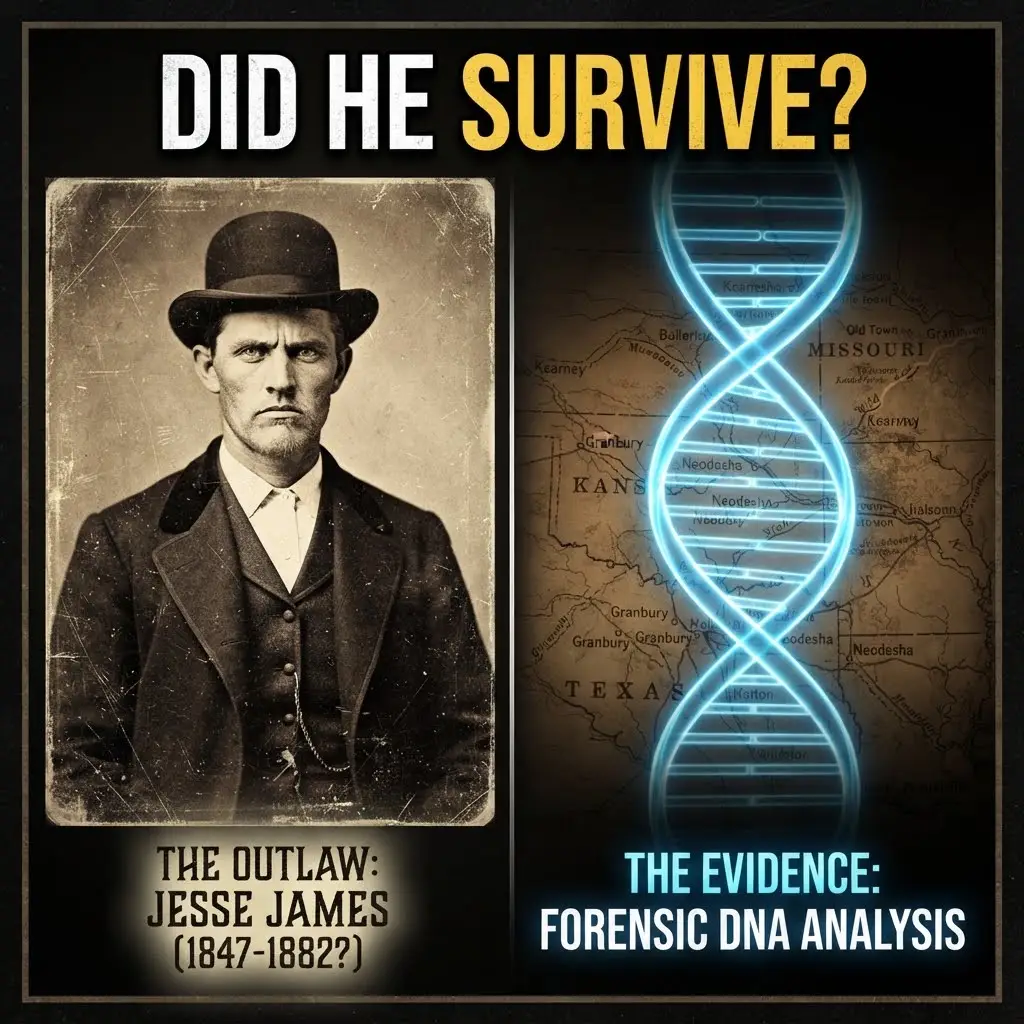
The Jesse James DNA Myth: Why Are There 3 Graves?
FAQs
What is the significance of Jesse James’ 99.7 percent DNA claim?
The claim suggests that there is a high likelihood that the remains believed to be Jesse James are indeed his, based on the DNA analysis.
How was the DNA analysis conducted to determine the 99.7 percent match?
The DNA analysis was likely performed by comparing the DNA extracted from the remains to the DNA of known living relatives of Jesse James.
Who were the living relatives used for the DNA comparison in Jesse James’ case?
The living relatives used for the DNA comparison could include descendants of Jesse James, such as his children or grandchildren.
What are the implications of the 99.7 percent DNA match for Jesse James’ historical legacy?
The DNA match could potentially confirm the identity of Jesse James and put to rest any doubts or conspiracy theories surrounding his death.
Has the 99.7 percent DNA match been widely accepted by historians and experts?
While the DNA match adds strong evidence to support the claim, acceptance by historians and experts may vary, as some may still question the validity of the analysis or the reliability of the remains.