The legend of Jesse James, a name synonymous with outlaw romance and daring exploits, continues to captivate imaginations. While his life was a whirlwind of train robberies, bank heists, and a relentless pursuit by lawmen, his final resting places have become points of historical intrigue and pilgrimage. Exploring the purported graves of Jesse James across Missouri, Texas, and Kansas offers a tangible connection to a figure who remains an enduring enigma in American history. These locations, steeped in local lore and historical debate, invite a deeper understanding of the myths and realities surrounding the infamous outlaw.
The Missouri Mausoleum: A Family Plot and a Lingering Mystery
Missouri, the heartland of Jesse James’s operations and his ultimate sanctuary, claims the most widely recognized and visited gravesite. Located in St. Joseph, Missouri, the simple headstone in the Mount Olivet Cemetery marks the burial place of Jesse James, as confirmed by his mother, Zerelda James Samuel. However, the circumstances surrounding his death and burial are fertile ground for speculation, adding layers to the mystique.
The St. Joseph Burial: Official Accounts and Doubts
On April 3, 1882, Jesse James was shot and killed by Robert Ford, a member of his own gang, in his St. Joseph home. Ford, seeking a pardon and a reward from the state, delivered the fatal shot. Zerelda James Samuel, Jesse’s mother, identified the body and arranged for his burial. The official narrative is that Jesse, under the alias of Thomas Howard, was living with his wife, Daisy, and their children when Ford and his brother, Charlie, arrived. The story of Jesse straightening a picture on the wall, a moment of perceived vulnerability, is etched into the outlaw’s lore. However, almost immediately, whispers and rumors began to circulate, questioning the authenticity of the corpse.
Forensic Evidence and Persistent Theories
The primary driver of these doubts was the alleged inability of some individuals, including Jesse’s mother and, according to some accounts, his surviving brother Frank, to definitively identify the body. Zerelda James Samuel’s initial identification is often cited as a key piece of evidence for the official story. Yet, persistent theories suggest that the body buried in St. Joseph was not Jesse James at all, but rather a look-alike, perhaps a body double, or even another individual altogether. These theories gain traction from the speed of the burial, the limited opportunities for close inspection, and the desire of the James family to protect Jesse from further desecration or to allow him to escape justice and live out his life in anonymity. Forensic advancements, including DNA analysis, have been proposed as a means to settle the debate, but these have been hampered by the lack of viable genetic material from definitive family members or the refusal to exhume the body. The St. Joseph grave, therefore, remains a focal point, drawing thousands of visitors who come to pay their respects, ponder the history, and perhaps, to feel the lingering presence of the notorious outlaw.
The Influence of Family and Local Lore
The St. Joseph grave is inextricably linked to the broader narrative of the James family and their deep roots in Missouri. Zerelda James Samuel, a formidable figure in her own right, played a significant role in shaping the public perception of her sons, often portraying them as Confederate heroes wronged by a corrupt government. Her insistence on the burial in St. Joseph, a city where Jesse had sought refuge, further cemented this location as his final resting place in the eyes of many. Local lore in St. Joseph is rich with tales of Jesse’s activities in the area, adding to the gravitas of the Mount Olivet Cemetery. The town itself embraces its connection to the outlaw, with various historical markers and businesses capitalizing on the enduring fascination. While the official story holds sway for most, the persistent undercurrent of doubt and the evocative power of the James family’s legacy ensure that the Missouri grave remains a site of both remembrance and unresolved historical questions.
The story of Jesse James, the infamous outlaw who roamed the borders of Missouri, Texas, and Kansas, is steeped in legend and intrigue. His exploits have captured the imagination of many, leading to numerous articles and discussions about his life and the historical context of his actions. For those interested in exploring more about the mysteries of history, you might find the article on ancient astronomy secrets enlightening. It provides a fascinating perspective on how ancient civilizations understood the cosmos, which can parallel the way we interpret the legends of figures like Jesse James. You can read more about it here: Uncovering Ancient Astronomy Secrets.
The Texas Connection: A Different Burial, Another Alias
While Missouri is Jesse James’s primary stomping ground, Texas also plays a role in the complex tapestry of his final years and potential resting places. The “Texas Connection” centers on the period following his purported death in Missouri, when some believe he continued to live under an assumed identity, eventually dying in the Lone Star State.
The “Charley Bigelow” Theory
One of the most prominent theories suggests that Jesse James, not Robert Ford, killed the man in St. Joseph. This theory posits that Jesse, recognizing the imminent betrayal by Ford, staged his own death. According to this narrative, he then fled to Texas, where he lived for several more years under the alias of Charley Bigelow. This alias is significant because it was the name of a man who died in Granbury, Texas, in 1950. The theory, championed by some historians and descendants, suggests that this Charley Bigelow was, in fact, Jesse James.
Granbury, Texas: A Grave of Contention
The town of Granbury, Texas, has become a focal point for this alternative narrative. A cemetery in Granbury features a grave marked with the name “Charley Bigelow.” Proponents of this theory point to supposed physical resemblances between photographs of Jesse James and Charley Bigelow, as well as anecdotal evidence from individuals who claimed to have known Bigelow and believed him to be the legendary outlaw. Descendants of Bigelow have, at times, embraced this lineage, further fueling the speculation. The debate often hinges on the interpretation of historical records, the credibility of oral traditions, and the willingness to accept a narrative that deviates from the widely accepted account of Jesse’s demise in Missouri. This Texas grave, though less widely visited than its Missouri counterpart, represents a significant branch of the Jesse James legend, offering an alternative end to a life lived on the run.
The “Lost Years” and the Appeal of a Fugitive’s Life
The idea of Jesse James living out his days in anonymity in Texas resonates with the romanticized image of the outlaw. The vastness and relative remoteness of parts of Texas during the late 19th and early 20th centuries would have provided ample opportunity for a fugitive to disappear. The “lost years” theory, as it’s sometimes called, suggests that Jesse, weary of his life of crime but unable to completely abandon his past, sought a quiet existence, perhaps still engaging in some clandestine activities but largely avoiding the spotlight. The Granbury grave, with its enigmatic name and the possibility of a hidden identity, embodies the allure of this enduring mystery. It invites those who believe in the Texas theory to engage with a different version of Jesse’s final chapter, one that offers a poignant contrast to the violent end met by many of his contemporaries.
The Kansas Shadow: Echoes of the Bandit’s Trail
Kansas, though perhaps less prominently associated with Jesse James’s final resting places, holds a significant place in his criminal career. The state was a frequent backdrop for his daring raids, and the history of his passage through Kansas is woven into the fabric of local communities, with some locations hinting at more than just transient stops.
Coffeyville’s Infamous Raid and its Aftermath
The most notorious event in Kansas history involving Jesse James was the botched raid on the Coffeyville banks in October 1892. This was an audacious attempt by the James-Younger Gang to rob two banks simultaneously. However, the plan went disastrously wrong. The townsfolk, armed and determined, fought back ferociously. Two members of the gang, Joe and Burt Hintze, were killed, and Cole Younger was captured. Jesse and Frank James, though wounded, managed to escape. This raid solidified Jesse’s image as a daring but ultimately fallible outlaw, and its impact on Coffeyville and the surrounding Kansas communities was profound. While no graves are directly attributed to Jesse James in Coffeyville, the town remains a historical landmark for his activities. The memory of the shootout and the bravery of the townsfolk are preserved, serving as a stark reminder of the harsh realities of the outlaw life.
The Transitory Nature of an Outlaw’s Existence
Beyond the infamous Coffeyville raid, Jesse James and his gang operated throughout Kansas, often using the state as a passage or a place to lie low. The transient nature of an outlaw’s life meant that they rarely established permanent residences or left behind clearly defined graves. Their movements were dictated by the pursuit of law enforcement and the need to disappear. Therefore, any potential gravesites in Kansas are more likely to be the result of isolated incidents, perhaps a gang member succumbing to wounds or illness while on the run, rather than a planned final resting place. These possibilities remain largely undocumented and submerged in the historical footnotes of the era, adding another layer of complexity to the search for Jesse James’s final resting places.
The “What Ifs” of Kansas History
The Kansas landscape, with its vast prairies and isolated settlements, could have easily provided numerous hidden resting spots for those seeking to evade detection. While definitive graves are absent, the historical presence of Jesse James in Kansas encourages speculation. Local histories in towns along his known routes might contain whispers of unconfirmed burials or unmarked graves that were once rumored to belong to members of his gang. These “what ifs” contribute to the enduring mystique of Jesse James, suggesting that his legend might extend to even more remote and forgotten corners of the American West.
Deciphering the Legacies: History, Myth, and the Allure of the Outlaw
The enduring fascination with Jesse James stems not only from his criminal exploits but also from the persistent ambiguity surrounding his life and death. The contested gravesites are more than just burial locations; they are powerful symbols of the enduring power of myth and the human desire to understand and connect with historical figures, even those on the wrong side of the law.
The Role of Family in Perpetuating the Legend
The James family, particularly Jesse’s mother, Zerelda, played a crucial role in shaping the narrative around Jesse. By presenting him as a victim of circumstance and a noble rebel against injustice, they helped to cultivate an image that differed greatly from that of a common criminal. This familial influence has contributed to the longevity of the legend, ensuring that stories of his bravery and defiance, however embellished, continue to be told. The family’s actions, from the identification of the St. Joseph body to the support of alternative theories, have directly influenced the historical record and the ongoing debate about Jesse’s final resting place.
The Construction of Outlaw Mythology
Jesse James embodies the archetype of the romantic outlaw, a figure who challenges authority and lives by his own code. This archetype is deeply embedded in American folklore, resonating with a sense of rebellion and individual freedom. The mystery surrounding his death and burial only amplifies this mystique. The possibility of his survival and escape, of him living out his days in peace, appeals to a romantic ideal that transcends the harsh realities of his criminal life. The gravesites, whether definitively his or not, become focal points for this mythology, allowing people to project their interpretations and desires onto the tangible remnants of his alleged existence.
The Unresolved Question and the Enduring Appeal
Ultimately, the question of where Jesse James is truly buried remains a subject of debate and speculation. While the St. Joseph grave holds the weight of official confirmation, the persistent theories surrounding Texas and the general fugitive nature of his life leave room for doubt. This unresolved question is precisely what fuels the enduring appeal of Jesse James. He is not simply a historical footnote but a living legend, a figure whose story continues to evolve and captivate. The exploration of his purported graves in Missouri, Texas, and Kansas is not just an exercise in historical inquiry; it is an engagement with the very essence of American myth-making and the timeless allure of the outlaw.
The legacy of Jesse James, the infamous outlaw who roamed the borders of Missouri, Texas, and Kansas, continues to captivate historians and enthusiasts alike. His life of crime and the graves that mark his final resting places tell a story of rebellion and adventure. For those interested in exploring the broader implications of historical figures on modern society, a related article discusses the complexities of supply chains in Mexico, shedding light on how historical events shape current economic landscapes. You can read more about it in this insightful piece on understanding the risks of Mexico’s supply chain.
The Pilgrimage of the Curious: Visiting the Gravesites Today
| State | Location | Significance | Notable Details |
|---|---|---|---|
| Missouri | Kearney | Jesse James Family Cemetery | Jesse James’ family burial site; Jesse James himself is buried in Kearney |
| Missouri | St. Joseph | Jesse James Grave | Jesse James was killed in St. Joseph; his grave is located in Mount Olivet Cemetery |
| Kansas | Various | Historical Sites | Sites related to Jesse James’ outlaw activities and raids |
| Texas | Various | Outlaw Activity | Less direct connection; some outlaw legends and folklore mention Texas |
For many, the allure of Jesse James extends beyond the pages of history books; it draws them to the physical locations where his legend is said to rest. Visiting these gravesites offers a tangible connection to the past and provides an opportunity to reflect on the life and enduring enigma of the infamous outlaw.
Mount Olivet Cemetery, St. Joseph, Missouri: A Shrine to the Outlaw
The grave in St. Joseph, Missouri, is undoubtedly the most visited and iconic of Jesse James’s purported resting places. Located within Mount Olivet Cemetery, the simple, weathered headstone bearing his name draws a steady stream of visitors. Many come with a profound sense of curiosity, eager to stand on the ground where one of America’s most notorious figures is said to be buried. The site is often adorned with flowers and small mementos, testaments to the enduring fascination with Jesse James. Guides and historical markers in the area provide context, recounting the events leading to his death and the subsequent burial. The atmosphere at Mount Olivet is one of historical reverence, mixed with a touch of the adventurous spirit that defined Jesse James’s life. It is a place where history buffs, tourists, and those with a genuine interest in outlaw lore converge to pay homage to a figure who has become an indelible part of the American narrative.
Granbury Cemetery, Granbury, Texas: A Site of Alternative History
The cemetery in Granbury, Texas, offers a different kind of pilgrimage, one for those who subscribe to the theory of Jesse James living out his days as Charley Bigelow. While perhaps less frequented than the St. Joseph grave, the “Charley Bigelow” plot also attracts individuals interested in the alternative narrative. Visitors here often come with a more critical eye, examining the limited evidence and pondering the possibility of a life lived in hiding. The experience in Granbury is often more about contemplation and the exploration of historical “what ifs.” It is a place where the lines between documented fact and speculative legend blur, inviting visitors to consider the complexities of historical interpretation and the enduring power of a well-crafted story. The quietude of the Granbury Cemetery, in contrast to the more established presence in St. Joseph, adds to its introspective appeal.
The Enduring Draw of the Outlaw’s Shadow
Regardless of the definitive truth about which grave, if any, is truly Jesse James’s final resting place, the act of visiting these sites holds significant meaning. These are not merely burial grounds; they are touchstones to a bygone era and to a figure who continues to embody a complex mix of criminality, rebellion, and romanticized heroism. The pilgrimages to these locations reflect a deep-seated human interest in the stories of those who lived outside the bounds of ordinary society. They offer a chance to connect with the legend on a visceral level, to touch the stones that mark his supposed end, and to contemplate the enduring shadow that Jesse James continues to cast over American history and popular culture. The exploration of these gravesites is a testament to the fact that even in death, the outlaw remains a captivating figure, his story perpetually inviting new chapters of investigation and imagination.
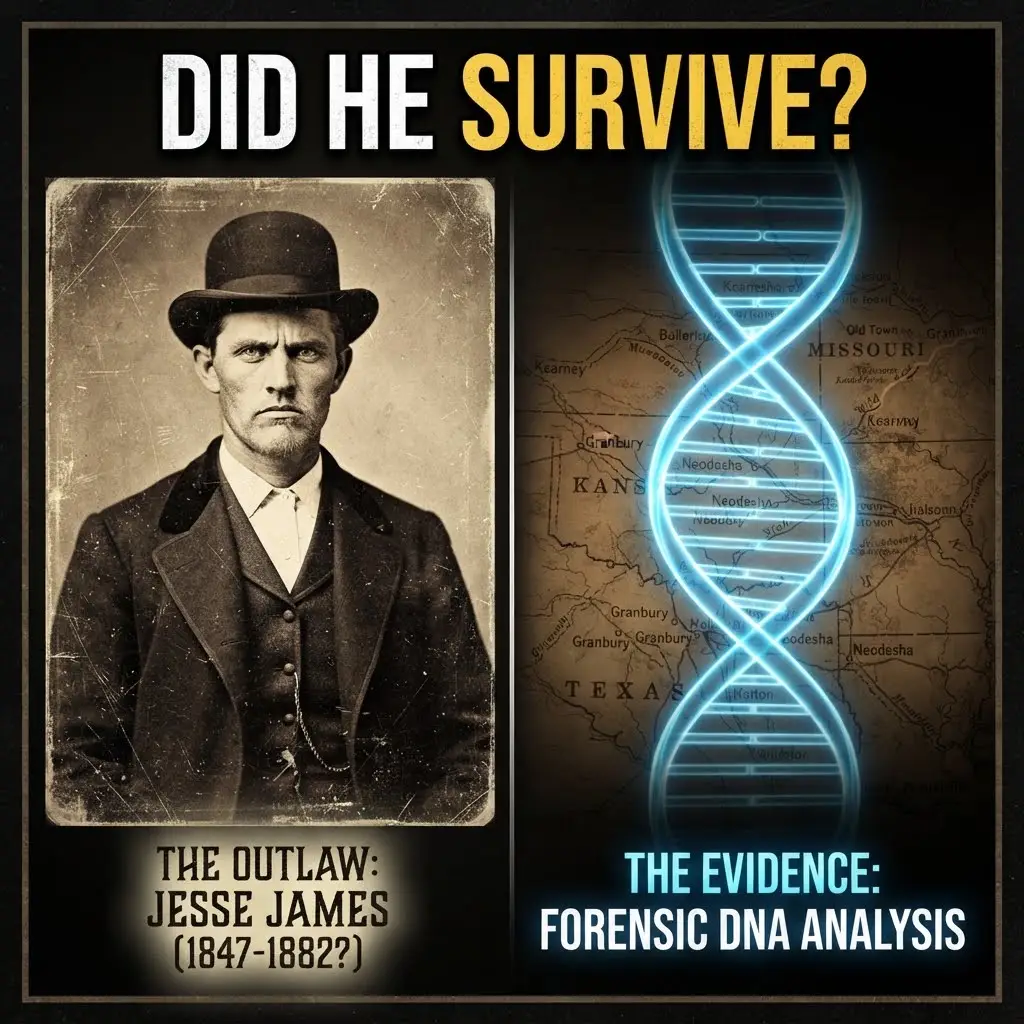
The Jesse James DNA Myth: Why Are There 3 Graves?
FAQs
1. Where are the graves of Jesse James located?
The graves of Jesse James are located in Missouri, Texas, and Kansas. There are multiple claimed burial sites for the infamous outlaw.
2. Why are there multiple claimed burial sites for Jesse James?
There are multiple claimed burial sites for Jesse James due to the mystery and controversy surrounding his death. Some believe that he faked his death and lived under an alias, leading to different locations being attributed as his final resting place.
3. Is there a specific reason why Missouri, Texas, and Kansas claim to have Jesse James’ grave?
Missouri, Texas, and Kansas claim to have Jesse James’ grave due to his connections and activities in those states during his outlaw days. Each state has its own historical accounts and evidence supporting their claim.
4. How can one determine the true grave of Jesse James?
Determining the true grave of Jesse James is challenging due to the lack of conclusive evidence and the conflicting stories surrounding his death. Historians and researchers continue to investigate the various claims to uncover the most likely resting place of the outlaw.
5. What is the significance of the Jesse James gravesites?
The Jesse James gravesites hold historical and cultural significance as they are linked to one of the most notorious outlaws in American history. Visiting these sites offers a glimpse into the legend and legacy of Jesse James, sparking interest and intrigue among history enthusiasts.