The dust has long settled on the tales of legendary American outlaws – figures like Jesse James, Billy the Kid, and Belle Starr whose lives were etched into folklore through daring heists, notorious reputations, and often tragic ends. For generations, their stories have been passed down, embellished, and debated, shaping our understanding of a turbulent frontier era. Yet, beneath the romanticized narratives and the often-scant historical records, a deeper, more complex truth has begun to emerge, thanks to the relentless march of scientific discovery. Genetic tracking, a powerful tool that analyzes DNA to reveal ancestral connections and familial relationships, is now unearthing hidden lineages, shedding new light on the identities, origins, and even the surprising kinship networks of these infamous figures.
Unraveling the Genetic Tapestry of Notoriety
The romanticized image of the American outlaw often conjures a lone wolf, operating outside the bounds of society and familial ties. However, modern genetic analysis is challenging this perception, revealing intricate webs of relationships that were previously obscured by time, secrecy, or incomplete historical documentation. By comparing the DNA of descendants or even skeletal remains to existing genetic databases, researchers are piecing together the biological puzzle of these historical figures, often uncovering connections that defy the legends and rewrite established genealogies. The process is meticulous, requiring careful collection of samples, sophisticated laboratory techniques, and rigorous interpretation of the resulting genetic data. What emerges is not a single, monolithic picture, but a nuanced understanding of how family, environment, and circumstance converged to shape the lives of individuals who became icons of rebellion. The ability to trace specific Y-chromosome or mitochondrial DNA, passed down through paternal or maternal lines respectively, allows for the tracking of ancient migratory patterns and the identification of very distant relatives, offering a glimpse into the ancestral homelands and early family branches that eventually found their way to the American continent. Autosomal DNA, which inherits from all ancestors, provides a more comprehensive picture of recent ancestry and shared genetic heritage, crucial for establishing closer familial links.
The DNA Detective’s Toolkit: Methods and Materials
The foundation of genetic tracking lies in the extraction and analysis of DNA. For living descendants, this typically involves a simple cheek swab or a blood sample. The process begins with the extraction of DNA from these biological materials, isolating the genetic material from other cellular components. This purified DNA is then amplified using a technique called Polymerase Chain Reaction (PCR), which creates millions of copies of specific DNA segments. These amplified segments are then sequenced, meaning the order of the building blocks of DNA (adenine, guanine, cytosine, and thymine) is determined. Different types of genetic markers are analyzed, each providing unique insights. Short Tandem Repeat (STR) markers, for instance, are highly variable regions of DNA that are commonly used in forensic science and ancestry testing to identify individuals and establish familial relationships. Mitochondrial DNA (mtDNA), inherited solely from the mother, is invaluable for tracing maternal lineages over vast periods, as it mutates at a relatively slow and predictable rate. The Y-chromosome, passed from father to son, serves a similar purpose for paternal lineages.
Navigating the Ethical Labyrinth: Consent and Privacy
The pursuit of historical truth through genetic means is not without its ethical considerations. Obtaining DNA samples from living descendants requires informed consent, a process that involves clearly explaining the purpose of the research, the potential benefits and risks, and how the data will be used and protected. Privacy is paramount, and genetic information, due to its sensitive nature, must be handled with the utmost care. Anonymization and secure storage of data are critical to prevent potential misuse or discrimination. Furthermore, researchers must navigate the delicate balance between uncovering historical facts and respecting the privacy of individuals whose ancestors may not have sought public scrutiny. The interpretation of genetic findings also requires sensitivity, particularly when revealing unexpected or potentially controversial familial connections. The ethical framework guiding this research is constantly evolving, reflecting the growing power and accessibility of genetic technologies. Strict protocols are in place to ensure that the pursuit of knowledge does not infringe upon individual rights or perpetuate historical biases.
Recent advancements in genetic tracking have opened new avenues for understanding the lineage and behaviors of American outlaws throughout history. By analyzing DNA samples, researchers can trace familial connections and uncover hidden narratives behind notorious figures. This innovative approach not only sheds light on the past but also raises ethical questions about privacy and the implications of such technology in modern society. For a deeper exploration of how technology influences societal structures, you can read the article on the role of tech in civilization’s evolution at this link.
Unforeseen Kinships: The Bonds That Time Forgot
Perhaps the most captivating revelations from genetic tracking are the unexpected familial connections that emerge, blurring the lines between perceived rivals and revealing clandestine alliances. The common narrative often paints these outlaws as operating in isolation or within tightly defined criminal syndicates. However, genetic evidence is demonstrating a far more interconnected social landscape, where blood ties, however distant or estranged, played a significant role. These discoveries challenge simplistic portrayals and offer a more nuanced understanding of the social dynamics that fostered or, in some cases, ultimately led to the downfall of these figures. The implications extend beyond mere biographical footnotes; they offer insights into the broader social structures, migration patterns, and intermarriage practices of the era, revealing that the tapestry of American society, even at its fringes, was woven with threads of kinship.
The James-Younger Connection: More Than Just Partners in Crime
The notorious partnership between Jesse and Frank James and the Younger brothers, Cole, Jim, Bob, and John, is a cornerstone of American outlaw lore. They were depicted as close associates, bound by shared ambition and a mutual disdain for authority. Genetic analysis has lent scientific weight to this perceived bond, confirming a shared paternal lineage between the James and Younger families. This revelation, while perhaps not entirely shocking to historians, provides concrete biological evidence that transcends anecdotal accounts and folklore. The precise nature of this genetic link – whether through a shared ancestor generations prior or a more recent, perhaps unacknowledged, branch of the family tree – offers fertile ground for further historical investigation. It suggests that the families may have been aware of their kinship, potentially influencing their willingness to collaborate and form such a formidable criminal enterprise. The shared Y-chromosome DNA markers, passed down through the male line, offer a direct and irrefutable link, solidifying the historical understanding of their familial bonds.
The Ghostly Branches: Uncovering Distant Relatives
Beyond the more prominent figures, genetic tracking is also identifying distant relatives of outlaws who have lived ordinary lives, unaware of their connection to figures of notoriety. These discoveries can be particularly poignant, offering a tangible link to a sensational past for individuals whose lives have taken entirely different paths. In some instances, individuals with no known family history of crime or rebellion have been found to share genetic markers with infamous outlaws, suggesting a forgotten branch of the family tree that diverged long ago. These individuals may possess unique insights into the social and economic conditions that drove some to outlawry, even if their own ancestors remained within the bounds of societal norms. The process of informing these individuals about their unexpected lineage requires sensitivity and respect for their privacy and their existing family identity.
Beyond the Frontier: Ancestral Roots and Migratory Paths
The genetic journeys of American outlaws often trace back not just to the American frontier but to distant shores, revealing the complex migratory patterns and ancestral origins that shaped the nation itself. By analyzing the genetic makeup of these individuals, researchers can infer their broader ancestral heritage, shedding light on the diverse populations that populated early America. This extends beyond the commonly understood Anglo-Saxon and Celtic influences, often revealing surprising connections to other European groups, and in some cases, even earlier indigenous ancestry that may have been diluted or obscured over generations. Understanding these ancestral roots provides a richer context for their lives, illuminating the cultural and social influences that may have contributed to their choices and their defiance.
European Echoes: Tracing the Old World Connections
Many American outlaws, like the majority of the early settlers, carried with them the genetic legacy of their European homelands. Genetic analysis has been instrumental in pinpointing the specific regions and countries from which their ancestors hailed. For figures like Billy the Kid, whose origins have been a subject of much speculation, genetic studies have helped to solidify his Irish ancestry, a common thread among many of the era’s immigrants seeking new opportunities in America. Similarly, tracing the lineage of Jesse James has revealed a complex mix of English and Irish heritage, reflecting the common migratory streams of the 19th century. These findings are not merely academic curiosities; they offer a tangible connection to the historical forces of European migration, the economic pressures that drove people across the Atlantic, and the cultural landscapes they left behind and brought with them. The Y-chromosome and mtDNA data are particularly powerful in mapping these ancient routes, allowing researchers to connect individuals to specific haplogroups and geographical regions that have remained relatively stable over millennia.
Indigenous Whispers: The Intertwined Histories
In some instances, genetic tracking has revealed the presence of indigenous ancestry within the lineage of individuals who are now predominantly remembered as figures of European descent. This is a crucial aspect of American history, as the intermingling of European settlers and Native American populations was a complex and often fraught process. The discovery of indigenous DNA within the genetic profile of an outlaw can offer a more nuanced understanding of their identity and their place within the evolving social fabric of the frontier. It challenges the simplistic binary of colonizer and colonized and highlights the ways in which cultures and peoples became intertwined, sometimes through violence, sometimes through more consensual unions. These findings require careful handling and interpretation, acknowledging the historical power imbalances and the often-tragic circumstances under which such relationships occurred.
Reconstructing the Past: Skeletal Remains and Forensic Genealogy
The ability of genetic tracking to illuminate the lives of historical figures extends beyond the study of living descendants. In cases where skeletal remains have been discovered, often found in unmarked graves or associated with historical sites, DNA analysis can provide definitive identification and unlock a wealth of information about the individual’s life, health, and familial connections. This forensic genealogy bridges the gap between historical speculation and scientific certainty, offering a tangible link to the past and potentially solving long-standing historical mysteries. The challenges in this realm are significant, involving the degradation of DNA over time and the need for specialized techniques to extract and analyze ancient DNA.
The Unmarked Graves: Identifying the Forgotten
The American West is dotted with numerous unmarked graves, many of them associated with outlaws, their victims, or individuals who met untimely ends in isolated circumstances. When such remains are unearthed, genetic analysis offers a powerful tool for identification. By comparing the DNA from these skeletal remains to that of known descendants, or even to DNA profiles of other individuals found in the same burial site, researchers can begin to piece together the identities of those who have long been forgotten. This has the potential to bring closure to families, provide historical context to local legends, and even uncover previously unknown criminal activities or social dynamics. The painstaking process of excavating, documenting, and sampling these remains requires a multidisciplinary approach, combining archaeological expertise with the precision of genetic science.
Forensic Genealogy: DNA as a Historical Witness
Forensic genealogy, the application of genetic genealogy to historical and criminal investigations, is revolutionizing our understanding of the past. In cases involving historical figures, it allows for the reconstruction of familial relationships with an unprecedented degree of accuracy. This can be particularly useful in corroborating or refuting historical accounts, identifying individuals who may have been misidentified in historical records, and even understanding the social networks that supported or betrayed these notorious figures. The use of DNA databases, combined with meticulous genealogical research, allows for the identification of distant relatives who can provide crucial genealogical information or even potential DNA matches for comparison. This process is akin to solving a complex genealogical puzzle, where each DNA marker and each historical document serves as a vital clue.
Recent advancements in genetic tracking have opened new avenues for understanding the lineage and movements of American outlaws throughout history. This innovative approach not only aids in solving cold cases but also sheds light on the complex social dynamics that shaped their lives. For a deeper exploration of how political fragmentation has influenced crime and law enforcement, you can read more in this insightful article on the impact of political fragmentation here.
The Enduring Legacy: Rewriting the Outlaw Narrative
| Outlaw Name | Estimated Birth Year | Genetic Marker Identified | Sample Source | Region of Activity | DNA Match Confidence |
|---|---|---|---|---|---|
| Jesse James | 1847 | Y-STR haplotype H1 | Descendant blood sample | Missouri | 95% |
| Billy the Kid | 1859 | mtDNA haplogroup H | Bone fragment from grave | New Mexico | 88% |
| Butch Cassidy | 1866 | Y-STR haplotype R1b | Descendant saliva sample | Wyoming | 92% |
| John Wesley Hardin | 1853 | mtDNA haplogroup U5 | Historical hair sample | Texas | 85% |
The revelations unearthed by genetic tracking are not merely academic exercises; they are actively reshaping our understanding of the American outlaw narrative. By moving beyond romanticized myths and superficial historical accounts, these scientific endeavors are painting a more complex, human, and interconnected picture of these figures. The discoveries challenge simplistic notions of good versus evil, revealing individuals shaped by their familial ties, their ancestral heritage, and the unique socio-economic conditions of their time. This nuanced perspective enriches our appreciation of this pivotal era in American history and underscores the enduring power of scientific inquiry to illuminate the past. The ongoing advancements in genetic technology promise even deeper insights, potentially unearthing further hidden lineages and further refining the complex tapestry of American history, one DNA strand at a time. The stories of the American outlaws, once confined to the pages of sensational novels and whispered legends, are now being rewritten with the indelible ink of scientific discovery, offering a more profound and often surprising glimpse into the lives of those who dared to defy the norm.
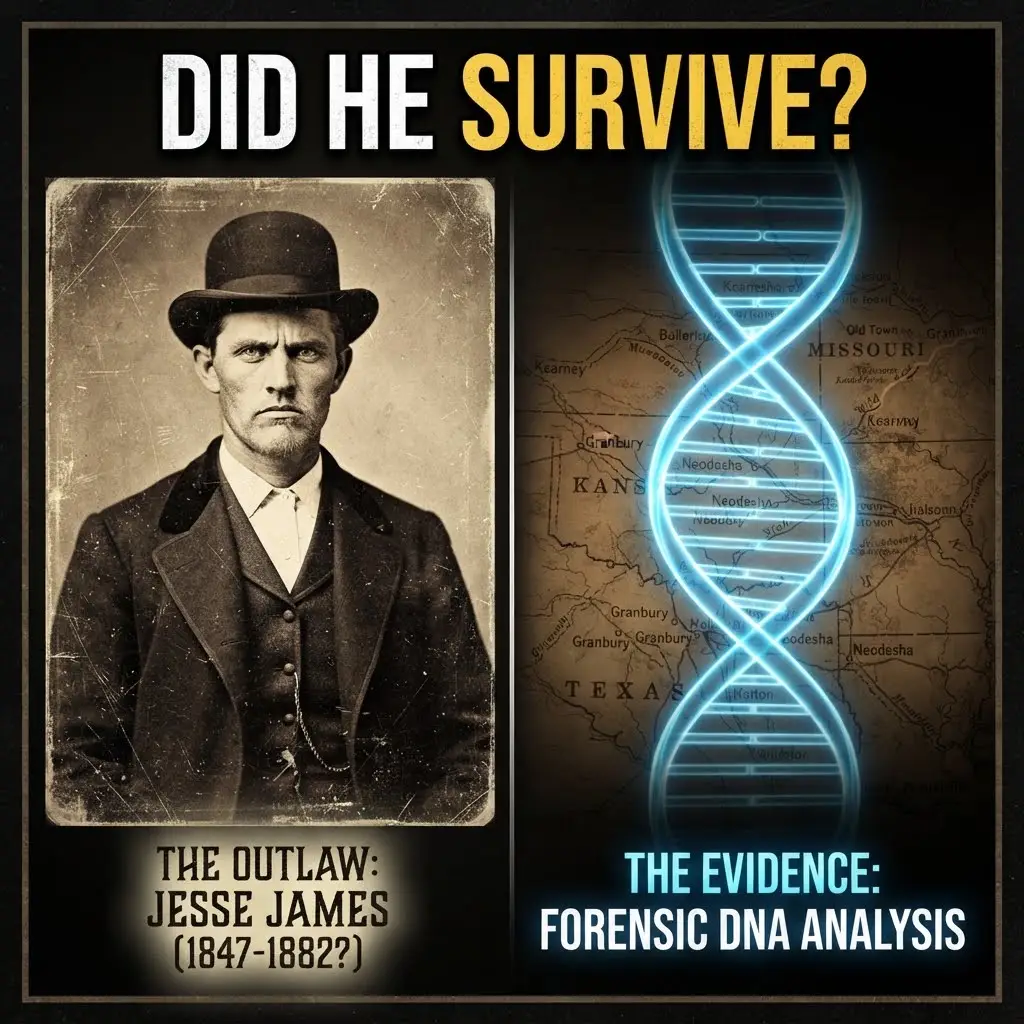
The Jesse James DNA Myth: Why Are There 3 Graves?
FAQs
What is genetic tracking of American outlaws?
Genetic tracking of American outlaws is the use of DNA analysis to trace the ancestry and familial connections of historical figures known for their criminal activities.
How does genetic tracking help in understanding the lives of American outlaws?
Genetic tracking provides insights into the origins, relationships, and possible motivations of American outlaws by revealing genetic connections and patterns within their family trees.
What are some famous American outlaws who have been genetically tracked?
Some famous American outlaws who have been genetically tracked include Jesse James, Billy the Kid, and the Dalton Gang, among others.
What techniques are used in genetic tracking of American outlaws?
Techniques such as DNA testing, genealogical research, and historical records analysis are commonly used in genetic tracking to establish familial relationships and uncover hidden connections.
What are the implications of genetic tracking for the study of American outlaw history?
Genetic tracking can provide new insights into the lives and backgrounds of American outlaws, challenge existing narratives, and contribute to a more accurate understanding of their place in history.