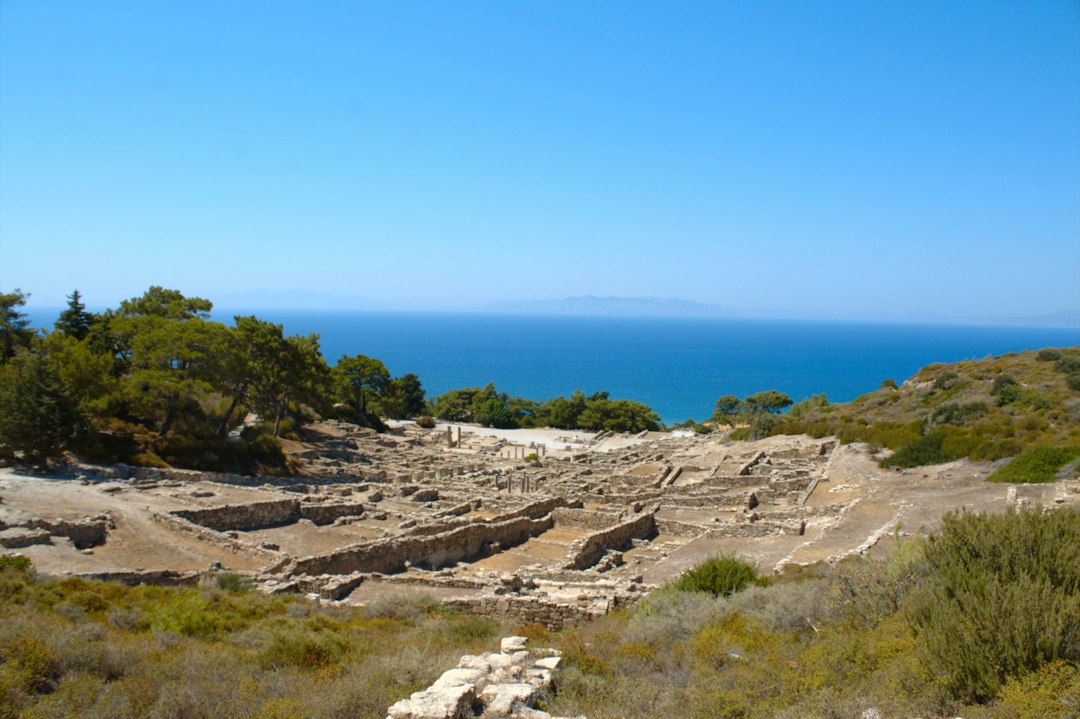
The arid landscapes and scattered coastlines of the ancient Mediterranean world presented a unique set of challenges and opportunities for human mobility and trade. While the sea undeniably served as a vital artery, connecting distant shores and facilitating the rapid movement of goods and people, it was overland transportation that underpinned the interconnectedness of these diverse societies. The development and utilization of intricate overland networks were crucial for the administration of empires, the exchange of local produce, the dissemination of ideas, and the movement of armies. These terrestrial pathways, often less celebrated than their maritime counterparts, were the sinews that bound together the disparate peoples and economies of the ancient Mediterranean, from the sun-baked plains of North Africa to the rugged mountains of Greece and the fertile crescent.
The Arteries of Empire: Roman Road Networks
The Roman Empire, perhaps more than any other ancient civilization, mastered the art of overland transportation through its vast and remarkably durable road system. These were not mere dirt tracks but meticulously engineered thoroughfares designed for efficiency, longevity, and military utility. The construction of these roads was a monumental undertaking, reflecting the empire’s organizational prowess and its ambition to control and integrate its far-flung territories. The principle of straight-line construction, often disregarding challenging terrain, was a hallmark of Roman engineering, allowing for faster travel times and easier military deployment. The Via Appia, stretching from Rome to Brundisium, is a prime example, a testament to the ambition and scale of Roman infrastructure projects. These roads were crucial for the swift movement of legions, the collection of taxes, and the efficient delivery of imperial decrees, effectively knitting the empire together with a network of stone and gravel.
Engineering for Endurance: Roman Road Construction Techniques
The longevity of Roman roads is legendary, and their construction techniques were remarkably sophisticated for their time. The Romans understood the importance of a stable foundation, typically digging deep trenches and filling them with layers of stone, gravel, and sand. The surface was often paved with large, precisely cut stones, creating a smooth and durable carriageway capable of withstanding heavy traffic and the vagaries of weather. Drainage was also a critical consideration, with ditches and culverts employed to channel rainwater away from the roadbed, preventing erosion and waterlogging. The process was labor-intensive, often employing legionaries and local populations, but the resulting infrastructure was an investment that paid dividends for centuries, facilitating communication and commerce across the vast empire.
Milestones and Wayfinding: Facilitating Travel and Administration
Beyond the physical construction, the Romans implemented systems to aid travelers and ensure the smooth administration of their vast territories. Milestones, erected at regular intervals along the major roads, provided vital information about distances to important cities and administrative centers. These markers, often inscribed with the names of emperors and the mileage, served as both practical guides for travelers and potent symbols of Roman authority. Inns and rest stops, known as mansiones and mutationes, were established at strategic points to provide accommodation and fresh horses for official travelers, further enhancing the efficiency of long-distance communication and transportation. These elements combined to create a remarkably well-managed and functional overland transportation system.
The study of overland transportation channels in ancient Mediterranean worlds reveals the intricate networks that facilitated trade and cultural exchange across vast distances. These routes not only connected cities and civilizations but also played a crucial role in the dissemination of innovations and technologies. For a deeper understanding of how lost innovations impacted ancient societies, you can explore the article on the catastrophic effects of these technological losses at this link.
The Silk Roads of the West: Pre-Roman Overland Networks
While the Romans may have perfected the art of road building, overland transportation networks existed in the Mediterranean long before their ascendancy. These earlier routes, often less formal and more varied in their construction, were nonetheless vital for regional trade, cultural exchange, and the movement of peoples. These networks were shaped by the natural geography, connecting fertile river valleys, mountain passes, and coastal settlements. They facilitated the exchange of goods like grain, wine, olive oil, metals, and pottery, as well as the dissemination of religious ideas, artistic styles, and technological innovations. The development of these networks laid the groundwork for the more extensive systems that would follow.
Nomadic Pathways and Trade Routes: Connecting East and West
The interactions between settled agricultural communities and nomadic or semi-nomadic peoples played a significant role in shaping early overland routes. Nomadic groups, with their extensive knowledge of terrain and their reliance on animal caravans, were instrumental in traversing less hospitable regions and connecting disparate settlements. Trade routes, often organically developed over centuries of interaction, snaked their way across the land, linking the Aegean to Mesopotamia, Egypt to the Levant, and beyond. These routes were often fluid, adapting to political stability, the availability of water sources, and the demand for specific commodities.
The Role of Oases and Mountain Passes: Bottlenecks and Hubs
Natural geographical features often dictated the flow of overland traffic. Oases in arid regions, such as those in Egypt and North Africa, served as vital stopping points and hubs for caravan routes, providing essential water and rest. Similarly, mountain passes, though challenging, were crucial for connecting regions separated by formidable ranges. These passes, often controlled by local communities or rulers, could become strategic choke points for trade and military movements. The control and maintenance of these vital arteries, whether by kings, city-states, or tribal confederations, were central to the economic and political power of the societies that relied upon them.
Caravans and Pack Animals: The Backbone of Overland Trade
The primary means of transporting goods overland in the ancient Mediterranean was through the use of caravans, large groups of merchants and their animals traveling together for mutual protection and efficiency. These caravans were the lifeblood of long-distance trade, moving bulk commodities and luxury items across vast distances. The choice of pack animal was crucial, dictated by the terrain and the cargo. Donkeys were common for shorter distances and rougher terrain, while camels, with their remarkable endurance and ability to traverse arid landscapes, were indispensable for trans-desert routes. The organization and management of these caravans required considerable skill and knowledge of logistics, trade routes, and potential dangers.
The Camel’s Dominance: Navigating Arid Frontiers
The camel’s ability to store water and survive long periods without sustenance made it the undisputed king of overland transportation in the arid and semi-arid regions of the ancient Mediterranean. From the deserts of North Africa to the interior of the Levant and Anatolia, camel caravans facilitated trade across vast, often inhospitable, landscapes. These beasts of burden could carry significant loads, enabling the transport of goods like spices, incense, textiles, and precious metals over immense distances. The development of sophisticated camel saddles and harnessing techniques further optimized their carrying capacity and efficiency.
The Donkey’s Versatility: Connecting Local Markets and Rugged Terrain
While camels dominated the deserts, the donkey proved to be an invaluable pack animal for shorter-distance trade and in more varied terrains. Their sure-footedness made them ideal for navigating rocky hillsides, narrow mountain passes, and the winding paths of agricultural regions. Donkeys were instrumental in connecting local markets, transporting agricultural produce from farms to towns, and moving goods between neighboring settlements. Their docility and relative ease of care also made them accessible to smaller merchants and farmers, contributing to the vibrancy of local economies.
The Impact of Overland Transport on Society and Culture
The intricate web of overland transportation channels in the ancient Mediterranean had profound and far-reaching impacts on the societies that utilized them. Beyond the purely economic benefits of trade, these routes facilitated the movement of people, ideas, and technologies, fostering cultural exchange and shaping the development of civilizations. The shared experiences of travelers, the establishment of common resting places, and the inevitable encounters between different cultures contributed to a degree of shared understanding and interconnectedness, even across vast distances.
The Spread of Ideas and Religions: Connecting Minds as Well as Markets
Overland routes served as conduits for the dissemination of knowledge, philosophies, and religious beliefs. Merchants, missionaries, and scholars traveling along these paths carried with them their cultural and intellectual baggage, introducing new ideas to receptive audiences. The spread of Hellenistic culture, for instance, was significantly aided by these networks, as were the early movements of Christianity and other religious traditions. Innovations in agriculture, metallurgy, and governance also traveled along these terrestrial arteries, contributing to the progress and evolution of different societies.
Military Logistics and Imperial Expansion: The Power of the March
The ability to move armies and supplies efficiently over land was a critical factor in the rise and expansion of empires. Roman legions, for example, could traverse vast distances with remarkable speed thanks to their extensive road network, allowing them to respond to threats and project power effectively. Similarly, earlier empires relied on their ability to maintain and protect overland routes to sustain their armies and control their territories. The logistical challenges of feeding and supplying troops on the move were immense, and the efficiency of overland transportation directly impacted the reach and sustainability of military endeavors.
In exploring the intricate networks of overland transportation channels in ancient Mediterranean worlds, one can gain insights into the economic and cultural exchanges that shaped civilizations. A fascinating article that delves into the complexities of trade and transportation in historical contexts can be found here: related article. This resource provides a broader understanding of how these ancient routes influenced not only commerce but also the social dynamics of the time.
Challenges and Innovations: Overcoming the Difficulties of Terrestrial Travel
| Transportation Channel | Region | Primary Use | Typical Goods Transported | Estimated Distance Covered (km) | Time Period |
|---|---|---|---|---|---|
| Via Appia | Roman Italy | Military and Trade | Grain, Olive Oil, Wine, Metals | 560 | 312 BCE onwards |
| Royal Road | Persian Empire | Communication and Trade | Textiles, Spices, Metals | 2,700 | 5th century BCE |
| Silk Road (Western Segment) | Eastern Mediterranean | Trade | Silk, Precious Stones, Spices | Approx. 1,500 | 2nd century BCE onwards |
| Via Egnatia | Balkans | Military and Trade | Wine, Olive Oil, Textiles | 1,120 | 2nd century BCE onwards |
| Desert Caravan Routes | North Africa and Levant | Trade | Incense, Gold, Spices | Varied, up to 1,000 | 1st millennium BCE |
Terrestrial travel in the ancient Mediterranean was far from easy. Travelers faced numerous challenges, including harsh weather, difficult terrain, limited infrastructure beyond major routes, and the constant threat of bandits. Over time, these challenges spurred innovation and adaptation, leading to the development of more efficient methods of travel and trade. The understanding of seasonal variations, the development of more robust carts and wagons, and the establishment of fortified settlements along key routes were all responses to these inherent difficulties.
The Perils of the Road: Bandits, Weather, and Terrain
The ancient world was a dangerous place for those traveling overland. Bandits were a constant threat, preying on unsuspecting caravans and lone travelers. The vagaries of weather, from scorching summer heat to treacherous winter snows in mountainous regions, could halt travel and endanger lives. Furthermore, the terrain itself presented significant obstacles. Steep mountains, dense forests, and vast, waterless deserts all required careful planning, specialized knowledge, and resilient modes of transport. The development of routes often involved finding the least arduous paths, and travel times could be unpredictable and lengthy.
Adaptations and Advancements: Improving Mobility and Safety
In response to these challenges, various adaptations and advancements emerged. The construction of more durable carts and wagons, equipped with sturdier wheels and axles, improved the carrying capacity and reliability of overland transport. The development of sophisticated navigation techniques, relying on celestial observation and knowledge of landmarks, aided travelers in traversing vast and featureless landscapes. The establishment of caravanserais, fortified resting places for travelers and their animals, provided a degree of safety and security, becoming vital nodes along important trade routes. The evolution of animal husbandry, selecting for breeds best suited to specific environments and tasks, also played a crucial role in enhancing the efficiency and resilience of overland transportation. The persistent need to overcome the limitations of terrestrial travel drove a continuous cycle of innovation and refinement, shaping the way goods and people moved across the ancient Mediterranean world.
The 2.7% Statistic That Terrifies Roman Historians
FAQs
What were the main overland transportation channels in the ancient Mediterranean worlds?
In the ancient Mediterranean worlds, the main overland transportation channels included well-established trade routes such as the Silk Road, the Incense Route, and the Amber Road. These routes connected different regions and facilitated the exchange of goods, ideas, and cultures.
How did overland transportation contribute to the growth of ancient Mediterranean civilizations?
Overland transportation played a crucial role in the growth of ancient Mediterranean civilizations by enabling the transportation of goods, resources, and people across vast distances. This facilitated trade, cultural exchange, and the spread of knowledge and technologies.
What were some challenges faced by travelers using overland transportation in the ancient Mediterranean worlds?
Travelers using overland transportation in the ancient Mediterranean worlds faced various challenges such as harsh weather conditions, rugged terrains, bandit attacks, and the risk of getting lost. These challenges often made journeys long and perilous.
How did the development of overland transportation impact the economy of ancient Mediterranean societies?
The development of overland transportation had a significant impact on the economy of ancient Mediterranean societies by promoting trade, stimulating economic growth, and creating opportunities for specialization and the development of markets. It also contributed to the prosperity of cities and regions along major trade routes.
Were there any innovations in overland transportation that emerged in the ancient Mediterranean worlds?
Yes, there were several innovations in overland transportation that emerged in the ancient Mediterranean worlds, such as the construction of roads, bridges, and caravanserais to facilitate travel and trade. The use of pack animals, carts, and ships also improved the efficiency of transportation networks during this time.