
The very name Jesse James conjures images of daring train robberies, elusive outlawry, and a romanticized Wild West. For generations, his legend has been passed down, with families claiming direct descent, whispering tales of inherited traits or familial resemblances. Yet, in the realm of verifiable history, the precise lineage of Jesse James has been a subject of ongoing investigation and, at times, debate. In recent years, the advent of advanced DNA matching protocols has revolutionized genealogical research, offering a powerful new lens through which to examine historical figures and their familial connections. This article delves into the DNA matching protocols that are being employed to explore the Jesse James lineage, shedding light on the scientific methodologies and the potential insights they can provide.
Unraveling the Family Tree Through Genetic Clues
The quest to definitively trace the ancestry of Jesse James is a complex undertaking, one that historical records alone can struggle to fully resolve. Family trees are often pieced together through birth certificates, marriage records, census data, and anecdotal family lore. While these sources are invaluable, they can be incomplete, contain errors, or be subject to interpretation. DNA matching protocols offer a complementary, and often more objective, approach. By analyzing specific markers within an individual’s genetic code, scientists can identify patterns that are passed down through generations, thereby establishing biological relationships. This process is particularly potent when comparing the DNA of individuals who claim descent from Jesse James with known relatives or even, in some hypothetical scenarios, with remains that might be attributed to him. The core principle lies in the inheritance of genetic material. Autosomal DNA, inherited from both parents, provides a broad overview of ancestry and can reveal close and distant relatives. Y-chromosome DNA, passed exclusively from father to son, is crucial for tracing paternal lines, which is directly relevant for verifying the male lineage of the notorious outlaw. Mitochondrial DNA, inherited from the mother, traces maternal lines. Each of these DNA types plays a specific role in reconstructing the intricate tapestry of a family history.
The Pillars of Genetic Genealogy: Autosomal, Y-DNA, and mtDNA
The power of DNA matching for genealogical purposes rests on the distinct ways in which our genetic material is inherited. Understanding these different types of DNA analysis is fundamental to appreciating how researchers can attempt to confirm or refute claims about the Jesse James lineage.
Autosomal DNA: The Broad Net of Relatedness
Autosomal DNA comprises the vast majority of an individual’s genetic code, found in the 22 pairs of chromosomes that are not sex chromosomes. This DNA is inherited in roughly equal halves from each parent. When two individuals share a common ancestor, they will share segments of autosomal DNA. The amount of shared DNA is proportional to the closeness of their relationship. For example, full siblings will share a significant percentage of their autosomal DNA, while second cousins will share a smaller, yet still detectable, amount. In the context of the Jesse James lineage, autosomal DNA testing can be instrumental in identifying individuals who share a common ancestor with Jesse James, even if that ancestor is several generations removed. By comparing the autosomal DNA profiles of multiple individuals who believe they are descended from Jesse, researchers can look for clusters of shared DNA segments. This allows for the identification of potential branches of the family tree and the corroboration of family trees built through traditional research methods. It is important to note that autosomal DNA does not pinpoint a specific ancestor; rather, it indicates a degree of relatedness. Therefore, interpretation of autosomal DNA results often requires integration with genealogical research to pinpoint the exact familial connection. A close match on autosomal DNA might suggest a sibling, parent, or child, while a more distant match could indicate a grandparent, aunt, uncle, or more remote ancestors. The challenge with historical figures like Jesse James is the difficulty in obtaining direct DNA samples. Therefore, much of the research relies on comparing the DNA of living descendants.
Y-Chromosome DNA: Tracing the Paternal Bloodline
The Y-chromosome is exclusively found in males and is passed down from father to son with very little recombination or mutation. This makes Y-DNA testing an incredibly powerful tool for tracing the direct paternal line. If Jesse James had male descendants, their Y-chromosome DNA would, in theory, be identical to his, save for rare mutations. Researchers can test living males who claim descent from Jesse James through their paternal line. If their Y-DNA profiles match, it provides strong evidence of a shared paternal ancestor. The power of Y-DNA lies in its ability to confirm the direct male lineage. For Jesse James, this would mean tracing his father, grandfather, great-grandfather, and so on, back in time. However, the utility of Y-DNA is limited to the direct paternal line. It cannot reveal relationships through maternal lines or collateral branches of the family tree. Furthermore, the accuracy of Y-DNA testing depends on the presence of sufficiently distant male descendants whose Y-DNA has not been significantly altered by mutations over generations. For prominent historical figures, the genetic marker present on the Y-chromosome can be established by testing known paternal relatives or, in the most exceptional circumstances, by analyzing remains believed to be theirs. The interpretation of Y-DNA results involves comparing specific markers, known as Short Tandem Repeats (STRs), which are short sequences of DNA that are repeated a variable number of times. The number of repeats at each STR locus forms a unique Y-DNA profile.
Mitochondrial DNA: Illuminating the Maternal Heritage
Mitochondrial DNA (mtDNA) is found in the mitochondria, the powerhouses of our cells, and is inherited solely from the mother. Like the Y-chromosome, mtDNA is passed down through generations with minimal recombination. This makes mtDNA testing valuable for tracing the direct maternal line, from mother to daughter, daughter to son, and so on. If individuals claim descent from Jesse James through his mother, mother’s mother, or mother’s mother’s mother, mtDNA testing can be employed. Similar to Y-DNA, mtDNA profiles can be compared to identify shared maternal ancestors. However, mtDNA analysis is limited to the direct maternal line. It cannot provide information about paternal relatives or collateral branches of the family. The interpretation of mtDNA results involves analyzing specific regions of the mitochondrial genome, particularly the hypervariable regions, which are prone to mutations and can therefore differentiate individuals. While less commonly the primary focus for tracing a notorious outlaw’s direct lineage, mtDNA can be crucial for confirming maternal connections or for establishing relationships through female ancestors whose paternal lines might be less clear. For Jesse James, this would involve tracing his mother, Jane James (née Hartley), and her maternal ancestors.
Recent advancements in DNA matching protocols have shed light on the lineage of infamous figures like Jesse James, offering new insights into historical narratives. For a broader understanding of how modern technology is influencing various fields, including trade relations and historical research, you can explore the article on the future of US-Mexico trade relations at this link. This article discusses the implications of technological advancements in different sectors, paralleling the innovative approaches being utilized in genealogical research.
The Practical Application: Steps in DNA Matching Protocols
Implementing DNA matching protocols for historical lineage research, particularly for figures like Jesse James, involves a systematic and rigorous process. It’s not simply a matter of spitting into a tube; it requires careful planning, ethical considerations, and expert interpretation. The process begins with identifying suitable DNA samples and then progresses through analysis, comparison, and ultimately, the integration of genetic findings with historical evidence.
Identifying and Obtaining Relevant DNA Samples
The foundation of any DNA matching protocol is the availability of suitable DNA samples. For historical figures like Jesse James, direct DNA samples are rarely obtainable. Therefore, researchers typically rely on the DNA of living descendants who can demonstrate a plausible genealogical link. This process involves extensive genealogical research to identify individuals who are most likely to be closely related to Jesse James through various familial lines. Family trees are meticulously constructed, tracing potential paternal and maternal branches. Once potential descendants are identified, their willingness to participate in DNA testing is crucial. Ethical considerations are paramount; informed consent is essential, and participants must understand the nature of the testing and how their genetic information will be used. In some rare and controversial cases, the possibility of testing skeletal remains has been explored. However, the identification and authentication of such remains present significant challenges. For instance, if remains purported to be Jesse James were discovered, their provenance would need to be meticulously established through historical records and archaeological context before any DNA extraction and analysis could be considered. The chain of custody for any such remains would also be critical to ensure the integrity of the sample.
DNA Extraction and Amplification: Preparing the Genetic Blueprint
Once a DNA sample is obtained, the first step in the laboratory is DNA extraction. This is the process of isolating the DNA from other cellular components, such as proteins and lipids. Various methods exist for DNA extraction, depending on the source material (e.g., blood, saliva, bone, hair). The extracted DNA is then often amplified using a technique called Polymerase Chain Reaction (PCR). PCR allows scientists to create millions of copies of specific DNA segments of interest, making them easier to analyze. This amplification is particularly important when dealing with degraded or low-quantity DNA, which can be common with older samples. For Y-DNA and mtDNA testing, specific primers are used to amplify the relevant regions of the Y-chromosome or mitochondrial genome. For autosomal DNA testing, primers are designed to target thousands of single nucleotide polymorphisms (SNPs) scattered across the autosomal chromosomes. The quality and quantity of the amplified DNA are crucial for the success of subsequent analysis. If the amplification is not successful or if the DNA is too degraded, the reliability of the test results can be compromised. Therefore, meticulous laboratory practices and quality control measures are essential at this stage.
Genotyping and Sequencing: Reading the Genetic Code
After amplification, the DNA is analyzed through genotyping or sequencing. Genotyping involves determining the specific alleles (variants) at particular locations in the genome. For Y-DNA testing, this typically involves analyzing a panel of STR markers. Different commercial testing companies offer various panel sizes, with larger panels providing more detailed resolution of paternal lineages. For mtDNA testing, sequencing of the hypervariable regions is commonly performed. Autosomal DNA testing typically utilizes SNP arrays, which can interrogate hundreds of thousands to millions of SNPs across the genome. Sequencing, a more comprehensive approach, involves determining the exact order of nucleotide bases in a DNA molecule. Whole genome sequencing provides the most detailed genetic information but is also more expensive and complex to analyze. The specific genotyping or sequencing technology used will depend on the type of DNA test being performed and the desired level of resolution. The output of this stage is a genetic profile, a unique set of data representing the individual’s genetic markers. This profile is the raw material for the subsequent comparison and analysis.
Comparing Genetic Profiles: Identifying Matches and Relationships
The core of DNA matching lies in the comparison of genetic profiles. Once the genetic profiles of individuals claiming descent from Jesse James are obtained, they are compared against each other and, where possible, against reference databases.
Direct Comparison of Descendant Samples
When multiple individuals claim descent from Jesse James, their genetic profiles are directly compared. For Y-DNA, researchers look for identical or near-identical profiles among men in the claimed paternal lineage. Similarly, for mtDNA, they examine women in the claimed maternal lineage. The degree of similarity in the number of shared STRs for Y-DNA, or identical sequences for mtDNA, provides an indication of the closeness of their relationship. For autosomal DNA, sophisticated algorithms are used to identify segments of shared DNA. These algorithms are designed to account for the expected amount of shared DNA based on known generational relationships. For example, a high percentage of shared autosomal DNA between two individuals might suggest a parent-child relationship, while a lower percentage could indicate a grandparent-grandchild or even a more distant cousin relationship. The interpretation of these matches requires careful consideration of the probabilities involved.
Utilizing Genealogical Databases and Reference Samples
In addition to direct comparison, genealogical databases and reference samples play a crucial role. Many commercial DNA testing companies maintain vast databases of genetic profiles from individuals who have voluntarily submitted their DNA for testing. These databases can be searched for individuals who share genetic markers with the individuals being tested. This allows researchers to identify potential relatives who may not be aware of their familial connection to Jesse James. Furthermore, if there are known, well-established genealogical lines for individuals who are undeniably related to Jesse James (e.g., siblings of his parents), their DNA can serve as invaluable reference samples. Comparing the DNA of individuals claiming descent from Jesse to these reference samples can provide strong corroboration or refutation of their claims. The availability of these reference samples is often a limiting factor in historical lineage research. The more established and diverse the reference samples, the more robust the conclusions can be.
Interpretation and Integration: Bridging the Gap Between Genetics and History
Genetic data, while powerful, does not exist in a vacuum. The interpretation of DNA matching results for the Jesse James lineage requires a careful integration of genetic findings with historical evidence. Science and history must work in tandem to build a comprehensive and accurate picture.
Recent advancements in genealogy have sparked interest in the lineage of infamous figures, including Jesse James. The protocols for DNA matching have become increasingly sophisticated, allowing researchers to trace familial connections with greater accuracy. For those intrigued by the implications of such technologies in various fields, an insightful article discusses the broader context of globalization and its effects on industries, which can be found in this related article. Understanding these connections not only sheds light on historical figures but also highlights the evolving landscape of modern society.
Statistical Probabilities and Genealogical Significance
DNA matching protocols provide statistical probabilities of relatedness. For instance, a Y-DNA match might indicate a probability of 99.9% that two individuals share a paternal ancestor within a certain number of generations. Autosomal DNA analysis can estimate the percentage of DNA shared, which can then be translated into a likely genealogical relationship (e.g., first cousin, second cousin). However, these probabilities are not absolute proof. Genealogical significance refers to the degree to which a genetic match aligns with or contradicts documented genealogical research. A genetic match that perfectly corroborates a well-documented family tree is far more compelling than a match that contradicts it or for which no genealogical evidence exists. Therefore, researchers must consider the statistical strength of the genetic evidence alongside the historical plausibility of the proposed connection. A strong genetic match between two individuals claiming descent from Jesse James is more convincing if their respective family trees, built through traditional research, converge on a common ancestor.
Challenges and Limitations in Historical DNA Research
Tracing the lineage of historical figures like Jesse James presents unique challenges. The primary limitation is the scarcity of direct DNA samples. Unlike living individuals, historical figures cannot readily provide their genetic material. This necessitates relying on the DNA of descendants, which can introduce complexities. Genetic mutations, while rare, can occur over generations, leading to slight variations in Y-DNA and mtDNA profiles. Also, the quality of DNA from ancient remains, if available, can be degraded, making extraction and analysis difficult and potentially less accurate. Furthermore, genealogical records themselves can be incomplete, contain errors, or be subject to misinterpretation. Over time, family names can change, individuals can be adopted, or records can be lost or destroyed. These historical uncertainties can make it difficult to definitively link genetic findings to specific individuals. The absence of a genetic match does not necessarily mean a claimed relationship is false; it could simply indicate that the individuals tested do not share the specific lineage being investigated or that mutations have occurred.
Ethical Considerations and Future Directions
As DNA matching protocols become more sophisticated and accessible, ethical considerations become increasingly important, particularly when dealing with the lineages of public figures and potentially sensitive historical information. The responsible application of these technologies is crucial for ensuring public trust and respecting individual privacy.
Informed Consent and Privacy
When individuals volunteer their DNA for genealogical research, particularly for projects involving historical figures, informed consent is paramount. Participants must fully understand what their DNA will be used for, who will have access to their genetic information, and the potential implications of the results. Privacy is a significant concern, as genetic data can reveal sensitive information about an individual’s health predispositions and familial relationships. Researchers must adhere to strict data protection protocols and ensure that genetic information is anonymized where possible and only shared with appropriate individuals and institutions. The potential for re-identification, even with anonymized data, is a growing concern, necessitating robust security measures. Transparency about data usage and storage policies is essential to build and maintain participant trust.
The Evolving Landscape of Genetic Genealogy
The field of genetic genealogy is constantly evolving. New technologies, such as next-generation sequencing, are providing increasingly detailed insights into our genetic past. Advances in bioinformatics are leading to more sophisticated algorithms for analyzing complex genetic data and identifying more distant familial relationships. The expansion of public genealogical databases and the increasing willingness of individuals to share their genetic information are also contributing to the accelerating pace of discovery. For the Jesse James lineage, these advancements hold the promise of further refining our understanding of his family connections. Future research might involve the analysis of even more granular genetic markers, or perhaps the discovery and successful analysis of better-preserved historical samples. The ongoing development of familial DNA searching techniques, while raising privacy concerns, also offers the potential to identify individuals who might have missed connections through traditional genealogical methods. The ultimate goal is to use these powerful scientific tools to complement and enrich our understanding of history, providing objective evidence to support or challenge long-held beliefs and family narratives. The journey to unravel the Jesse James lineage through DNA matching is a testament to the power of scientific innovation in illuminating the past, but it must always be undertaken with scientific rigor and ethical responsibility.
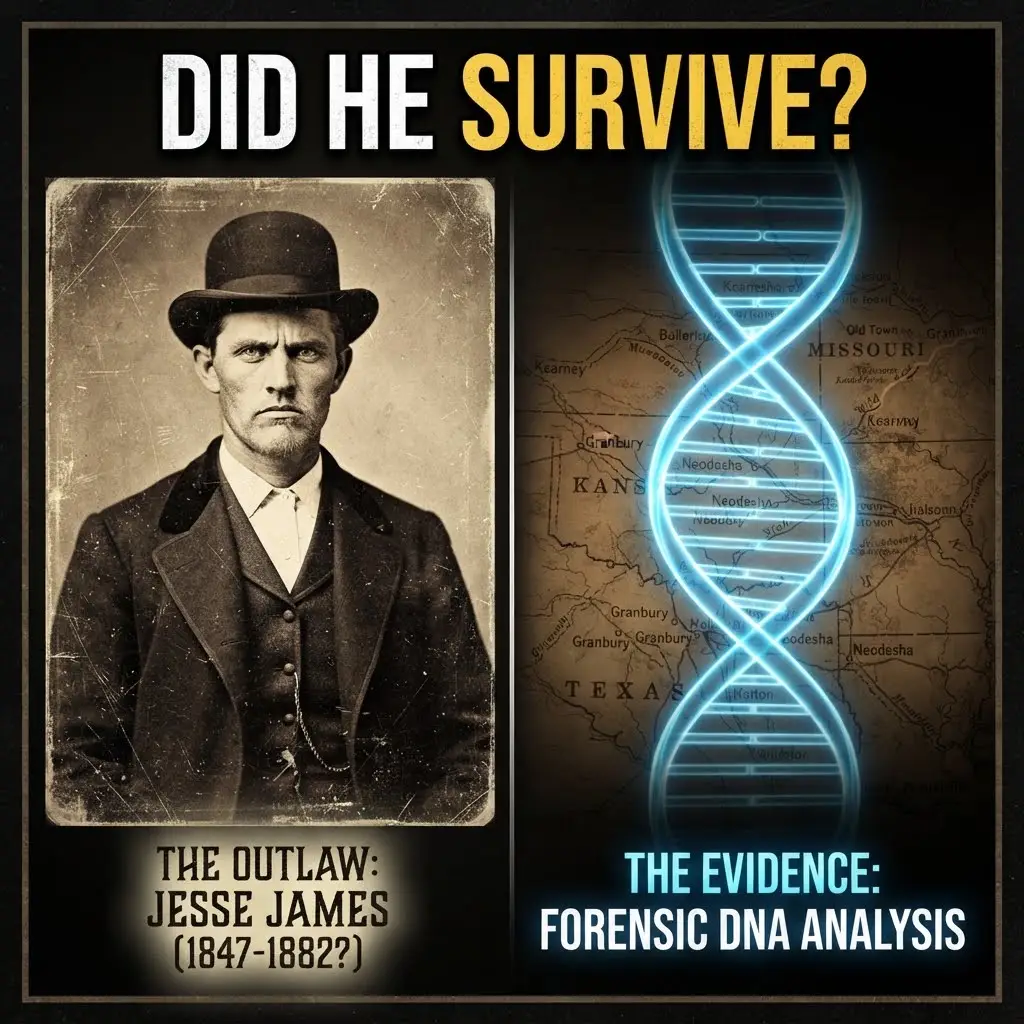
The Jesse James DNA Myth: Why Are There 3 Graves?
FAQs
What is the purpose of Jesse James lineage DNA matching protocols?
The purpose of Jesse James lineage DNA matching protocols is to accurately trace and confirm the genetic connections between individuals claiming to be descendants of the famous outlaw Jesse James.
How do Jesse James lineage DNA matching protocols work?
Jesse James lineage DNA matching protocols involve comparing the DNA of individuals who believe they are related to Jesse James with known genetic markers associated with his lineage. This comparison helps determine the likelihood of a genetic connection.
Who can participate in Jesse James lineage DNA matching protocols?
Anyone who believes they are a descendant of Jesse James or who has a documented family history linking them to him can participate in the lineage DNA matching protocols. This includes both direct descendants and more distant relatives.
What are the benefits of participating in Jesse James lineage DNA matching protocols?
Participating in Jesse James lineage DNA matching protocols can provide individuals with a scientifically validated confirmation of their genetic connection to Jesse James. It can also help build a more accurate family tree and connect individuals with other verified descendants.
Are Jesse James lineage DNA matching protocols accurate?
Yes, Jesse James lineage DNA matching protocols are based on scientific methods and can provide a high level of accuracy in determining genetic connections to the famous outlaw. However, it is important to follow the established protocols and work with reputable genetic testing companies to ensure reliable results.