
Jesse James, a name that reverberates through the annals of American folklore, evokes images of daring train robberies, fierce gunfights, and a defiant stand against perceived injustice. Yet, beneath the veneer of the romanticized outlaw lies a complex tapestry of historical fact, enduring myth, and lingering mysteries that continue to captivate and confound. This exploration delves into the life and legend of Jesse James, attempting to untangle the man from the myth, examining the historical context that shaped him, and uncovering the enduring questions that persist centuries later.
The Genesis of an Outlaw’s Reputation
The story of Jesse James is inextricably linked to the tumultuous aftermath of the American Civil War. Born Jesse Woodson James on September 5, 1847, in Clay County, Missouri, his formative years were marked by the violent currents of a nation divided. His father, Robert James, a Baptist minister and plantation owner, died in 1850, leaving Jesse’s mother, Zerelda Cole James, to raise him and his siblings. The family’s Southern sympathies and their ownership of enslaved people placed them firmly in the Confederate camp, a sentiment that would profoundly influence Jesse’s path.
The outbreak of the Civil War in 1861 irrevocably altered the landscape of Missouri. The state became a battleground for guerrilla warfare, a brutal and often lawless conflict where allegiances were fluid and violence was commonplace. Jesse, along with his older half-brother Frank, was drawn into this maelstrom. While the exact age at which they joined the Confederate cause is debated, historical accounts suggest they were deeply involved in the bushwhacking campaigns that plagued Union-controlled areas. These raids, characterized by ambushes and hit-and-run tactics, honed their skills in violence and instilled a deep-seated animosity towards Union authorities.
The Quantrill-Anderson Gang and Early Notoriety
The formative experience for Jesse and Frank James was their association with William Quantrill and his notorious guerrilla band. Quantrill’s Raiders were infamous for their brutality, particularly the massacre at Lawrence, Kansas, in 1863, where hundreds of civilians were killed. While Jesse’s direct involvement in Lawrence remains a subject of historical debate, his presence within the Quantrill-Anderson sphere of influence at the time is undeniable. This period of guerrilla warfare was crucial in shaping Jesse’s reputation, laying the groundwork for the daring and often ruthless actions that would define his later career.
Following the Confederacy’s surrender in 1865, many Confederate guerrillas found themselves without a cause and facing a hostile Union government. Some, like the James brothers, refused to lay down their arms and instead transitioned into a life of crime. The transition was facilitated by the lingering resentments and the economic hardships that gripped the South. For men accustomed to violence and living outside the law, the allure of easy money through robbery proved a powerful temptation. The perception of them as avenging Southern martyrs, while largely a post-facto romanticization, offered a narrative that resonated with many who felt disenfranchised by the Reconstruction era.
For those intrigued by the historical mysteries surrounding Jesse James, a fascinating article that explores the broader context of trade and its implications can be found here: Mexico’s Growing Role in Global Trade. This piece delves into the economic landscape that shaped the era in which James lived, offering insights into how trade routes and economic conditions influenced the lives of outlaws and lawmen alike. Understanding these dynamics can provide a richer backdrop to the legendary tales of Jesse James and his contemporaries.
The Golden Age of the James-Younger Gang
The years following the Civil War saw the James brothers emerge as the leaders of one of the most formidable and infamous criminal enterprises in American history: the James-Younger Gang. Comprised of Jesse, Frank, Cole Younger, Jim Younger, Bob Younger, and a rotating cast of associates, the gang became synonymous with daring bank and train robberies that captivated the nation’s attention. Their exploits, often embellished by sensationalized newspaper accounts, painted a picture of Robin Hood-esque figures, stealing from the rich (banks and railroads, often seen as symbols of Northern industrial power) and occasionally, it was said, sharing with the poor.
The gang’s methods were often characterized by a surprising level of organization and audacity. They targeted banks and trains, employing tactics that combined brute force with a calculated show of bravado. They would often enter towns, announce their intentions, carry out the robbery with remarkable speed, and escape before local law enforcement could effectively respond. Their ability to evade capture for so long added to their mystique. They were skilled horsemen, intimately familiar with the terrain of Missouri and surrounding states, which provided them with numerous hiding places and escape routes.
Landmark Robberies and Public Perception
Several key robberies cemented the James-Younger Gang’s notoriety. The first major bank robbery occurred in Liberty, Missouri, in 1866, netting a significant sum. This was followed by a string of increasingly ambitious heists across the Midwest. The Great Train Robbery at Adair, Iowa, in 1873, was particularly significant, as it was one of the first times a moving train was robbed. The gang’s ability to halt a train, board it, and escape with the loot was a testament to their daring.
The perception of Jesse James as a folk hero was largely cultivated by the press. In an era before widespread radio and television, newspapers were the primary source of information and entertainment. The sensationalized accounts of the James-Younger Gang’s exploits, often romanticizing their actions and downplaying their violence, created a legend that far outstripped the reality. The Pinkerton Detective Agency, hired by banks and railroads to track down the gang, played a crucial role in both hunting them and, inadvertently, in spreading their fame through their public appeals for information and their often-failed attempts at capture. The public’s fascination with the outlaws stemmed from a complex mix of anti-establishment sentiment, a thirst for adventure, and a romantic idealization of rebellion against perceived oppressive forces.
The Downfall and the Enduring Question of Identity
The reign of the James-Younger Gang was not destined to last forever. The relentless pursuit by law enforcement, coupled with internal strife and a growing public weariness of their violence, began to erode their operational capacity. The Battle of Northfield, Minnesota, in 1876, marked a turning point. The gang’s attempt to rob the First National Bank of Northfield proved disastrous. The townspeople, alerted to their presence, put up fierce resistance, resulting in the deaths of two gang members and the capture of Cole, Jim, and Bob Younger. Jesse and Frank James managed to escape, but the gang’s core had been shattered.
The Northfield debacle forced Jesse and Frank to go into hiding and operate with a much smaller, less cohesive group. They continued to rob occasionally, but their effectiveness was diminished. The prolonged manhunt, led by figures like former Confederate soldier turned Pinkerton operative Allan Pinkerton, created immense pressure. The government, eager to quell the lingering banditry, offered substantial rewards for their capture, dead or alive. This immense pressure and the desire for a quiet life likely contributed to the events that unfolded in 1882.
The Betrayal and the “Death” of Jesse James
The prevailing narrative of Jesse James’s demise is that he was murdered by Robert Ford, a young member of his gang, in St. Joseph, Missouri, on April 3, 1882. Ford, allegedly seeking the reward money and a pardon from Governor Thomas T. Crittenden, shot Jesse in the back while he was straightening a picture on the wall. This act of betrayal, whether motivated by greed or a desire for self-preservation, brought a swift end to the life of the infamous outlaw. Jesse was reportedly 34 years old at the time of his death.
The body identified as Jesse James was put on public display, and the news of his death spread like wildfire. However, almost immediately, whispers and rumors began to circulate. Could this really be the legendary Jesse James? The rapid burial, the alleged lack of clear identification by close family members (though his mother did reportedly identify the body), and the inherent desire of the public to believe the myth fueled these doubts. The legend of Jesse James was so potent that many found it difficult to accept his simple demise.
The Lingering Mysteries and Unanswered Questions
Despite the official pronouncements and the historical consensus, the question of Jesse James’s true fate has been a persistent thorn in the side of historical certainty. For over a century, various theories and claims have emerged, fueling the enduring mystery surrounding the outlaw. These range from the plausible to the downright fantastical, but they all speak to the deep-seated human desire to unravel the enigma that is Jesse James.
One of the most persistent theories centers around the idea that the man shot by Robert Ford was not Jesse James at all, but an imposter. Proponents of this theory suggest that Jesse, realizing the immense pressure and the futility of his fugitive existence, orchestrated his own death, faked his demise, and lived out the rest of his life in anonymity. This would explain the haste of the burial and the lingering doubts about the identification. This theory gained significant traction in the 20th century with the emergence of individuals claiming to be the real Jesse James.
The “Other” Jesse James: Claims and Counter-Claims
Over the decades, several individuals have come forward claiming to be the real Jesse James, living under assumed identities. Perhaps the most prominent of these was John Henry James, who lived in Oklahoma and claimed to have been Jesse James since the late 19th century. His death in 1951 was met with renewed speculation and investigation into his claims. While his family and supporters believed him to be the outlaw, official historical and forensic investigations have largely dismissed these claims, finding them to be without sufficient credible evidence.
Another claimant emerged in the late 20th century, a man known as “Jesse E. James,” who asserted his lineage and provided what he believed to be corroborating evidence. These claims, while captivating to some, have consistently failed to withstand rigorous historical scrutiny. The primary challenge for all these claimants is the lack of irrefutable proof that can definitively link them to Jesse James and explain the discrepancy with the widely accepted historical record. DNA testing has been proposed as a solution, but obtaining samples from direct descendants of Jesse and his wife, Zerelda “Zee” Mimms, as well as from a verified grave site of the historical Jesse James, presents significant logistical and ethical hurdles.
In exploring the enigmatic life of Jesse James, one might also find interest in the historical mysteries surrounding other infamous figures. A fascinating read on this topic is the article about the curse associated with the discovery of a mummy’s tomb, which delves into the eerie consequences faced by those who unearthed it. This piece not only highlights the dangers of archaeological digs but also draws parallels to the legends surrounding outlaws like James. For more on this intriguing subject, you can check out the article here.
The Enduring Legacy of a Mythic Figure
| Aspect | Details | Notes |
|---|---|---|
| Full Name | Jesse Woodson James | Famous American outlaw |
| Birth Date | September 5, 1847 | Clay County, Missouri |
| Death Date | April 3, 1882 | Killed by Robert Ford |
| Occupation | Outlaw, Gang Leader | Leader of the James-Younger Gang |
| Notable Crimes | Bank and train robberies | Multiple heists across Midwest |
| Historical Mystery | Identity and death controversies | Claims that Jesse James survived beyond 1882 |
| Famous Alias | Mr. Howard | Used during hiding periods |
| Legacy | American folk hero and outlaw legend | Subject of numerous books and films |
| Recent Research | DNA testing on remains | Attempts to confirm identity and lineage |
Whether Jesse James was a cold-blooded killer or a misunderstood rebel, his story has undeniably woven itself into the fabric of American popular culture. The myth of Jesse James, the daring outlaw who defied authority, continues to resonate, fueled by countless books, films, songs, and a general fascination with the “bad boy” archetype. His legend transcends simple historical accuracy, tapping into deeper themes of rebellion, freedom, and the romanticism of a bygone era.
The complexity of Jesse James’s legacy lies in the very ambiguity that surrounds him. He was a product of his time, a man shaped by war, violence, and a society grappling with immense change. His actions, while undeniably criminal, were often portrayed through a lens of Southern grievance and resistance, making him a complex figure for a nation still healing from its wounds. The persistent mysteries surrounding his life and death only serve to further solidify his place as a legendary, almost mythical, figure.
Scholarship, Folklore, and the Future of Investigation
Modern historical scholarship continues to grapple with the life of Jesse James. Historians strive to separate fact from fiction, employing rigorous research methods to analyze primary sources, reconcile conflicting accounts, and understand the socio-economic and political context of his era. The focus remains on piecing together a coherent narrative of his life, acknowledging his criminal activities while also understanding the motivations and the environment that shaped them.
The folklore surrounding Jesse James, however, shows no sign of fading. The allure of the outlaw, the romanticized rebel, continues to capture the public imagination. This enduring fascination ensures that the legend of Jesse James will persist, perhaps even evolving further, as new generations discover his story and the mysteries that continue to surround him. While definitive answers to all the lingering questions may remain elusive, the ongoing quest to understand Jesse James, the man and the myth, is a testament to the enduring power of his legend. The historical detective work continues, fueled by the unyielding allure of one of America’s most captivating figures.
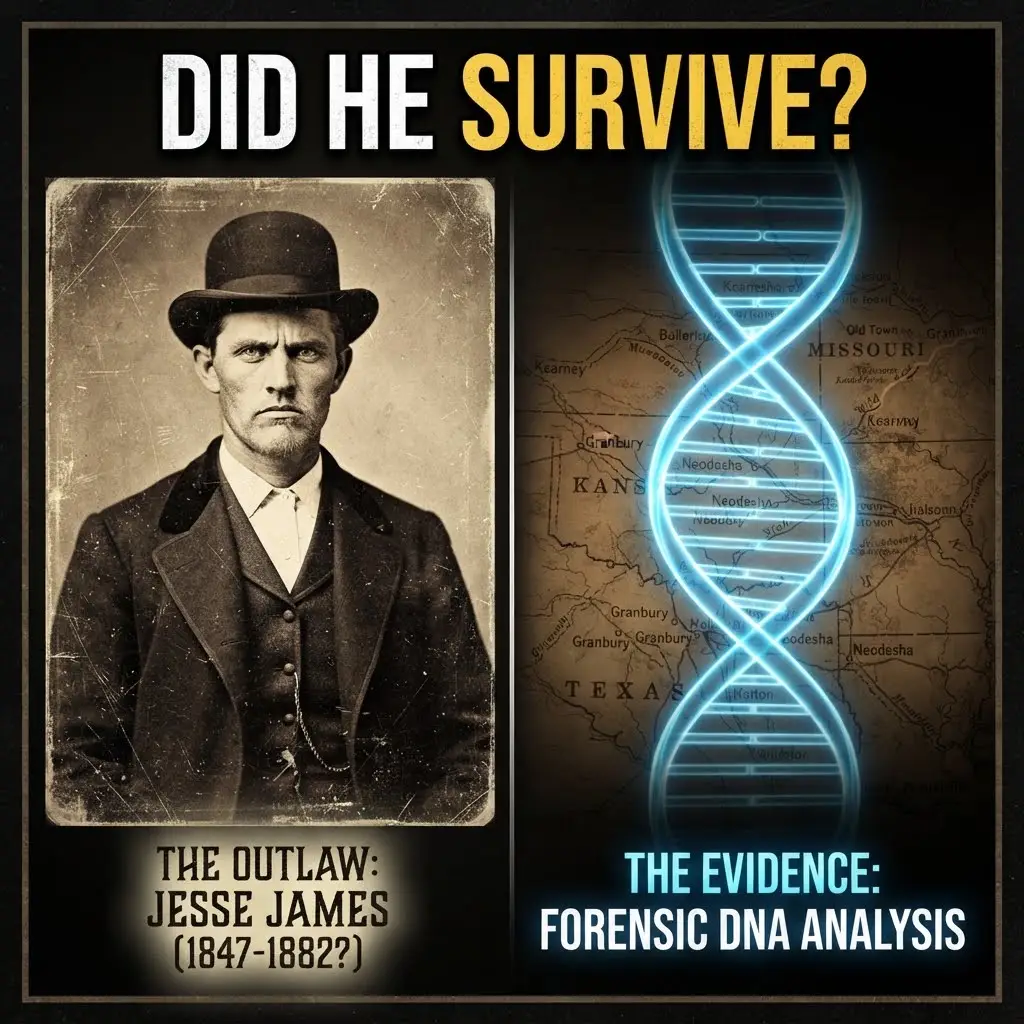
The Jesse James DNA Myth: Why Are There 3 Graves?
FAQs
Who was Jesse James and why is he considered a historical mystery?
Jesse James was an American outlaw, bank and train robber, guerrilla, and leader of the James-Younger Gang. He is considered a historical mystery because of the conflicting accounts of his life, actions, and motivations, as well as the numerous myths and legends that surround him.
What are some of the theories surrounding Jesse James’s death?
Some theories surrounding Jesse James’s death suggest that he faked his own death and lived under an assumed identity, while others believe he was killed by a member of his own gang or by a law enforcement officer seeking the bounty on his head.
What role did Jesse James play in the American Civil War?
Jesse James fought as a Confederate guerrilla during the American Civil War, participating in raids and skirmishes in Missouri. His experiences during the war are believed to have influenced his later outlaw activities.
How did Jesse James become a legendary figure in American folklore?
Jesse James became a legendary figure in American folklore due to the sensationalized newspaper reports of his crimes, the romanticized portrayal of him in dime novels and Wild West shows, and the enduring fascination with his outlaw persona and Robin Hood-like image.
What are some of the key locations associated with Jesse James’s life and activities?
Some key locations associated with Jesse James’s life and activities include his childhood home in Missouri, the site of the first bank robbery attributed to him in Liberty, Missouri, and the place of his death in St. Joseph, Missouri.