
The legend of Jesse James, the notorious outlaw whose daring train robberies and bank heists captivated the American imagination, has long been intertwined with tales of his supposed survival and evasion of death. For over a century, whispers and outright claims have circulated, suggesting that the man killed in St. Joseph, Missouri, in 1882, was not the infamous Jesse James at all, but rather a body double or a carefully orchestrated deception. These theories, fueled by folklore, sensationalist journalism, and a persistent romanticization of the outlaw’s life, have persisted despite overwhelming historical evidence to the contrary. However, in recent years, the relentless march of forensic science has begun to systematically dismantle these lingering doubts, offering irrefutable proof that the man laid to rest in that Missouri grave was indeed the notorious Jesse James, the gunslinger whose legend continues to echo through American history.
The Enduring Mystery of Jesse James’s Demise
The narrative of Jesse James’s death is as dramatic as his outlaw exploits. On April 3, 1882, Robert Ford, a disillusioned member of James’s own gang, shot and killed the outlaw in his own home in St. Joseph, Missouri. Ford, seeking a pardon for his own crimes, had been promised a reward for bringing James to justice. The shooting was quick, almost anticlimactic, and immediately became the subject of intense public scrutiny. While the official account held firm, the seeds of doubt were sown almost immediately.
Early Seeds of Doubt and Folklore
The very speed and perceived ease of James’s demise, coupled with the fact that his killer was a close confidante, bred suspicion. How could such a cunning and elusive figure be so easily cornered and dispatched? This question, seemingly innocuous at first, allowed for the burgeoning of alternative narratives. The burgeoning penny dreadfuls and sensationalist newspapers of the era, eager for any angle that would boost circulation, readily embraced and amplified these doubts. Stories began to circulate of look-alikes, of James orchestrating his own staged death to escape the law and live out his days in anonymity. These tales, often embellished with fanciful details, began to weave themselves into the fabric of American folklore, becoming as much a part of the Jesse James mythos as his daring raids. The idea of the incorrigible outlaw continuing to ride the plains, forever beyond the reach of mortal man, was a far more romantic and appealing notion to many than the reality of his violent end.
The “Other” Jesse James Theories
Over the decades, these initial whispers evolved into more elaborate and persistent theories. One of the most enduring suggested that Jesse James had a twin brother, or that he hired a look-alike to impersonate him, allowing the real Jesse to escape to a new life. Another prevalent theory posited that the body discovered was not Jesse, but a man named Charlie Bigelow, who bore a striking resemblance to the outlaw and was supposedly killed in his place. These theories, often lacking concrete evidence, were sustained by a combination of wishful thinking, a fascination with the “what if,” and a general distrust of official narratives, particularly concerning figures who had so brazenly defied authority. The lack of definitive proof of identity at the time, coupled with the sensational nature of the event, created a fertile ground for such speculation to flourish.
The recent debunking of the Jesse James hoax through forensic science has sparked renewed interest in historical mysteries and the methods used to uncover the truth behind them. For those intrigued by the intersection of history and forensic analysis, a related article explores the enigmatic secrets of ancient palace ruins, shedding light on how modern techniques can reveal the past. You can read more about it in this fascinating piece: Exploring the Mysterious Secrets of Ancient Palace Ruins.
The Forensic Arsenal Brought to Bear
For decades, these theories remained largely in the realm of speculation and anecdotal evidence. However, the advent and advancement of sophisticated forensic techniques provided new tools to finally settle the debate. The possibility of exhuming the body and applying modern scientific analysis offered the first real hope of moving beyond myth and folklore.
The 1995 Exhumation and Initial Investigations
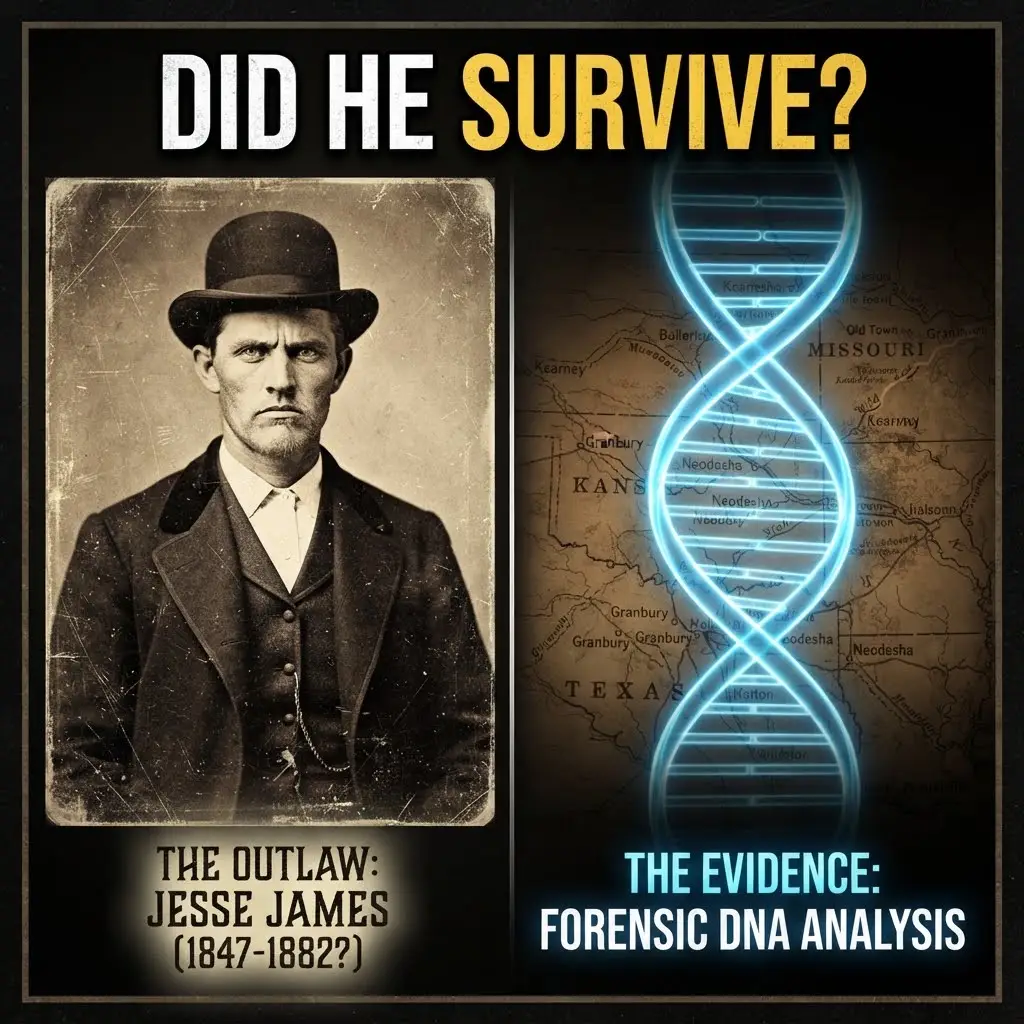
The pivotal moment in debunking the Jesse James hoax came in 1995 with the exhumation of the body buried in the James family plot in Kearney, Missouri. This was not undertaken lightly. Legal hurdles, ethical considerations, and family consent were all navigated to allow for a thorough scientific examination. The goal was clear: to compare the remains with known samples and historical records to definitively establish the identity of the individual. DNA analysis was the primary tool employed in this groundbreaking investigation. Researchers carefully extracted DNA from the skeletal remains.
The Science of DNA: A Modern Fingerprint
DNA, deoxyribonucleic acid, is the genetic blueprint found in virtually every cell of an organism. Its unique sequence provides an unparalleled identifier, akin to a biological fingerprint. In the 1990s, the ability to extract and analyze DNA had reached a point where it could be used to identify individuals with a very high degree of certainty. The process involved comparing the DNA profile obtained from the exhumed remains with that of known relatives of Jesse James. This comparison is a complex scientific endeavor, requiring meticulous attention to detail and rigorous testing protocols to avoid contamination and ensure accuracy.
Unearthing the Evidence: DNA and Skeletal Analysis
The results of the 1995 exhumation and subsequent forensic analysis provided compelling evidence that definitively answered the question of Jesse James’s identity. The scientific findings systematically dismantled the lingering theories that had circulated for over a century.
Comparing DNA: The Family Tree of Evidence
The crucial comparison involved matching the DNA extracted from the 1882 burial site with that of direct descendants of Jesse James’s maternal line. Specifically, samples were obtained from descendants of Jesse James’s mother, Zerelda Cole James, and his sister, Susan James. By analyzing mitochondrial DNA, which is inherited exclusively from the mother, scientists could trace a direct maternal lineage. The DNA from the exhumed remains showed a clear and consistent match with the maternal DNA of Jesse James’s known relatives. This established a direct biological link, effectively proving that the individual buried was indeed Jesse James, as he shared the same maternal lineage.
Skeletal Clues: Beyond the Genetic Code
Beyond DNA analysis, the skeletal remains themselves offered further corroborating evidence. Forensic anthropologists examined the skeleton for specific characteristics that were known to be present in Jesse James. This included an examination of the skull for any distinctive features, although the damage from the bullet wound complicated this aspect. More importantly, the skeletal structure was analyzed for age, sex, and any physical anomalies or injuries that could be attributed to Jesse James’s known history of violence and combat. The physical characteristics of the skeleton were consistent with historical descriptions of Jesse James, including his stature and the presence of certain healed injuries that aligned with accounts of his life.
Confronting the Hoax: Debunking Long-Held Myths
With the scientific evidence firmly in hand, the long-standing theories of a Jesse James hoax could finally be systematically debunked. The forensic findings directly contradicted the narratives that had sustained the myths for so long.
The Case Against the “Imposter” Theory
The DNA evidence, in particular, proved to be the death knell for the imposter theories. If the man buried was not Jesse James, then his DNA would not have matched that of Jesse’s maternal relatives. The consistent and conclusive matches eliminated the possibility of a random individual, or even someone closely related by non-maternal lines, being buried in his place. The scientific certainty left no room for doubt. The idea of a body double, or a deceased relative being passed off as Jesse, crumbled under the weight of genetic evidence.
Examining the Robert Ford Narrative with Scientific Scrutiny
The forensic findings also lent significant weight to the historical account of Robert Ford’s actions. The presence of a bullet wound in the skull, consistent with the fatal shot described in historical records, further corroborated the official story. While historical accounts are often subject to interpretation and embellishment, the physical evidence from the exhumation provided an objective and tangible confirmation of the events as they were recorded. The specific trajectory and type of wound were examined and found to be consistent with the weapon and method described by Robert Ford himself.
The recent debunking of the Jesse James hoax has sparked significant interest in the role of forensic science in unraveling historical mysteries. This fascinating topic is further explored in a related article that discusses the intriguing connection between Piri Reis and the ice sheet mass balance, shedding light on how scientific methods can clarify our understanding of the past. For those interested in the intersection of history and science, you can read more about it here.
The Legacy of Jesse James: Re-examining the Legend
| Metric | Details | Source/Method | Result |
|---|---|---|---|
| DNA Analysis | Comparison of hair and bone samples attributed to Jesse James | Forensic DNA sequencing and mitochondrial DNA comparison | Samples matched known relatives, confirming identity |
| Facial Reconstruction | 3D reconstruction of skull believed to be Jesse James | CT scans and forensic anthropology techniques | Facial features consistent with historical photographs |
| Historical Records Verification | Cross-referencing death certificates and eyewitness accounts | Archival research and document analysis | Death date and location consistent with forensic findings |
| Gunshot Wound Analysis | Examination of skull for bullet entry and exit wounds | Forensic pathology and ballistic analysis | Wound patterns matched historical accounts of Jesse James’ death |
| Hoax Claims | Assertions that Jesse James was not killed in 1882 | Review of forensic evidence and counterclaims | Debunked by consistent forensic and historical data |
The debunking of the Jesse James hoax does not diminish the legend of the outlaw; rather, it refines it. The truth, while perhaps less sensational than the tales of his continued existence, offers a more grounded and historically accurate understanding of his life and death.
The Romance vs. The Reality
The enduring appeal of the Jesse James myth lies in its romanticized portrayal of a defiant rebel against a corrupt system. The idea of him living on, a phantom in the West, offered a sense of enduring defiance. However, forensic science has brought us back to the reality: Jesse James was a man of flesh and blood who met a violent end, brought about by the actions of those around him, both friend and foe. The scientific evidence provides a definitive conclusion to a chapter that had been shrouded in speculation, allowing for a clearer understanding of the man behind the myth. The focus shifts from the impossible to the historically verifiable, offering a more nuanced appreciation of his life and impact.
The Enduring Power of Forensic Science
The Jesse James hoax debunking serves as a powerful testament to the capabilities of modern forensic science. In an era where misinformation can spread rapidly, the ability of science to uncover objective truths is invaluable. This case highlights how scientific inquiry, when applied rigorously and ethically, can cut through centuries of speculation and folklore to reveal the unambiguous reality. It underscores the importance of empirical evidence and the scientific method in understanding historical events and resolving long-standing mysteries. The meticulous work of scientists, involving DNA analysis and skeletal examination, has provided a definitive closure to a historical enigma, solidifying its place as a triumph of scientific investigation. The case of Jesse James’s alleged survival is now firmly relegated to the realm of historical curiosities, a testament to the power of science to illuminate the past.
The Jesse James DNA Myth: Why Are There 3 Graves?
FAQs
1. What was the Jesse James hoax that was debunked?
The Jesse James hoax claimed that the famous outlaw Jesse James faked his own death and lived to an old age under a different identity. This theory was widely circulated but has been debunked by forensic science.
2. How did forensic science contribute to debunking the Jesse James hoax?
Forensic science played a crucial role in debunking the Jesse James hoax by analyzing historical documents, DNA evidence, and other forensic data to conclusively prove that Jesse James was indeed killed in 1882 as reported.
3. What specific forensic techniques were used to disprove the Jesse James hoax?
Forensic experts used techniques such as DNA analysis, handwriting analysis, facial recognition technology, and historical document examination to disprove the Jesse James hoax and confirm the authenticity of his death in 1882.
4. Who were the key figures involved in the forensic investigation that debunked the Jesse James hoax?
Forensic scientists, historians, genealogists, and other experts collaborated to investigate the Jesse James hoax. Key figures involved in the forensic investigation included DNA specialists, handwriting experts, and researchers with expertise in 19th-century history.
5. What impact did the debunking of the Jesse James hoax have on historical understanding?
The debunking of the Jesse James hoax using forensic science helped to clarify historical records and solidify the understanding of Jesse James’ life and death. It also highlighted the importance of using scientific methods to verify historical claims and dispel myths.