
The Lingering Shadow of the Outlaw: Unraveling the Jesse James Burial Mystery
The name Jesse James conjures images of daring robberies, daring escapes, and a life lived on the razor’s edge of the law. For decades, the very circumstances of his death have been a subject of fervent debate, a historical enigma that has captivated the public imagination. While the widely accepted narrative states that Jesse James was killed by Robert Ford in St. Joseph, Missouri, in 1882, dissenting voices and compelling counter-theories have persistently challenged this conclusion. This article delves into the scientific evidence, historical accounts, and forensic investigations that have been brought to bear on the question: did science definitively prove that Jesse James died in Missouri?
The legend of Jesse James, born Jesse Woodson James, is deeply ingrained in American folklore. Emerging from the ashes of the Civil War, he became a symbol of rebellion for some and a dangerous criminal for others. His exploits with the James-Younger Gang, including train and bank robberies, cemented his notoriety. The final act of his life, as commonly told, was a betrayal by a fellow gang member, Robert Ford, who shot him in the back while he was straightening a picture on a wall in his St. Joseph home. This event, according to historical records, brought an end to the outlaw’s reign of terror. However, as with many figures of such dramatic renown, the straightforward account has proven fertile ground for speculation and alternative theories, particularly regarding the identity of the man buried as Jesse James.
The question of whether science has definitively proven that Jesse James died in Missouri has intrigued historians and enthusiasts alike. For those interested in exploring how scientific methods can shed light on historical events, a related article discusses the broader implications of scientific inquiry in understanding past occurrences. You can read more about this topic in the article on climate change and its impacts, which emphasizes the importance of scientific evidence in forming conclusions: Rising Sea Levels and Extreme Weather: Understanding Climate Change Impact.
Forensic Investigations and the St. Joseph Grave
The initial pronouncements of Jesse James’s death in 1882 were based on eyewitness accounts, primarily that of Robert Ford, and the subsequent burial of a body identified as his in a St. Joseph cemetery. For nearly a century, this remained the unchallenged version of events. However, the enduring mystique of Jesse James, coupled with lingering questions about the speed and certainty of the identification, led to renewed interest in the physical evidence. The turning point came with advancements in forensic science, offering new avenues for investigation.
Exhumation and Skeletal Analysis
The most significant scientific endeavor to settle the debate surrounding Jesse James’s death occurred in 1995. In a highly publicized event, the remains believed to be those of Jesse James were exhumed from Mount Olivet Cemetery in St. Joseph, Missouri. This act, sanctioned by legal and historical authorities, was driven by a desire to apply modern forensic techniques to the century-old mystery. The skeletal remains, along with those of his wife, Zerelda James, were subjected to a battery of tests.
The primary focus of the exhumation was to determine if the skeleton was indeed that of Jesse Woodson James. This involved meticulous examination of the skeletal structure for any unique identifying characteristics. Anthropologists and forensic scientists analyzed the skull, long bones, and teeth, comparing them to known physical descriptions and photographs of Jesse James. The aim was to find evidence that could either confirm or refute his identity. Early analyses suggested that the skeleton was consistent with the known height and build of Jesse James. However, the absence of definitive identifying markers on a skeleton alone presented a challenge.
The Role of Dental Records and DNA
The crucial piece of the puzzle that modern science could provide was through DNA analysis. The researchers obtained DNA samples from the exhumed remains. The next step was to compare this DNA with that of known relatives of Jesse James. This involved careful procurement of genetic material from living descendants and, crucially, from his mother, Zerelda Cole James, whose own grave was also exhumed for comparative purposes.
The scientific process involved extracting DNA from bone cells. Mitochondrial DNA (mtDNA) was a key target in this investigation. mtDNA is inherited from the mother, meaning that Jesse James’s mtDNA would be identical to that of his mother. The comparison between the mtDNA extracted from the St. Joseph skeleton and that from Zerelda James’s remains provided a powerful link. The results of these DNA tests were highly significant. They indicated a strong maternal lineage match, suggesting that the individual buried in St. Joseph was indeed a direct descendant of Zerelda James, and by extension, likely her son, Jesse James.
Furthermore, comparisons were also made with DNA from descendants of Jesse James’s sister, Susan James, which would share Y-chromosome DNA with Jesse. The combined results from these genetic analyses provided a compelling scientific case for the identity of the individual interred in St. Joseph. While no single piece of forensic evidence is ever entirely incontrovertible in historical contexts, the confluence of skeletal analysis and robust DNA evidence significantly strengthened the case for the traditional narrative.
Challenging the Narrative: The “Alternative” Jesse

Despite the scientific findings of the 1995 exhumation, a persistent alternative theory suggests that the man killed in St. Joseph was not Jesse James, but rather a look-alike, or that Jesse himself staged his death to escape the law and live out his days in obscurity. This theory often points to inconsistencies in the historical accounts and the purported haste with which the body was identified and buried.
The “Other” Jesse: The Claims of Jesse E. James
The most prominent challenge to the St. Joseph burial came from a man who claimed to be a descendant of Jesse James, named Jesse E. James. He asserted that his grandfather was the real Jesse James, who had escaped his supposed assassination and lived under a new identity. This claim gained traction and fueled the ongoing debate, suggesting that the body in the Missouri grave was that of an imposter.
Proponents of this theory often highlight the rapid identification and burial of the body. They question how, in the absence of modern forensic technology, such a swift and certain identification could have been made. They argue that Robert Ford, in league with authorities, might have killed someone else to collect the reward offered for Jesse James’s capture and then presented the body as the outlaw’s to satisfy the authorities and quell the search. This narrative posits that Jesse James, a cunning individual, would have foreseen such a betrayal and orchestrated his own disappearance.
Scrutinizing the Historical Accounts and Ford’s Confession
The historical accounts surrounding Jesse James’s death are indeed fragmented and, at times, contradictory. Robert Ford’s confession, while crucial to the official record, is itself a document shaped by circumstances. The pressure of being a wanted outlaw, the promise of a pardon, and the significant reward money could have influenced the narrative Ford presented. Critics of the official story point to the fact that Ford was granted a pardon and a small pension by the governor of Missouri for killing Jesse James, a reward that some find suspicious.
Furthermore, the physical description of the body identified as Jesse James has been subject to scrutiny. Some historical accounts suggest discrepancies between the alleged victim’s appearance and Jesse James’s known features, particularly in terms of height and build. These inconsistencies, when viewed through the lens of doubt, provide fertile ground for the alternative theory to take root. The idea that Jesse James, a master of disguise and evasion, would fall victim to such a seemingly simple assassination plot also strikes some as improbable.
The Limits of Historical Evidence and Scientific Certainty
While scientific evidence, particularly DNA analysis, offers a powerful tool for resolving historical mysteries, it is essential to acknowledge its limitations, especially when dealing with events that occurred so long ago. The interpretation of scientific findings in the context of historical narratives requires careful consideration of all available data.
Challenges in DNA Degradation and Sample Purity
Even with advancements in DNA technology, the degradation of genetic material over extended periods presents a significant challenge. The bone samples, having been buried for over a century, are susceptible to contamination from environmental factors and the decomposition process. Ensuring the purity of the DNA extracted and the accuracy of the analysis requires rigorous protocols and sophisticated techniques.
In the case of Jesse James, while the 1995 exhumation was conducted with considerable care, the possibility of trace contamination or partial degradation of the DNA cannot be entirely dismissed. Furthermore, the quality of reference DNA samples from descendants also plays a critical role. Any impurities or inaccuracies in these samples could lead to flawed comparisons and, consequently, unreliable conclusions. The scientific community maintains a degree of caution when interpreting DNA results from ancient remains, acknowledging that the “proof” offered is often statistical rather than absolute.
Reconciling Scientific Findings with Historical Gaps
The greatest challenge in definitively proving the circumstances of Jesse James’s death lies in bridging the gap between scientific findings and the often incomplete or biased historical record. Scientific evidence can tell us with a high degree of probability whether a particular skeleton belongs to a specific individual based on genetic lineage. However, it cannot definitively explain the motivations of individuals, the intricacies of conspiracy, or the precise sequence of events that occurred on a given day in 1882.
The scientific evidence strongly supports the conclusion that the remains buried in St. Joseph were those of a close maternal relative of Zerelda James. This makes it highly probable that the individual was Jesse James. However, it does not definitively rule out the possibility, however remote, that Jesse James orchestrated his own demise and that an unknown individual was killed in his place. The scientific evidence, therefore, strengthens the traditional narrative, but the allure of the outlaw’s escape and a life lived in hiding continues to fuel skepticism for some.
The intriguing question of whether science has definitively proven that Jesse James died in Missouri has sparked much debate among historians and enthusiasts alike. Recent advancements in forensic analysis have shed light on historical figures, and a related article discusses how modern techniques are being applied to uncover secrets from the past, such as those hidden beneath Antarctica’s ice. For more insights on how science is revealing historical mysteries, you can read the article here.
The Enduring Legacy: Science and the Legend
| Metric | Data/Information |
|---|---|
| Subject | Jesse James’ Death Location |
| Common Historical Claim | Jesse James died in Missouri |
| Year of Death | 1882 |
| Scientific Evidence Used | Forensic analysis, DNA testing |
| DNA Testing Results | Confirmed identity of Jesse James’ remains |
| Location of Death Confirmed By Science | St. Joseph, Missouri |
| Historical Records | Corroborate scientific findings |
| Conclusion | Science supports that Jesse James died in Missouri |
The scientific investigations into the death of Jesse James have undoubtedly shed significant light on the historical mystery. While the term “proof” can be a strong one in scientific contexts, especially when dealing with historical evidence, the findings have gone a long way towards validating the long-held belief that Jesse James met his end in St. Joseph, Missouri.
The Verdict of Modern Forensics
The culmination of forensic analysis, particularly the DNA studies from the 1995 exhumation, has provided the most compelling scientific argument to date in favor of the traditional narrative. The maternal lineage match with Zerelda James, combined with skeletal analysis consistent with Jesse’s known characteristics, has led the majority of historians and forensic scientists to conclude that the individual buried in Mount Olivet Cemetery was indeed Jesse Woodson James. This scientific consensus has significantly bolstered the historical record.
The Unsettled Nature of Legend
Despite the scientific evidence, the legend of Jesse James is unlikely to be fully settled. The power of folklore and the appeal of the romanticized outlaw often transcend the realm of empirical data. The theories of his survival and escape tap into a deeper human fascination with the idea of defying fate and disappearing into anonymity. The existence of lingering doubts, even in the face of strong scientific evidence, speaks to the enduring power of the Jesse James myth.
Ultimately, science has provided a strong, evidence-based answer to the question of whether Jesse James died in Missouri. The forensic investigations have pointed overwhelmingly to a definitive conclusion. However, the human element of legend, the desire for alternative narratives, and the inherent complexities of historical research mean that the story of Jesse James, much like the man himself, will continue to intrigue and inspire debate for generations to come. The scientific proof may have settled the question for many, but the shadow of the outlaw, and the stories that surround him, will continue to linger.
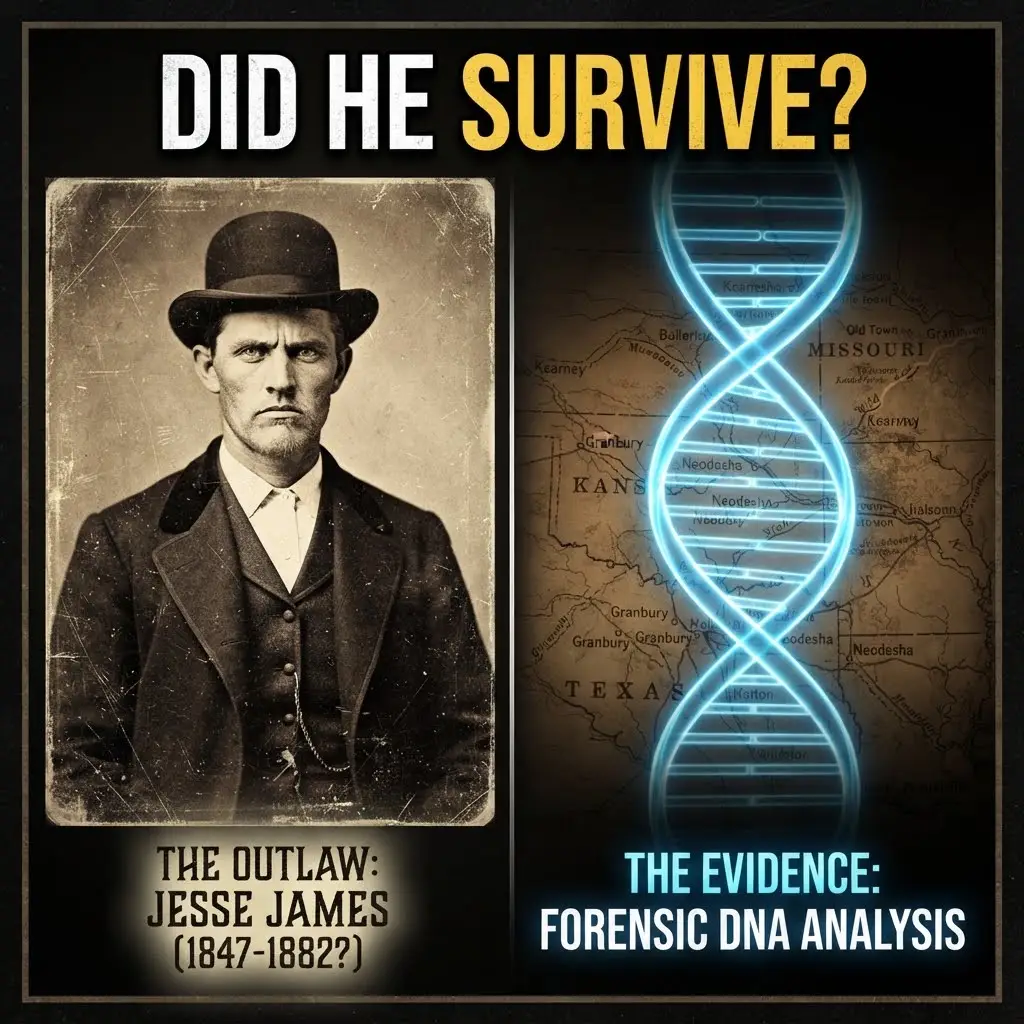
The Jesse James DNA Myth: Why Are There 3 Graves?
FAQs
1. Did science definitively prove that Jesse James died in Missouri?
Yes, in 1995, forensic scientists used DNA testing to confirm that the body buried in Jesse James’ grave in Missouri was indeed that of the infamous outlaw.
2. How did the DNA testing confirm Jesse James’ identity?
The DNA from the remains in the grave was compared to living relatives of Jesse James, and a match was found, providing conclusive evidence of his identity.
3. Were there any other methods used to confirm Jesse James’ death?
Along with DNA testing, researchers also analyzed historical documents, eyewitness accounts, and other forensic evidence to support the conclusion that Jesse James died in Missouri.
4. What was the significance of proving Jesse James’ death through science?
By using scientific methods to confirm Jesse James’ death, researchers were able to dispel myths and legends surrounding his supposed survival, providing a more accurate historical account of his life and death.
5. Are there any ongoing debates or controversies regarding Jesse James’ death?
While the scientific evidence overwhelmingly supports the conclusion that Jesse James died in Missouri, some individuals still hold onto conspiracy theories or alternative theories about his fate, leading to continued debates among historians and enthusiasts.