
Unearthing the Logic of Ancient Commerce: A Data-Driven Exploration
The allure of ancient trade hubs, from the Silk Road’s vast arteries to the bustling ports of the Mediterranean, often conjures images of vibrant bazaars, exotic goods, and intrepid merchants. While romantic notions abound, the operational efficiency and underlying logic of these ancient commercial networks remain a subject of deep scholarly inquiry. Traditionally, understanding these systems relied on archaeological evidence, textual analysis, and historical interpretation. However, in recent decades, the advent of data science has opened new avenues for examining these complex historical phenomena. By applying computational methods and statistical analysis to vast datasets, researchers are now able to uncover patterns, identify critical nodes, and quantify the efficiency of ancient trade. This article delves into how data science is revolutionizing our understanding of ancient trade hub efficiency, offering insights that were previously inaccessible and painting a more nuanced picture of early globalized economies.
The study of ancient trade hubs has become increasingly relevant in the field of data science, particularly in understanding the efficiency of trade routes and economic interactions. A fascinating article that explores the implications of data science in securing long-term human presence on the Moon can be found at this link. By analyzing historical trade patterns, researchers can draw parallels to modern logistical challenges, highlighting how data-driven approaches can enhance our understanding of both ancient and contemporary trade systems.
The Foundation of Analysis: Data Acquisition and Curation for Historical Trade
The success of any data science endeavor hinges on the quality and comprehensiveness of the data. For ancient trade, this presents a unique set of challenges. Unlike modern digital transactions, historical records are fragmented, often incomplete, and prone to biases. Nevertheless, dedicated efforts in archaeology, epigraphy, and historical linguistics have yielded a wealth of information that, when meticulously curated and digitized, can serve as the bedrock for robust data analysis.
Archaeological Footprints: Unearthing Physical Evidence
Archaeological excavations provide tangible evidence of trade activities. Artifacts, such as pottery shards, coins, tools, and luxury goods, are not merely objects of historical curiosity; they are data points. The provenance of these items, determined through material analysis (e.g., petrography for pottery, isotopic analysis for metals), can reveal their origin and, by extension, the routes they traveled. The density and distribution of specific artifact types within a settlement can indicate its role as a consumption center, a production site, or a transshipment point. Data science can be employed to map these find locations, analyze spatial correlations between different artifact types, and even reconstruct potential trade networks based on the geographic spread of originating materials. For instance, analyzing the distribution of Mesopotamian pottery in Egyptian sites or Roman amphorae across the North African coast can illuminate the scale and direction of interregional exchange.
Epigraphic and Textual Treasures: Deciphering Written Records
Ancient texts, ranging from cuneiform tablets detailing commodity exchanges to Roman administrative documents recording customs duties, offer invaluable textual data. These documents, when digitized and made searchable, can reveal specific trade goods, quantities, prices, merchants’ names, and even legal frameworks governing trade. Extracting this information requires sophisticated natural language processing (NLP) techniques. NLP can identify entities (merchants, places, goods), relationships between them, and extract quantitative data. For example, analyzing a corpus of Akkadian cuneiform tablets from a specific period can help reconstruct the types and volumes of grain, textiles, and metals traded between cities like Ur and Mari. Similarly, deciphering inscriptions on trade seals or shipwrecks can provide direct evidence of goods and origins.
Numismatic Clues: The Currency of Exchange
Coins are more than just ancient currency; they are historical artifacts that carry a wealth of information. The metal composition, minting location, and iconography of ancient coins can reveal their origin and circulation patterns. Analyzing the find spots of coins from different mints can map out trade routes and spheres of influence. Data science can be applied to numismatic databases to perform statistical analysis on coin hoards, identify temporal trends in circulation, and even model the economic impact of monetary policies or the introduction of new coinage. For example, analyzing the distribution of Greek drachmas across Anatolia and Egypt can shed light on the economic integration of these regions under Hellenistic influence.
Modeling Trade Networks: The Architecture of Ancient Exchange
Once data is collected and curated, the next step is to model the intricate networks of ancient trade. This involves representing the connections between different locations and the flow of goods between them. Data science offers powerful tools for visualizing, analyzing, and understanding the structure and dynamics of these complex systems.
Graph Theory and Network Analysis: Mapping the Arteries of Commerce
Graph theory provides a robust framework for representing trade networks. Each location (city, port, settlement) can be treated as a node, and the trade routes or the movement of goods between them as edges. The strength of these edges can be quantified by the volume of trade, the frequency of transactions, or the diversity of goods exchanged. Network analysis techniques can then be applied to these graphs to identify key features of the ancient trade landscape.
Identifying Centrality and Influence: The Pivotal Players
Measures of centrality, such as degree centrality (number of connections), betweenness centrality (how often a node lies on the shortest path between other nodes), and eigenvector centrality (influence based on connections to other influential nodes), can reveal the most important hubs in the network. A city with high betweenness centrality, for example, likely served as a crucial intermediary, facilitating trade between distant regions. Analyzing these metrics can help us understand which cities exerted the most economic or political influence within their trading spheres. The Minoa on Crete, with its extensive maritime reach, or the Roman city of Ostia, as the primary port of Rome, would likely exhibit high centrality in their respective networks.
Community Detection and Clustering: Understanding Regional Synergies
Community detection algorithms can identify groups of nodes that are more densely interconnected than with nodes outside the group. This can reveal distinct regional trading blocs or economic zones that operated with a degree of semi-autonomy. For instance, analysis might uncover a distinct Aegean trading community, a Red Sea maritime network, or a Mesopotamian overland exchange system. Understanding these communities helps in dissecting the broader ancient global economy into manageable, interconnected parts.
Agent-Based Modeling: Simulating Merchant Behavior and Market Dynamics
Agent-based modeling (ABM) offers a dynamic approach to understanding trade efficiency. In this framework, individual agents (merchants, producers, consumers) are programmed with specific behaviors and decision-making rules. These agents then interact within a simulated environment representing the ancient economy. By observing the emergent patterns of trade and resource allocation from these micro-level interactions, researchers can gain insights into the macro-level efficiency of the system.
Simulating Supply and Demand: Predicting Market Responses
ABMs can simulate how changes in supply, demand, or transportation costs might affect prices and trade flows. For example, researchers could model the impact of a drought in one region on grain prices in another, or how the introduction of a new, more efficient mode of transport might alter established trade routes. This allows for a more granular understanding of market responsiveness and the potential for disruptions or optimizations within ancient economic systems.
Exploring Risk and Resilience: Navigating Uncertainties
Ancient trade was inherently risky, subject to piracy, political instability, and natural disasters. ABMs can incorporate these uncertainties by introducing random events or agents with risk-averse or risk-seeking behaviors. This can help researchers understand how ancient trade networks adapted to and mitigated risks, and how resilient they were to external shocks. A network with multiple redundant routes and diverse trading partners might be more resilient than one heavily reliant on a single key node.
Quantifying Efficiency: Metrics and Measures of Ancient Commercial Flow
Beyond mapping networks, data science allows for the quantification of efficiency within these ancient trade systems. This moves beyond qualitative descriptions to provide measurable insights into how effectively resources were allocated, goods were transported, and economic activities were conducted.
Flow and Throughput Analysis: Measuring the Pace of Commerce
Analyzing the volume and speed of goods moving through the network is crucial for assessing efficiency. This can involve estimating the number of shipments per unit of time between nodes, or the total value of goods passing through a particular hub. For archaeological data, this might involve estimating the number of amphorae transported annually on a specific sea route, or the total weight of metals processed at a mining center. Textual data can provide direct records of commodity flows, allowing for quantitative analysis of throughput.
Inventory Management and Stockpiling: The Art of Anticipation
Ancient economies, even without modern logistics, exhibited sophisticated inventory management and stockpiling strategies. Data science can analyze patterns of surplus and deficit across different regions over time. By examining the distribution of stored goods and the timing of their release into the marketplace, researchers can infer the efficiency of anticipatory economic practices. For example, analyzing the scale of grain silos in Egypt before and after harvests can reveal the effectiveness of their food security and distribution systems.
Cost-Benefit Analysis of Routes and Technologies: Optimizing the Journey
The cost of transportation, whether by land or sea, was a significant factor in ancient trade. Data science can be used to model these costs, considering factors like travel time, risks of loss, and the carrying capacity of different transport methods (e.g., pack animals vs. ships). By comparing the costs and benefits of different routes and technologies, researchers can identify the most efficient pathways and understand the economic rationale behind specific transportation choices. The development of the trireme in the Mediterranean, for instance, significantly reduced travel times and increased the volume of trade.
Economic Linkages and Interdependence: Understanding the Ripple Effect
The efficiency of a trade hub is not solely determined by its internal operations but also by its integration into broader economic systems. Data science can quantify the degree of interdependence between different regions and sectors.
Input-Output Modeling: Tracing the Supply Chain
While modern input-output models are highly sophisticated, simplified versions can be applied to ancient data. By analyzing the flow of raw materials to production centers and then the flow of finished goods to consumption centers, researchers can reconstruct simplified supply chains. This helps to understand how the output of one region or industry served as the input for another, revealing intricate economic dependencies. For example, the tin from Cornwall was essential for Bronze Age tool production in many parts of Europe.
Price Elasticity and Market Responsiveness: Gauging Economic Agility
Analyzing price fluctuations in response to changes in supply or demand can offer insights into market responsiveness and efficiency. If prices quickly stabilize after a disruption, it suggests an agile and efficient market. Conversely, persistent price volatility might indicate inefficiencies or bottlenecks. Historical price data, though scarce, can be analyzed to infer these characteristics. The Roman grain market, for instance, was remarkably responsive to fluctuations in supply due to its highly organized distribution system.
In exploring the efficiency of ancient trade hubs, one fascinating aspect is how early civilizations utilized innovative technologies to optimize their operations. A related article discusses the remarkable use of solar energy in ancient times, showcasing how solar furnaces were harnessed for various purposes. This historical perspective not only highlights the ingenuity of our ancestors but also provides valuable insights into sustainable practices that can inform modern data science approaches. For more information on this topic, you can read the article on harnessing ancient solar furnace technology.
Case Studies and Emerging Discoveries: Real-World Applications of Data Science in Ancient Trade
| Trade Hub | Period (Century) | Estimated Annual Trade Volume (tons) | Number of Trade Routes | Average Transit Time (days) | Goods Traded | Efficiency Index (0-100) |
|---|---|---|---|---|---|---|
| Alexandria | 3rd Century BCE | 120,000 | 15 | 12 | Grain, Papyrus, Glassware | 85 |
| Babylon | 6th Century BCE | 95,000 | 10 | 18 | Textiles, Spices, Metals | 78 |
| Tyre | 8th Century BCE | 70,000 | 8 | 20 | Purple Dye, Timber, Glass | 72 |
| Chang’an | 7th Century CE | 150,000 | 20 | 10 | Silk, Tea, Porcelain | 90 |
| Petra | 1st Century CE | 60,000 | 7 | 15 | Incense, Spices, Precious Stones | 75 |
The theoretical frameworks of data science come to life when applied to specific historical contexts. Numerous studies have already demonstrated the power of these analytical tools in shedding new light on ancient trade dynamics.
The Silk Road: From Myth to Measurable Network
The legendary Silk Road, often romanticized as a single, monolithic route, has been subjected to extensive data science analysis. By mapping the archaeological distribution of Silk Road goods like silk textiles, spices, and precious metals, researchers have been able to reconstruct the complex network of overland and maritime routes, identifying key oasis towns, caravanserai, and port cities that served as vital nodes. Network analysis has revealed the differential importance of various routes over time, highlighting periods of greater overland reliance versus maritime dominance. Agent-based models have also been used to simulate the economic decision-making of merchants traversing these long distances, considering factors like security, tolls, and market prices at different destinations.
The Roman Mediterranean: A Highly Integrated Economic System
The Roman Empire’s vastness and sophisticated infrastructure facilitated a highly integrated economic system. Data science has been instrumental in mapping the extensive trade in grain from Egypt and North Africa to Rome, the movement of wine and olive oil across the Mediterranean, and the distribution of pottery and luxury goods throughout the empire. Analysis of coin hoards has revealed the penetration of Roman currency into distant regions, indicating the reach of its economic influence. By quantifying the volume of goods transported via Roman roads and maritime routes, researchers have been able to assess the efficiency of their logistics and identify potential bottlenecks. For instance, the efficiency of grain shipments to Rome directly impacted the stability of the empire.
Ancient Mesopotamian Networks: Unraveling Early Long-Distance Exchange
The earliest known complex societies arose in Mesopotamia, with extensive trade networks dating back to the 4th millennium BCE. Data science is helping to unravel these early exchanges, analyzing the distribution of Mesopotamian pottery and other artifacts in neighboring regions like the Indus Valley and Anatolia. Linguistic analysis of cuneiform texts is providing detailed records of commodity exchanges, merchant activities, and the development of early credit systems. Network analysis of these early trade connections reveals the emergence of powerful city-states that acted as central hubs for regional and interregional commerce, demonstrating early forms of economic specialization and interdependence.
The study of ancient trade hubs reveals fascinating insights into the efficiency of early commerce, showcasing how data science can illuminate historical patterns. For a deeper understanding of how advanced technologies may have influenced these trade networks, you can explore a related article that discusses the lost secrets of ancient civilizations and their remarkable innovations. This resource offers a compelling look at the intersection of technology and trade, which can be found here: lost secrets of ancient civilizations.
Future Directions and the Evolving Landscape of Historical Data Science
The application of data science to ancient trade is a rapidly evolving field, with new techniques and datasets constantly emerging. The future promises even deeper insights and a more comprehensive understanding of humanity’s earliest economic endeavors.
Advancements in Digital Humanities and AI: Enhancing Data Extraction
The continued development of AI, particularly in NLP and computer vision, will further enhance the extraction of information from historical sources. This includes more sophisticated decipherment of damaged or obscure texts, automated recognition and classification of artifacts in digital archives, and the integration of disparate datasets from various disciplines. The potential to analyze vast, previously unmanageable corpora of historical documents and archaeological records is immense.
Geospatial Analysis and Predictive Modeling: Illuminating Undiscovered Hubs
The integration of geospatial data with archaeological and textual information
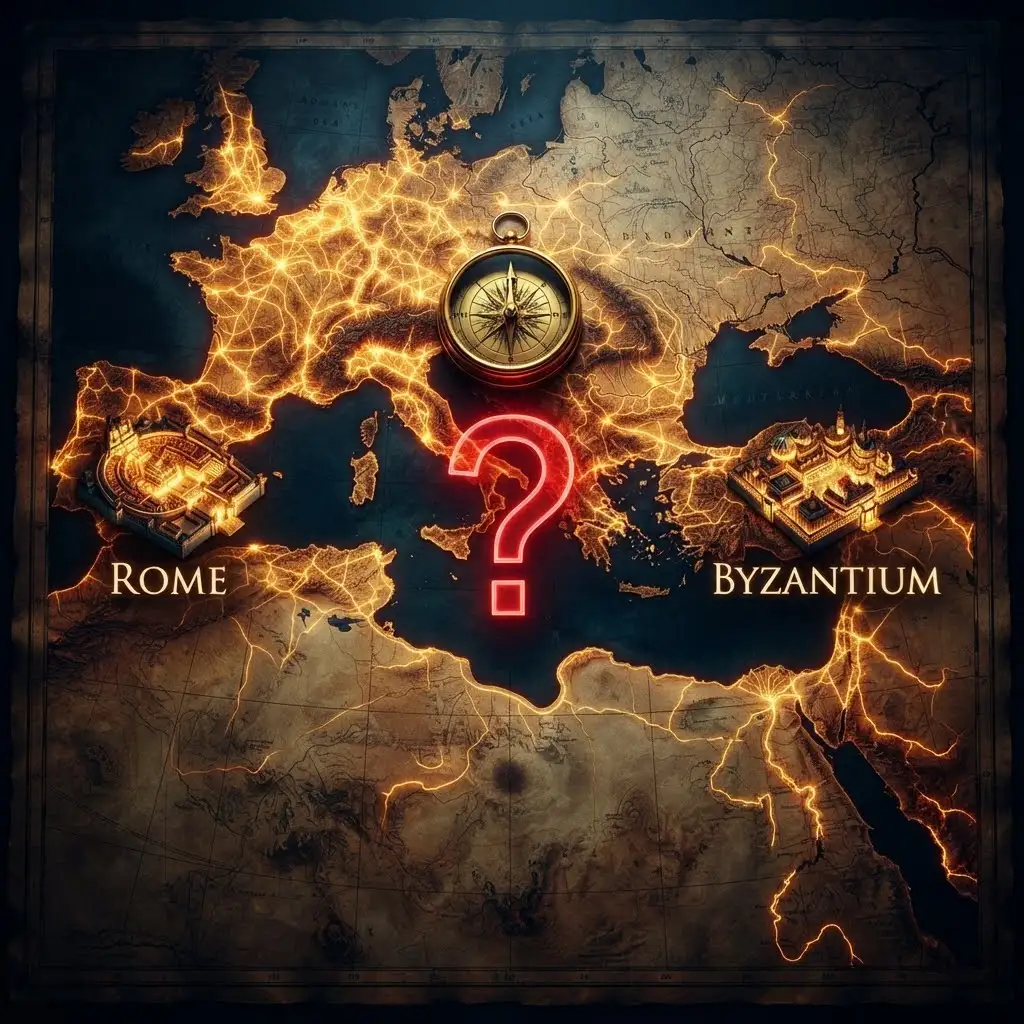
The 2.7% Statistic That Terrifies Roman Historians
FAQs
What is the significance of studying ancient trade hub efficiency?
Studying ancient trade hub efficiency provides valuable insights into the economic systems, transportation networks, and cultural interactions of past civilizations. It helps us understand how goods and ideas were exchanged, and how these exchanges influenced the development of societies.
How can data science contribute to analyzing ancient trade hub efficiency?
Data science can help analyze large datasets of archaeological findings, historical records, and geographical information to identify patterns, trends, and correlations related to ancient trade routes, market dynamics, and resource distribution. By applying statistical models and machine learning algorithms, data scientists can uncover hidden insights and make predictions about ancient trade activities.
What are some challenges in using data science to study ancient trade hub efficiency?
Challenges in using data science to study ancient trade hub efficiency include the incompleteness and ambiguity of historical data, the difficulty of interpreting ancient texts and artifacts, and the limitations of modern analytical tools in handling non-standardized information from different time periods and regions. Data scientists must also consider cultural biases and historical context when analyzing ancient trade data.
How can the findings from studying ancient trade hub efficiency be applied in modern contexts?
The findings from studying ancient trade hub efficiency can be applied in modern contexts to improve supply chain management, optimize transportation networks, and enhance international trade relations. By learning from the successes and failures of ancient trade systems, modern businesses and policymakers can make more informed decisions about resource allocation, market expansion, and economic development.
What are some examples of ancient trade hubs that have been studied using data science?
Some examples of ancient trade hubs that have been studied using data science include the Silk Road, the Mediterranean Sea routes, the Indus Valley civilization, and the Hanseatic League. By analyzing trade patterns, commodity flows, and cultural exchanges in these regions, researchers have gained valuable insights into the efficiency and impact of ancient trade hubs on global history.