The Roman military, a force renowned for its discipline, innovation, and unparalleled effectiveness, owed a significant portion of its success to its sophisticated logistical and engineering prowess. Among its most enduring legacies, the vast network of Roman roads stands as a testament to their strategic foresight and technical mastery. These arteries of empire were not merely pathways; they were meticulously designed and constructed conduits, optimized for the rapid and efficient movement of legions, supplies, and communication across vast and often hostile territories. The Roman military road system was a cornerstone of their expansion, consolidation, and enduring control of their empire, enabling swift deployment, reinforcing garrisons, and facilitating the administration of conquered lands. Their strategic design principles, from their straightness and durability to their drainage and gradient control, all served the singular purpose of maximizing troop movement efficiency, a critical factor in Roman military dominance.
The Blueprint of Empire: Roman Road Construction Principles
The construction of Roman roads was a complex and labor-intensive undertaking, guided by a set of well-defined principles that prioritized durability, functionality, and speed. These principles were not born of casual observation but of centuries of experience and a deep understanding of military logistics. The Romans recognized that a well-built road was an investment, not an expense, directly contributing to the military’s ability to project power and respond to threats effectively. The sheer scale of their road-building efforts, covering over 400,000 kilometers across the empire, underscores the immense importance they placed on this infrastructure.
The Straight and Narrow Path: Geometry and Alignment
One of the most striking features of Roman military roads is their characteristic straightness. The Romans favored the most direct route between two points, often disregarding natural obstacles like hills or marshes, unless their deviation was deemed strategically or logistically insurmountable. This directness was not an arbitrary aesthetic choice; it was a deliberate engineering decision rooted in maximizing travel speed and minimizing effort for marching soldiers. A straight path required less steering, reduced the expenditure of energy, and allowed for a more consistent pace, especially for formations on the march. While the Romans were capable of remarkable feats of tunneling and bridge-building to maintain straightness, they were also pragmatic. If a slight curve or detour offered a significant engineering advantage – such as avoiding a steep gradient or a particularly difficult terrain – they would incorporate it. However, these deviations were generally minimal, always aiming to return to the most direct line as soon as feasible. This emphasis on directness also facilitated clear lines of sight for scouting and signaling, an advantage in military operations.
Layers of Strength: Foundation and Pavement
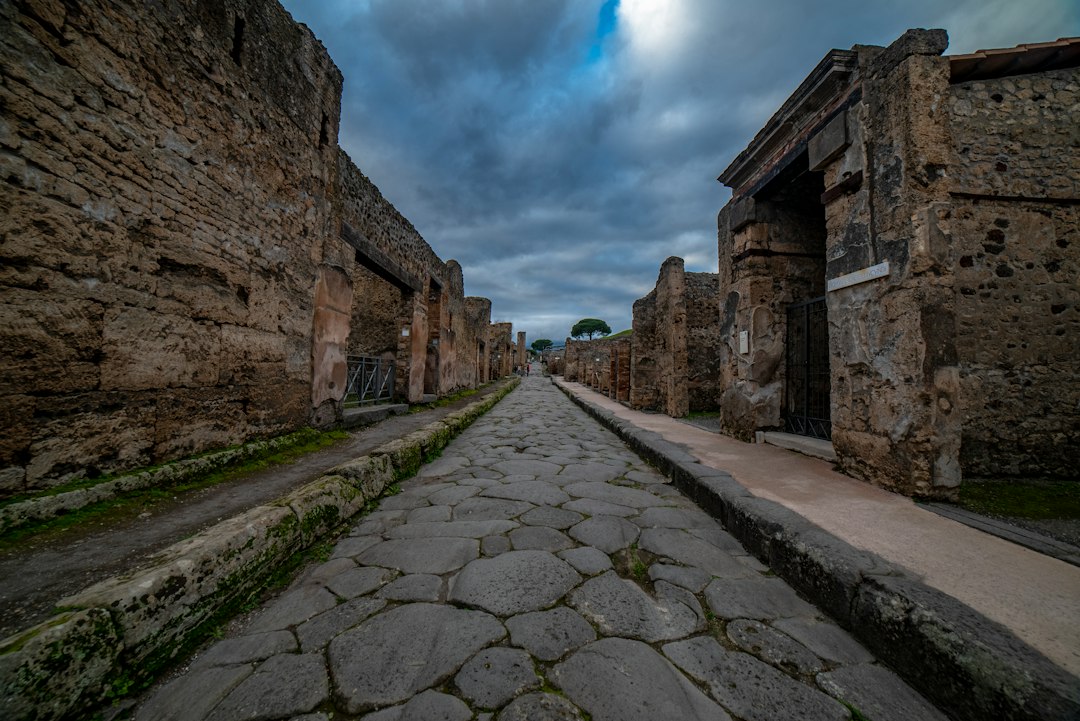
The durability of Roman roads was legendary, a direct result of their multi-layered construction techniques. These roads were built to withstand the constant heavy traffic of marching legions, supply wagons, and chariots, enduring for centuries in some cases. The foundation typically began with a deep excavation, often several feet deep, into which large stones and rubble were laid. This base layer provided stability and drainage, preventing the road from becoming waterlogged and susceptible to damage. Above this, successive layers of smaller stones, gravel, and sand were compacted, each layer contributing to the overall strength and resilience of the roadbed. The surface layer, or pavement, varied in its composition depending on the availability of materials and the importance of the road. In many instances, it consisted of tightly fitted polygonal stone blocks, creating a smooth and even surface. In other cases, a layer of gravel or crushed stone was used, bound together with a mixture of sand and lime, or even a primitive form of concrete, known as opus caementicium. This careful layering and compaction ensured excellent drainage, a critical factor in preventing frost heave and erosion, thereby extending the road’s lifespan and maintaining its usability in all weather conditions.
Managing the Flow: Drainage and Gradient Control
A sophisticated understanding of water management was integral to Roman road design. The Romans recognized that standing water was the enemy of any road, leading to erosion, structural weakening, and the creation of muddy, impassable mire. To combat this, they incorporated elaborate drainage systems. Ditches were dug along the sides of the roads, often lined with stones, to channel rainwater and runoff away from the roadbed. In flatter terrain, slight convexities in the road surface, known as camber, helped to direct water to the ditches. In areas with significant rainfall or near water sources, more elaborate culverts and bridges were constructed to carry water underneath the road. Equally important was the control of gradients. While the Romans aimed for straightness, they were also acutely aware that excessively steep inclines could impede the movement of heavy wagons and tired soldiers. They meticulously surveyed the terrain, employing engineers who calculated the optimal gradients to allow for efficient passage without compromising the integrity of the road. This attention to detail ensured that even in hilly or mountainous regions, Roman roads remained navigable and functional for military purposes.
The strategic design of Roman military troop movement roads played a crucial role in the efficiency of their military campaigns, enabling swift movement and logistical support across vast territories. For a deeper understanding of how ancient technologies can inspire modern solutions, you can explore the article titled “Unlocking the Power of Ancient Tech for Modern Solutions” which discusses the enduring impact of ancient innovations on contemporary practices. You can read it here: Unlocking the Power of Ancient Tech for Modern Solutions.
Strategic Placement: Connecting the Empire’s Arteries
The placement of Roman military roads was a deliberate and strategic undertaking, designed to serve specific military objectives. These roads were not built in isolation but were part of a larger, interconnected network that facilitated rapid deployment, reinforced supply lines, and allowed for swift communication across the vast Roman territories. The location of these roads was dictated by strategic considerations, including proximity to frontiers, key military installations, and valuable resources.
Securing the Frontiers: Defense and Deterrence
A primary objective in the placement of Roman roads was the fortification and defense of the empire’s borders. Roads were constructed along or near frontiers to allow for the rapid movement of legions to any point of incursion. This facilitated swift responses to barbarian raids, rebellions, or the movements of rival powers. The presence of a well-maintained road network also served as a deterrent; potential enemies understood that any attack would be met with swift and overwhelming Roman force. These frontier roads often connected strategically important forts, legionary bases, and watchtowers, creating a layered defense system. The ability to quickly reinforce threatened sectors of the frontier with fresh troops and supplies was a critical component of Roman military strategy. Furthermore, these roads allowed for efficient reconnaissance and patrolling of border areas, providing early warning of potential threats and enabling a proactive defense.
The design of Roman military troop movement roads played a crucial role in the efficiency of their military campaigns, allowing for rapid deployment and communication across vast territories. These roads not only facilitated the movement of soldiers but also contributed to the economic stability of the regions they traversed. For a deeper understanding of how such infrastructure impacted ancient economies, you can explore a related article that discusses the broader implications of these developments in the context of historical economic systems. Check out the article on the fall of ancient economies for more insights here.
Facilitating Deployment and Reinforcement: Projecting Power
Beyond the frontiers, Roman roads were instrumental in facilitating the rapid deployment of troops and the swift reinforcement of garrisons throughout the empire. A legion could be moved from a peacetime garrison to a troubled province or a new theater of operations with remarkable speed, thanks to the efficient transit provided by the road network. This ability to quickly concentrate forces was a significant advantage in any conflict. Conversely, if a distant province was experiencing unrest, reinforcements could be dispatched with minimal delay, preventing small uprisings from escalating into widespread rebellions. The roads also allowed for the efficient movement of auxiliary troops and allied contingents, further augmenting Roman military power. The psychological impact of seeing Roman legions appear so rapidly was often enough to quell dissent and maintain order.
Supply Lines and Logistics: The Backbone of Sustained Operations
The effectiveness of any military force is heavily reliant on its logistical capabilities, and Roman roads were the backbone of their supply chain. The efficient transport of food, weapons, armor, and other essential supplies was crucial for sustaining legions on campaign, in garrisons, and across vast distances. Roads allowed for the unimpeded movement of supply wagons, reducing travel time and the risk of disruption by hostile forces or natural terrain. This ensured that soldiers were well-fed, well-equipped, and able to maintain their fighting effectiveness. The presence of a robust road network also facilitated the collection of taxes and resources from conquered territories, providing the economic fuel for continued military operations and imperial expansion. The Romans understood that an army marches on its stomach, and their roads were the literal pathways that fed and equipped their legions.
Engineered for the March: Features Enhancing Troop Movement
Beyond the fundamental principles of construction and placement, Roman military roads incorporated specific design features that directly enhanced the efficiency of troop movement. These details, often overlooked by casual observers, were crucial for maintaining discipline, speed, and the well-being of soldiers on the march.
Milestones and Waymarkers: Navigation and Timekeeping
The Romans were meticulous record-keepers and planners, and their roads reflected this. Milestones were erected at regular intervals along the major routes, indicating the distance to the nearest town or important landmark. These milestones, often inscribed with the names of emperors and the distance in milia passuum (a thousand paces), served a vital navigational purpose, allowing commanders to accurately estimate travel times and plan marches. They also provided a psychological benefit to soldiers, offering a sense of progress and direction. Waymarkers, often simpler stones or cairns, were used at junctions or in less well-traveled areas to guide travelers and ensure they stayed on the correct path. This attention to clear signage and distance markers reduced the risk of getting lost and facilitated the efficient movement of large formations.
Bridges and Tunnels: Overcoming Obstacles
When faced with rivers, valleys, or hills, the Romans did not shy away from engineering solutions to maintain the integrity of their road network. Their expertise in bridge construction was remarkable, with many of their stone and concrete bridges surviving to this day. These bridges were designed to be robust, capable of bearing the weight of entire legions and their equipment. Similarly, in mountainous regions, they constructed tunnels to avoid steep gradients and maintain a direct path. These feats of engineering not only ensured the continuity of their road network but also allowed for faster and safer passage than would have been possible by detouring or attempting to navigate treacherous terrain. The strategic placement of these enduring structures speaks volumes about their commitment to unimpeded military mobility.
Rest Stops and Mansiones: Sustaining the Journey
Along major routes, particularly those used for significant troop movements and official travel, the Romans established mansiones. These were official roadside stations that provided lodging, food, and stabling for travelers. While not exclusively for military use, they were vital for sustaining long marches. Legions could utilize these facilities to rest, resupply, and recuperate, allowing them to maintain a higher pace over extended periods. The availability of these strategically located rest stops ensured that troops did not suffer from exhaustion and could remain effective throughout their journey. This foresight in planning for the welfare of soldiers contributed directly to their sustained operational capability.
The Enduring Legacy: Impact on Roman Society and Beyond
The Roman military road network was far more than a tool for warfare and conquest; it was a transformative force that shaped Roman society, facilitated trade, and left an indelible mark on the development of Western infrastructure. The efficiency and connectivity provided by these roads had profound and lasting consequences.
Economic Integration and Trade: The Arteries of Commerce
While conceived for military purposes, Roman roads quickly became vital arteries of commerce. The ability to transport goods safely and efficiently across vast distances spurred economic growth and integration throughout the empire. Merchants could travel with their wares, connecting distant markets and facilitating the exchange of goods and ideas. This economic prosperity, in turn, provided the resources necessary to maintain the military and further expand the empire. The roads fostered a sense of shared economic space, contributing to the homogenization of markets and the diffusion of Roman culture and language.
Cultural Diffusion and Romanization: Spreading the Empire’s Reach
The constant movement of troops, officials, merchants, and travelers along the road network facilitated the spread of Roman culture, language, law, and customs. As legions moved from one province to another, they brought their way of life with them, and in turn, they were exposed to local traditions. This process of cultural exchange, often referred to as Romanization, helped to unify the diverse populations of the empire under a common cultural umbrella. The roads were conduits for ideas as much as for soldiers, contributing to the lasting impact of Roman civilization.
A Blueprint for Future Infrastructure: Inspiring Generations
The Roman approach to road building was so effective that it served as a blueprint for infrastructure development for centuries to come. Later civilizations, from medieval kingdoms to modern nations, drew inspiration from the principles of Roman engineering and the strategic thinking behind their road networks. The durability, functionality, and extensive reach of Roman roads set a standard that influenced the development of transportation systems for millennia. Even today, many modern roads follow the precise alignments laid down by Roman engineers, a testament to the enduring genius of their design. The Roman military road network remains one of the most significant and visible legacies of their unparalleled organizational and engineering capabilities.

The 2.7% Statistic That Terrifies Roman Historians
FAQs
What factors influenced the design of Roman military roads?
Roman military roads were designed with factors such as strategic military needs, topography of the terrain, distance between forts and settlements, and ease of troop movement in mind.
How did Roman military roads contribute to the success of the Roman army?
Roman military roads allowed for quick and efficient movement of troops, supplies, and messengers across the vast Roman Empire, enabling rapid deployment of forces to respond to threats or engage in offensive campaigns.
What materials were used in the construction of Roman military roads?
Roman military roads were typically constructed using layers of gravel, sand, and stones, topped with large paving stones known as “basoli” or “saxa calcaria” to create a durable and long-lasting road surface.
How were Roman military roads maintained and repaired?
Roman military roads were maintained by a dedicated corps of engineers known as “miliaria,” who were responsible for keeping the roads clear of debris, repairing damage, and ensuring the roads remained in good condition for military use.
What impact did Roman military road design have on the development of infrastructure in the Roman Empire?
The construction of Roman military roads not only facilitated the movement of troops but also played a significant role in the development of trade, communication, and urbanization throughout the Roman Empire, laying the foundation for the extensive road network that connected the far reaches of the empire.