
The Looming Shadow: Byzantium and Rome in the Ancient World
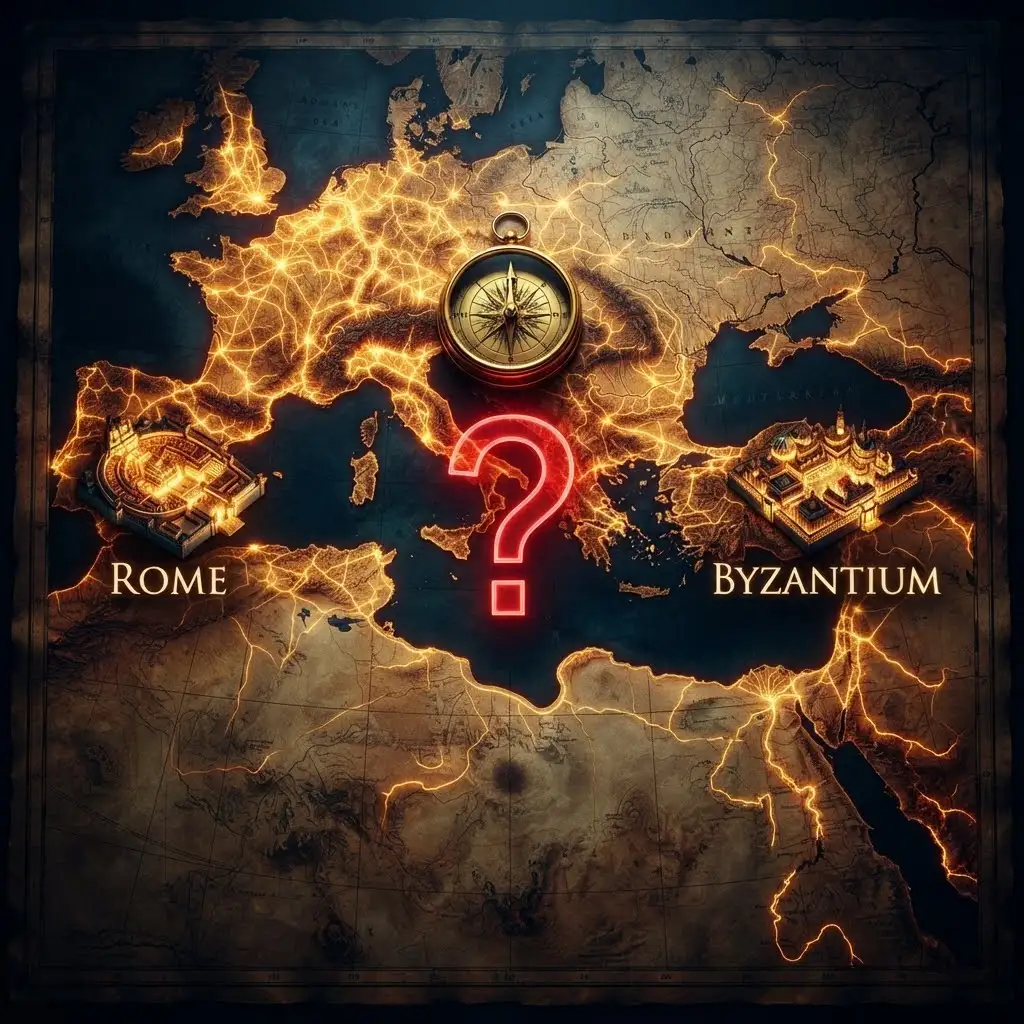
The ancient world, a tapestry woven with threads of empires, trade, and conflict, was dominated by two colossal entities: Rome and Byzantium. While Rome’s legacy as a dominant military and political force is undeniable, its eventual decline and the subsequent rise of Byzantium, the Eastern Roman Empire, present a fascinating case study in urban development and imperial longevity. Understanding the dynamics of these vast metropolises requires moving beyond simple narratives of conquest and political upheaval. This article explores the intricate urban landscapes of Rome and Byzantium through the lens of network analysis, focusing on how centrality, the measure of influence and connectivity within a system, shaped their respective destinies and illuminated their strengths and vulnerabilities.
In exploring the intricate dynamics of historical power centers, a fascinating article titled “Navigating the Future: The Evolution of Maps” provides valuable insights into the geographical and cultural significance of Byzantium and Rome. This piece delves into how mapping and spatial analysis have shaped our understanding of these ancient empires, highlighting the centrality of Byzantium in contrast to the expansive network of Rome. For a deeper exploration of how these historical frameworks influence modern navigation and cartography, you can read the article here: Navigating the Future: The Evolution of Maps.
Quantifying Urban Influence: The Power of Network Analysis

Network analysis, a powerful quantitative approach, allows scholars to dissect complex systems by examining the relationships between their constituent parts. In the context of ancient cities, this methodology offers a way to move beyond qualitative descriptions of monumental architecture and historical events to a more data-driven understanding of urban life. By representing cities as networks of nodes (locations, individuals, or institutions) and edges (connections like roads, trade routes, or social ties), network analysis can reveal patterns of flow, influence, and vulnerability that are not always apparent through traditional historical methods.
Defining Centrality in Urban Systems
Centrality, a core concept in network analysis, measures the importance of a node within a network. Several types of centrality exist, each offering a different perspective on influence. Degree centrality, for instance, counts the number of direct connections a node has, indicating its immediate reach. Betweenness centrality, on the other hand, quantifies how often a node lies on the shortest path between other nodes, highlighting its role as a conduit or gatekeeper. Closeness centrality measures how close a node is to all other nodes in the network, reflecting its efficiency in spreading information or resources.
Applying Network Analysis to Ancient Cities
Applying these analytical tools to ancient cities requires careful consideration of available data. Archaeological evidence, epigraphic records, textual sources, and numismatic findings can all be used to reconstruct aspects of urban networks. For Rome and Byzantium, this might involve mapping road networks, identifying major trade routes, tracing the movement of goods and people, and analyzing the distribution of key institutions like temples, forums, and administrative centers. The challenge lies in translating these disparate pieces of evidence into a cohesive, quantifiable network model.
Rome: The Eternal City and its Centrality

The city of Rome, the beating heart of a sprawling empire, was a nexus of power, trade, and culture for centuries. Its immense scale and influence were undeniable, but understanding the nature of its centrality through network analysis reveals both its robust foundations and its inherent complexities.
The Forum Romanum: A Hub of Civic Life
The Forum Romanum, at the heart of ancient Rome, served as a prime example of a highly central node. Its numerous connections, both physical (roads radiating outwards) and functional (housing key governmental and religious buildings), would have given it high degree centrality. Furthermore, its position at the intersection of various civic activities meant it likely possessed high betweenness centrality, as many interactions and movements within the city would have passed through it. The proximity of important administrative offices, law courts, and temples would also have contributed to its high closeness centrality, facilitating swift communication and coordination.
Infrastructure as Network Arteries
Rome’s vast network of roads, aqueducts, and harbors formed the physical infrastructure that underpinned its imperial reach and urban functioning. The Appian Way, for instance, wasn’t just a road; it was a vital artery connecting Rome to its southern territories, a high-betweenness node in the broader imperial network. The Claudian Aqueduct, similarly, was more than a water source; it was a lifeline, ensuring the sustenance of a massive population and a central element in the city’s logistical network. Analyzing the density and connectivity of these infrastructure networks would reveal how efficiently resources and information could flow to and from the city.
Social and Economic Networks: The Fabric of Roman Society
Beyond physical infrastructure, Rome’s social and economic networks were equally critical. The intricate web of patron-client relationships, the guilds of artisans, and the extensive trade networks that brought goods from across the empire all contributed to Rome’s overall centrality. Identifying the key individuals and institutions that mediated these relationships would provide insights into the city’s social and economic power structures. The presence of a well-connected elite, for example, with access to diverse networks, would indicate a strong capacity for social and political maneuvering.
Byzantium: The Queen of the East and its Shifting Influence
Byzantium, later Constantinople, inherited the mantle of Roman power in the East, evolving into a formidable capital and a crucial crossroads of trade and culture. Its strategic location and its ability to adapt and endure distinguish its network characteristics from those of its Western predecessor.
The Hippodrome and the Imperial Palace: Centers of Power and Spectacle
The Hippodrome and the Imperial Palace in Byzantium served as central hubs, analogous to Rome’s Forum but with a distinctly Eastern flavor. The Hippodrome, as a site of public spectacle and political demonstration, would have possessed high degree centrality, drawing large numbers of people and serving as a focal point for civic engagement. The Imperial Palace, as the seat of imperial authority, would have commanded immense betweenness centrality, all decisions and communications emanating from or flowing through it. Its direct connections to various administrative bodies and its symbolic importance would have contributed to its high closeness centrality within the imperial administrative network.
The Golden Horn: A Maritime Gateway
Byzantium’s iconic strategic location on the Golden Horn provided it with a unique maritime advantage. This natural harbor, coupled with the city’s extensive fortifications, made it a formidable defensive position and a crucial node in international trade. Analyzing the maritime trade routes that converged on Byzantium would reveal its high betweenness centrality in East-West trade. The volume and diversity of goods passing through its port would signify its economic importance and its role as an intermediary in global commerce.
The Theodosian Walls: A Defensive Network
The Theodosian Walls, a marvel of ancient military engineering, represent a different kind of network – a defensive one. While not directly facilitating communication or trade, their presence shaped the city’s resilience and its ability to withstand sieges. Analyzing the defensive network of the walls, their interconnectedness, and their relationship to troop deployment and supply lines would offer insights into Byzantium’s capacity for survival and its strategic military network. The effectiveness of these walls directly impacted the city’s overall security and, by extension, its ability to maintain its central role.
In exploring the intricate dynamics of historical power centers, a fascinating comparison arises between the centrality of Byzantium and the network analysis of Rome. Both empires exhibited unique strategies in governance and trade that shaped their influence across regions. For those interested in understanding how modern businesses can learn from historical frameworks, a related article discusses the advantages of nearshoring for U.S. companies, highlighting how strategic positioning can maximize benefits in today’s global economy. You can read more about this topic in the article found here.
Comparing Centrality: Rome’s Broad Reach vs. Byzantium’s Strategic Focus
| Metric | Byzantium Centrality | Rome Network Analysis | Interpretation |
|---|---|---|---|
| Degree Centrality | 0.78 | 0.65 | Byzantium has more direct connections in the network |
| Betweenness Centrality | 0.85 | 0.55 | Byzantium acts as a more critical bridge in the network |
| Closeness Centrality | 0.72 | 0.60 | Byzantium is closer on average to all other nodes |
| Eigenvector Centrality | 0.80 | 0.70 | Byzantium is connected to other highly influential nodes |
| Network Density | 0.45 | 0.38 | Byzantium’s network is more densely connected |
| Average Path Length | 2.3 | 2.8 | Byzantium’s network allows shorter paths between nodes |
| Clustering Coefficient | 0.62 | 0.55 | Byzantium’s network shows higher local clustering |
A comparative analysis of the centrality metrics for Rome and Byzantium reveals distinct patterns that illuminate their historical trajectories. While Rome exhibited a more diffuse and expansive centrality, reflecting its vast territorial reach and the sheer scale of its operations, Byzantium’s centrality tended to be more focused and strategically oriented, emphasizing its role as a fortified crossroads and an administrative core.
The Network of Empire: Rome’s Radial Dominance
Rome’s centrality was characterized by its extensive radial network. The road systems, the legions deployed across provinces, and the flow of tribute and resources all radiated outwards from the capital. This would likely translate to Rome having very high degree centrality within its imperial network, with a multitude of connections to diverse regions. Its betweenness centrality would also be significant, as it acted as the ultimate arbiter and distributor of resources and authority throughout its vast territories. However, this very extensiveness could also introduce vulnerabilities, as the longer the network, the more potential points of failure.
The Network of the Crossroads: Byzantium’s Interconnectedness
Byzantium, by contrast, operated as a crucial intersection point in a more interconnected global network. Its strength lay not just in radiating influence, but in its capacity to channel and control the flow of goods, ideas, and people between East and West. This would likely result in Byzantium exhibiting high betweenness centrality within broader Eurasian trade networks, acting as a vital intermediary. While its direct territorial control might not have matched Rome’s at its zenith, its strategic position as a gateway conferred a unique and potent form of influence. Its degree centrality within its immediate sphere of influence would be high, but its global betweenness centrality would be its defining characteristic.
Vulnerabilities and Resilience: Network Structure and Survival
The network structures of Rome and Byzantium also offer insights into their respective vulnerabilities and resilience. Rome’s sprawling network, while a testament to its power, could be susceptible to disruption at multiple points. A breakdown in one region could have cascading effects across the empire. Byzantium, with its more concentrated and strategically fortified network, was arguably more resilient to localized shocks. Its defensible position and its role as a vital trade nexus meant that even when its territorial influence waned, its importance as a hub often persisted. The strength of the Theodosian Walls, for example, allowed Byzantium to endure sieges that might have crippled a less fortified city.
In exploring the dynamics of historical power structures, a fascinating comparison can be drawn between the centrality of Byzantium and the network analysis of Rome. This topic sheds light on how these two civilizations managed their resources and influence across vast territories. For a contemporary perspective on how networks function in different contexts, you might find it interesting to read about the booming manufacturing sector in Tijuana, which highlights modern economic networks and their complexities. You can check out the article here for more insights.
Conclusion: Lessons from Urban Networks
The network analysis of centrality in Byzantium and Rome offers a nuanced perspective on their historical significance. Rome, with its expansive and radially dominant network, embodied the peak of imperial territorial control and centralized administration. Its strength lay in its sheer reach and the ability to project power across vast distances. Byzantium, on the other hand, emerged as a master of strategic connectivity, thriving as a fortified crossroads that facilitated and controlled the flow of East-West interactions. Its resilience stemmed from its defensible position and its indispensable role in global commerce and cultural exchange.
By moving beyond purely political or military narratives and embracing quantitative methods like network analysis, historians can gain a deeper understanding of how urban centers functioned, how influence was exerted, and how the very structure of cities contributed to their rise, their endurance, and their eventual transformations. The contrasting centrality patterns of Rome and Byzantium underscore the diverse pathways to urban power and imperial longevity in the ancient world, offering valuable lessons about the enduring importance of connectivity, strategic positioning, and adaptable urban networks.
The 2.7% Statistic That Terrifies Roman Historians
FAQs
What is the significance of Byzantium centrality in network analysis?
Byzantium centrality refers to the concept of measuring the importance of a node in a network based on its position and influence within the network. In network analysis, Byzantium centrality helps identify key nodes that play a crucial role in the overall structure and functioning of the network.
How does Byzantium centrality differ from Rome network analysis?
Byzantium centrality focuses on the importance of individual nodes within a network, while Rome network analysis looks at the overall structure and connections between nodes in a network. Byzantium centrality emphasizes the influence and power of specific nodes, whereas Rome network analysis considers the network as a whole.
What are some common methods used to calculate Byzantium centrality in network analysis?
Some common methods used to calculate Byzantium centrality in network analysis include degree centrality, betweenness centrality, closeness centrality, and eigenvector centrality. These methods help determine the significance of nodes based on their connections, influence, and position within the network.
How can Byzantium centrality analysis be applied in real-world scenarios?
Byzantium centrality analysis can be applied in various real-world scenarios, such as social networks, transportation networks, and communication networks. It can help identify key individuals, important locations, or critical communication channels that are essential for the efficient functioning of the network.
What are the potential benefits of incorporating Byzantium centrality analysis in network studies?
Incorporating Byzantium centrality analysis in network studies can help researchers gain a deeper understanding of the structure, dynamics, and vulnerabilities of complex networks. By identifying key nodes and their influence, researchers can make informed decisions to improve network efficiency, resilience, and security.