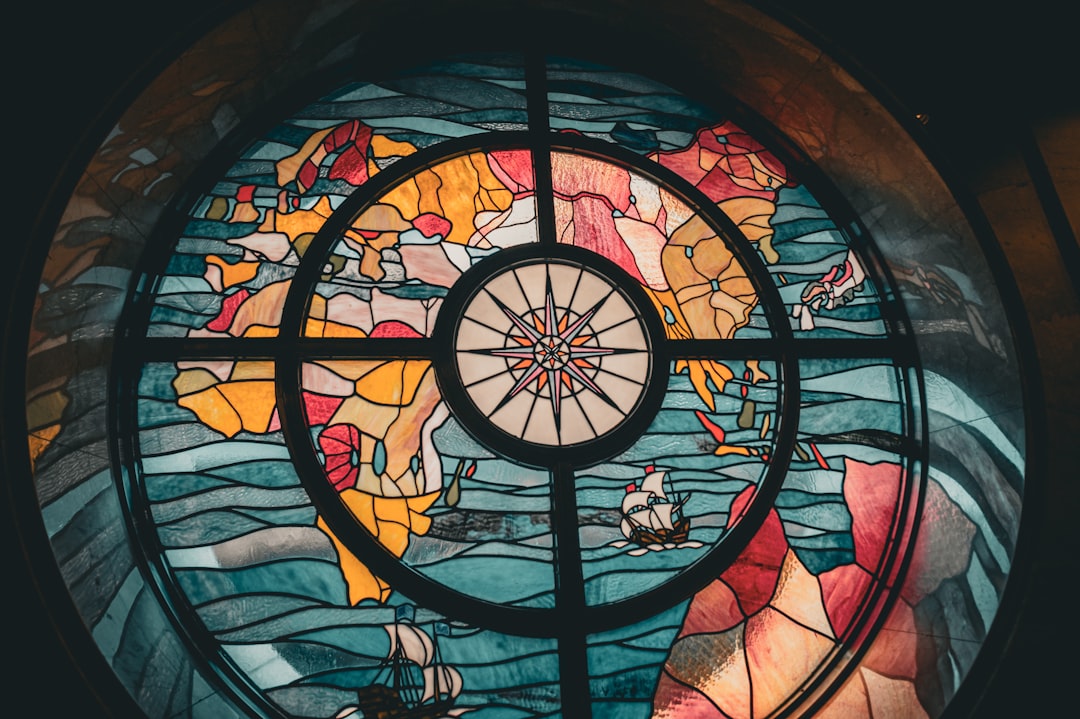
The history of rhumb lines and compass roses is deeply intertwined with the evolution of navigation itself. Rhumb lines, also known as loxodromes, are paths on the surface of the Earth that cross all meridians at the same angle. This concept emerged during the Age of Exploration, a period marked by significant maritime advancements.
Early navigators, relying on celestial navigation and rudimentary maps, sought a reliable method to chart their courses across vast oceans. The introduction of the compass in the 14th century revolutionized navigation, allowing sailors to determine their heading with greater accuracy. As navigational techniques evolved, so too did the need for a systematic way to represent these courses on maps.
Compass roses, which depict the cardinal directions—north, south, east, and west—along with intermediate points, became essential tools for mariners. The earliest known compass rose appeared on a map in the 14th century, serving as a guide for sailors to orient themselves.
The combination of rhumb lines and compass roses provided navigators with a framework to plot their journeys, facilitating exploration and trade across uncharted waters. This historical backdrop underscores the significance of these navigational tools in shaping maritime history.
Key Takeaways
- Rhumb lines are constant compass direction paths historically used for navigation, often depicted on charts with compass roses.
- Compass roses are essential tools on navigational charts, indicating directions and aiding in course plotting.
- Plotting a course with rhumb lines and compass roses involves maintaining a steady bearing, useful for both coastal and long-distance navigation.
- Magnetic variation affects compass readings, making understanding and adjusting for it crucial when navigating with rhumb lines and compass roses.
- While modern technology has enhanced navigation, mastering traditional rhumb line and compass rose techniques remains valuable for accurate and reliable navigation.
Understanding Rhumb Lines and Their Use in Navigation
Rhumb lines are crucial for understanding how to navigate effectively across the globe. Unlike great circle routes, which represent the shortest distance between two points on a sphere, rhumb lines maintain a constant angle with respect to the meridians. This characteristic makes them particularly useful for sailors who need to steer a consistent course over long distances.
By following a rhumb line, navigators can avoid the complexities of constantly adjusting their heading, simplifying the process of reaching their destination. In practical terms, rhumb lines are often represented on nautical charts as straight lines connecting two points. This simplicity allows mariners to plot their courses without needing to calculate complex angles continuously.
For instance, when navigating from one port to another, a sailor can draw a straight line on the chart and follow it while maintaining a steady heading. This method not only enhances efficiency but also reduces the likelihood of navigational errors that could arise from frequent course adjustments.
The Importance of Compass Roses in Navigational Charts

Compass roses play an indispensable role in navigational charts by providing essential orientation for mariners. These symbols not only indicate cardinal directions but also serve as reference points for understanding the layout of the chart itself. A well-designed compass rose allows navigators to quickly ascertain their heading and make informed decisions about their course.
The clarity and accuracy of these symbols are vital, especially in challenging conditions where visibility may be limited. Moreover, compass roses are often embellished with artistic elements that reflect cultural influences and historical significance. While their primary function is practical, they also serve as a testament to the artistry of cartography throughout history.
The intricate designs found on older maps often tell stories of exploration and discovery, connecting modern navigators with their maritime heritage. In contemporary navigation, compass roses remain essential tools that bridge the gap between tradition and technology, ensuring that sailors can navigate confidently across the seas.
How to Plot a Course Using Rhumb Lines and Compass Roses
Plotting a course using rhumb lines and compass roses involves several straightforward steps that any navigator can master. First, one must identify the starting point and destination on the nautical chart. Once these points are marked, the navigator can use a ruler or straightedge to draw a line connecting them.
This line represents the rhumb line, indicating the course to be followed. It is essential to ensure that this line intersects with the compass rose at an appropriate angle, as this will dictate the heading required for navigation. Next, the navigator must determine the angle at which the rhumb line intersects the compass rose.
This angle is crucial for setting the ship’s course on the water. By measuring this angle with a protractor or using a compass rose directly on the chart, sailors can establish their heading in degrees. Once this information is obtained, it can be translated into navigational instructions for steering the vessel.
This process exemplifies how rhumb lines and compass roses work together to facilitate effective navigation across open waters.
Navigating Around Obstacles Using Rhumb Lines and Compass Roses
| Metric | Description | Typical Value / Range | Unit |
|---|---|---|---|
| Number of Rhumb Lines | Total number of rhumb lines radiating from the compass rose | 16, 32, or 64 | Count |
| Angle Between Rhumb Lines | Angular separation between adjacent rhumb lines | 11.25°, 22.5°, or 45° | Degrees |
| Compass Rose Diameter | Diameter of the compass rose on a nautical chart | 5 – 15 | cm |
| Magnetic Variation Indicated | Difference between true north and magnetic north shown on the rose | Varies by location | Degrees |
| Cardinal Points | Number of main cardinal directions marked | 4 (N, E, S, W) | Count |
| Intercardinal Points | Number of intermediate directions between cardinal points | 4 (NE, SE, SW, NW) | Count |
| Secondary Intercardinal Points | Additional points between cardinal and intercardinal points | 8 (e.g., NNE, ENE, etc.) | Count |
Navigating around obstacles is an essential skill for any mariner, and rhumb lines combined with compass roses provide a framework for doing so effectively. When faced with potential hazards such as reefs, islands, or other vessels, navigators must adjust their courses while still adhering to their planned rhumb line. This requires careful consideration of both the obstacle’s location and the desired heading.
To navigate around an obstacle while maintaining a rhumb line course, sailors can employ a technique known as “waypoint navigation.” By identifying waypoints—specific locations along the route that can be used as reference points—navigators can create a new rhumb line that circumvents obstacles while still progressing toward their destination. This method allows for flexibility in navigation without sacrificing efficiency or safety. By utilizing compass roses to maintain awareness of their heading throughout this process, mariners can confidently navigate around obstacles while adhering to their overall course.
The Role of Magnetic Variation in Navigating with Rhumb Lines and Compass Roses

Magnetic variation, also known as magnetic declination, plays a significant role in navigating with rhumb lines and compass roses. This phenomenon occurs due to the difference between true north (geographic north) and magnetic north (the direction a compass points). As navigators plot their courses using rhumb lines and compass roses, they must account for this variation to ensure accurate navigation.
To effectively navigate using rhumb lines in conjunction with compass roses, sailors must first determine the magnetic variation for their specific location. This information is typically available on nautical charts or through navigational publications. Once they have established the magnetic variation, they can adjust their compass readings accordingly.
For instance, if magnetic north is east of true north by 10 degrees, navigators must subtract this value from their compass heading when plotting their course along a rhumb line. This adjustment ensures that they remain on track despite variations in magnetic orientation.
Using Rhumb Lines and Compass Roses for Coastal Navigation
Coastal navigation presents unique challenges and opportunities for mariners utilizing rhumb lines and compass roses. While open-water navigation often relies heavily on these tools for plotting long-distance courses, coastal navigation requires additional considerations due to proximity to land and potential hazards such as shallow waters or rocky shorelines. Nevertheless, rhumb lines remain valuable for establishing initial courses when approaching or departing from coastal areas.
When navigating along coastlines, sailors can use rhumb lines to connect various waypoints along their route while referencing compass roses for accurate headings. This approach allows them to maintain a steady course while making necessary adjustments based on local conditions or navigational aids such as buoys or lighthouses. Additionally, coastal charts often feature detailed information about water depths and potential hazards, enabling mariners to make informed decisions while following their plotted rhumb line.
Navigating Long Distances with Rhumb Lines and Compass Roses
Long-distance navigation is where rhumb lines truly shine as effective tools for mariners seeking to traverse vast expanses of ocean. By plotting a course using rhumb lines and compass roses, sailors can maintain consistent headings over extended periods without needing constant recalibration of their direction. This efficiency is particularly advantageous during lengthy voyages where time and resources are critical.
As sailors embark on long journeys, they often rely on established rhumb line routes that have been tested by previous navigators. These routes take into account prevailing winds and currents, allowing mariners to optimize their travel times while minimizing fuel consumption or sail adjustments. By adhering to these plotted courses and utilizing compass roses for orientation, sailors can navigate confidently across open waters while remaining aware of their surroundings.
The Advantages and Limitations of Using Rhumb Lines and Compass Roses for Navigation
While rhumb lines and compass roses offer numerous advantages in navigation, they are not without limitations. One significant advantage is their simplicity; by providing clear visual representations of courses and directions, these tools enable even novice navigators to plot routes effectively. Additionally, rhumb lines allow for consistent steering angles over long distances, reducing the cognitive load on sailors during extended voyages.
However, there are limitations inherent in relying solely on rhumb lines and compass roses for navigation. One notable drawback is that rhumb lines do not account for changes in wind patterns or ocean currents that may affect a vessel’s actual path over time. As such, navigators must remain vigilant and adaptable throughout their journey, making adjustments as necessary based on real-time conditions rather than strictly adhering to plotted courses.
Modern Technology and Its Impact on Navigating with Rhumb Lines and Compass Roses
The advent of modern technology has significantly transformed how mariners navigate using rhumb lines and compass roses. While traditional methods remain relevant, advancements such as GPS (Global Positioning System) have revolutionized navigation by providing precise location data in real-time. This technology allows sailors to plot courses with unparalleled accuracy while still utilizing rhumb lines as foundational tools.
Despite these advancements, many experienced navigators continue to value traditional methods alongside modern technology. The integration of GPS with traditional navigation techniques fosters a comprehensive approach that combines accuracy with time-tested practices. For instance, while GPS provides real-time positioning information, sailors may still refer to rhumb lines and compass roses when planning routes or making decisions about course adjustments based on environmental factors.
Tips for Mastering the Art of Navigating with Rhumb Lines and Compass Roses
Mastering the art of navigating with rhumb lines and compass roses requires practice and familiarity with both tools. One essential tip is to regularly review nautical charts before embarking on any journey; understanding local conditions and potential hazards will enhance overall safety during navigation. Additionally, practicing plotting courses using rhumb lines will build confidence in navigating effectively over long distances.
Another valuable tip is to develop an intuitive understanding of magnetic variation; being aware of how it affects compass readings will enable sailors to make necessary adjustments without hesitation. Furthermore, maintaining situational awareness throughout any voyage—whether coastal or open water—is crucial; regularly referencing compass roses will help ensure that navigators stay oriented even amidst changing conditions. In conclusion, navigating with rhumb lines and compass roses remains an essential skill for mariners today despite advancements in technology.
By understanding their historical significance and practical applications in various contexts—from coastal navigation to long-distance voyages—navigators can harness these tools effectively while appreciating their enduring legacy within maritime history.
Rhumb lines and compass roses are essential concepts in navigation, providing a framework for understanding how to plot courses on maps. For a deeper exploration of navigation and its historical significance, you can read more in this related article on the topic at Real Lore and Order. This resource delves into various aspects of navigation, including the evolution of tools and techniques used by explorers throughout history.
WATCH THIS! 🗺️ The Map That Proves Humans Explored Earth 5,000 Years Too Early
FAQs
What is a rhumb line?
A rhumb line, also known as a loxodrome, is a path on the Earth’s surface that crosses all meridians at the same angle. It represents a constant compass direction, making it useful for navigation.
How are rhumb lines used in navigation?
Rhumb lines are used by navigators to maintain a steady compass bearing over long distances. Although they are not the shortest path between two points, they simplify steering by keeping a constant direction.
What is a compass rose?
A compass rose is a figure on maps and nautical charts that displays the orientation of the cardinal directions (North, East, South, West) and their intermediate points. It helps users understand direction relative to the map.
How are rhumb lines and compass roses related?
Compass roses often include rhumb lines radiating from the center, indicating constant compass bearings. These lines help navigators plot courses that follow a fixed compass direction.
Why are rhumb lines not the shortest route between two points?
Because the Earth is a sphere, the shortest path between two points is a great circle route, which curves relative to compass directions. Rhumb lines maintain a constant bearing but typically follow a longer, spiral-like path.
Where can you commonly find compass roses with rhumb lines?
Compass roses with rhumb lines are commonly found on nautical charts, old maps, and navigation instruments to assist sailors and pilots in plotting courses.
What is the historical significance of rhumb lines and compass roses?
Historically, rhumb lines and compass roses were essential tools for maritime navigation, especially before the advent of modern GPS technology. They allowed sailors to navigate open seas using constant compass bearings.
Can rhumb lines be used for air navigation?
Yes, rhumb lines can be used in air navigation for maintaining a constant heading, although great circle routes are often preferred for efficiency over long distances.
How do rhumb lines appear on a Mercator projection map?
On a Mercator projection, rhumb lines appear as straight lines, which is why this map projection is popular for marine navigation.
What is the difference between a rhumb line and a great circle route?
A rhumb line maintains a constant compass direction but is generally longer, while a great circle route is the shortest distance between two points on a sphere but requires continuously changing the compass bearing.