
The Silent Guardians: Microbial Architects of Preservation in Waterlogged Soils
Waterlogged soils, often perceived as hostile environments due to their anoxic conditions and saturated nature, can paradoxically become exceptional settings for the preservation of organic materials. While many organisms struggle to survive under such duress, a specialized suite of microbes thrives, actively contributing to the remarkable resilience of buried organic matter. These microscopic communities, working in concert, transform the anaerobic landscape into a unique ecosystem where decomposition is significantly slowed, and the very fabric of organic remains can be protected for millennia. Their survival strategies are intricate, involving specialized metabolic pathways, cooperative interactions, and adaptation to a world deprived of free oxygen. Understanding these microbial dynamics is crucial for fields ranging from archaeology and paleontology to environmental science and soil management, offering insights into the long-term fate of organic carbon and the history locked within ancient deposits.
Research into how organic materials survive in waterlogged soil reveals fascinating insights into the preservation of ancient artifacts and ecosystems. A related article discusses the innovative methods of wind harvesting and their implications for sustainable practices, which can also shed light on the conditions that allow organic materials to endure in challenging environments. For more information, you can read the article here: Uncovering Ancient Secrets of Wind Harvesting.
Unveiling the Anaerobic Realm: Life’s Ingenuity in Oxygen-Deprived Environments
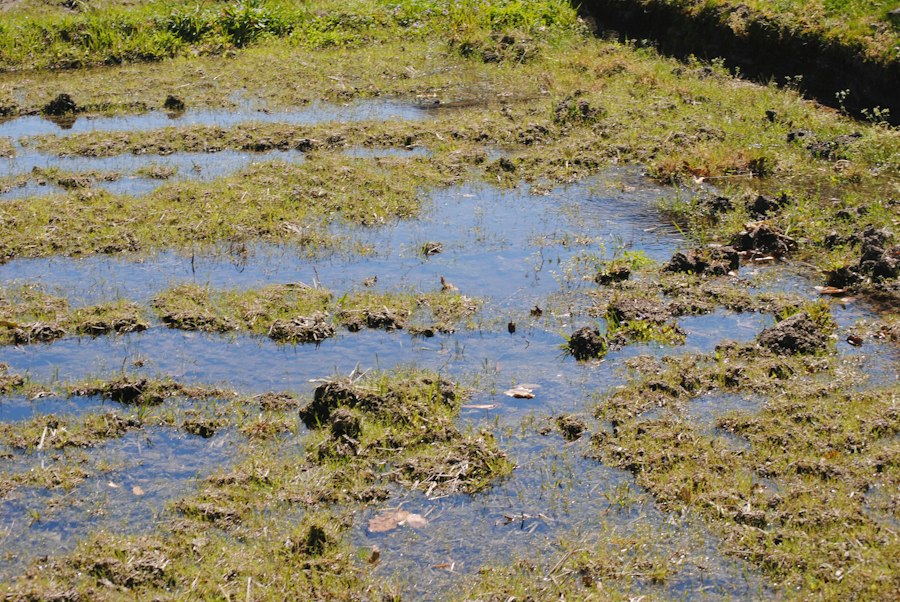
The defining characteristic of waterlogged soils is the absence or severe depletion of dissolved oxygen. This anoxic state fundamentally alters biogeochemical processes, creating a distinct microbial landscape where organisms reliant on aerobic respiration are disadvantaged. Yet, life, in its persistent adaptability, has found ways to flourish. Anaerobic microorganisms, employing a diverse array of metabolic strategies, not only survive but dominate these environments, shaping the fate of organic materials in profound ways. Their existence challenges the notion that oxygen is a universal prerequisite for complex life and highlights the remarkable evolutionary plasticity of microbial communities.
The Metabolic Toolkit: Fueling Life Without Oxygen
The core of anaerobic survival lies in their ability to generate energy through alternative pathways to aerobic respiration. Instead of using oxygen as the final electron acceptor, anaerobic microbes utilize a range of other inorganic or organic compounds. This metabolic diversity is the bedrock of their success in waterlogged soils.
Respiration’s Darker Side: Anaerobic Respiration Pathways
Anaerobic respiration encompasses several distinct pathways, each utilizing a different terminal electron acceptor. These include nitrate, sulfate, iron(III), and manganese(IV) ions, as well as various organic compounds.
Nitrate Reduction (Denitrification): Certain bacteria, when faced with anoxia and the presence of nitrates, can reduce nitrate (NO₃⁻) to nitrogen gas (N₂). This process, known as denitrification, releases energy for the microbes and also removes nitrogen from the system, influencing nutrient cycling. While this can lead to the breakdown of organic nitrogen, it is a slower process than aerobic decomposition.
Sulfate Reduction: In environments rich in sulfate, sulfate-reducing bacteria (SRBs) become prominent. They use sulfate (SO₄²⁻) as their terminal electron acceptor, reducing it to sulfide (S²⁻). This process is often associated with the production of hydrogen sulfide (H₂S), which can contribute to the characteristic “rotten egg” smell of anoxic environments. Sulfide can react with organic matter, leading to the formation of organosulfur compounds, which can, in some instances, contribute to preservation by cross-linking and stabilizing biomolecules.
Metal Reduction: Iron(III) and manganese(IV) are also utilized as electron acceptors by various anaerobic microbes. The reduction of these metal oxides can influence the redox potential of the soil and the availability of metals for other processes. The byproducts of these reductions can also interact with organic matter, potentially contributing to its stabilization.
Fermentation: The Ancient Art of Energy Extraction
When even inorganic electron acceptors are scarce, some anaerobic microbes resort to fermentation. This is a metabolic process that involves the incomplete breakdown of organic molecules, primarily carbohydrates, to generate ATP. The end products of fermentation are typically organic acids (like acetate, lactate, and propionate), alcohols (like ethanol), and gases (like hydrogen and carbon dioxide). While fermentation yields less energy per molecule of substrate than respiration, it is a vital strategy for survival in highly reducing environments. The organic acids produced can also lower the pH of the soil, further inhibiting the activity of some aerobic decomposers.
Adapting to the Squeeze: Strategies for Survival
Beyond their metabolic prowess, anaerobic microbes have evolved a suite of morphological and physiological adaptations that allow them to thrive in waterlogged conditions.
Motility and Biofilm Formation: Many anaerobic bacteria are motile, using flagella to navigate through the waterlogged soil matrix, seeking out favorable microhabitats and nutrient sources. Furthermore, the formation of biofilms is a crucial survival strategy. Biofilms are communities of microorganisms embedded in a self-produced matrix of extracellular polymeric substances (EPS). This matrix provides physical protection from environmental stresses, facilitates nutrient and waste exchange, and promotes close association between different microbial species, enabling cooperative metabolic activities.
Endospore Formation: Certain anaerobic bacteria, such as species of Clostridium, can form highly resistant endospores. These structures are metabolically dormant and can withstand extreme conditions, including desiccation, heat, radiation, and the presence of antimicrobial agents. When favorable conditions return, the endospores can germinate back into vegetative cells. This allows these bacteria to persist through unfavorable periods in the soil.
Enzyme Engineering: To break down complex organic polymers, anaerobic microbes produce a diverse array of extracellular enzymes. In waterlogged soils, these enzymes are often adapted to function optimally under anoxic and often acidic conditions. For example, cellulases, hemicellulases, and proteases secreted by anaerobic bacteria are essential for degrading plant and animal tissues, albeit at a slower rate than their aerobic counterparts.
The Preservation Powerhouse: How Microbes Slow Down Decomposition

The dominance of anaerobic microbes in waterlogged soils fundamentally alters the decomposition process. Instead of rapid mineralization driven by oxygen-dependent organisms, preservation becomes the prevailing outcome. This is not an absence of activity but rather a shift towards slower, more complex biochemical transformations orchestrated by the anaerobic community.
The Oxygen Scarcity Effect: Inhibiting Aerobic Breakdown
The most direct impact of waterlogging is the exclusion of oxygen, which is essential for the high metabolic rates of aerobic decomposers like fungi and many bacteria. These organisms are responsible for the rapid breakdown of complex organic molecules into carbon dioxide and water under aerobic conditions. In their absence, the initial stages of decomposition are significantly hampered.
Fungal Fading: The Decline of Fungal Decomposers
Fungi are particularly sensitive to anoxia. While some fungi can tolerate low oxygen levels, their extensive hyphal networks and efficient enzyme production, critical for breaking down recalcitrant materials like lignin, are severely compromised in waterlogged soils. This dramatically reduces the rate at which complex plant tissues are dismantled.
Bacterial Bottlenecks: Aerobic Bacteria’s Struggle
Similarly, aerobic bacteria, which also play a crucial role in organic matter decomposition, are largely inhibited. Their reliance on oxygen for electron transport chain phosphorylation means their energy production grinds to a halt in anoxic conditions. This leaves the field open to the more specialized anaerobic microbes.
Microbial Chemistry of Stabilization: Building Resilience into Organic Matter
While aerobic decomposition leads to mineralization, anaerobic processes often result in the formation of more stable organic compounds. These transformations can effectively lock away carbon and nutrients, contributing to long-term preservation.
Humification’s Slow Burn: Anaerobic Pathways to Stability
The process of humification, the transformation of fresh organic matter into stable humic substances, still occurs in waterlogged soils, but at a considerably slower pace and via different pathways. Anaerobic microbes contribute to the formation of humic acids and fulvic acids through the partial breakdown and re-polymerization of organic residues. The resulting humic substances are highly resistant to further decomposition due to their complex molecular structure and the presence of recalcitrant functional groups.
Cross-Linking and Polymerization: Creating Robust Structures
Some anaerobic microbial activities lead to the direct stabilization of organic molecules. For instance, the production of phenolic compounds by microbes can lead to their incorporation into larger organic structures. Additionally, metal ions, which are often more soluble and reactive in anoxic environments, can chelate with organic matter, further stabilizing it. The formation of organosulfur compounds, as mentioned earlier, can also contribute to the structural integrity of preserved organic matter by creating covalent bonds within biomolecules.
Physical Encapsulation: The Protective Matrix
The EPS produced by anaerobic bacteria in biofilms can also play a direct role in preservation. This sticky matrix can physically entrap and encapsulate organic debris, shielding it from enzymatic attack and microbial access. Over time, this matrix can become incorporated into the soil structure, contributing to the overall stability of the buried material.
The Environmental Context: Factors Favoring Preservation
While the microbial community is the primary driver of preservation in waterlogged soils, the broader environmental context plays a crucial role in creating and maintaining the conditions necessary for these processes to occur.
Hydrological Regimes: The Water’s Role
The sustained presence of water is the fundamental prerequisite for waterlogging. This saturation ensures the depletion of oxygen by limiting its diffusion from the atmosphere into the soil pores. Different hydrological regimes, such as permanent saturation in bogs and fens, or seasonal waterlogging in floodplains and wetlands, will influence the intensity and duration of anaerobic conditions, thereby affecting the extent of preservation.
Oxygen Depletion Mechanisms: How Water Excludes Air
The physical presence of water in soil pores displaces air. This significantly slows down the diffusion of oxygen from the atmosphere into the soil. In saturated soils, the rate of oxygen diffusion is estimated to be about 10,000 times slower than in air. Furthermore, the respiration of soil organisms, even anaerobic ones, consumes any available oxygen, further exacerbating anoxia.
Redox Potential: The Indicator of Anoxia
The redox potential (Eh) is a measure of the oxidizing or reducing intensity of a system. In aerobic soils, Eh values are typically positive, indicating the presence of oxidizing agents. In waterlogged soils, as oxygen is depleted and anaerobic respiration takes over, the Eh values become negative, typically dropping below +100 mV and often reaching values below -100 mV. This low redox potential is a strong indicator of anoxic conditions and favors the activity of anaerobic microbes, while inhibiting many aerobic processes.
Geochemical Signatures: The Influence of Minerals and Nutrients
The surrounding geological and geochemical environment can significantly influence the types of anaerobic microbes present and the chemical transformations they mediate.
Iron and Sulfur Cycles: Key Players in Preservation
The availability of iron and sulfur compounds is particularly important. Iron-reducing bacteria and sulfate-reducing bacteria are abundant in many waterlogged soils. The reduction of iron oxides can influence the availability of other nutrients and the overall redox state. The production of sulfides by SRBs can lead to the formation of iron sulfides, which can also contribute to the stabilization of organic matter by precipitating dissolved organic compounds and forming complexes.
pH Extremes: Buffering and Acidity
The pH of waterlogged soils can vary widely, from acidic peat bogs to neutral or alkaline fens. Acidic conditions, often found in peatlands, can further inhibit the activity of many decomposers, particularly fungi, and contribute to the preservation of organic matter. Conversely, in alkaline environments, different sets of anaerobic microbes may dominate, and the geochemical interactions can lead to different preservation pathways.
Temperature and Time: The Unseen Accelerators and Stabilizers
Temperature, while often lower in waterlogged environments due to the insulating effect of water, still plays a role in microbial activity. Lower temperatures generally slow down all biochemical processes, including decomposition. The extended period of anoxia and reduced temperatures in waterlogged environments over geological timescales is a critical factor in the accumulation and preservation of large amounts of organic matter, as seen in peat deposits.
Research into how organic materials survive in waterlogged soil has revealed fascinating insights into the resilience of ecosystems. A related article discusses the unique conditions in Antarctica and how they affect organic matter preservation. For more information on this topic, you can read about it in the article unveiling Antarctica’s hidden secrets. Understanding these processes not only sheds light on the past but also helps us comprehend the implications of climate change on various habitats.
The Legacy of Waterlogging: Archaeological and Paleontological Insights
| Factor | Description | Impact on Organic Material Survival | Typical Measurement/Metric |
|---|---|---|---|
| Oxygen Levels | Amount of dissolved oxygen in waterlogged soil | Low oxygen slows decomposition, preserving organic matter | 0.1 – 2 mg/L dissolved oxygen |
| Soil pH | Acidity or alkalinity of the soil environment | Acidic conditions inhibit microbial activity, aiding preservation | pH 4.0 – 6.5 typical in waterlogged soils |
| Temperature | Soil temperature in degrees Celsius | Lower temperatures reduce microbial metabolism, slowing decay | 5°C – 15°C common in waterlogged environments |
| Water Saturation | Degree to which soil pores are filled with water | High saturation limits oxygen diffusion, preserving organics | 90% – 100% saturation |
| Microbial Activity | Presence and activity level of decomposer microbes | Reduced activity in anaerobic conditions slows decomposition | Measured by respiration rates or microbial biomass |
| Organic Material Type | Composition of the organic matter (e.g., lignin, cellulose) | Materials like lignin decompose slower, aiding survival | Percentage of lignin content (e.g., 20-30%) |
The remarkable preservation capabilities of waterlogged soils have provided invaluable windows into the past. From remarkably intact human bodies to ancient wooden artifacts and fossilized plant remains, these environments act as natural archives, safeguarding evidence of past life, human activities, and ecological conditions.
Human Remains: The Bog Bodies and Beyond
Perhaps the most iconic examples of preservation in waterlogged environments are the “bog bodies” found across Europe. These exceptionally well-preserved human remains, some dating back thousands of years, offer unparalleled insights into diet, health, clothing, and ritualistic practices of ancient populations. The anaerobic conditions, low temperatures, and acidic waters of peat bogs inhibit decomposition by preventing the proliferation of bacteria and fungi, and the tannins present in the peat can also contribute to the tanning of the skin, further aiding preservation.
Artifacts of the Past: Wood, Leather, and Textiles
Waterlogged archaeological sites frequently yield organic artifacts that would have long since decayed in drier conditions. Wooden structures, tools, and boats, leather footwear, and textile fragments have been recovered in a remarkable state of preservation from submerged settlements, shipwrecks, and waterlogged archaeological layers. The anoxic environment prevents oxidation and microbial degradation, while the water saturation can slow down chemical breakdown.
Ecological Records: Plant Remains and Pollen
Waterlogged soils are also rich in preserved plant material. Seeds, leaves, wood fragments, and pollen grains provide detailed information about past vegetation, climate, and land use. Peat cores, in particular, serve as invaluable paleoecological archives, allowing scientists to reconstruct environmental histories spanning millennia. The anaerobic conditions prevent the complete breakdown of plant tissues, allowing for the accumulation of these organic records.
Microbial Fossils and Biomarkers: Tracing Ancient Life
Even the microbial communities themselves leave a lasting legacy. Fossilized microbial cells and their biomolecules, known as biomarkers, can be found in waterlogged sediments. These microscopic fossils and chemical signatures provide direct evidence of past microbial life and can be used to reconstruct ancient ecosystems and biogeochemical cycles.
Research into how organic materials survive in waterlogged soil reveals fascinating insights into the resilience of ecosystems. For a deeper understanding of how environmental factors influence agricultural practices, you might find it interesting to explore this article on Mexico’s growing role in global trade. The interplay between soil conditions and trade dynamics can significantly impact agricultural productivity and sustainability. You can read more about it here.
Harnessing the Power: Modern Applications and Future Directions
Understanding the processes of preservation in waterlogged soils has implications far beyond academic curiosity. These insights can be leveraged for modern applications in environmental management, carbon sequestration, and even the development of new preservation techniques.
Soil Carbon Sequestration: Nature’s Carbon Sink
Waterlogged soils, particularly peatlands, are massive carbon sinks, storing vast amounts of organic carbon that have accumulated over millennia. The anaerobic conditions and slow decomposition rates in these environments prevent the release of this carbon into the atmosphere as CO₂, a potent greenhouse gas. Protecting and restoring these ecosystems is therefore crucial for climate change mitigation.
Bioremediation and Waste Management: Learning from Nature’s Decomposers
While waterlogging slows decomposition, the anaerobic microbes present are still active agents of biogeochemical transformation. Research into these microbial communities is informing strategies for bioremediation of contaminated sites and for managing organic waste. Understanding how these microbes break down specific compounds under anoxia could lead to more efficient and environmentally friendly waste treatment processes.
Novel Preservation Technologies: Mimicking Natural Processes
The remarkable preservation achieved in natural waterlogged environments inspires the development of novel artificial preservation technologies. By understanding the chemical and biological factors that contribute to long-term preservation, scientists can explore new methods for preserving perishable materials, from food and pharmaceuticals to cultural heritage artifacts, potentially using controlled anoxic environments or specific microbial consortia.
Future Research Avenues: Unlocking More Secrets
The study of preservation in waterlogged soils is an ongoing and dynamic field. Future research will likely focus on:
- Metagenomics and Metatranscriptomics: Deeper investigations into the genetic makeup and gene expression of microbial communities in waterlogged soils will reveal novel metabolic pathways and cooperative interactions involved in preservation.
- Biogeochemical Modeling: Developing sophisticated models to predict the fate of organic matter under various waterlogging scenarios will aid in environmental management and carbon cycle research.
- Isotopic Analysis: Advanced isotopic analysis of preserved organic matter can provide highly detailed information about the original source materials and the transformation processes they underwent.
- Nanoscale Imaging: Techniques allowing for the visualization of organic matter and microbial interactions at the nanoscale will offer unprecedented insights into the physical and chemical mechanisms of preservation.
The silent guardians of waterlogged soils, the diverse and resilient anaerobic microbial communities, continue to surprise and inform us. Their ability to transform challenging environments into preserves of the past offers not only a glimpse into history but also valuable lessons for the future of our planet.

The Viking “Bison” Myth That Was Just Debunked
FAQs
How do organic materials survive in waterlogged soil?
Organic materials in waterlogged soil survive by adapting to anaerobic conditions, where oxygen is limited. Some organisms have evolved specialized structures or metabolic processes to thrive in low-oxygen environments.
What role do microbes play in the survival of organic materials in waterlogged soil?
Microbes play a crucial role in breaking down organic matter in waterlogged soil through processes like anaerobic respiration. They help recycle nutrients and maintain soil health despite the lack of oxygen.
Can organic materials decompose in waterlogged soil?
Yes, organic materials can decompose in waterlogged soil through anaerobic decomposition. This process is slower than aerobic decomposition but still allows for the breakdown of organic matter by specialized microorganisms.
How do plant roots adapt to waterlogged soil conditions?
Plant roots in waterlogged soil adapt by developing aerenchyma, which are specialized tissues that allow for oxygen transport to the roots. This adaptation helps plants survive in waterlogged conditions by preventing oxygen deprivation.
What are some examples of organic materials that can thrive in waterlogged soil?
Examples of organic materials that can thrive in waterlogged soil include certain types of bacteria, fungi, and wetland plants like cattails and water lilies. These organisms have evolved mechanisms to survive and even thrive in waterlogged environments.