The whispers of Norse seafarers reaching the shores of North America millennia ago have long captivated imaginations. For centuries, tales of Vinland, a verdant land encountered by Leif Erikson and his kin, were relegated to the realm of sagas and legend. However, a growing body of independent archaeological evidence has moved this narrative from the speculative to the demonstrably real, offering a compelling testament to the Viking presence on this continent. This evidence, unearthed through meticulous excavation and rigorous scientific analysis, paints a picture not of a fleeting visit, but of a sustained, albeit limited, period of Norse exploration and settlement.
Echoes from L’Anse aux Meadows
The most potent and universally accepted testament to the Viking presence in North America lies at the windswept tip of Newfoundland’s Great Northern Peninsula. L’Anse aux Meadows, a UNESCO World Heritage site, stands as an irrefutable monument to this transatlantic encounter. The initial discovery in the early 1960s by Norwegian explorers Helge and Anne Stine Ingstad provided the first concrete proof. Their meticulous excavation revealed the foundations of eight Norse-style turf buildings, distinct from any indigenous architectural styles found in the region.
The Architecture of Norse Settlement
The buildings at L’Anse aux Meadows are strikingly characteristic of Norse construction techniques prevalent in Greenland and Iceland during the Viking Age. These were not simple shelters but substantial dwellings, characterized by longhouses with thick turf walls, supported by timber frames. Evidence of hearths within the buildings, along with remnants of iron slag and charcoal, clearly indicate domestic activities, including iron smelting and smithing – a technology not indigenous to the North American cultures of that period. The layout of the settlement, with its distinct workshops and living quarters, suggests a well-organized community, capable of supporting itself through various crafts and resource utilization. The presence of boat repair facilities, indicated by timber posts and debris, further strengthens the argument for a seafaring people establishing a temporary or seasonal base.
Artifacts of Daily Life and Craftsmanship
Beyond the architectural footprint, the artifacts recovered from L’Anse aux Meadows offer an intimate glimpse into the lives of its inhabitants. These include a significant number of iron artifacts, such as rivets, nails, and fragments of tools. The crucial finding of a bronze ring-headed pin, a common Norse personal adornment, provides a direct cultural link to the Old World. Stone artifacts, including a soapstone spindle whorl used for spinning wool, indicate the presence of women and the continuation of domestic textile production. These objects, when analyzed and compared to similar finds from known Norse sites in Europe and Greenland, exhibit a clear stylistic and material continuity, underscoring their foreign origin. The sheer quantity and nature of these artifacts leave little room for doubt about the Norse identity of the occupants.
Tracing the Trails of Norse Exploration

While L’Anse aux Meadows is the definitive settlement site, other locations across eastern North America have yielded tantalizing, though often more debated, evidence suggesting the broader reach of Norse voyagers. These findings, while not as conclusive as L’Anse aux Meadows, contribute to a growing mosaic of potential Norse activity beyond the initial settlement.
The Kensington Runestone: A Controversial Relic
One of the most famously debated artifacts is the Kensington Runestone, purportedly discovered in 1898 in Minnesota. Inscribed with runic script, the stone claims a group of Swedish explorers were present in 1362. The linguistic and archaeological context of the stone has been a subject of intense scholarly scrutiny. While many mainstream archaeologists and linguists remain skeptical due to perceived anomalies in the runic inscription and its geographical location, proponents argue that the inscriptions are consistent with Old Norse dialects and that the presence of Vikings inland is plausible, given their extensive trading networks. Despite the controversy, the runestone continues to fuel discussion about the potential for Norse expansion deeper into the continent.
The Maine Penny and Other Coastal Discoveries
Scattered along the eastern seaboard, a handful of other discoveries have been put forward as potential indicators of Norse presence. The most significant of these is the Maine Penny, a small, medieval Norse coin unearthed in 1978 at an archaeological site in Brooklin, Maine. The coin, dated to the reign of King Olav Kyrre of Norway (1067-1093), is considered by many to be strong evidence of Norse activity, likely through trade or exploration. While a single coin does not prove settlement, its authenticity and unusual provenance in North America have led to its widespread acceptance as a piece of the puzzle. Other minor finds, such as unusual metal artifacts and isolated stone structures, have been speculatively attributed to Norse visitors, though their dating and cultural attribution often remain contentious.
Scientific Analysis: Verifying the Norse Connection
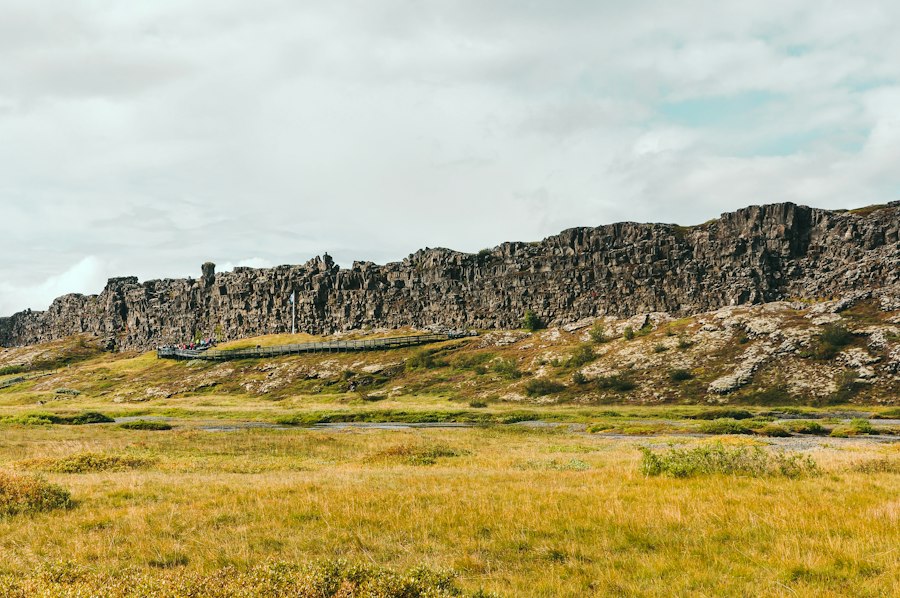
The scientific analysis of artifacts and environmental data plays a crucial role in corroborating the historical and archaeological interpretations of Norse presence. Modern scientific techniques allow for precise dating, material sourcing, and environmental reconstruction, providing objective verification of claims.
Radiocarbon Dating and Beyond
Radiocarbon dating of organic materials found at L’Anse aux Meadows, such as wood fragments and charcoal, has consistently placed the occupation of the site within the late 10th to early 11th centuries CE. This timeframe aligns perfectly with the sagas’ accounts of Norse exploration and settlement. Beyond radiocarbon dating, dendrochronology, the study of tree rings, has been employed to analyze the timber used in the construction of the turf buildings. This analysis can reveal the age of the trees felled and potentially their origin, further solidifying the Norse connection by demonstrating the use of wood consistent with that available in Greenland.
Isotopic Analysis and Material Provenance
Isotopic analysis of metal artifacts, such as iron and bronze, can provide invaluable information about the origin of the raw materials used. By examining the ratios of different isotopes within a sample, scientists can determine whether the metal was smelted from ores found in Europe, Greenland, or North America. Initial analyses of iron artifacts from L’Anse aux Meadows have suggested they were smelted from bog iron deposits, a method commonly employed by Norse ironworkers. Further isotopic studies on other suspected Norse artifacts could potentially confirm their transatlantic origin and distinguish them from indigenous creations.
The Saga Context and Archaeological Corroboration
The archaeological findings at sites like L’Anse aux Meadows do not exist in a vacuum. They provide tangible, independent verification for the narratives preserved in the Old Norse sagas, particularly the “Saga of the Greenlanders” and the “Saga of Erik the Red.” These texts describe voyages led by figures like Leif Erikson, who, according to the sagas, explored lands to the west of Greenland, which they named Helluland, Markland, and Vinland.
Reconciling Sagas with Sites
The sagas describe the discovery of fertile lands with grapevines and timber, consistent with regions of North America. The geographical descriptions, though often poetic, can be loosely correlated with the coastlines of modern-day Canada and the United States. L’Anse aux Meadows, with its abundant timber resources and its location at the entrance to the Gulf of St. Lawrence, aligns with the sagas’ descriptions of Vinland as a place suitable for resource gathering and potential settlement. The archaeological evidence of iron production at L’Anse aux Meadows is particularly significant, as the sagas mention the Norse exploiting iron deposits. The presence of boat-building and repair facilities also directly supports the sagas’ accounts of extensive sea voyages and the need to maintain vessels in unfamiliar territories.
The Purpose of Norse Ventures
While the sagas hint at exploration and settlement, the archaeological evidence from L’Anse aux Meadows suggests a more nuanced purpose. The site appears to have been a base camp rather than a large, permanent colony. It likely served as a staging point for expeditions into the surrounding areas for timber and other resources, a place for overwintering, and potentially a hub for further exploration. The limited scale and the evident focus on resource extraction and temporary habitation suggest a strategic approach by the Norse to exploit the riches of this new world rather than an attempt at mass colonization, which would have been logistically challenging given the distance and the societal structure of Norse Greenland.
Recent archaeological discoveries have provided independent evidence supporting the Viking presence in North America, particularly at sites like L’Anse aux Meadows in Newfoundland. This site, recognized as a Norse settlement, has sparked interest in the broader implications of Viking exploration across the continent. For those interested in exploring more about the historical context and the potential erasure of ancient wisdom, a related article discusses these themes in depth. You can read more about it here.
The Broader Implications of a Transatlantic Connection
| Type of Evidence | Description | Location | Date/Period | Significance |
|---|---|---|---|---|
| Archaeological Site | Remains of Norse buildings, tools, and artifacts | L’Anse aux Meadows, Newfoundland, Canada | Circa 1000 AD | First confirmed Viking settlement in North America |
| Runic Inscriptions | Runestones with Norse inscriptions | Various locations in North America (disputed) | Medieval period (disputed authenticity) | Potential evidence of Viking exploration beyond known sites |
| Botanical Evidence | Presence of butternuts (native to North America) in Norse Greenland | Greenland Norse settlements | 10th-14th centuries | Suggests contact or travel to North America |
| Historical Sagas | Written accounts describing voyages to Vinland | Scandinavia (Iceland, Norway) | 13th century (written), describing 10th-11th century events | Literary evidence supporting Viking presence in North America |
| Metal Artifacts | Iron nails and rivets consistent with Norse shipbuilding | L’Anse aux Meadows | Circa 1000 AD | Supports Norse maritime activity in North America |
The acceptance of an independent archaeological record of Viking presence in North America carries significant weight, reshaping our understanding of pre-Columbian history and the scope of early human mobility. It challenges the long-held notion of Columbus as the sole discoverer of the Americas and highlights the interconnectedness of the world much earlier than often assumed.
Rewriting Pre-Columbian History
The definitive establishment of Norse voyages to North America before Columbus fundamentally alters the narrative of transatlantic contact. It demonstrates that the Atlantic Ocean was not an insurmountable barrier but a navigable route for intrepid seafarers from both sides. This understanding necessitates a re-evaluation of the technological capabilities and the navigational prowess of Norse peoples. It also opens the door to more nuanced discussions about potential cultural exchanges and influences, however limited, between Norse explorers and indigenous populations, even if direct evidence of such interaction remains elusive at most sites.
The Legacy of Norse Endeavor
The Viking presence, as revealed by archaeology, serves as a testament to the spirit of exploration and human ambition. While their presence was transient and ultimately did not lead to permanent Norse colonies, their voyages represent a remarkable achievement in seafaring and navigation. The independent archaeological evidence from sites like L’Anse aux Meadows ensures that the story of the Norse in North America is no longer confined to myth and legend, but stands as a solid chapter in the complex and ever-evolving story of human history. It compels us to look beyond established narratives and to appreciate the multifaceted tapestry of global exploration that has unfolded over millennia.

The Viking “Bison” Myth That Was Just Debunked
FAQs
What evidence supports the presence of Vikings in North America?
Independent evidence of Viking presence in North America includes archaeological findings such as the remains of a Norse settlement at L’Anse aux Meadows in Newfoundland, Canada, dating back to around 1000 AD.
How do we know that the Vikings reached North America before Christopher Columbus?
The Norse settlement at L’Anse aux Meadows predates Christopher Columbus’ arrival in the Americas by about 500 years, providing concrete evidence that Vikings reached North America before Columbus.
Are there any artifacts that suggest Viking presence in North America?
Artifacts such as Norse-style tools, structures, and objects found at L’Anse aux Meadows and other sites in North America provide tangible evidence of Viking presence in the region.
Did the Vikings interact with indigenous peoples in North America?
There is some evidence to suggest that the Vikings may have interacted with indigenous peoples in North America, as indicated by artifacts and possible trade relationships between the two groups.
How did the discovery of the Vinland Map contribute to the understanding of Viking presence in North America?
The Vinland Map, a controversial map that purportedly shows Viking exploration of North America, has sparked debates among scholars about the extent of Viking presence in the region and their possible exploration beyond L’Anse aux Meadows.