The gnawing chill of the Pleistocene, an epoch characterized by vast ice sheets and fluctuating climates, spurred remarkable journeys for our ancient ancestors. These were not casual strolls but epic migrations, driven by the relentless search for sustenance and the unyielding pressure of environmental change. Tracing these Ice Age migration routes across Europe is akin to deciphering a prehistoric map etched in stone, bone, and the very landscape itself. By piecing together archaeological evidence, genetic studies, and paleoenvironmental reconstructions, scientists are slowly but surely illuminating the paths our forebears trod, revealing a dynamic and interconnected human past.
The Driving Forces of Ice Age Movement
The allure of warmth, the abundance of game, and the sheer necessity of survival were the primary engines propelling early humans across the European continent. The Pleistocene, spanning from roughly 2.6 million to 11,700 years ago, was a period of dramatic climatic oscillations. Glacial periods, characterized by the expansion of ice sheets, pushed populations southwards, while interglacial periods saw them venture back northwards, reclaiming territory as the ice retreated. These cycles of advance and retreat created a constantly shifting mosaic of habitable landscapes, influencing not only where humans lived but also how they moved.
Environmental Pressures and Resource Scarcity
During glacial maxima, much of Northern Europe was rendered uninhabitable by massive ice sheets, forcing human groups into more southerly refugia. These areas, though warmer, often experienced reduced plant and animal diversity. The pressure to find food became immense. Large herbivores, such as mammoths, woolly rhinoceroses, and reindeer, were critical food sources. However, these animals were migratory themselves, following seasonal patterns of vegetation. Human groups had to follow these herds, leading to extensive seasonal movements. The scarcity of resources in some areas would have also compelled groups to explore new territories, pushing the boundaries of their known world in search of richer hunting grounds or more sheltered living spaces.
Opportunities Presented by Interglacial Periods
Conversely, interglacial periods offered a vastly different scenario. As the ice retreated, vast tracts of land became available, often supporting lush vegetation and a wider array of fauna. These periods presented opportunities for expansion and exploration. Humans, adapted to varied environments, would have seized these chances to colonize previously inaccessible regions, following the receding ice and the accompanying flora and fauna. These movements were not always linear or direct; they were often dictated by geographical features like river valleys, coastlines, and mountain ranges, which acted as both barriers and conduits for travel.
Recent studies have shed light on the complex migration routes of early humans during the Ice Age across Europe, revealing how climate changes influenced their movements and settlement patterns. For a deeper understanding of the factors that can affect societal structures, you might find the article on financial systems and their vulnerabilities insightful. It discusses the implications of bank bail-ins and their potential impact on communities, drawing parallels to how environmental shifts can lead to significant changes in human behavior. You can read more about it here: Understanding Financial Bank Bail-Ins.
Tracing the Footprints: Archaeological Evidence and Dating
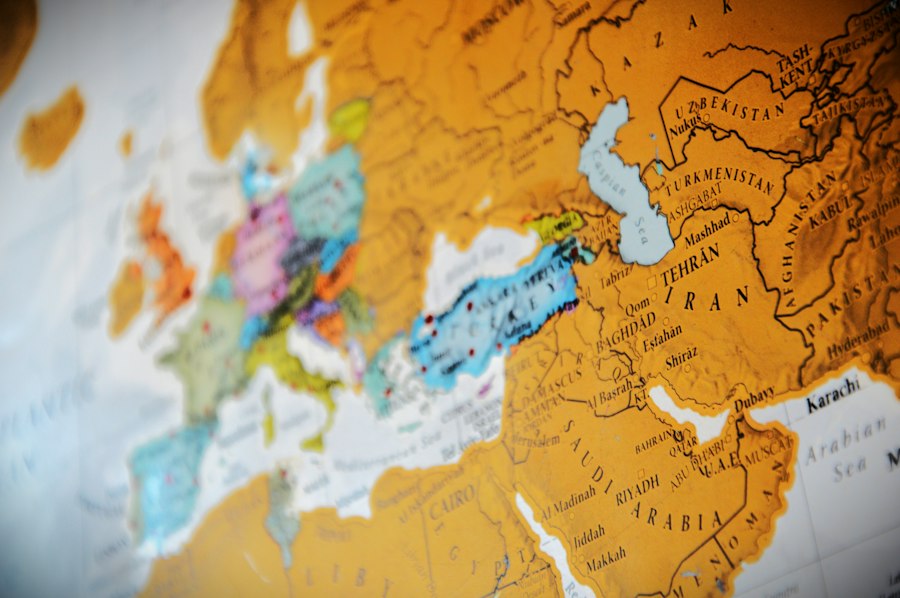
The tangible remnants of our ancestors’ lives – their tools, shelters, and skeletal remains – provide the most direct evidence of their movements. The discovery and meticulous dating of these artifacts allow researchers to map out patterns of settlement and migration across Europe.
Stone Tools as Paleo-Cartographers
The types of stone tools found at different archaeological sites offer crucial insights into cultural connections and movements. The standardization of toolkits, such as the Acheulean handaxes of the Lower Paleolithic or the more refined blades and points of the Upper Paleolithic, suggests the transmission of knowledge and techniques over vast distances. When similar tool types are found in geographically separated areas, it strongly implies interaction, trade, or migration between those populations. The study of raw material sourcing for these tools further refines our understanding, revealing if local materials were used or if materials were transported from afar, indicating long-distance travel.
Early Settlements and Their Chronology
Archaeological excavations reveal not just tools but also the structures our ancestors built and inhabited. From simple hearths and temporary shelters to more permanent encampments and even early forms of burial sites, these settlements provide snapshots of where people lived and when. Radiocarbon dating, thermoluminescence, and other chronometric techniques allow scientists to assign ages to these sites. By plotting the geographical distribution of these dated settlements, researchers can identify patterns of expansion and contraction of human populations over time, effectively reconstructing segments of migration routes. For instance, the gradual spread of specific cultural industries, like the Aurignacian or Gravettian, across Europe is a testament to significant migratory events.
Genetic Signatures of Ancient Journeys
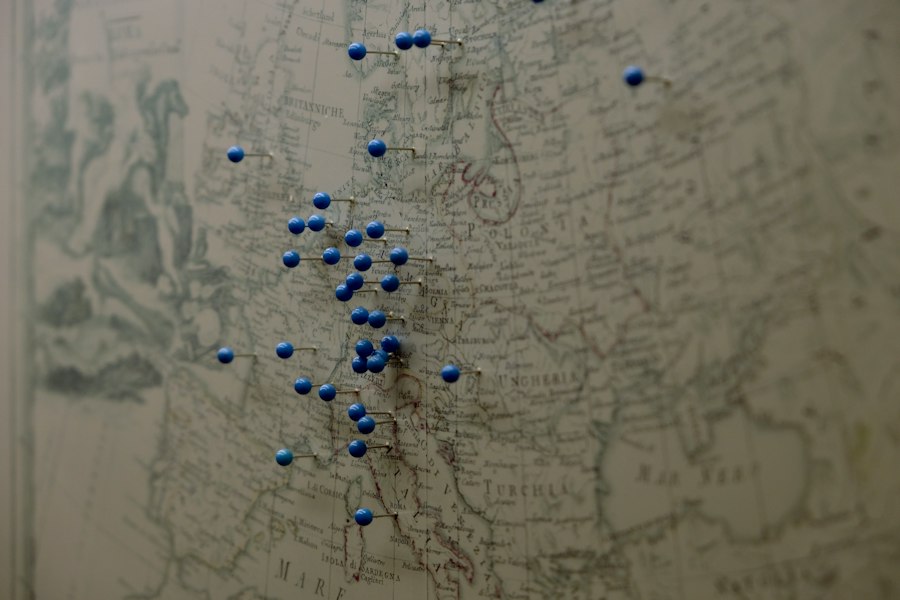
In recent decades, the study of ancient DNA has revolutionized our understanding of human migration. By extracting and analyzing genetic material from the fossilized remains of our ancient relatives, scientists can now directly track ancestral lineages and their movements.
Unraveling Ancestral Lineages
Ancient DNA analysis allows researchers to identify distinct genetic populations and trace their relationships to one another. Comparing the genetic makeup of individuals from different regions and time periods reveals patterns of admixture, divergence, and gene flow. This genetic evidence can confirm or refine migration routes suggested by archaeology, providing a biological underpinning to the observed movements. For example, studies have shown how early modern humans entering Europe from Africa gradually replaced Neanderthal populations, with evidence of limited interbreeding.
Population Movements and Refugia
Genetic studies have identified key population movements that shaped the genetic landscape of Europe. They have highlighted the importance of southern refugia during glacial periods, where populations survived and subsequently expanded outwards as the climate ameliorated. Conversely, they have also documented the colonization of new territories during interglacial periods. The genetic signatures of Mesolithic populations, for instance, reveal distinct ancestral components that reflect their adaptations and movements in post-glacial Europe, often showing connections to earlier Upper Paleolithic groups and also migrations from further east.
Key Migration Corridors and Barriers
The European landscape itself played a crucial role in shaping migration routes. Geographical features acted as both natural highways and formidable obstacles, influencing the direction and ease of movement for prehistoric populations.
River Valleys as Prehistoric Highways
Major river systems, such as the Danube, Rhine, and Loire, likely served as vital arteries for human migration. These valleys offered not only sources of water but also provided relatively flat terrain and attracted game animals, making them attractive corridors for movement. Following these river systems allowed groups to travel considerable distances, connecting different regions and facilitating the spread of ideas, technologies, and genes. Archaeological sites are often found in clusters along these prominent waterways, underscoring their significance.
The Impact of Mountains and Coastlines
Mountain ranges, such as the Alps and the Pyrenees, presented significant barriers to movement, channeling populations into specific routes or forcing them to go around. However, they were not impenetrable. Evidence of human activity in high-altitude areas suggests that even these formidable obstacles could be traversed, albeit with greater difficulty. Coastlines also played a dual role. While they could limit movement inland, they also provided opportunities for coastal travel and access to marine resources. The development of seafaring capabilities, even rudimentary ones, would have opened up new migration pathways along the coasts of the Mediterranean and the Atlantic.
Recent studies on ice age migration routes across Europe have shed light on how early humans adapted to changing climates and landscapes. These findings not only enhance our understanding of prehistoric movements but also connect to broader themes in archaeology, such as social dynamics in ancient settlements. For a deeper exploration of these themes, you can read about the complexities of social structures in ancient cities in this insightful article on uncovering social fractures. This connection highlights the intricate tapestry of human history during periods of significant environmental change.
The Legacy of Ice Age Migrations on Modern Europe
| Migration Route | Time Period (Years Ago) | Regions Covered | Key Species/Groups | Notable Archaeological Sites | Climate Conditions |
|---|---|---|---|---|---|
| Southern Route via Iberian Peninsula | 40,000 – 20,000 | Spain, Portugal, Southern France | Early Modern Humans (Homo sapiens) | El Castillo Cave, Altamira | Mild Mediterranean climate, refugium during glaciation |
| Central European Route | 35,000 – 15,000 | Germany, Poland, Czech Republic | Neanderthals, Early Modern Humans | Neander Valley, Dolní Věstonice | Cold steppe-tundra environment |
| Eastern Route via the Danube Corridor | 30,000 – 12,000 | Austria, Hungary, Balkans | Early Modern Humans | Willendorf, Kostenki | Variable climate, river valley refugium |
| Northwestern Route via British Isles | 20,000 – 10,000 | United Kingdom, Ireland | Early Modern Humans | Gough’s Cave, Creswell Crags | Cold, glacial conditions with intermittent warming |
| Scandinavian Route | 15,000 – 8,000 | Norway, Sweden, Finland | Reindeer hunters, Early Modern Humans | Hensbacka, Ahrensburg culture sites | Post-glacial tundra and boreal forest expansion |
The ancient journeys of our Ice Age ancestors have left an indelible mark on the genetic, cultural, and even the physical landscape of modern Europe. Understanding these ancient movements is not merely an academic exercise; it is a journey into the deep roots of human history and identity.
Shaping the Genetic Tapestry of Europe
The genetic variations observed in contemporary European populations are a direct consequence of these ancient migrations. Tracing the lineage of modern Europeans back to Paleolithic and Mesolithic hunter-gatherer groups reveals a complex mosaic of ancestral contributions from different waves of migration and subsequent intermingling. The genetic diversity of Europe today is a testament to the resilience and adaptability of our ancestors who navigated these challenging landscapes.
The Enduring Influence on Culture and Technology
The transmission of knowledge and technological innovations along these ancient routes had a profound impact on the development of human societies. The spread of sophisticated tool technologies, artistic expressions like cave paintings, and eventually the domestication of plants and animals were all facilitated by these migratory movements. The cultural landscape of Europe, with its diverse languages, traditions, and historical narratives, is a continuation of these deep historical processes. The very settlements and landscapes that were shaped by these migrations continue to hold echoes of our distant past, offering a profound connection to the human story.

Beneath the Ice: Surviving the Ice Age 20,000 Years Ago
FAQs
1. What evidence supports the theory of ice age migration routes across Europe?
Archaeological findings, genetic studies, and analysis of ancient human remains all provide evidence of prehistoric human migration routes during the ice age in Europe.
2. Which regions in Europe were key migration routes during the ice age?
The Iberian Peninsula, the Italian Peninsula, the Balkans, and the Danube River valley are believed to have been important migration routes for early humans during the ice age in Europe.
3. How did the ice age impact human migration patterns in Europe?
The ice age created harsh environmental conditions that forced early humans to adapt and migrate in search of food, shelter, and resources, leading to the development of specific migration routes across Europe.
4. What role did climate change play in shaping ice age migration routes in Europe?
Fluctuations in climate during the ice age influenced the availability of resources and habitats, prompting human populations to move and follow specific routes to survive and thrive in different regions of Europe.
5. How did early humans navigate and adapt to different terrains along ice age migration routes in Europe?
Early humans likely used their knowledge of the landscape, natural landmarks, and animal migration patterns to navigate diverse terrains along migration routes, while also developing tools and techniques to adapt to changing environments during the ice age in Europe.