The story of humanity is, at its core, a narrative of ingenuity. Even before the dawn of recorded history, in the vast, unwritten epochs of prehistory, early humans demonstrated a remarkable capacity for innovation, adaptation, and problem-solving. These were not passive beings merely surviving; they were active agents shaping their environments, devising solutions to complex challenges, and laying the foundational stones for all future technological and cultural advancements. Understanding this early human ingenuity is crucial not only for appreciating our distant ancestors but also for comprehending the trajectory of human development and the enduring power of our species’ inventive spirit.
The Dawn of Tool Use: A Leap in Cognitive Abilities
The emergence of tool use represents perhaps the most profound early indicator of human ingenuity. It was not simply about picking up a rock; it was about understanding the properties of materials, manipulating them with purpose, and anticipating future needs. This capacity to create and utilize tools signaled a significant leap in cognitive abilities, distinguishing early hominins from other primates. The simple act of striking one stone against another to produce a sharper edge was a complex undertaking requiring foresight, dexterity, and an understanding of cause and effect.
Early Stone Tool Industries: The Oldowan Revolution
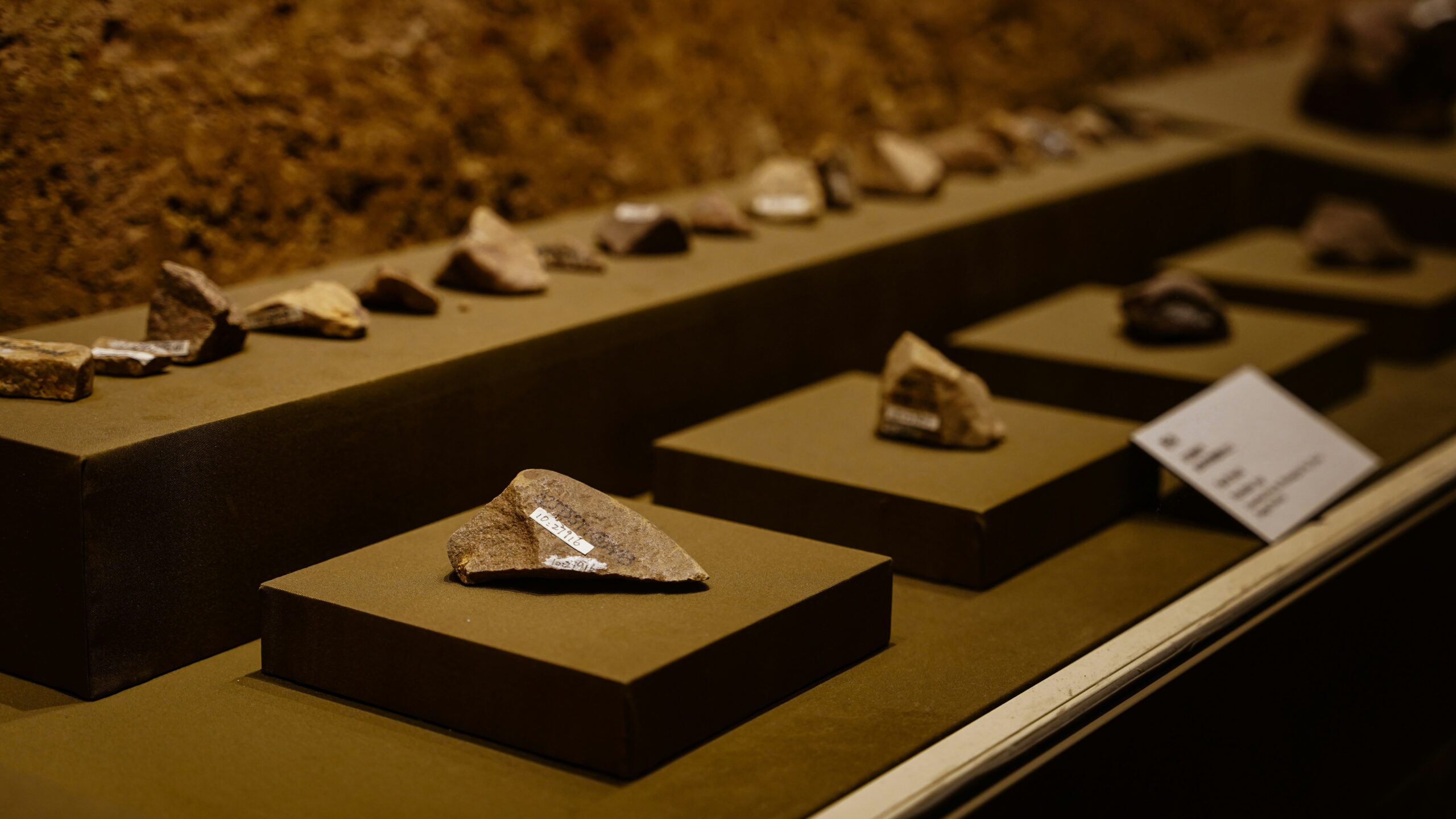
The earliest widely recognized stone tool industry is the Oldowan, dating back to around 2.6 million years ago. Found at sites like Gona in Ethiopia and Olduvai Gorge in Tanzania, these tools were remarkably simple, often consisting of unmodified or minimally modified stones with a few sharp flakes removed. However, their significance lies in their deliberate creation for specific tasks. Archaeologists interpret these as choppers, scrapers, and pounders, used for butchering carcasses, processing plant materials, and woodworking. The consistency in the types of flakes produced and the selection of specific raw materials suggest a rudimentary understanding of fracture mechanics and material properties. The production of Oldowan tools required not just the physical ability to strike stones but also the mental capacity to visualize the desired outcome and execute the necessary actions.
The Acheulean Handaxe: A Sophisticated Design
A significant advancement over the Oldowan was the Acheulean industry, characterized by the iconic bifacial handaxe, which appeared around 1.7 million years ago and persisted for over a million years. These handaxes were carefully shaped on both sides, exhibiting a more refined symmetry and a standardized form. The production of a well-made Acheulean handaxe was a time-consuming and skill-intensive process, requiring the knapper to understand the shape and thickness of the core stone, the angle of impact, and the controlled removal of large flakes. The widespread distribution of Acheulean tools across Africa, Europe, and parts of Asia suggests a high degree of technological transfer and perhaps even shared knowledge among early human populations. The handaxe was a versatile tool, likely used for a multitude of purposes, from butchering and digging to woodworking and defense. Its enduring presence for such an extended period speaks to its effectiveness and the deep-seated ingenuity that went into its design and manufacture.
To gain a deeper understanding of early human ingenuity during prehistoric epochs, one can explore the fascinating connections between ancient maps and human exploration. An insightful article titled “Uncovering the Secrets of the Piri Reis Map” delves into the complexities of early cartography and its implications for our understanding of ancient civilizations. This resource highlights how such maps reflect the knowledge and skills of early humans in navigation and geography. For more information, you can read the article here: Uncovering the Secrets of the Piri Reis Map.
Mastering Fire: A Transformative Technology

The control of fire stands as another monumental achievement in early human ingenuity, a transformative technology that fundamentally altered the course of human evolution and societal development. Fire provided not only warmth and light but also protection from predators, a means to cook food, and a social focal point that could foster community and shared experience. The transition from a naturally occurring phenomenon to a deliberately managed resource marks a profound step in human control over their environment.
The Challenges of Fire Control
The exact timing of humanity’s first mastery of fire remains a subject of ongoing debate among archaeologists and anthropologists. While evidence of burnt materials exists from very early periods, definitively proving controlled fire use is challenging. Early evidence, such as hearths with concentrations of ash and charred bone, begins to appear more frequently from around 400,000 years ago, with more robust evidence for regular and sustained fire use emerging in the Middle Pleistocene. The challenges were considerable: understanding how to ignite fire, maintain it, and transport embers would have required significant observational skills and experimentation. Early humans would have needed to identify suitable tinder and fuel sources, learn to nurture a flame, and develop strategies for keeping fire alive during periods of inactivity.
The Multifaceted Benefits of Fire
The benefits derived from controlled fire were far-reaching. Cooking food, for example, made it more digestible, releasing more nutrients and making them more readily available for absorption. This likely contributed to changes in human physiology, such as smaller gut sizes and larger brains. Fire also offered protection from nocturnal predators, allowing early humans to settle in more open areas and reducing mortality rates. The warmth provided by fire enabled survival in colder climates and extended the active hours of the day, allowing for increased social interaction, tool production, and planning. Furthermore, fire could be used to shape wood, harden spear tips, and clear vegetation, further demonstrating its utility in a variety of practical applications, all born from early human ingenuity.
The Art of Adaptation: Migrations and Environmental Challenges

Early human ingenuity was not solely focused on toolmaking or technological innovation; it was also deeply intertwined with the ability to adapt to diverse and often challenging environments. The dispersal of early humans out of Africa and across the globe is a testament to their remarkable adaptability and problem-solving skills, demonstrating an inherent capacity to overcome geographical barriers and exploit new ecological niches.
Navigating New Landscapes: Strategies for Survival
As early humans ventured beyond their ancestral homelands, they encountered a vast array of new landscapes, climates, and food sources. This necessitated the development of new survival strategies. They learned to identify and exploit local flora and fauna, developing specialized hunting techniques for different prey animals and mastering the preparation of unfamiliar plant foods. They observed seasonal patterns, understood weather phenomena, and developed shelter-building techniques suited to different climates, from caves and rock shelters to constructed dwellings. The ability to adapt their toolkits to the specific resources available in a region, whether it be flint, obsidian, or bone, further highlights their ingenuity and resourcefulness.
The Role of Social Learning and Cooperation
Migration and adaptation were not solely individualistic endeavors. The transmission of knowledge and the development of cooperative strategies played a crucial role in the success of early human dispersals. Social learning, the process by which individuals acquire knowledge and skills by observing and interacting with others, was likely paramount. Whether it was learning the most effective way to track an animal, identify edible plants, or construct a shelter, these skills would have been passed down through generations, becoming refined and elaborated upon. Furthermore, cooperative hunting and defense would have offered significant advantages, allowing early humans to tackle larger prey and fend off predators more effectively. This inherent sociality and capacity for collective action are powerful manifestations of early human ingenuity.
Early Art and Symbolism: The Emergence of Abstract Thought
The appearance of art and symbolic behavior in the archaeological record marks a significant turning point, indicating a shift towards more complex cognitive abilities, including abstract thought, imagination, and the capacity for self-awareness and communication beyond immediate needs. While the interpretation of prehistoric art can be challenging, its existence points to a profound level of ingenuity in how early humans perceived and interacted with their world.
Cave Paintings and Engravings: Visual Narratives
The most striking examples of early art are found in cave paintings and engravings, such as those at Chauvet Cave in France (dating back over 30,000 years) and El Castillo Cave in Spain (with evidence of red disks dating back over 40,000 years). These magnificent creations, often depicting animals with remarkable naturalism and detail, suggest a sophisticated understanding of visual representation and artistic technique. The pigments used, the application methods, and the careful selection of cave surfaces demonstrate a level of planning and skill. The subjects depicted, primarily large game animals, may have served various purposes, from instructional tools for hunting to shamanic rituals or a form of storytelling, reflecting a desire to record, understand, or even influence the natural world.
Personal Adornment and Symbolic Objects
Beyond grand cave art, evidence of personal adornment and the creation of symbolic objects also speaks to early human ingenuity. The discovery of beads made from shells, teeth, and bone, often perforated and showing signs of wear, suggests an interest in personal aesthetics and possibly a system of social signaling or status. The deliberate modification of objects, such as the creation of carved figurines or the incorporation of ochre into burial practices, further indicates a capacity for abstract thought and the development of symbolic meaning. These acts, seemingly disconnected from immediate survival needs, reveal a deeply ingrained human drive to create, adorn, and imbue objects with meaning, demonstrating a unique form of cognitive ingenuity.
To gain deeper insights into early human ingenuity during prehistoric epochs, one can explore the fascinating article that discusses the hidden technological advancements of ancient civilizations. This piece sheds light on the innovative tools and methods that our ancestors developed, which played a crucial role in their survival and adaptation. For a more comprehensive understanding of these remarkable inventions, you can read the article here.
The Legacy of Ingenuity: Laying the Foundation for Civilization
| Epoch | Time Period | Key Innovations | Materials Used | Significance |
|---|---|---|---|---|
| Paleolithic | 2.5 million – 10,000 years ago | Stone tools, fire control, hunting strategies | Flint, bone, wood | Foundation of tool-making and survival techniques |
| Mesolithic | 10,000 – 8,000 BCE | Microlithic tools, fishing gear, early shelters | Stone, bone, antler | Transition to more specialized tools and semi-permanent settlements |
| Neolithic | 8,000 – 3,000 BCE | Agriculture, pottery, polished stone tools, domestication | Stone, clay, wood | Shift to farming and permanent villages, technological advancement |
| Chalcolithic | 3,000 – 1,500 BCE | Copper tools, early metallurgy, wheel invention | Copper, stone, clay | Introduction of metalworking and complex societies |
The ingenuity displayed by early humans in the prehistoric epochs was not merely a series of isolated achievements; it was a continuous, cumulative process that laid the essential groundwork for the development of complex societies and ultimately, civilization. Each innovation, from the sharpened flint to the controlled flame, built upon previous knowledge and contributed to the growing capacity of our species to thrive and expand.
The Transmission of Knowledge and the Pace of Innovation
The ability to transmit knowledge across generations, through spoken language, observation, and imitation, was fundamental to this cumulative process. As skills and techniques were passed down, they could be refined, improved, and adapted. This intergenerational transfer of knowledge accelerated the pace of innovation, allowing for the development of increasingly sophisticated tools, technologies, and social structures. The very survival and success of early human populations were contingent on this capacity for learning and adaptation, a testament to their inherent ingenuity.
The Seeds of Future Advancements
The ingenuity of our prehistoric ancestors is evident in the very foundations of modern society. The principles of toolmaking, the understanding of materials, the harnessing of energy, and the development of symbolic communication all have their roots in these ancient times. The nomadic hunter-gatherer societies, with their deep knowledge of the environment and their sophisticated social networks, were the precursors to settled agricultural communities and eventually, the complex urban civilizations we know today. The enduring human drive to understand, to create, and to solve problems, so evident in the earliest chapters of our history, continues to be the engine of progress and innovation, a powerful legacy from our ingenious prehistoric forebears.

Beneath the Ice: Surviving the Ice Age 20,000 Years Ago
FAQs
What are the different prehistoric epochs that mark early human ingenuity?
There are several prehistoric epochs that are significant in understanding early human ingenuity, including the Paleolithic, Mesolithic, and Neolithic periods.
How did early humans demonstrate ingenuity during the Paleolithic period?
During the Paleolithic period, early humans showed ingenuity by creating tools out of stone, bone, and wood to aid in hunting, gathering, and survival.
What advancements in technology were made during the Mesolithic period?
In the Mesolithic period, early humans made advancements in technology by developing more sophisticated tools, such as microliths and composite tools, for hunting and gathering.
How did early humans showcase ingenuity in the Neolithic period?
In the Neolithic period, early humans demonstrated ingenuity by transitioning from a nomadic lifestyle to settled agricultural communities, leading to the development of farming, pottery, and domestication of animals.
What role did early human ingenuity play in the development of civilization?
Early human ingenuity played a crucial role in the development of civilization by enabling advancements in technology, agriculture, and social organization, laying the foundation for the complex societies that followed.