The biting wind whipped across the frozen tundra, carrying with it the scent of distant prey and the ever-present chill of the Ice Age. For the hunters who eked out an existence in this harsh landscape, life was a perpetual cycle of movement, dictated by the migrations of the colossal herbivores that sustained them. These were not mere opportunistic forays; these were ancient, intricate dances of predator and prey, honed over millennia, played out on a grand, unforgiving stage.
The Apex Predators of the Pleistocene
The men and women of the Ice Age were not the feeble, cowering creatures of popular imagination. They were robust, intelligent, and deeply attuned to their environment. Their survival depended on an intimate knowledge of animal behavior, an uncanny ability to read the land, and a mastery of tools that, while primitive by modern standards, were remarkably effective. They were the apex predators of their time, holding their own against mammoths, woolly rhinoceroses, and vast herds of bison. Their lives were a testament to human resilience and ingenuity in the face of overwhelming natural forces.
Masters of the Hunt: Understanding the Prey
The success of any Ice Age hunting expedition hinged on a profound understanding of their quarry. These were not isolated animals but part of vast, migratory herds that followed ancient routes across continents. Hunters would spend countless hours observing, learning the subtle cues that indicated the direction of travel, the signs of distress or illness within a herd, and the best times and places to intercept them. They knew when the calves were most vulnerable, when the bulls were most aggressive, and how the changing seasons would influence herd movements. This ecological knowledge was passed down through generations, a vital component of their cultural heritage.
The Mammoth’s Path: A Prized Target
The mammoth, with its immense size and rich stores of meat, fat, and bone, was a primary target for many Ice Age hunter-gatherer groups. Tracking a mammoth herd across the frozen plains was a monumental undertaking, requiring patience, endurance, and a coordinated effort. Hunters would often identify a lone bull or a smaller group that had become separated from the main herd, as these presented slightly less formidable challenges. The sheer scale of the beast meant that a successful hunt provided sustenance for an entire community for weeks, a crucial buffer against lean times.
Herds of Bison and Reindeer: Sustaining the Community
Beyond the mammoth, vast herds of bison and reindeer offered a more regular and accessible source of food and materials. These animals moved in predictable patterns, often following river valleys or specific grazing grounds. While individually smaller than mammoths, the sheer numbers within these herds provided a consistent supply. The hunters developed strategies to isolate individuals or small groups from these larger aggregations, employing tactics that minimized risk and maximized the chances of a successful kill. The hides of bison were essential for clothing and shelter, while reindeer provided bone and sinew for tools and a calorie-rich diet.
The Arsenal of the Ancient Hunter
The tools of the Ice Age hunter were an extension of their own physical capabilities, meticulously crafted from the materials available in their environment. Stone, bone, wood, and sinew were transformed into implements of precision and power, allowing them to bring down prey that dwarfed them in size and strength. The development and refinement of these tools represent a significant leap in human cognitive and technological evolution, enabling them to exploit new ecological niches and expand their territories.
Spear and Atlatl: Extending the Reach
The spear, a fundamental hunting weapon, was made even more effective by the invention of the atlatl, or spear-thrower. This ingenious device, essentially a lever, allowed hunters to hurl their spears with far greater velocity and accuracy than they could with their arms alone. This dramatically increased their effective hunting range, enabling them to engage prey from a safer distance and to strike with enough force to penetrate thick hides and muscle. The atlatl was a true game-changer, a testament to early human innovation.
Traps and Ambush: The Art of Deception
While direct confrontation was often necessary, Ice Age hunters also employed sophisticated trapping and ambush techniques. Natural features of the landscape were ingeniously utilized. Pits dug in game trails, strategically placed rockfalls, and the manipulation of terrain to funnel herds towards prepared kill zones were common tactics. These methods required an intimate knowledge of animal behavior and a meticulous planning process, often involving multiple hunters working in concert. The element of surprise was paramount, turning the environment itself into an ally.
Fire and Sound: Psychological Warfare
Beyond physical tools, hunters understood the power of psychological manipulation. The controlled use of fire could be employed to drive herds into pre-selected kill zones or to create panic and confusion. The creation of loud noises, perhaps through drumming or shouting in unison, could also be used to disorient prey and make them more susceptible to attack. These were not crude attempts at intimidation but calculated applications of sensory disruption, demonstrating a deep understanding of animal psychology.
Ice Age hunters were skilled at stalking migrating herds, utilizing their deep understanding of animal behavior and seasonal patterns to secure food for their communities. This fascinating aspect of prehistoric life highlights the intricate relationship between humans and their environment during periods of extreme climate change. For a contemporary perspective on how humans adapt to shifting conditions, you might find the article on the new space cold war insightful. It discusses modern challenges and strategies in the face of evolving global dynamics. You can read more about it here: The New Space Cold War Explained.
The Nomadic Existence: Following the Food
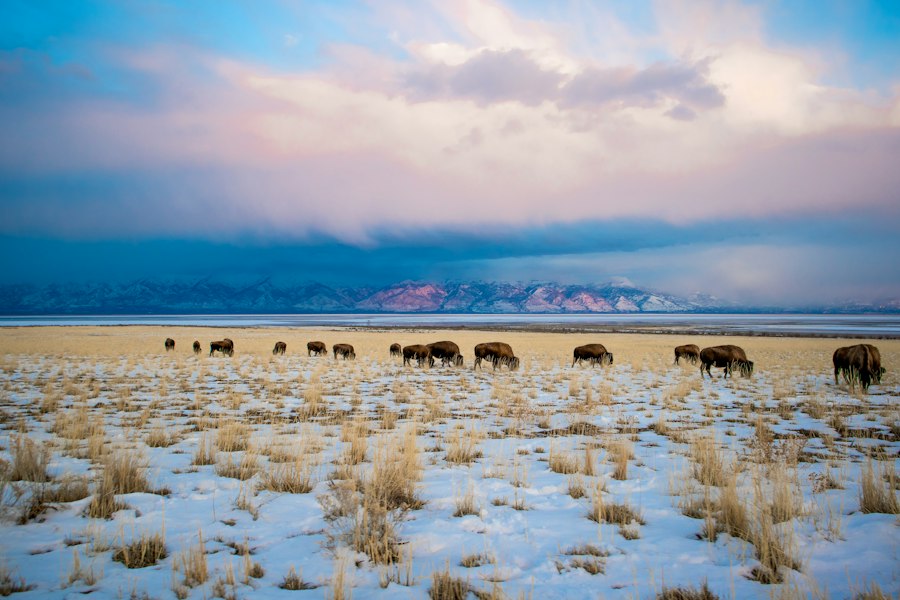
The lives of Ice Age hunters were inherently nomadic. Their survival was inextricably linked to the seasonal movements of their prey. They could not simply settle in one place and expect a consistent food source. Instead, they were compelled to follow the herds, their camps shifting with the rhythm of the migrations. This constant movement shaped their social structures, their material culture, and their relationship with the landscape.
The Great Migratory Routes: Highways of Life
The Pleistocene was characterized by vast, sweeping migrations of herbivore populations. These animals followed ancient, established routes, often dictated by the availability of fresh grazing, water sources, and protection from the harshest winter conditions. For the hunters, these migratory routes were not just paths of animals; they were the highways of their own existence, the arteries that supplied them with the sustenance they needed to survive. Understanding and anticipating these routes was a matter of life and death.
Seasonal Shifts and Herd Dynamics
The ebb and flow of the seasons profoundly influenced herd behavior. In spring and summer, herds would spread out across the tundra, grazing on the newly emerging vegetation. As autumn approached and food became scarcer, they would begin to congregate and move towards wintering grounds, often in more sheltered valleys or areas with accessible lichen and moss. Ice Age hunters were acutely aware of these seasonal shifts, adjusting their own movements and hunting strategies accordingly. They knew when to expect certain herds in specific regions and how their size and composition might change throughout the year.
The Mobile Camp: A Temporary Haven
The hunter-gatherer camp was a testament to mobile living. Structures were designed to be easily dismantled and transported, often utilizing animal hides stretched over wooden frames or natural shelters like caves. The focus was on efficiency and adaptability. While temporary, these camps were not devoid of social life. They were centers for food processing, tool making, and the transmission of knowledge, as well as places for storytelling and community bonding.
Tents and Shelters: Protection from the Elements
Ice Age dwellings were remarkably well-suited to the harsh climate. Animal hides, primarily from reindeer and bison, provided excellent insulation and waterproofing. These hides were stretched over frameworks of bone or wood, creating conical tents or more elaborate shelters that could withstand strong winds and freezing temperatures. In some cases, natural shelters like caves were utilized, offering a ready-made refuge, but these were often adapted and improved by the inhabitants.
Ice Age hunters were skilled at stalking migrating herds, utilizing their knowledge of animal behavior and seasonal patterns to secure food for their communities. This ancient practice highlights the deep connection between humans and their environment, a theme that resonates even today as we navigate the complexities of resource management. For a modern perspective on how geopolitical interests shape our understanding of natural resources, you can explore a related article that discusses the ongoing race for Antarctic resources, which can be found here.
The Social Fabric: Cooperation and Kinship
The demanding nature of Ice Age hunting fostered strong social bonds and a high degree of cooperation. Successful hunts, especially of large game, often required the coordinated efforts of multiple individuals or even entire family groups. This interdependence reinforced kinship ties and fostered a deep sense of community responsibility. Sharing of resources was not just a matter of altruism; it was a survival strategy that ensured the well-being of the group as a whole.
Kinship Networks and Resource Sharing
Family and kinship played a central role in the organization of Ice Age societies. Extended families or clans likely formed the core units of these nomadic groups. The sharing of meat and other essential resources was a fundamental principle, ensuring that no one went hungry, especially during times of scarcity. This system of mutual support was crucial for the survival of infants, the elderly, and those who might be injured or ill.
The Perilous Pursuit: Risks and Rewards

The life of an Ice Age hunter was fraught with danger. The prey they pursued were powerful and unpredictable, and the environment itself presented constant threats. Yet, the rewards were immense – sustenance, warmth, and the continuation of their lineage. Every successful hunt was a triumph over adversity, a reaffirmation of their place in the natural world.
Facing the Beast: Encounters with Danger
Direct encounters with large Ice Age mammals were inherently dangerous. A wounded mammoth or an enraged bull bison could inflict fatal injuries with a single blow. Hunters had to be acutely aware of their surroundings, ready to react instantly to threats. The success of a hunt often depended on the skill and courage of individuals who placed themselves at the forefront of the danger.
The Stampede and the Charge: Unpredictable Fury
The sheer power of a stampeding herd could be overwhelming. Hunters would often seek to disrupt the cohesion of a herd, creating panic that could lead to individuals becoming separated or falling prey to natural hazards like crevasses or steep drops. However, the unpredictable nature of these events meant that hunters themselves could easily become caught in the terrifying rush of fleeing animals. The charge of a determined bull was a force to be reckoned with, capable of shattering bones and crushing bodies.
The Thrill of the Kill: Sustaining Life
Despite the inherent risks, the successful kill represented the culmination of immense effort and skill. The procurement of meat, fat, hides, and bones was not just about immediate survival; it was about providing for the long term. The energy-rich meat and fat were essential for survival in the cold, while the hides offered vital protection. Bones and antlers were fashioned into tools, weapons, and ornaments, demonstrating the multifaceted value of each kill.
From Kill Site to Camp: The Labor of Survival
The process did not end with the kill. Transporting the carcass, often weighing hundreds or even thousands of kilograms, was a significant undertaking. This would involve butchering the animal at the kill site and then carrying the meat and other useful parts back to the camp, often over considerable distances. This arduous labor was a communal effort, further reinforcing social bonds and the shared responsibility for survival.
The Psychological Toll: Resilience in the Face of Loss
While the narrative often focuses on the triumphs, it is important to acknowledge the constant presence of risk and potential loss. Hunters could be injured or killed, and the failure of a hunt could mean hardship and even starvation for a community. The ability to persevere through such setbacks, to continue hunting and surviving despite the ever-present dangers, speaks to a profound psychological resilience that was essential for the perpetuation of Ice Age societies.
The Legacy of the Hunt: Echoes in the Present
The lives of Ice Age hunters, though long past, have left an indelible mark on human history. Their ingenuity, their resilience, and their deep connection to the natural world continue to inspire and inform us. The skills they honed, the knowledge they accumulated, and the social structures they developed laid the foundations for the complex societies that would eventually emerge.
The Deep Roots of Human Ingenuity
The innovations of Ice Age hunters, from the atlatl to sophisticated trapping techniques, represent crucial milestones in human technological and cognitive development. These were not random discoveries but the product of observation, experimentation, and the transmission of knowledge across generations. The ability to adapt and innovate in response to environmental challenges is a hallmark of our species, and its roots are deeply embedded in this prehistoric era.
Toolmaking and Technological Advancement
The development of specialized tools for hunting, butchering, and processing hides was a slow but continuous process. Each new tool, each refinement of an existing one, represented a step forward in human capability. The mastery of stone knapping, for example, allowed for the creation of incredibly sharp and durable blades, essential for working with tough animal hides and processing meat. This technological progress was intrinsically linked to their ability to exploit their environment more effectively.
The Primal Connection to Nature
Ice Age hunters lived in a world where their existence was intimately tied to the rhythms of the natural world. They were not detached observers but active participants in a complex ecological web. This deep connection fostered a profound respect for the environment and its inhabitants, a respect that is often absent in modern industrialized societies. Understanding their relationship with nature can offer valuable insights into our own place within the global ecosystem.
Ecological Knowledge and Environmental Stewardship
The survival of Ice Age hunters depended on their extensive knowledge of flora and fauna, weather patterns, and geological features. This knowledge was not static but constantly updated and refined through generations of experience. They understood the delicate balance of their environment and, in their own way, acted as stewards, ensuring the long-term sustainability of the resources they depended upon. Their lives offer a compelling argument for the importance of ecological literacy.
The Enduring Human Spirit: Resilience and Adaptation
Ultimately, the story of the Ice Age hunters is a testament to the enduring human spirit. They faced unimaginable challenges with courage, intelligence, and an unyielding will to survive. Their ability to adapt to a rapidly changing world, to thrive in harsh conditions, and to build communities in the face of adversity is an inspiring legacy that continues to resonate today. They remind us of the fundamental human capacity for resilience and the power of cooperation in overcoming even the most daunting obstacles.

Beneath the Ice: Surviving the Ice Age 20,000 Years Ago
FAQs
What were ice age hunters hunting?
Ice age hunters were hunting migrating herds of animals such as mammoths, bison, and reindeer.
How did ice age hunters track migrating herds?
Ice age hunters tracked migrating herds by following their footprints, observing their behavior, and utilizing their knowledge of the animals’ migration patterns.
What tools did ice age hunters use for hunting?
Ice age hunters used tools such as spears, bows and arrows, and stone-tipped weapons to hunt migrating herds.
How did ice age hunters adapt to the harsh environment?
Ice age hunters adapted to the harsh environment by wearing warm clothing made from animal hides, building shelters, and creating fires for warmth and cooking.
What role did ice age hunters play in their communities?
Ice age hunters played a crucial role in their communities by providing food, clothing, and other resources necessary for survival through their hunting skills and knowledge of the environment.