The whisper of wind across ancient landscapes carries stories of ingenuity, and among the most compelling are those told by the humble bone needle. These remarkably preserved artifacts, unearthed from sites spanning continents and millennia, offer a profound glimpse into the lives of our prehistoric ancestors. Far from being mere curiosities, these sharpened slivers of bone represent a fundamental leap in human technological development, unlocking the ability to create, repair, and adorn. Their presence speaks to a sophisticated understanding of materials and a pressing need for protection against the elements, as well as a nascent desire for personal expression. The story of the prehistoric bone needle is not just about a tool; it is about survival, adaptation, and the very foundations of human culture.
The Dawn of Dexterity: Origins and Early Innovations
The development of tools is a hallmark of human evolution, and the bone needle stands as a testament to our ancestors’ growing mastery over their environment. The earliest evidence suggests that bone was among the first materials, alongside wood and stone, to be systematically modified for specific tasks. The inherent properties of bone – its strength, durability, and relative ease of shaping compared to harder stones – made it an ideal candidate for intricate work. The transition from simply using naturally shaped bone fragments to deliberately crafting tools marks a significant cognitive and practical advancement.
The Emergence of the Perforated Tool
The true breakthrough, however, was the creation of the perforated needle. Before this innovation, sewing as we understand it was impossible. Early forms of textile production likely involved lashing or weaving with natural fibers, creating more rigid and less adaptable coverings. The ability to pierce and draw thread through material fundamentally altered the possibilities for garment construction. Imagine the struggle of early humans, exposed to harsh climates, relying on crudely fashioned animal hides or woven plant fibers. The bone needle, even in its most rudimentary form, provided a means to stitch these materials together, creating fitted garments that offered superior insulation and protection.
The earliest bone needles, often found in Paleolithic archaeological contexts, are remarkably simple. They are typically elongated pieces of bone, meticulously ground and shaped to a point at one end, with a small perforation at the other. This perforation, or “eye,” is the defining characteristic, and its presence signifies a deliberate intention to create a tool for passing a thread or sinew. The size and shape of these early needles vary, reflecting the materials they were intended to work with and the specific needs of their makers. Smaller, finer needles would have been suitable for working with thinner threads and softer materials, perhaps for crafting delicate adornments or mending finer cloths. Larger, more robust needles suggest the need to work with thicker sinews or strips of hide, essential for robust, protective outerwear.
The selection of bone was also a crucial factor. Different types of bone would have offered varying degrees of strength and workability. The dense bone from larger mammals, such as deer or bison, might have been favored for its durability, while the more porous bone from smaller animals could have been easier to shape. The process of creating a bone needle would have been laborious, involving grinding against abrasive stones and then carefully drilling or punching the eye. This dedicated craftsmanship underscores the value placed on this transformative tool.
In exploring the fascinating world of prehistoric clothing repair techniques, one might find it intriguing to consider the role of tools such as bone needles, which were essential for mending garments made from animal hides. These ancient implements not only highlight the ingenuity of early humans but also provide insight into their daily lives and survival strategies. For a broader understanding of how human innovation has evolved in response to various challenges, you can read about the government’s authority in declared disasters in this related article: The US Government’s Authority in Declared Disasters.
Unraveling the Craft: Techniques and Materials of Prehistoric Sewing

The existence of bone needles directly implies a parallel development in the creation and manipulation of threads and fabrics. The needles themselves are only part of the story; they are the instruments that enable a more complex process. Understanding the techniques employed by prehistoric peoples sheds light on their resourcefulness and their growing understanding of textile properties.
The Art of Thread Making
Before thread could be passed through a needle, it had to be created. Prehistoric peoples likely utilized a variety of natural materials to fashion their sewing threads. Plant fibers, such as those from flax, hemp, nettles, and grasses, would have been abundant and versatile. These fibers would have been processed by retting (soaking to separate the fibers), scraping, and then twisting or spinning them together to create a continuous thread of sufficient strength. The fineness and strength of the resulting thread would have depended on the type of plant, the processing method, and the skill of the spinner.
Animal sources also provided crucial thread materials. Sinew, the strong connective tissue found in animal tendons, was an excellent resource. When dried and separated into fine strands, sinew could be twisted into a remarkably strong and durable thread, particularly well-suited for heavy-duty sewing of hides and furs. The processing of sinew would have involved drying, pounding, and then carefully separating and twisting the fibers.
The choice of thread material would have been dictated by the intended application. For delicate beadwork or repairs to finely woven fabrics, fine plant fibers would have been preferred. For stitching together thick animal hides to create warm, protective clothing, strong sinew or twisted plant fibers would have been essential. The ability to consistently produce thread of a desired strength and thickness was a crucial prerequisite for effective sewing.
The Evolution of Prehistoric Textiles
The bone needle was not only used for sewing animal hides but also for working with early forms of woven and felted textiles. While direct evidence of the earliest fabrics is scarce due to their perishable nature, archaeological finds of bone needles and awls (tools for piercing holes) strongly suggest their existence.
Woven textiles, likely made from plant fibers, would have offered a lighter and more flexible alternative to animal hides. The process of weaving involves interlacing warp and weft threads on a loom-like structure. Bone needles would have been used to join woven panels, create decorative elements, or repair tears. The size and type of needle would have been adapted to the weave structure; finer needles for denser weaves and coarser ones for more open textiles.
Felt, made by matting and pressing wool or other animal fibers together, would have been another significant prehistoric textile. The fibers are agitated and worked until they interlock, forming a dense, cohesive material. Bone needles could have been used to embellish felted items, attach them to other materials, or even to create more intricate felted designs by stitching layers together.
The presence of bone needles, therefore, indicates a growing sophistication in prehistoric material culture, moving beyond simple animal skins to more complex and adaptable forms of clothing and functional items. The needle was the key that unlocked these possibilities.
Beyond Utility: Adornment, Art, and Social Signaling
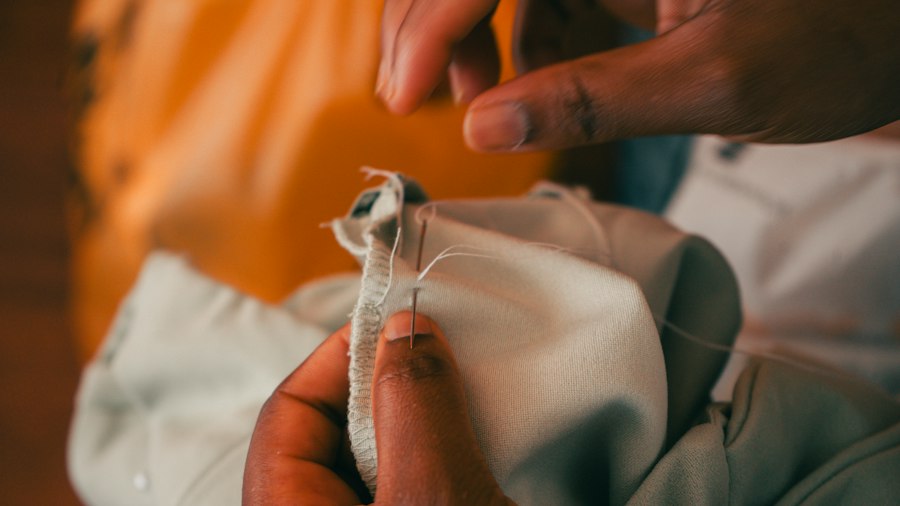
While the primary driver for the invention of the bone needle was undoubtedly practical – the need for warmth, protection, and repair – its impact extended far beyond mere survival. The ability to stitch and fasten opened up new avenues for personal adornment, artistic expression, and the subtle signaling of social status and identity.
The Embellishment of Everyday Life
The introduction of sewing allowed for the incorporation of decorative elements into clothing and other items. Prehistoric peoples began to attach beads, shells, small bones, and other decorative materials to their garments using bone needles and fine threads. This was not simply gratuitous decoration; it served important social and symbolic purposes.
These embellishments could indicate tribal affiliation, marital status, or achieved status within a community. The types of materials used for decoration would have varied depending on local availability and trade networks. Rare or exotic materials, meticulously sewn onto clothing, would have signified wealth, prestige, and access to distant resources. Intricate patterns and designs, requiring considerable skill and time to create, would have demonstrated the maker’s artistic talent and dedication.
The act of creating these decorative items also represented a significant investment of time and effort. This suggests a society where leisure time existed, and where personal expression and aesthetic considerations were valued. The bone needle, in this context, becomes an instrument of art and culture, transforming utilitarian objects into canvases for individual and collective identity.
Early Forms of Textile Artistry
The development of sewing techniques also laid the groundwork for early forms of textile art. Beyond simple embellishment, prehistoric peoples likely created more complex decorative patterns by using different colored threads, varying stitch types, or creating intricate appliqué designs. While direct evidence of these early textile artworks is rare, the sophistication of some surviving bone needles, with their fine perforations and polished surfaces, hints at a desire for precision and delicacy in their work, suggesting they were capable of creating more than just functional seams.
Imagine the vibrant displays at tribal gatherings, with individuals adorned in clothing that proclaimed their lineage, their achievements, or their spiritual beliefs. The bone needle was the essential tool in bringing these visual narratives to life. The evolution from rudimentary stitching to more complex decorative work mirrors the broader trajectory of human creativity, where practical needs gradually gave way to the pursuit of beauty and meaning.
The Social Fabric: Identity and Belonging
Clothing has always been a powerful tool for communicating identity. In prehistoric societies, where written language was absent, visual cues took on even greater importance. The style of garments, the choice of materials, and the nature of their adornment all served to signal group membership, social standing, and individual roles. The bone needle was instrumental in shaping these visual markers.
For example, the use of specific animal hides, the way they were cut and stitched, or the patterns of beadwork applied could all identify an individual as belonging to a particular clan, tribe, or even a specific profession within that society. The ability to create and maintain these distinctive visual signals was directly dependent on the availability and skilled use of tools like the bone needle. It was a means of reinforcing social bonds and establishing a sense of collective identity, a visual language spoken through fabric and thread.
Preservation and Discovery: What Bones Tell Us
The enduring legacy of prehistoric bone needles lies in their remarkable preservation. While organic materials like textiles and threads rarely survive the ravages of time, bone is far more resilient. This allows archaeologists to unearth these ancient tools and piece together crucial information about the people who made and used them.
The Archaeological Footprint of Craftsmanship
The discovery of bone needles in archaeological excavations provides direct and irrefutable evidence of sewing practices. Their presence in a particular stratum or context can help date the site and shed light on the activities that took place there. A concentration of bone needles, alongside awls and other perforation tools, strongly suggests a domestic area where clothing was made or repaired.
The wear patterns on these needles can also offer valuable insights. Scratches and abrasions around the eye might indicate the type of thread used or the intensity of use. The shape and size of the needle, as mentioned earlier, can suggest the intended materials. For instance, a needle found alongside evidence of large mammal hunting might have been used for stitching thick hides, while a finer needle found near evidence of plant processing could have been for finer weaving or embroidery.
Furthermore, the geographical distribution of bone needle finds can help map ancient trade routes and cultural interactions. If a particular style or type of bone needle is found in regions where the raw material is not indigenous, it suggests movement of people, ideas, or finished goods.
Decoding the Manufacturing Process
The study of prehistoric bone needles involves a multidisciplinary approach. Researchers use macroscopic observation, microscopy, and even forensic analysis to understand how these tools were made. Examining the tool marks left by grinding stones, the nature of the perforation, and the overall shaping techniques allows archaeologists to reconstruct the manufacturing process.
The presence of unfinished needles or bone fragments showing early stages of shaping can provide further clues about the workshop or living space where these tools were created. This can reveal the types of tools used for shaping and drilling, such as flint drills or abrasive stones. The level of skill demonstrated in the craftsmanship of a bone needle can also offer insights into the specialization of labor within prehistoric communities. Highly skilled artisans may have been responsible for producing these essential tools.
The study of bone needles is not just about understanding a tool; it’s about understanding the cognitive abilities, the material knowledge, and the practical problem-solving skills of our ancient ancestors. Each needle is a miniature artifact, a tangible link to a world long past, offering a profound connection to the ingenuity of human evolution.
In the fascinating study of prehistoric tools and techniques, researchers have uncovered the use of bone needles for clothing repair, showcasing the ingenuity of early humans in adapting their garments for survival. This ancient practice not only highlights the resourcefulness of our ancestors but also connects to broader themes of material culture and craftsmanship. For those interested in exploring how historical practices influence modern society, a related article discusses the implications of currency choices in today’s economy, which can be found here.
The Lasting Echo: Legacy and Modern Parallels
| Metric | Value | Unit | Description |
|---|---|---|---|
| Age of Bone Needles | 40,000 | Years BP | Estimated age of earliest bone needles used for clothing repair |
| Needle Length | 5-10 | cm | Typical length range of prehistoric bone needles |
| Material | Bone | – | Primary material used for needle manufacture |
| Clothing Repair Frequency | High | – | Indicates frequent use of needles for repairing garments |
| Stitch Type | Running stitch | – | Common stitch type identified on prehistoric clothing repairs |
| Sites Found | Multiple | – | Number of archaeological sites where bone needles were discovered |
| Repair Durability | Moderate | – | Effectiveness of repairs made with bone needles in prehistoric times |
The impact of the prehistoric bone needle reverberates through the ages, shaping the course of human development and finding echoes in our modern world. While modern sewing machines and synthetic threads have transformed the act of sewing, the fundamental principles established by these early tools remain.
The Foundation of Clothing and Comfort
The ability to sew, facilitated by the bone needle, was a critical step in the development of the tailored garment. This allowed humans to adapt to diverse climates, expanding their habitable range and enabling more complex social structures by providing better protection and comfort. Without the ability to create fitted clothing, many of the advancements in human migration, exploration, and settlement would have been significantly hampered. The bone needle is, therefore, a foundational technology for human civilization.
The concept of “making do” and repairing is also deeply rooted in the use of bone needles. The ability to mend torn clothing or create new items from existing materials was essential for survival in resource-scarce environments. This ethos of conservation and resourcefulness, born out of necessity, continues to be a valuable principle even in our technologically advanced society.
A Symbol of Enduring Human Ingenuity
The prehistoric bone needle stands as a powerful symbol of human ingenuity and our innate drive to innovate and adapt. It demonstrates that even with limited resources and rudimentary technology, humans could develop sophisticated solutions to complex problems. The simplicity of its design belies its profound impact, making it one of the most significant, yet often overlooked, technological advancements in human history.
In a world increasingly dominated by mass production and disposable goods, the story of the bone needle serves as a reminder of the value of craftsmanship, the importance of resourcefulness, and the enduring power of human creativity. It is a testament to our ancestors’ ability to transform the natural world around them, not just to survive, but to thrive, to adorn, and to express themselves, laying the groundwork for the rich tapestry of human culture we know today.

Life 20,000 Years Ago: How Humans Survived the Ice Age
FAQs
What is a prehistoric bone needle?
A prehistoric bone needle is a tool made from animal bones that was used by ancient humans for sewing and repairing clothing.
How were prehistoric bone needles used for clothing repair?
Prehistoric bone needles were used to mend tears, holes, and seams in clothing made from animal skins or plant fibers. They were essential for keeping clothing intact and functional.
What evidence supports the use of prehistoric bone needles for clothing repair?
Archaeological findings of bone needles with wear marks and residues of fibers suggest that they were used for sewing and repairing clothing in prehistoric times. Additionally, depictions in ancient art and written records provide further evidence of their use.
What materials were commonly repaired using prehistoric bone needles?
Ancient humans used prehistoric bone needles to repair clothing made from animal hides, furs, and plant fibers. These materials were readily available and essential for protection against the elements.
How did the use of prehistoric bone needles for clothing repair contribute to early human survival?
The ability to repair clothing using prehistoric bone needles allowed early humans to extend the lifespan of their garments, ensuring warmth and protection. This skill was crucial for survival in harsh environments and during long hunting expeditions.