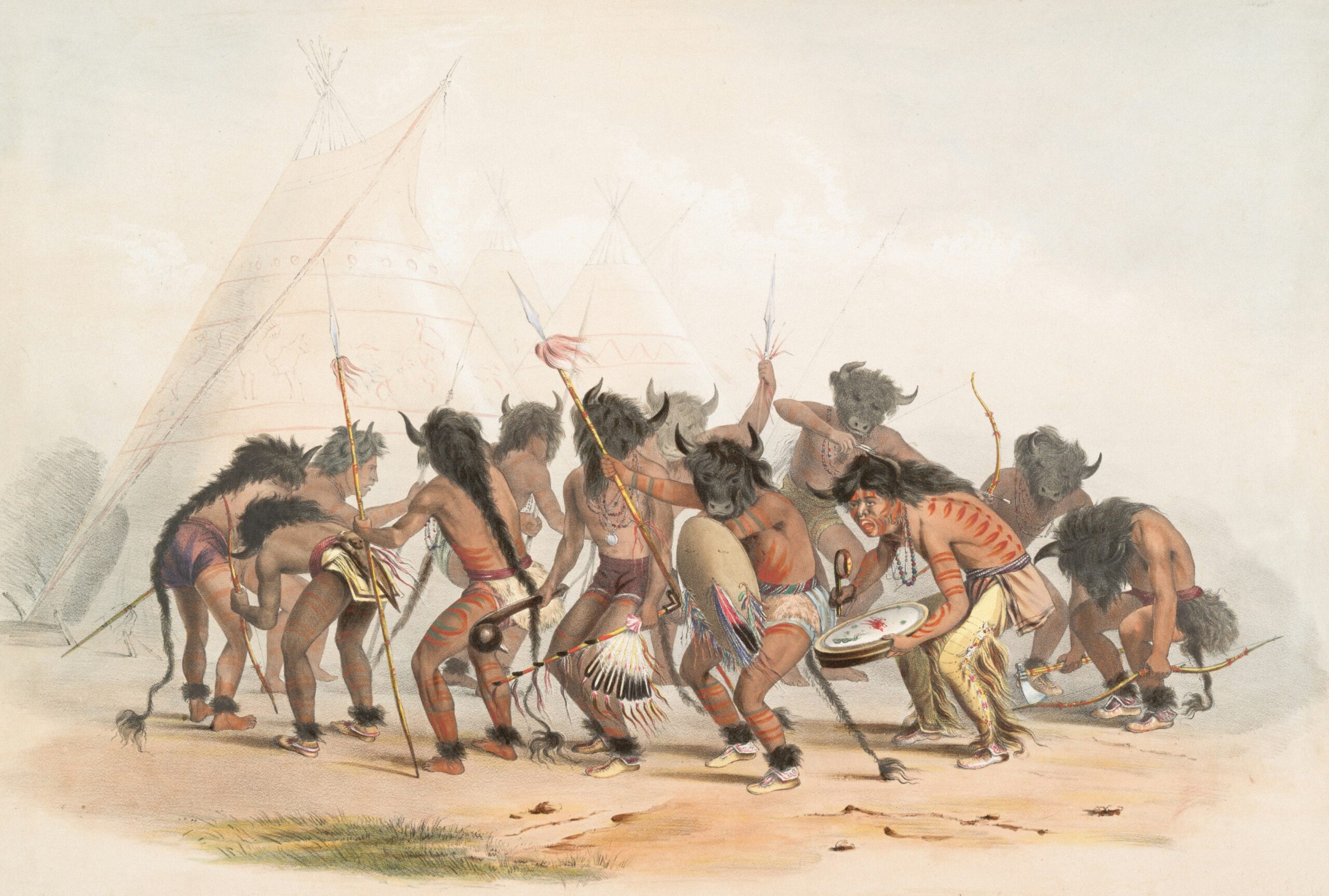
The air, thick with the scent of woodsmoke and damp earth, hung heavy as the two groups cautiously approached each other. Centuries, perhaps millennia, of separation had etched different paths into their ways of life. This was not a meeting of armies, nor of traders with goods to barter. This was a fundamental, primal encounter – the first tentative bridge built across the vast chasm of the unknown between two distinct Stone Age tribes. The precise moment, the exact location, remains lost to the mists of prehistory, yet the echoes of such initial interactions resonate through the very fabric of human development, hinting at the complex tapestry of exchange, adaptation, and sometimes, conflict, that shaped our earliest societies.
Whispers from the Paleolithic Divide
The world of the Paleolithic peoples was characterized by a profound connection to the immediate environment. Survival depended on an intimate understanding of animal migration patterns, the fruiting and seeding cycles of plants, and the geological features that offered shelter and resources. Mobility was a way of life, with bands of hunter-gatherers following game herds across vast territories. Their toolkits, though ingenious, were limited to what could be fashioned from stone, bone, and wood. The concept of permanent settlement was largely alien, and social structures, while undoubtedly complex, were likely fluid and kin-based, operating within the constraints of small, nomadic groups. The horizon was defined by immediate needs and the dangers and opportunities that lay within a day’s or a few day’s journey. The existence of other human groups, beyond the immediate kin or allied bands, would have been a matter of conjecture, perhaps fueling myths and legends told around flickering campfires, tales of ‘others’ who shared the world but remained unseen.
The Vastness of Uncharted Territories
Imagine the sheer scale of ignorance. A single tribe, perhaps numbering no more than a few dozen individuals, might roam a territory spanning hundreds, even thousands, of square kilometers. Their knowledge of the land, while deep within their own sphere of influence, would have been infinitesimally small when compared to the entire populated world. Rivers, mountain ranges, and dense forests acted as natural barriers, not just geographically, but culturally. The journey from one valley to another, let alone across a significant geographical feature, could take weeks or months, fraught with peril from predators, natural disasters, and the very real possibility of encountering unknown and potentially hostile groups. The mental map of their world, meticulously etched into their collective memory, would have had sharp, undefined edges, beyond which lay a realm of speculation and fear.
The Echoes of Solitude
For extended periods, a tribe might exist in relative isolation, their interactions limited to the members within their own band. This isolation, while not absolute, would have fostered a unique set of cultural norms, linguistic nuances, and a particular worldview. Their understanding of the universe, their spiritual beliefs, and their methods of problem-solving would have evolved organically within this self-contained context. The sounds and sights of their world would have been familiar and predictable, punctuated only by the cyclical rhythms of nature. The absence of frequent contact with other human groups meant that their developmental trajectory, in terms of technology, social organization, and cultural expression, could diverge significantly from those in other regions, even if they shared a common ancestral lineage.
In exploring the fascinating dynamics of early human societies, one can draw parallels to modern challenges in collaboration and communication. A related article that delves into the complexities of navigating new frontiers is available at Navigating the Future: Cislunar Space Traffic Management. This piece discusses how different entities must coordinate and manage their interactions in the burgeoning realm of cislunar space, much like how Stone Age tribes would have had to navigate their first encounters with one another, balancing cooperation and competition in a shared environment.
The Spark of Encounter: A Crossroads of Worlds

The impetus for such a monumental meeting would have been varied and driven by fundamental needs or circumstances. It was rarely a planned event, but rather a serendipitous intersection of migratory paths, resource scarcity, or perhaps even curiosity. When it did occur, the initial moments would have been charged with an intense mix of apprehension and fascination. These were not abstract concepts of ‘otherness’ anymore; these were tangible, living beings who walked, spoke, and looked… differently.
Driven by the Hunt and the Gathering
The most probable catalysts for initial encounters were related to the primal necessities of survival. Following game herds, especially large migratory species like mammoth or bison, could lead tribes into territories previously unvisited or inhabited by others. A particularly bountiful hunting ground, a rich berry patch, or a vital water source could also become points of convergence, drawing multiple groups into proximity. When such a resource was shared, or competed for, a direct interaction became unavoidable. The scent of smoke from a distant fire, the faint sound of voices carried on the wind, or the discovery of unfamiliar tracks would have been the early warning signs, prompting a cautious approach.
The Pull of the Unknown
While survival needs were paramount, it is also conceivable that curiosity played a role, albeit a more subtle one. Tales passed down through generations about distant lands and the peoples who inhabited them might have fueled a desire to explore, to venture beyond the known boundaries. The discovery of artifacts – a strangely shaped stone tool, a shell from a distant sea – could have sparked questions and a longing to understand their origin. In such instances, a tribe might intentionally deviate from their usual migratory routes, driven by an insatiable human urge to explore the limits of their world and to discover what lay beyond the horizon. This curiosity, coupled with the practicalities of resource acquisition, likely formed a potent combination for initiating contact.
First Impressions: A Dance of Doubt and Discovery

The immediate aftermath of the initial sighting would have been a carefully orchestrated dance of caution and observation. No immediate assumptions of kinship or malice could be made. Each group would have assessed the other, looking for clues to their intentions, their capabilities, and their level of threat. This was a moment where non-verbal communication, body language, and primal instincts would have been paramount.
A Spectrum of Gestures and Gazes
The first ‘words’ exchanged would have been visual. Wide eyes, perhaps a widening of the mouth in a tentative, non-threatening gesture, or the raising of open hands, palms outwards, would have been universal signals of peace. Conversely, bared teeth, a clenched fist, or aggressive postures would have conveyed hostility. The language spoken by each group would have been utterly foreign, a cacophony of sounds that held no immediate meaning. Therefore, communication would have relied on a shared understanding of fundamental human expressions and actions. The way the ‘others’ carried themselves, the size and composition of their group, the tools they carried, and even their physical appearance would have been scrutinized for any hints of their nature. Were they hunters or gatherers? Were they organized and skilled? Did they appear to be in distress or confident?
The Weight of the Unknown Tongue
The sheer alienness of the spoken language would have been a significant barrier. While gestures could convey basic intentions, the nuances of social interaction, the sharing of complex information, or the negotiation of immediate needs would have been severely hampered. This linguistic divide would have amplified the sense of separation and potential misunderstanding. Initial interactions would have been characterized by a reliance on mimicry and observation. If one group offered a piece of food, the other might reciprocate with a gesture of thanks and perhaps an offering of their own. If one group pointed to a water source, the other might nod in understanding. This slow, painstaking process of decoding meaning would have been crucial in navigating the delicate initial stages of contact.
Building Bridges: From Caution to Connection
If the initial encounter did not result in immediate conflict, a slow and incremental process of building trust and understanding would have begun. This was a phase of tentative exploration, of probing the boundaries of acceptable interaction, and of discovering commonalities amidst the differences. The success of these early exchanges would have determined the long-term relationship between the tribes, shaping the future of both groups.
The Silent Language of Exchange
The most powerful tool for bridging the gap of communication was through material exchange, even if it was not formalized trade in the modern sense. An offering of food, a shared drink from a water source, or the demonstration of a useful skill could foster a sense of goodwill. If one tribe possessed a superior tool or a particularly valuable resource, a cautious offering might be made, not for immediate reciprocation, but as a gesture of openness. This act of sharing, of demonstrating generosity, could break down initial barriers of suspicion. Similarly, if one group observed the other successfully hunting or gathering a particular resource, they might attempt to mimic the technique, prompting a response that could range from helpful guidance to outright dismissal, depending on the prevailing mood.
The Seeds of Shared Knowledge
Beyond material exchange, the sharing of knowledge, however basic, would have been instrumental. Observing how another group navigated their environment, their methods of tool-making, or their understanding of medicinal plants could provide invaluable insights. A tribe skilled in flint-knapping might demonstrate their techniques, while another, with a deeper knowledge of edible plants, might point out safe foraging grounds. This mutual learning, driven by the desire for survival and improvement, could foster a nascent form of cooperation. The discovery of shared needs, such as a common threat from a predator or the need to access a distant resource, could also create opportunities for temporary alliances, further solidifying connections.
In exploring the fascinating dynamics of early human interactions, one can draw parallels to the complexities of modern legal frameworks, as discussed in a related article on nationalization and sovereign interests. The first encounters between Stone Age tribes were likely marked by a mix of curiosity and caution, much like the careful negotiations that occur today between nations. These initial meetings laid the groundwork for cultural exchanges and alliances that would shape human history. For a deeper understanding of how these principles apply in contemporary contexts, you can read more about it in this insightful piece on legal frameworks for nationalization.
The Enduring Legacy: A Tapestry of Adaptation
| Metric | Description | Estimated Value |
|---|---|---|
| Number of Tribes | Count of distinct tribes meeting | 2-5 |
| Average Tribe Size | Number of individuals per tribe | 20-50 people |
| Duration of Meeting | Length of time tribes interact | Several hours to a few days |
| Primary Purpose | Reason for the meeting | Trade, alliance, information exchange |
| Communication Methods | Ways tribes communicate | Gestures, basic language, symbols |
| Conflict Incidence | Likelihood of disputes during meeting | Low to moderate |
| Resource Exchange | Types of goods traded or shared | Tools, food, raw materials |
| Social Rituals | Common rituals performed | Sharing food, storytelling, dances |
These initial Stone Age encounters, though lost to specific historical records, were not isolated incidents. They were part of a continuous, dynamic process that shaped human migration, cultural diffusion, and the very genetic makeup of our species. The interactions between tribes, whether peaceful or confrontational, left indelible marks on their respective societies, influencing their technologies, their languages, their social structures, and their understanding of the world. The stories of these meetings, passed down through oral traditions, became the bedrock of their collective memory, contributing to the rich tapestry of human prehistory.
The Ripple Effect of Cultural Diffusion
When two distinct groups met, the exchange of ideas and practices was inevitable. New tool-making techniques, different methods of hunting or gathering, or novel approaches to shelter construction could be observed and adopted. This cultural diffusion was not always a one-way street; innovations could spread in both directions, leading to a gradual convergence or, conversely, a more complex hybridization of cultures. The adoption of new words or linguistic phrases could also occur, slowly altering the linguistic landscape. These exchanges, repeated across countless encounters over millennia, contributed to the remarkable diversity and adaptability of human societies.
The Shaping of New Identities
These first meetings also played a crucial role in the formation of distinct tribal identities. By encountering ‘others,’ each group became more acutely aware of their own unique customs, beliefs, and ways of life. The differences, highlighted by the interactions, solidified their sense of ‘us’ versus ‘them.’ While some encounters fostered alliances and a degree of assimilation, others might have led to prolonged periods of avoidance or even conflict, further defining the boundaries of their respective territories and social spheres. The narratives of these encounters, whether emphasizing cooperation or competition, would have become integral to their mythology and their understanding of their place in the world, a legacy that continues to resonate through the deep currents of human history.

20,000 Years Ago | The Coldest Journey in Human History
FAQs
1. How did stone age tribes communicate with each other when meeting for the first time?
Stone age tribes likely used a combination of gestures, body language, and possibly some basic vocal sounds to communicate with each other when meeting for the first time.
2. What were some common reactions when stone age tribes encountered each other for the first time?
Common reactions when stone age tribes met for the first time may have included curiosity, caution, fear, excitement, and a sense of wonder at encountering a different group of people.
3. Did stone age tribes engage in any rituals or ceremonies when meeting for the first time?
It is possible that stone age tribes engaged in rituals or ceremonies when meeting for the first time, such as exchanging gifts, performing dances, or sharing food as a way to establish trust and goodwill.
4. How did stone age tribes navigate potential conflicts when meeting for the first time?
Stone age tribes may have navigated potential conflicts when meeting for the first time by demonstrating peaceful intentions through gestures, avoiding threatening behavior, and showing respect for each other’s territory and resources.
5. What were some long-term effects of stone age tribes meeting for the first time?
Meeting for the first time may have led to cultural exchange, intermarriage, alliances, conflicts, or even the sharing of knowledge and technologies between stone age tribes, influencing their future interactions and shaping their societies in the long term.