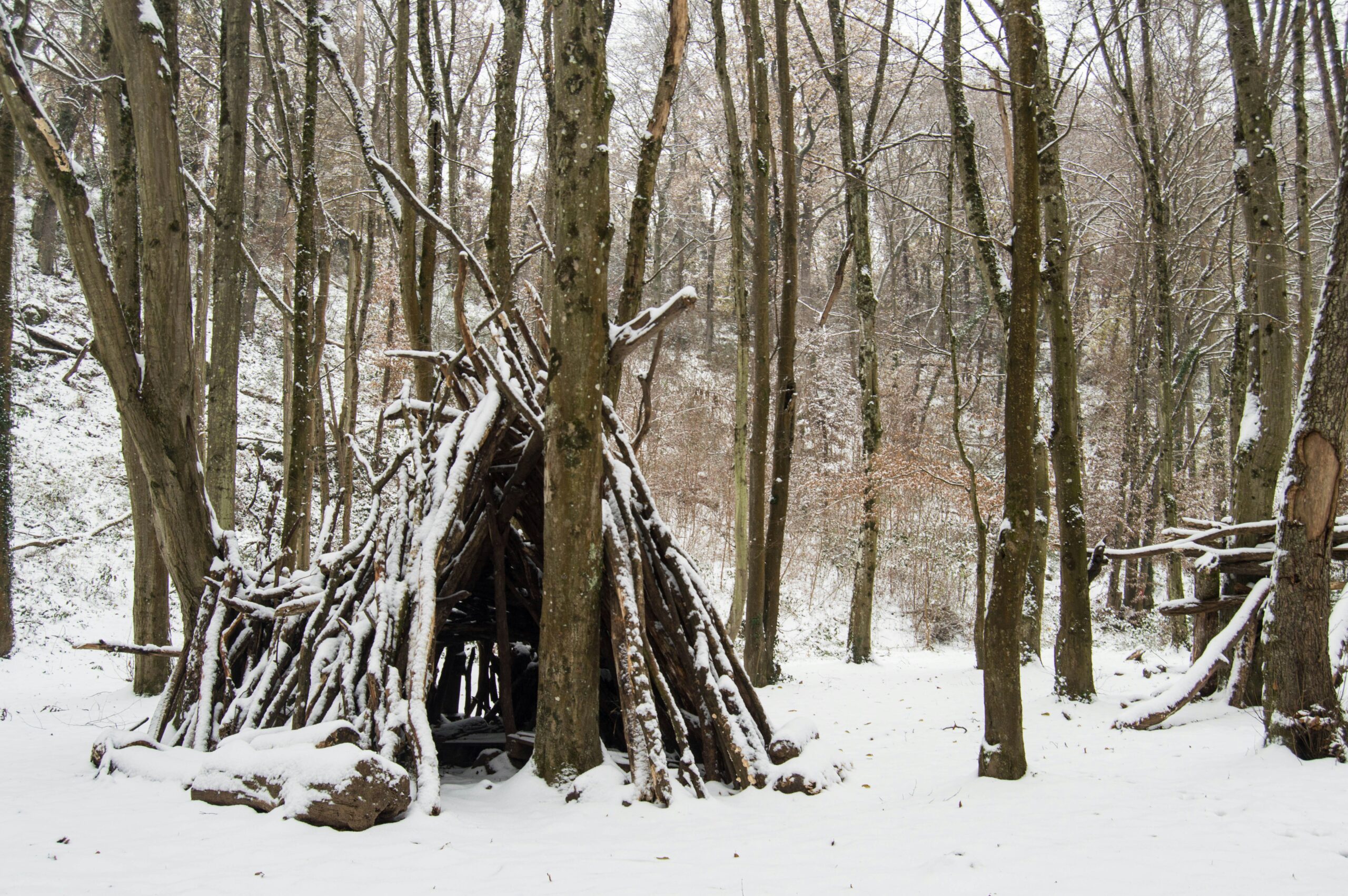
The biting winds of the Pleistocene epoch, a period characterized by its extreme cold and vast, unforgiving landscapes, presented early hominins with a monumental challenge: survival. Beyond the critical needs of food and water, the most immediate threat was exposure. The development and refinement of primitive shelter-building techniques were not merely a matter of comfort; they were fundamental to the successful migration, expansion, and ultimately, the persistence of our ancestors across diverse and often brutal environments. These early shelters, crafted from the limited resources available, represent a profound testament to human ingenuity and adaptability in the face of immense environmental pressures.
Foundations of Survival: Early Hominin Needs and the Drive for Shelter
The Ice Age era, spanning roughly 2.6 million to 11,700 years ago, witnessed significant climatic fluctuations, including numerous glacial periods characterized by expanding ice sheets and arid conditions in many regions. During these times, hominins, including early Homo sapiens, faced the constant peril of hypothermia, frostbite, and death from exposure. Shelter served multiple vital functions, extending far beyond mere protection from the elements. It provided a safe haven for rest and recuperation, critical for energy conservation and the ability to hunt and gather effectively. It offered a secure space for social interaction, the nurturing of young, and the transmission of knowledge, fostering group cohesion and survival. Furthermore, shelters offered protection from predators and the harsh realities of weather, such as blizzards and torrential rains. The impetus to build was thus deeply ingrained in the biological and social imperatives of these early populations.
The Spectrum of Early Dwelling: From Natural Havens to Constructed Spaces
The earliest forms of “shelter” were undoubtedly opportunistic, leveraging pre-existing natural features. Caves and rock overhangs provided ready-made protection from wind and precipitation, requiring minimal modification. Archaeological evidence from sites like Wonderwerk Cave in South Africa, with its traces of hominin occupation dating back over a million years, highlights the long-standing reliance on these natural refuges. However, as hominins migrated into more open environments lacking such geological formations, the necessity for constructed shelters became paramount. This marked a significant cognitive leap, requiring planning, resource assessment, and the application of learned skills to actively shape their environment for survival. The transition from opportunistic use to deliberate construction signifies a crucial stage in human technological and cultural evolution.
Environmental Pressures and Resource Availability: Shaping the Blueprint of Survival
The specific types of shelters constructed were heavily dictated by the available local resources and the prevailing environmental conditions. In forested regions, wood, branches, and leaves formed the primary building materials. In open grasslands or tundra, animal bones, hides, and mammoth tusks became essential components. The intensity of cold, the prevalence of wind, and the availability of water sources all influenced the design and construction methods. For instance, shelters built in areas with high winds would likely be lower-profile and more enclosed to minimize wind exposure. The careful observation of animal behavior, such as the denning habits of various species, may also have informed early architectural principles. Understanding the properties of different materials – their insulating capabilities, structural integrity, and resistance to decay – was a crucial aspect of developing effective and durable shelters.
Primitive shelter building during the Ice Age was a crucial survival skill, as early humans had to adapt to harsh climates and limited resources. These shelters, often constructed from natural materials like wood, stone, and animal hides, provided essential protection from the elements. For a fascinating exploration of ancient civilizations and their survival strategies, you can read about the Piri Reis map theory in this related article: Uncovering the Lost Civilization: Piri Reis Map Theory. This piece delves into the knowledge and navigational skills of early societies, shedding light on their remarkable adaptability and ingenuity.
Crafting Hearth and Home: Early Construction Materials and Techniques

The ingenuity of Ice Age builders is evident in their ability to transform raw, often unwieldy, natural materials into functional living spaces. These were not rudimentary lean-tos of the simplest form, but rather carefully considered constructions that prioritized warmth, stability, and defensibility. The available toolkit was limited, consisting primarily of stone tools for cutting, scraping, and shaping, and possibly bone tools for finer work. Yet, with these basic instruments, they achieved remarkable feats of engineering.
Leveraging the Earth: Pit Dwellings and Subterranean Structures
In many regions, excavating into the ground offered an excellent way to utilize the earth’s natural insulation. Pit dwellings, essentially depressions dug into the soil, provided a stable and relatively warm base. The excavated earth could then be piled around the edges to create low walls, further enhancing insulation. The roofs of these structures were often constructed from branches, animal hides, or reeds, supported by a framework of timbers or even large animal bones. Archaeological evidence for such structures exists across various Ice Age sites, suggesting a widespread adoption of this technique. The depth of the pit and the thickness of the surrounding earth walls were likely adapted to the local climate, with deeper and thicker walls providing greater thermal mass and protection against extreme cold.
The Power of Mammoth Bones and Tusks: Iconic Mammoth Steppe Shelters
Perhaps the most iconic and awe-inspiring shelters of the Upper Paleolithic period were those constructed from the bones and tusks of mammoths, particularly in the open landscapes of the Mammoth Steppe. These colossal creatures provided not only food but also an abundance of robust building materials. Large long bones, such as femurs and humeri, were used as upright supports and beams, creating a sturdy framework. Rib cages could be integrated to form walls, and massive skulls could serve as structural elements. Mammoth tusks, with their inherent strength and curvature, were employed in various ways, perhaps to create doorways or as reinforcing elements. These structures were often covered with hides, packed with moss and grasses for insulation, and then topped with turf or snow for added protection. Sites like Mezhirich in Ukraine have revealed remarkably well-preserved examples of these mammoth bone dwellings, demonstrating sophisticated planning and construction capabilities. The sheer scale of these structures suggests significant communal effort and organization.
Wood, Hides, and Turf: Versatile Materials for Diverse Environments
In forested regions where mammoths were less prevalent or accessible, hominins relied on a wider array of readily available materials. Timber, branches, and saplings were fashioned into frames for conical or dome-shaped structures. These frames were then typically covered with animal hides, providing a relatively waterproof and windproof exterior. The interiors were often insulated with layers of moss, grass, or packed earth. The use of turf, particularly in areas with dense vegetation, offered excellent insulation and could be layered to create durable walls. The meticulous preparation and arrangement of these materials were crucial for maximizing their insulating properties. The process of tanning and preparing hides would have been a significant undertaking, requiring knowledge of animal anatomy and the use of natural chemicals.
Adapting to the Cold: Insulation and Heating Strategies

The primary objective of any Ice Age shelter was to retain precious body heat and create a habitable internal environment, especially during the long, frigid winters. Insulation and heating were therefore paramount considerations in their design and construction. The success or failure of these strategies directly impacted survival rates.
Layering for Warmth: The Science of Insulation in Primitive Dwellings
The concept of insulation was intuitively understood and expertly applied. Multiple layers of natural materials were employed to trap air, which is a poor conductor of heat. Animal hides, with their fur intact, were a primary insulating material. These were often used to line the interior walls and floors. Packed moss, dried grasses, and even leaves were stuffed into gaps and cavities within the structure, further preventing heat loss. The use of turf, as mentioned previously, also played a significant role in insulation, its dense composition and the air pockets within it providing effective thermal resistance. In particularly cold climates, the outer layers of a shelter might be covered with snow, which, despite its icy appearance, is an excellent insulator when packed and undisturbed. The strategic placement of entrances, often designed with a narrow opening or a windbreak, also helped to minimize cold air infiltration.
The Central Hearth: Conquering the Cold with Fire
The mastery of fire was one of the most significant technological advancements of the Ice Age, and its role in shelter heating was revolutionary. The hearth, typically located in the center of a dwelling, provided a source of warmth, light, and protection. Archaeological evidence consistently reveals the presence of fire pits within Ice Age settlements. The positioning of the hearth was carefully considered to maximize its heating efficiency and minimize fire hazards. In some structures, smoke would have been allowed to escape through openings in the roof or through a designated vent. More sophisticated designs might have incorporated rudimentary smoke management systems, though evidence for this is less common. The ability to maintain a consistent internal temperature, even in the harshest conditions, dramatically increased the chances of survival, allowing for longer periods of occupation and greater resilience against the cold. The psychological comfort provided by a fire cannot be overstated, offering a sense of security and community.
Microclimates and Ventilation: Balancing Heat Retention and Air Quality
While retaining heat was crucial, maintaining adequate ventilation was equally important for health and safety. Stale air, filled with moisture and carbon dioxide, could lead to respiratory problems and discomfort. Therefore, while shelters were designed to be enclosed, they were not hermetically sealed. Small openings in the roof or walls, or the controlled management of the hearth’s ventilation, allowed for the necessary exchange of air. The creation of microclimates within the shelter, with warmer zones around the hearth and cooler areas further away, was a natural consequence of the heating strategies employed. Understanding these internal temperature gradients and managing them effectively contributed to the overall habitability of the dwelling.
Beyond Basic Shelter: Fortification, Community, and Social Life
The construction of shelters during the Ice Age was not solely about individual survival from the elements. These structures played a pivotal role in fostering community, providing security, and shaping social dynamics. They became the centers of family life, the loci of technological innovation, and the foundations of early human societies.
Communal Living and Social Bonds: The Shelter as a Social Hub
Many Ice Age shelters, particularly the more substantial ones like the mammoth bone dwellings, were designed to accommodate multiple individuals or families. This communal living arrangement fostered strong social bonds, facilitating cooperation in hunting, food gathering, and child-rearing. The shared space of the shelter provided a constant environment for social interaction, storytelling, and the transmission of cultural knowledge. The proximity to one another during long, cold winters would have reinforced group solidarity and mutual reliance. The development of distinct living areas within larger structures, or the clustering of smaller shelters in a settlement, suggests a nascent understanding of social organization and spatial planning within the community.
Defense and Security: Protecting the Vulnerable
In addition to environmental threats, early hominins faced dangers from predators and, potentially, from rival human groups. Shelters provided a degree of security, offering a defensible space to retreat to. The robust construction of some dwellings, with thick walls and limited entrances, would have made them difficult to breach. The presence of fire within the shelter could also deter nocturnal predators. The strategic placement of settlements, perhaps on elevated ground or near defensible features, further enhanced security. The ability to protect themselves and their resources within a designated space was crucial for the long-term survival and success of Ice Age populations.
The Hearth as the Heart: Cultural Practices and Rituals
The hearth, as the central focus of the shelter, was more than just a source of heat and light; it was often the symbolic and practical heart of domestic and social life. It was where food was prepared, tools were repaired, and stories were shared. Evidence from some sites suggests that hearths may have also been associated with ritualistic activities. The careful tending of the fire, the shared meals, and the intimate discussions that took place around it would have cemented cultural traditions and shared beliefs. The shelter, therefore, became the physical embodiment of the social and cultural fabric of Ice Age communities.
In exploring the fascinating world of primitive shelter building during the Ice Age, one can gain deeper insights into the survival strategies of early humans. These ancient techniques not only reflect the ingenuity of our ancestors but also highlight their adaptability to harsh environments. For those interested in the broader context of ancient human practices, a related article discusses the secrets of ancient scribes and their hidden writings, which can provide a unique perspective on the cultural developments of the time. You can read more about this intriguing topic here.
Legacy and Lasting Impact: The Enduring Influence of Primitive Shelters
| Aspect | Description | Materials Used | Estimated Duration to Build | Functionality |
|---|---|---|---|---|
| Structure Type | Simple lean-to or snow cave | Wood, animal bones, hides, snow, ice | Several hours to 1 day | Protection from wind and cold |
| Insulation | Layering of animal skins and moss | Animal hides, moss, grass | 1-2 hours | Retain heat inside shelter |
| Size | Small, enough for 1-4 people | N/A | N/A | Efficient heat retention |
| Location | Near natural windbreaks or caves | N/A | N/A | Maximize shelter stability and warmth |
| Durability | Temporary to semi-permanent | Wood, bones, hides, snow | Days to weeks | Survive harsh weather conditions |
The primitive shelters of the Ice Age, though long gone, represent a foundational step in human technological and cultural evolution. They laid the groundwork for future architectural innovations and demonstrated the profound human capacity for adaptation and problem-solving. The principles of insulation, structural integrity, and resource utilization honed during these challenging times continue to resonate in modern construction.
A Testament to Ingenuity: The Cognitive Leap in Construction
The ability to conceive, plan, and execute the construction of shelters required a significant cognitive leap. It demanded abstract thought, foresight, and an understanding of cause and effect. These early builders possessed a sophisticated knowledge of their environment and the properties of natural materials, skills passed down through generations. The diverse array of shelter types, from simple windbreaks to complex mammoth bone structures, showcases the remarkable adaptability and creativity of Ice Age hominins. This innovation was not merely reactive; it was a proactive strategy that enabled them to thrive and expand into new territories.
Precursors to Modern Architecture: Enduring Principles of Design
The fundamental principles that guided Ice Age shelter construction – maximizing insulation, utilizing local materials, and creating a safe and comfortable living space – are timeless. The understanding of thermal mass, the importance of a well-insulated envelope, and the strategic use of building materials to manage heat and moisture are all concepts that remain central to modern architectural design. The Ice Age builders were, in essence, the first architects and engineers, demonstrating an intuitive grasp of physics and engineering that would be further developed over millennia. Their legacy is etched not only in the archaeological record but also in the very foundations of human habitation.
The Evolutionary Advantage: Enabling Migration and Expansion
The successful development of effective shelter-building techniques was undoubtedly a key factor in the ability of hominins to migrate out of Africa and colonize vast areas of the globe, including the challenging environments of the Ice Age. These shelters provided the necessary refuge and stability to survive harsh climates, allowing populations to establish themselves and reproduce. Without these advancements, human expansion would have been severely limited, and the trajectory of our species would have been very different. The simple act of building a dwelling was, in many ways, a crucial evolutionary adaptation that paved the way for the global presence of humanity today.

20,000 Years Ago | The Coldest Journey in Human History
FAQs
1. How did people in the Ice Age build primitive shelters?
People in the Ice Age built primitive shelters using materials such as mammoth bones, tusks, hides, and stones. These materials were used to construct simple structures that provided protection from the harsh environment.
2. What were some common types of primitive shelters built in the Ice Age?
Common types of primitive shelters built in the Ice Age included caves, rock shelters, huts made from mammoth bones, and structures covered with animal hides. These shelters were designed to keep people warm and safe from predators.
3. How did people insulate their primitive shelters in the Ice Age?
People in the Ice Age insulated their primitive shelters by using materials such as animal hides, fur, moss, and grass. These materials helped trap heat inside the shelter and provided additional protection from the cold.
4. What tools did people use to build primitive shelters in the Ice Age?
People in the Ice Age used simple tools such as stone axes, bone needles, and wooden spears to build primitive shelters. These tools were essential for cutting materials, sewing hides together, and constructing the shelter’s framework.
5. How did the construction of primitive shelters in the Ice Age contribute to human survival?
The construction of primitive shelters in the Ice Age was crucial for human survival as it provided protection from the elements, predators, and other dangers. These shelters allowed early humans to stay warm, rest, and store food, contributing to their ability to thrive in challenging environments.