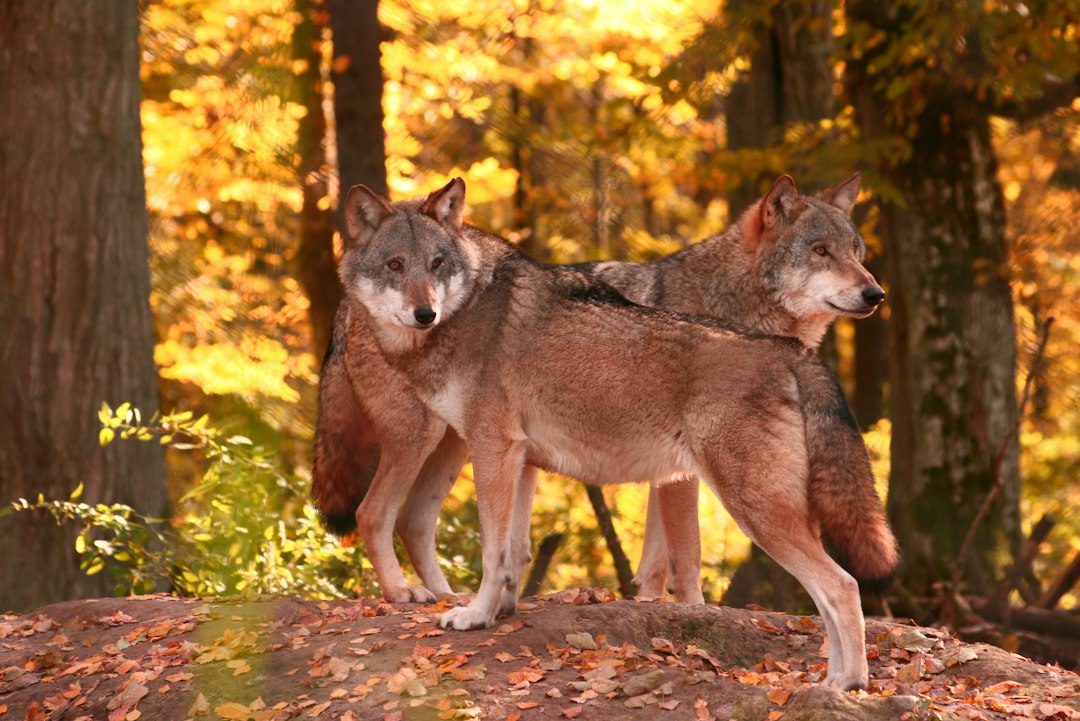
The primal landscape of prehistoric Earth was a theatre of survival, where the breath of the wild mingled with the nascent sparks of human ingenuity. In this ancient arena, two species, the wolf and Homo sapiens, carved out their existences, often in direct competition, yet destined for a profound and transformative relationship. Their initial encounters were likely fraught with tension, a delicate dance of predator and potential prey, of rival hunters vying for the same resources. The wolf, a master of pack coordination and a formidable predator, represented a significant threat to early human groups, just as early humans, with their developing tool use and cooperative strategies, posed a challenge to wolf packs. This era of wild rivalry, however, was not an endpoint but a prelude to an extraordinary shift, a transition that would fundamentally alter the trajectory of both species and, indeed, the course of natural history.
The Shadow of the Wolf: A Perilous Coexistence
The early human experience was inextricably linked to the formidable presence of the wolf. These intelligent canids, with their keen senses and pack mentality, were apex predators in many of the same environments that early humans inhabited. The threat they posed was multifaceted, extending beyond direct predation to the subtler, yet equally impactful, competition for food. Understanding the wolf’s position in this early ecosystem is crucial to appreciating the magnitude of the eventual alliance.
Wolves as Competitors for Scarce Resources
For hominins navigating the Paleolithic, securing sustenance was a daily struggle. They relied on hunting, scavenging, and gathering, activities that often brought them into direct conflict with other carnivores, among whom the wolf was a prominent figure. Wolf packs were highly effective hunters, capable of bringing down large prey like deer, bison, and mammoths. This meant that when early humans encountered a kill, it was often the case that a wolf pack had preceded them or was actively feeding on the carcass. Such encounters were perilous; a lone human or a small group would have been at a severe disadvantage against a coordinated pack of wolves. The wolves’ ability to detect carrion from afar, their stamina in pursuit, and their coordinated attacks made them formidable rivals. Even when not directly attacking humans, wolves could deplete game populations in an area, further straining the resources available to early human hunter-gatherers. This constant competition fostered an ingrained wariness, a deep-seated awareness of the wolf’s power and potential danger. It is plausible that early human folklore and oral traditions were replete with tales of wolf encounters, solidifying their image as a significant threat in the human psyche.
The Evolutionary Arms Race: Early Humans and the Wolf
The presence of wolves undoubtedly acted as a selective pressure on early human populations. Those individuals and groups who possessed better strategies for avoiding wolf predation, who were more adept at defending their kills, or who could find ways to deter wolves would have had a survival advantage. This could have driven the development of certain traits and behaviors. For instance, the inclination for early humans to live in larger, more cohesive social groups might have been partly an evolutionary response to the threat of large predators like wolves. A larger group offered more eyes to watch for danger, more individuals to defend against an attack, and the potential for collective action, such as using fire or coordinated noise to scare away predators. The development of more sophisticated hunting techniques, which allowed humans to bring down larger prey more efficiently, could also have been influenced by the need to secure food before wolves did. Furthermore, the development of rudimentary shelters and defensive structures, such as fortified encampments or strategically chosen cave dwellings, would have been essential in mitigating the risk of nocturnal wolf attacks. This constant interplay, this silent evolutionary dance, honed the survival instincts of both species, shaping their behaviors and physical adaptations over millennia.
Wolves have played a significant role in the history of human civilization, particularly in how they interacted with early humans. These interactions likely laid the groundwork for the domestication of dogs, which became essential companions and helpers to humans. For a deeper understanding of the evolution of relationships between species and how they impact human development, you might find the article on the evolution of trade agreements insightful. It explores how cooperation and mutual benefit have shaped societies, much like the bond between wolves and early humans. You can read more about it here: The Evolution of NAFTA and USMCA.
The Seeds of Fascination: Observing the Wild Canine
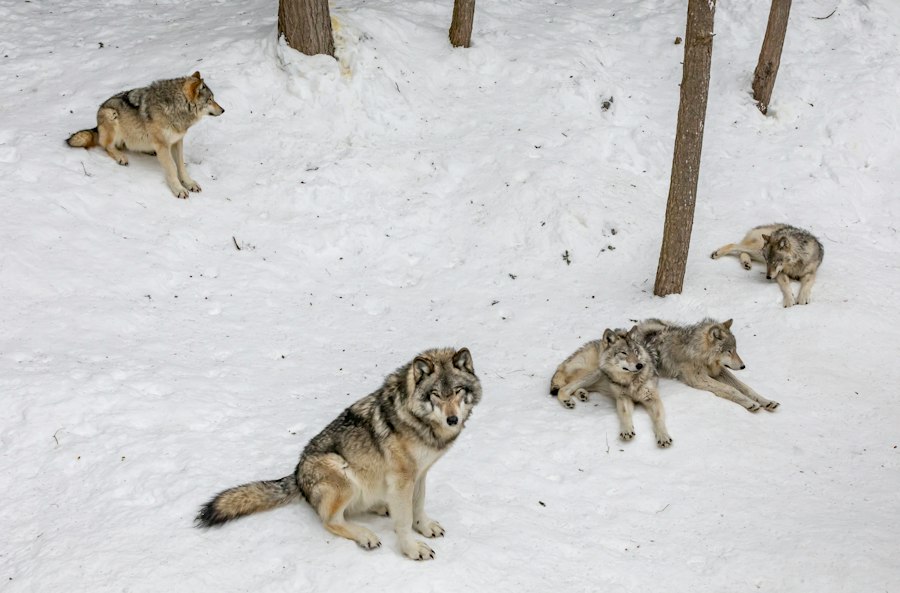
Despite the inherent dangers, the relationship between early humans and wolves was not solely defined by fear and competition. A more nuanced and ultimately crucial element was the power of observation. As humans honed their own tracking and hunting skills, they would have inevitably observed the wolves, their behaviors, their strengths, and their weaknesses. This sustained observation, driven by a mixture of caution and curiosity, laid the groundwork for a profound shift in their perception.
Learning from the Masters of the Hunt
Wolves are renowned for their exceptional hunting prowess, a skill honed over millions of years of evolution. Early humans, themselves developing into sophisticated hunters, would have had ample opportunity to witness and learn from these highly efficient predators. The wolves’ understanding of prey behavior – their ability to track animals across vast distances, to anticipate migration patterns, and to exploit terrain to their advantage – would have been a living textbook for observant humans. They would have seen how wolves worked together, coordinating their movements in a hunt, using flanking maneuvers and strategic ambushes. This collective hunting strategy, a hallmark of wolf packs, was likely a source of both awe and strategic insight for early human groups. Humans, by observing these techniques, could have adapted and refined their own cooperative hunting strategies. They might have learned to mimic wolf tactics, using the natural environment to their advantage, or to interpret wolf pack behavior to predict prey movements. The keen senses of wolves, their ability to detect subtle changes in the wind or ground vibrations, also offered valuable lessons in sensory perception and environmental awareness. This observational learning was not a conscious act of imitation but a gradual assimilation of knowledge, born from shared ecological space and the universal drive for survival.
Recognizing the Pack’s Social Intricacies
Beyond their hunting skills, wolves possess a complex social structure that would have been observable to early humans. The dominance hierarchies, the communication signals, and the cooperative bonds within a wolf pack are all observable phenomena. Humans, with their own burgeoning social complexities, would have likely recognized parallels and differences in these social dynamics. The loyalty, the care for young, and the communal defense of the pack would have stood out. Observing how wolves supported each other, how they shared resources within the pack, and how they collectively protected their territory could have offered early humans insights into the benefits of strong social cohesion. This recognition of shared social needs and behaviors, even across species, could have chipped away at the perception of wolves as purely instinct-driven monsters. It allowed for a nascent understanding of their world, a world where cooperation and social bonds were essential for survival, mirroring, in many ways, the needs of early human societies. This nascent understanding, fostered through observation, was a crucial precursor to the eventual shift from adversarial to symbiotic.
The Crossroads of Chance: The Emergence of a Truce
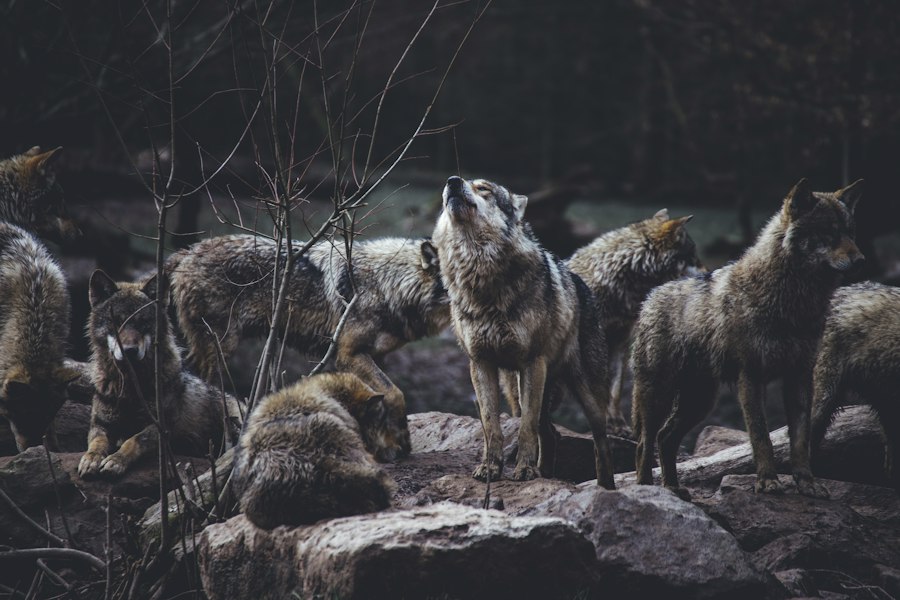
The transition from wild rivals to cooperative allies was not a sudden event but a gradual process, likely initiated by chance encounters and mutualistic opportunities. These early interactions, driven by pragmatic needs and the opportunistic nature of both species, sowed the seeds of a relationship that would redefine the evolutionary landscape.
Accidental Encounters and Shared Scavenging Grounds
The vastness of the prehistoric landscape meant that wolves and early humans would have frequently encountered each other, not always in direct confrontation, but sometimes in proximity. Wolves, being opportunistic scavengers as well as hunters, would have been attracted to the remains of kills made by other predators, including potentially those made by early humans. Similarly, early humans, when scavenging for food, might have encountered wolf packs feeding on carcasses. These encounters were likely initially tense, with humans employing deterrents like noise, fire, or displays of aggression. However, over time, a degree of tolerance may have emerged, especially in areas where prey was abundant. Humans might have learned to coexist with wolf packs at kill sites, maintaining a respectful distance, while wolves, recognizing that humans posed less of a threat when not actively hunting, might have tolerated their presence. These shared scavenging grounds could have become areas of uneasy truce, where both species profited from the leftovers of nature.
The “Scavenging Hypothesis” and Early Foraging Strategies
One prominent theory suggests that the domestication of the dog, the wolf’s descendant, began with wolves being attracted to human settlements due to the readily available food scraps. Early human campsites, with their discarded food remnants, would have been an irresistible draw for opportunistic wolves. The less fearful, more curious, and perhaps bolder wolves, those with a predisposition to approach human habitation, would have been the first to exploit this new food source. This “scavenging hypothesis” posits that humans, in turn, may have tolerated these less-wary wolves for various reasons. The wolves could have acted as an early warning system against other, more dangerous predators. Their presence might have also deterred other scavengers that were more of a nuisance or threat to humans. Over generations, this casual proximity and tolerance would have favored wolves with a less aggressive disposition towards humans, leading to a gradual genetic divergence. These early “proto-dogs” would have become more accustomed to human presence, forming a loose, symbiotic relationship.
The Unspoken Alliance: Mutual Benefits Take Root
As chance encounters evolved into more stable interactions, the tangible benefits of this emerging alliance began to solidify. For both wolves and early humans, the advantages of cooperation, however rudimentary at first, became increasingly evident, leading to a mutually beneficial relationship that would have profound long-term consequences.
Wolves as Early Guardians and Sentinels
The development of a more tolerant relationship with wolves offered early humans significant protective advantages. Wolves possess acute hearing and an excellent sense of smell, making them highly sensitive to approaching threats, whether they be other predators or unfamiliar human groups. As these less-wary wolves began to linger around human camps, they effectively became living alarm systems. Their alerted barks, growls, or agitated movements would have served as an early warning signal to humans, allowing them time to prepare for danger, defend their camps, or even take evasive action. This protective function would have been particularly valuable during the night, when human senses are diminished, and the risk of predation increases. The mere presence of wolves, even at a distance, might have discouraged other, more dangerous carnivores from approaching human settlements, thereby creating a safer living environment. This mutualistic relationship, where wolves provided an invaluable early warning system and humans offered a consistent food source, represented a significant evolutionary advantage for both species.
Humans as Providers of Food and Safety for Wolf Offspring
The reciprocal benefits of this alliance were equally crucial for the wolves. The consistent availability of food scraps from human campsites eliminated the constant pressure of the hunt for these opportunistic scavengers. This access to a reliable food source would have allowed wolf packs to conserve energy, improve their reproductive success, and potentially increase the survival rates of their pups. Furthermore, by associating with humans, certain wolf lineages may have found a degree of protection for their young. While direct human intervention to protect wolf pups is unlikely in the earliest stages, the general reduction in interspecific conflict around human settlements could have provided a safer environment for wolf dens. A wolf pack that was less fearful of humans and more integrated into the human periphery might have been less vulnerable to attacks from rival wolf packs or other predators that were more directly threatened by human presence. This mutualistic exchange, where humans provided consistent sustenance and a degree of indirect protection, allowed for the flourishing of certain wolf populations and set the stage for the more profound domestication process.
Wolves have long been a subject of fascination when it comes to their interactions with early humans, as these relationships played a significant role in the development of both species. Research suggests that the domestication of wolves into dogs may have stemmed from mutual benefits, such as hunting and protection. For a deeper understanding of how these dynamics evolved, you might find it interesting to explore this article that discusses various environmental challenges faced by early human societies, including the impact of changing landscapes on their interactions with wildlife. You can read more about it here.
The Dawn of Domestication: A Shared Future Forged
| Interaction Aspect | Description | Evidence/Metric | Time Period |
|---|---|---|---|
| Mutual Hunting | Wolves and early humans cooperated in hunting large prey, increasing success rates. | Archaeological sites showing wolf remains alongside human hunting tools; isotopic analysis indicating shared prey. | Approx. 30,000 – 15,000 years ago |
| Domestication Beginnings | Early humans began domesticating wolves, leading to the evolution of dogs. | Genetic studies showing divergence of dogs from wolves around 20,000 – 40,000 years ago. | 20,000 – 40,000 years ago |
| Scavenging Behavior | Wolves scavenged from human kills, benefiting from leftovers. | Bone markings on animal remains indicating wolf scavenging near human campsites. | Throughout Paleolithic era |
| Protection and Warning | Wolves may have provided early humans with warnings of danger or predators. | Ethnographic analogies and behavioral studies of wolf-human interactions in modern hunter-gatherer societies. | Likely ongoing during early human settlements |
| Competition | Competition for resources sometimes led to conflict between wolves and humans. | Evidence of wolf remains with injuries consistent with human weapons; cave paintings depicting wolves as threats. | Throughout prehistoric times |
The culmination of this long and complex interaction was the process of domestication, a transformative journey that fundamentally altered the evolutionary paths of both wolves and humans, ushering in a new era of interspecies cooperation. This was not merely about coexistence; it was about the deliberate or accidental selection and breeding of traits that fostered a deeper bond and a shared destiny.
The Gradual Divergence: From Wild Canid to Domestic Companion
The process of dog domestication is thought to have been a gradual, multi-stage phenomenon rather than a single event. It likely began with the aforementioned scavenging wolves, drawn to the periphery of human settlements. Over countless generations, natural selection, combined with what may have been some degree of human intentional selection, favored wolves with specific traits. Those wolves that were less fearful, more adaptable to human presence, and perhaps even exhibited more docile temperaments would have had a greater chance of survival and reproduction in this human-influenced environment. Humans, recognizing the advantages of these less-threatening canids, might have actively encouraged their presence, perhaps by leaving out food, or even by keeping pups that showed promising traits. This could have led to the development of distinct wolf populations that were genetically and behaviorally differentiated from their wild counterparts, laying the foundation for the domestic dog. The wild wolf, while continuing its existence in natural environments, began to diverge, giving rise to a new species intrinsically linked to humanity.
The Transformative Impact on Human Societies and Natural Ecosystems
The domestication of the wolf, resulting in the creation of the dog, had a profound and lasting impact on human societies. Dogs became invaluable partners in hunting, their keen senses and stamina augmenting human capabilities. They served as guardians, providing an unparalleled level of security for human settlements and livestock. They even became companions, offering emotional support and contributing to the social fabric of early human communities. The presence of dogs likely influenced human migration patterns, as they could assist in managing livestock and protecting nomadic groups. Furthermore, the domestication of dogs had ripple effects on the natural environment. Their presence around human settlements could have altered the behavior of prey animals and even influenced the dynamics of wild wolf populations. This partnership, born from ancient rivalry and nurtured through observation and mutualistic opportunism, represents one of the most successful and enduring interspecies alliances in the history of life on Earth, a testament to the power of adaptation, cooperation, and the shared journey of evolution.
