The Whispers of the Past: Mammoth Bone Huts as Archeological Puzzles
The skeletal remains of the colossal mammoth, once a dominant inhabitant of the Pleistocene landscapes, continue to offer profound insights into the lives of our ancient human ancestors. Among the most compelling archaeological discoveries are the remnants of structures built almost entirely from mammoth bones. These are not merely piles of bones; they represent deliberate, organized constructions, offering a tangible link to the ingenuity and resourcefulness of Upper Paleolithic peoples. Reconstructing these ancient dwellings from fragmented evidence is a complex, multidisciplinary endeavor, requiring a deep understanding of paleontology, archaeology, and experimental archaeology. The very act of deciphering these bone huts necessitates a careful excavation, meticulous analysis of spatial relationships, and a constant dialogue between the archaeological record and modern scientific understanding. What emerges is not just an image of shelter, but a window into the social structures, technological capabilities, and environmental adaptations of hunter-gatherer societies that thrived in challenging ice-age conditions.
The rarity of well-preserved mammoth bone hut sites, coupled with the inherent fragility of ancient organic materials and the passage of millennia, means that each discovery is a treasure trove of information. These sites are often found in Eastern Europe and Siberia, areas that were extensively inhabited by mammoth populations and their human counterparts. The sheer scale of the bones used—femurs, tibias, skulls, and scapulae—speaks to the significant effort involved in their acquisition, transportation, and assembly. The placement of these bones, the evidence of hearths, and the distribution of associated artifacts all contribute to a growing body of knowledge about how these structures functioned as more than just protection from the elements. They were likely central to social gatherings, the processing of game, and perhaps even held symbolic or ritualistic significance. The ongoing quest to reconstruct these ephemeral dwellings is a testament to the enduring power of archaeological inquiry to bring the distant past into sharp focus.
Recent advancements in archaeology have shed light on the reconstruction of mammoth bone huts, providing insight into the lives of prehistoric communities. These structures, made from the bones of woolly mammoths, offer a glimpse into the ingenuity and resourcefulness of early humans in harsh environments. For a broader understanding of how ancient societies adapted to their surroundings and the implications of such adaptations in the context of modern conflicts, you might find it interesting to explore the article on global power struggles and proxy wars. You can read more about it here: The Rise of Proxy Wars: A Global Power Struggle.
Unearthing the Giants’ Legacy: Site Discovery and Excavation

The discovery of mammoth bone hut sites is often a serendipitous event, unearthed by chance during construction projects, agricultural work, or geological surveys. However, a growing understanding of paleogeography and the behavior of both mammoths and early humans has also led to more targeted explorations. Regions known to have supported large mammoth populations during the Pleistocene, particularly those with evidence of early human activity, are prime candidates. The identification of scattered mammoth bones in an area often prompts closer inspection, and the recognition of deliberate patterns in their arrangement is the critical turning point from a natural accumulation to a potential human construction.
Once a site is identified, the excavation process demands extreme precision and care. Unlike more recent archaeological contexts, Pleistocene layers are often deeply buried and can be fragile. The sheer size and weight of mammoth bones present unique logistical challenges. Specialized equipment may be necessary for their safe removal and stabilization. Archaeologists employ detailed mapping techniques, often using total stations and GPS, to record the precise location and orientation of every bone fragment, artifact, and feature, such as hearths or postholes. This granular data is crucial for understanding the original layout and potential construction methods of the bone huts.
The Delicate Dance of Preservation: Challenges in the Field
The preservation of mammoth bone hut sites is a significant concern. Many are exposed to the elements, subject to erosion, and vulnerable to disturbance. Permafrost in some regions offers a remarkable preservation medium, keeping organic materials intact for tens of thousands of years. However, as global temperatures rise, these ancient deposits are increasingly threatened. Excavation itself can accelerate deterioration if not undertaken with the utmost care. Archaeologists must employ a range of techniques to stabilize fragile bone, prevent further decay of organic materials, and meticulously document the context before any removal. This often involves working in adverse weather conditions and in remote locations, adding further layers of complexity to the fieldwork.
Spatial Archaeology: Reading the Footprints of Builders
The spatial arrangement of mammoth bones within a site is paramount to understanding its construction and function. Archaeologists analyze the distribution of different bone elements (e.g., skulls, long bones, ribs) and their orientations. Are the bones arranged in discernible walls, supporting structures, or clustered in specific areas? The presence of hearths, often evidenced by charcoal, ash, and heated stones, indicates areas of activity within the dwelling. The proximity of artifacts, such as stone tools, bone implements, and beads, to specific bone arrangements provides clues about the activities that took place within and around the hut. This spatial analysis allows researchers to move beyond simply identifying a structure to inferring its purpose, the number of occupants, and the division of labor involved in its construction and use.
Decoding the Blueprints: Reconstructing Habitation Models
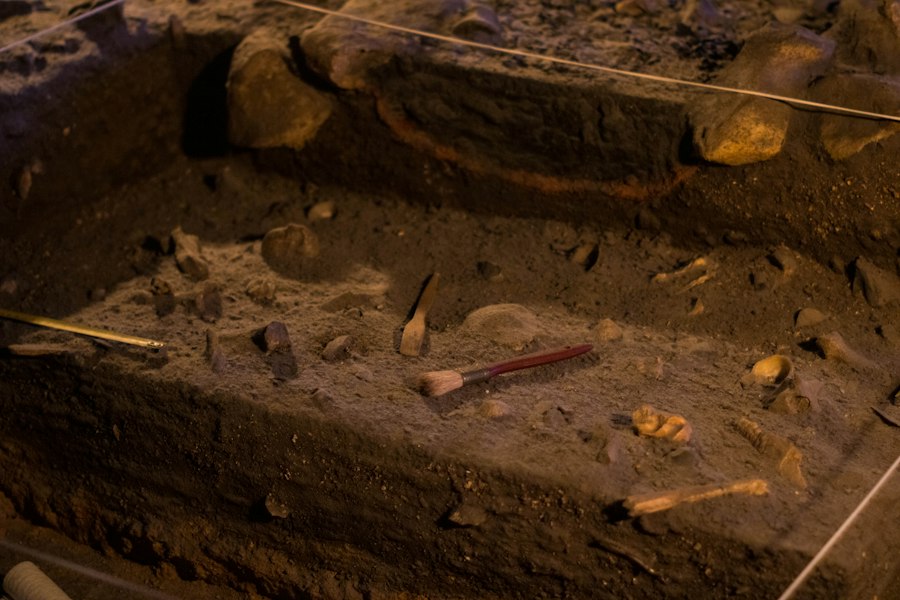
The reconstruction of mammoth bone huts is not a straightforward process of simply reassembling excavated fragments. It involves a sophisticated interplay of archaeological evidence, comparative analysis, and scientific modeling. Archaeologists must consider the available bone elements, their sizes, shapes, and how they might have interlocked or been supported. The understanding of mammoth anatomy is crucial here, as different bones would have served distinct structural roles.
The Engineering of Giants: Structural Principles in Ice Age Dwellings
When reconstructing the structural principles of mammoth bone huts, archaeologists consider how the massive bones could have been used to create a stable dwelling. Long bones like femurs and tibias, often found vertically or at an angle, likely formed the primary supports, akin to upright posts. Ribs and scapulae, with their curved shapes, could have been used to form walls or roofing elements, creating a protective enclosure. Skulls, being large and relatively flat, might have served as foundational elements or even contributed to roof structures. The sheer weight of these bones would have provided a degree of stability, but it is probable that earth, turf, hides, or even smaller bones were used to fill gaps and create a more weather-tight environment. Evidence of postholes or indentations in the ground can further inform hypotheses about how these bones were anchored.
Analogues from the Past and Present: Ethnographic and Experimental Insights
To fill the gaps in the archaeological record, researchers often turn to ethnographic studies of contemporary or historically documented indigenous groups who lived in harsh environments and utilized animal bones for construction. While direct parallels may be limited, the principles of resourcefulness, material adaptation, and structural ingenuity can offer valuable insights. Furthermore, experimental archaeology plays a vital role. Archaeologists and builders have recreated sections of mammoth bone huts using replica bones or actual mammoth bones (where ethically sourced and legally obtained) to test construction techniques, assess structural integrity, and understand the labor involved. These experiments help validate or refine theoretical models, providing a tangible understanding of the challenges and solutions faced by Paleolithic builders.
Virtual Reconstructions: Digital Tools for Ancient Architecture
In recent years, digital technologies have revolutionized the process of reconstructing ancient structures. Photogrammetry and 3D laser scanning of excavated sites allow for the creation of highly detailed digital models of the bone arrangements. These digital environments enable archaeologists to virtually manipulate and assemble bone elements, test different structural configurations, and visualize the potential form of the complete hut. Computer-aided design (CAD) software further facilitates the creation of detailed architectural plans and simulations, offering a dynamic way to explore hypotheses about construction methods and interior layouts. These virtual reconstructions are invaluable for communicating complex findings to both academic audiences and the public.
Life Within the Mammoth Walls: Daily Activities and Social Dynamics
The reconstruction of mammoth bone huts is not solely about understanding their construction; it is also about inferring the lives of the people who inhabited them. The artifacts found within and around these structures, coupled with the spatial organization of the bones, provide tantalizing clues about daily activities, social organization, and the broader cultural landscape of the Upper Paleolithic.
Hearth and Home: Evidence of Domestic Life and Resource Management
The presence of hearths is a consistent feature in many mammoth bone hut sites, indicating their primary role as shelters for warmth and cooking. The distribution of charcoal, ash, and heat-altered stones within a hut provides evidence of where fires were located and how they were managed. Analysis of faunal remains found in association with these hearths can reveal dietary patterns, indicating the types of animals hunted and how their carcasses were processed. Evidence of tool manufacturing, such as flint knapping debitage or bone working debris, suggests that these huts were not just places of rest but also served as workshops for crafting essential tools and implements. The careful curation of resources, including the reuse of bone for tools or fuel, speaks to a sophisticated understanding of their environment and a strong emphasis on sustainability.
Beyond Survival: Social Hubs and Ritualistic Spaces
The sheer size of some mammoth bone huts, and the effort required to construct them, suggests they served purposes beyond mere individual shelter. They may have functioned as communal gathering places, providing protection and warmth for entire groups or bands. The presence of multiple hearths within a single structure, or distinct activity areas, could indicate a degree of internal organization and shared living. Furthermore, some scholars propose that these structures may have held symbolic or ritualistic significance. The prominent use of mammoth bones, animals that were likely revered for their strength and importance to survival, could have imbued these dwellings with a deeper cultural meaning. The placement of specific bone elements, or the inclusion of certain artifacts in specific locations, might hint at ceremonies or practices that are now lost to us but were integral to the social fabric of these communities.
Material Culture and Cognitive Abilities: Tools, Art, and Thought
The artifacts recovered from mammoth bone hut sites are a direct window into the cognitive abilities and technological sophistication of their builders. The diversity of stone tools, ranging from scrapers and awls for hide processing to projectile points for hunting, demonstrates a mastery of lithic technology. Bone tools, such as needles for sewing or spatulas for scraping, further highlight their adaptability and resourcefulness. The discovery of personal adornments, like beads made from shells or animal teeth, suggests a capacity for symbolic expression and an appreciation for aesthetics. In some instances, engraved or carved bone fragments have been found, hinting at the nascent stages of artistic expression. These material remains, when analyzed in conjunction with the architectural evidence, paint a complex picture of societies that were not solely focused on survival but also engaged in activities that fostered social cohesion, cultural identity, and intellectual development.
Recent advancements in mammoth bone hut reconstruction archaeology have shed light on the living conditions of prehistoric peoples in cold climates. These ancient structures, made from the bones of woolly mammoths, provide valuable insights into the resourcefulness of early humans. For those interested in exploring more about ancient geography and its implications on human settlement, a fascinating article discusses how a 1513 map reveals an ice-free Antarctica, suggesting that this continent may have once supported life. You can read more about this intriguing discovery in the article here.
Echoes of the Ice Age: Broader Implications for Human History
| Metric | Value | Unit | Description |
|---|---|---|---|
| Estimated Age | 25,000 | Years BP | Approximate age of mammoth bone huts from Upper Paleolithic period |
| Number of Bones Used | 60-100 | Bones | Typical quantity of mammoth bones used in hut construction |
| Hut Diameter | 4-6 | meters | Average diameter of reconstructed mammoth bone huts |
| Bone Weight | 50-100 | kg per bone | Estimated weight range of individual mammoth bones used |
| Number of Archaeological Sites | 5 | Sites | Known sites with mammoth bone hut remains in Eastern Europe |
| Reconstruction Duration | 3-6 | Months | Time taken for archaeological teams to reconstruct a hut |
| Carbon Dating Range | 24,000-26,000 | Years BP | Radiocarbon dating range for bones used in huts |
| Estimated Occupancy | 4-6 | People | Number of individuals the hut could shelter |
The study of mammoth bone huts extends far beyond the individual structures themselves. They offer profound insights into critical junctures in human history, including the development of complex social structures, adaptation to challenging environments, and the evolution of human ingenuity.
The Dawn of Sedentism and Social Complexity: Rethinking Paleolithic Lifestyles
The construction of substantial, seemingly long-term dwellings like mammoth bone huts challenges older perceptions of Upper Paleolithic hunter-gatherers as exclusively nomadic and transient. While mobility was undoubtedly a key component of their lifestyle, the presence of these impressive structures suggests periods of more settled habitation, or at least the establishment of significant base camps. This, in turn, implies a greater degree of social organization, requiring coordination, division of labor, and possibly established leadership roles to undertake such ambitious building projects. The sharing of resources and the cooperative effort involved in constructing and maintaining these communal shelters would have fostered stronger social bonds and a more complex social structure than previously imagined for such early periods.
Climate Change Adaptation: Resilience in a Frozen World
Mammoth bone huts stand as powerful testaments to human adaptability in the face of extreme climatic conditions. The Pleistocene was characterized by fluctuating glacial and interglacial periods, and the ability of these early peoples to thrive in icy landscapes speaks volumes about their resilience. The utilization of readily available, yet massive, resources like mammoth bones demonstrates a keen understanding of their environment and an ingenious approach to solving the fundamental need for shelter. These structures provided vital protection from harsh winds, snow, and frigid temperatures, allowing human populations to persist and even expand into previously inhospitable regions. The lessons learned from these ancient adaptations remain relevant today as we confront the challenges of ongoing climate change.
A Legacy of Innovation: The Precursors to Modern Shelters
The construction techniques employed in mammoth bone huts, even if rudimentary by modern standards, represent a significant leap in human innovation. They demonstrate an understanding of structural principles, material properties, and the application of collective effort to achieve a common goal. These early shelters can be seen as precursors to more complex architectural forms, laying the groundwork for the development of more sophisticated building technologies throughout human history. The ability to manipulate and utilize large-scale natural materials for shelter is a fundamental aspect of human technological advancement, and the mammoth bone huts offer a compelling early example of this transformative capacity. They are a reminder that even in the deepest reaches of prehistory, humans were actively shaping their environment and developing solutions that would ultimately lead to the complex societies and technologies we know today.