The Ghosts of the Grasslands: Unraveling the Steppe Bison and Its Modern Descendants
The vast, windswept plains of North America once thrummed with the heavy tread of immense herds. Among these iconic grazers, the steppe bison, Bison priscus, stands as a titan of the past, a creature that dominated the Pleistocene landscapes with its sheer size and formidable presence. While no longer roaming the earth, its legacy echoes in the modern bison species that continue to grace the North American prairies. Understanding the extinct steppe bison and its relationship to its living kin offers a fascinating glimpse into the power of evolution, adaptation, and the dynamic history of North American fauna. This article delves into the world of Bison priscus, exploring its evolutionary journey, its key differences from modern bison, and the scientific insights gained from studying this magnificent extinct ungulate.
The fascinating comparison between extinct steppe bison and modern bison sheds light on the evolutionary adaptations of these majestic creatures in response to changing climates. For a deeper understanding of how environmental factors have influenced species survival throughout history, you can explore the article on the role of climate in the Bronze Age collapse, which provides valuable insights into how climate shifts impact both human and animal populations. To read more about this topic, visit this article.
Unearthing the Ancestors: The Evolutionary Tale of the Steppe Bison

The story of the steppe bison is intrinsically linked to the dramatic climatic shifts and geological upheavals of the Pleistocene epoch, often referred to as the Ice Age. As glaciers advanced and retreated, vast expanses of grassland, known as the “mammoth steppe,” stretched across Eurasia and North America, creating an ideal habitat for large herbivores. It is within this environment that Bison priscus emerged, a species that would eventually become the direct ancestor of the bison we know today.
Origins and Geographic Spread
The evolutionary origins of Bison priscus are believed to lie in Asia, with evidence suggesting its lineage diverged from earlier bison ancestors sometime during the Middle Pleistocene. From its Asian homeland, the steppe bison embarked on a remarkable migratory journey. Utilizing land bridges, such as Beringia, that periodically connected continents during periods of lower sea levels, Bison priscus ventured into North America, becoming a dominant megafaunal component of the continent’s ecosystems. Fossils and archeological evidence paint a picture of widespread distribution, with Bison priscus found across the northern United States, Canada, and into Mexico, flourishing in the expansive grasslands and open woodlands of the time. Its presence was not confined to a single region; rather, it occupied a vast ecological niche, adapting to a variety of steppe environments.
The Mammoth Steppe Ecosystem
The environment in which Bison priscus thrived was significantly different from modern grasslands. The mammoth steppe was a complex and diverse biome characterized by cold, dry conditions and a rich variety of grasses, sedges, and herbaceous plants. This ecosystem supported a rich array of megafauna, including mammoths, woolly rhinoceroses, horses, and camels, creating a dynamic and competitive landscape. Bison priscus played a crucial role within this ecosystem, acting as a primary consumer, shaping plant communities through its grazing habits, and providing a vital food source for large predators like the dire wolf and the American lion. The sheer abundance of this species suggests a highly successful adaptation to the conditions of the mammoth steppe, demonstrating an ability to efficiently process the available vegetation and navigate the challenging climate.
Extinction and the Transition to Modern Bison
The demise of Bison priscus is thought to have occurred around the end of the Pleistocene, approximately 10,000 to 11,000 years ago, coinciding with the dramatic climate warming that marked the end of the Ice Age. This period witnessed significant ecological restructuring, including the disappearance of many megafaunal species. The exact reasons for the steppe bison’s extinction are still debated among scientists, but a combination of factors likely contributed. These include the alteration and fragmentation of its specialized steppe habitat due to climate change, increased competition from other herbivores as ecosystems shifted, and potentially the impact of human hunting, which intensified with the arrival and expansion of early human populations in North America. However, Bison priscus did not disappear entirely without leaving a successor. Evidence strongly suggests that the modern bison species, Bison bison (plains bison) and Bison athabascae (wood bison), evolved directly from Bison priscus, representing a remarkable instance of evolutionary continuity and adaptation to a changing world.
Anatomical Giants: Key Physical Differences
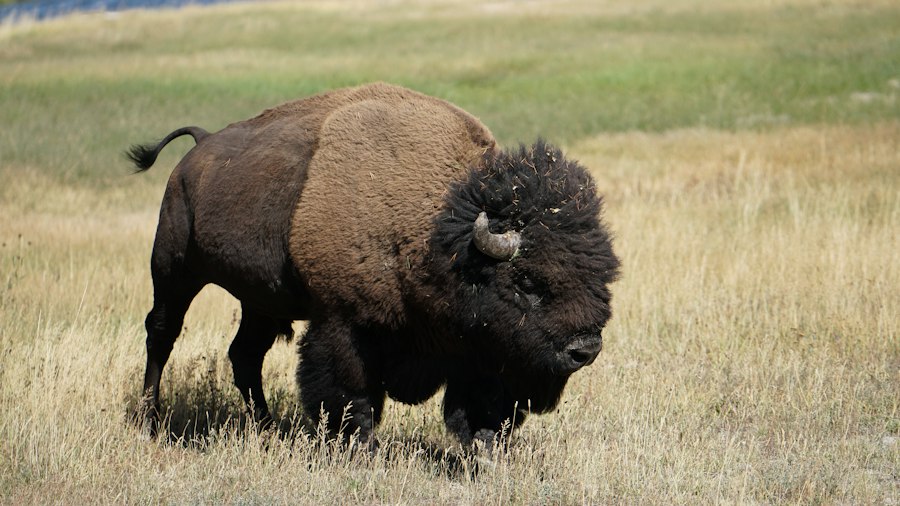
The physical characteristics of Bison priscus set it apart from its modern descendants, reflecting adaptations to its specific paleoenvironment and evolutionary trajectory. While sharing a common ancestry, the steppe bison was a creature built for the challenges and opportunities of the Pleistocene.
Size and Robustness
One of the most striking differences lies in the sheer size and robustness of Bison priscus. While modern bison are undeniably large and powerful animals, fossils indicate that the steppe bison was often even larger and more heavily built. Skulls, in particular, reveal a more massive and robust structure, often with longer and more widely spreading horns. This greater size may have conferred advantages in terms of thermoregulation in colder climates, defense against larger Pleistocene predators, and the ability to traverse challenging terrain. The immense skeletal remains unearthed from ancient sites speak to an animal of exceptional mass and power, a true giant of its time.
Horn Morphology
The horns of Bison priscus are a defining feature and a significant point of divergence from modern bison. Generally, the horns of the steppe bison were longer, thicker at the base, and possessed a more pronounced outward and upward curve, often with a wider span. This distinctive horn shape is a recurring characteristic in fossils attributed to Bison priscus across its vast geographic range. While modern plains bison typically have shorter, more curved horns and wood bison have longer, straighter horns, the steppe bison’s weaponry was a testament to its evolutionary path. These impressive cranial appendages likely served multiple purposes: defense against predators, display during courtship rituals, and possibly for intraspecific combat to establish dominance within herds. The sheer scale and shape of these horns undoubtedly contributed to the awe-inspiring image of the steppe bison.
Cranial Features
Beyond the horns, subtle but significant differences are observed in the cranial morphology of Bison priscus. The overall skull structure tends to be more massive and elongated compared to modern bison. The nasal bones are often broader, and the frontal bones can be more prominent, indicating adaptations related to the skull’s structural integrity and the attachment of powerful muscles for foraging and defense. These cranial distinctions, while perhaps not immediately apparent to a casual observer, are critical for paleontologists in identifying and differentiating between extinct and extant bison species, providing clues about their diets, behavior, and evolutionary relationships.
Ecological Niches: Diet and Habitat Preferences
The environment in which Bison priscus lived was a critical determinant of its ecological role, dictating its diet and habitat preferences, which in turn differed from those of modern bison.
Grazing Habits and Diet
As a large herbivore, Bison priscus was primarily a grazer, feeding on the abundant grasses and sedges of the mammoth steppe. Its powerful jaws and strong teeth were well-suited for processing tough, fibrous vegetation. While the broad categories of its diet likely overlap with modern bison, the specific plant species available in the Pleistocene grasslands would have varied. The presence of a wider array of herbaceous plants and forbs in the mammoth steppe may have offered a more diverse dietary palette than is available in many modern grasslands, which have been significantly altered by human activity and climate change. The sheer scale of steppe bison herds would have had a profound impact on the vegetation, acting as ecosystem engineers that shaped the landscape through their continuous grazing.
Habitat Adaptations
The steppe bison was a creature of open, expansive landscapes. It thrived in the vast, treeless or sparsely wooded grasslands of the Pleistocene. These environments offered ample foraging opportunities and provided open escape routes from predators. While modern plains bison are also associated with grasslands, they can also be found in more varied habitats, including woodlands and savannas, particularly under human management. Wood bison, on the other hand, are more adapted to boreal forests and woodlands. Bison priscus, however, was intrinsically linked to the drier, colder, and more expansive steppe environments. Its physiology and behavior were likely finely tuned to these specific conditions, including its ability to cope with harsh winters and fluctuating food availability. The success of Bison priscus across such a wide geographical range suggests a remarkable adaptability to the diverse conditions found within the broad definition of the mammoth steppe.
The fascinating differences between extinct steppe bison and modern bison reveal much about the adaptations of these majestic creatures to their environments. Recent studies have shed light on how climate change and human activity have influenced their evolution and survival. For a deeper understanding of how historical climate events have shaped the ecosystems these animals inhabited, you can explore this related article on glacial history and its impact on species, found here. This connection highlights the intricate relationship between climate and biodiversity throughout history.
Evidence from the Past: Fossil Discoveries and Scientific Insights
| Metric | Extinct Steppe Bison (Bison priscus) | Modern Bison (Bison bison) |
|---|---|---|
| Time Period | Pleistocene Epoch (approx. 2.6 million to 11,700 years ago) | Present (Holocene Epoch) |
| Geographic Range | Eurasian Steppe (Europe to Siberia) | North America (Great Plains, parts of Canada and Mexico) |
| Average Weight | Up to 1,000 kg (2,200 lbs) | 450 to 1,000 kg (1,000 to 2,200 lbs) |
| Height at Shoulder | Approximately 1.8 meters (6 feet) | 1.5 to 1.8 meters (5 to 6 feet) |
| Horn Shape | Long, curved horns extending outward and upward | Shorter, curved horns pointing upward and inward |
| Coat | Thick, shaggy winter coat adapted to cold steppe climate | Thick winter coat, less shaggy than steppe bison |
| Diet | Grazing on grasses and herbaceous plants | Primarily grasses, some shrubs and herbs |
| Extinction Status | Extinct (disappeared around 10,000 years ago) | Extant (currently living species) |
| Genetic Relation | Ancestor to modern bison species | Descendant species, evolved from steppe bison |
The study of Bison priscus relies heavily on the fossil record, with archaeological and paleontological discoveries providing invaluable data for understanding this extinct giant.
Key Fossil Sites and Discoveries
Fossils of Bison priscus have been unearthed from numerous sites across North America, Europe, and Asia, offering a rich tapestry of information. Significant discoveries include remarkably well-preserved skulls, teeth, and skeletal remains found in permafrost deposits in Siberia, which provide exceptional insights into the animal’s anatomy and even soft tissues in some cases. In North America, important fossil finds have been made in cave deposits, riverbeds, and ancient lake sediments. The famous “Bison skull” sites, often yielding large numbers of fossilized skulls and horns, have been crucial for understanding population dynamics and horn morphology. These discoveries, accumulated over centuries, have allowed scientists to piece together the evolutionary story and physical characteristics of this remarkable extinct species.
Paleoecological Reconstruction
By studying the fossilized remains of Bison priscus in conjunction with other contemporaneous flora and fauna, scientists can reconstruct the paleoecological conditions of the Pleistocene. The presence and distribution of steppe bison fossils indicate the extent and nature of the mammoth steppe biome. Analyzing the isotopic composition of their teeth and bones can reveal details about their diet and the types of plants they consumed, providing clues about the plant communities that sustained them. Furthermore, the association of Bison priscus fossils with other extinct megafauna helps scientists understand predator-prey relationships and the overall structure of these ancient ecosystems. The study of steppe bison, therefore, is not just about understanding one species but about unlocking a broader understanding of Earth’s past environments and the intricate web of life they supported.
Evolutionary Link to Modern Bison
The most profound scientific insight derived from the study of Bison priscus is its undeniable role as the direct ancestor of modern bison. Genetic analysis of ancient DNA extracted from fossilized bones has provided compelling evidence for this evolutionary link, confirming hypotheses formed from morphological comparisons. Understanding the transition from Bison priscus to Bison bison and Bison athabascae allows scientists to trace the genetic and physical changes that occurred over millennia as bison adapted to changing environments and landscapes following the end of the last Ice Age. This lineage highlights the adaptive capacity of the bison genus and provides a tangible connection between the megafauna of the Ice Age and the iconic wildlife of today.
Legacy in the Present: The Continuing Story of Bison
Although Bison priscus is a creature of the distant past, its evolutionary legacy continues to thrive in the form of modern bison. The story of these animals is not just one of ancient giants but also of resilience and conservation.
The Divergence of Plains and Wood Bison
As previously mentioned, the extinction of Bison priscus did not mark the end of bison in North America. Instead, it served as the evolutionary crucible from which the two extant species, the plains bison (Bison bison) and the wood bison (Bison athabascae), emerged. While closely related and capable of interbreeding, these species exhibit distinct adaptations. Plains bison, the more widely recognized subspecies, are characterized by their stockier build and more rounded humps, ideally suited for the open grasslands. Wood bison, larger and with a higher shoulder hump, are more adapted to the boreal forests and parklands of northern Canada. The divergence between these two lineages represents a fascinating example of adaptive radiation, where a common ancestor diversified to exploit different ecological niches in a post-Pleistocene world.
Conservation Efforts and the Future of Bison
The journey of modern bison has been a tumultuous one. By the late 19th and early 20th centuries, both plains and wood bison had been driven to the brink of extinction due to rampant hunting and habitat loss. Fortunately, dedicated conservation efforts have led to a remarkable recovery. Today, bison populations are managed in national parks, wildlife refuges, and on private lands across North America. These conservation initiatives aim to ensure the long-term survival of both species, restore their ecological roles, and reconnect people with these magnificent symbols of the North American wilderness. The ongoing efforts to conserve bison serve as a powerful reminder of the impact humans can have, both negatively and positively, on the natural world, and the importance of learning from the past to protect the future. The story of Bison priscus, from its dominance of the Ice Age steppes to its evolutionary descendants, is a testament to the enduring power of life and the intricate dance of adaptation and survival.