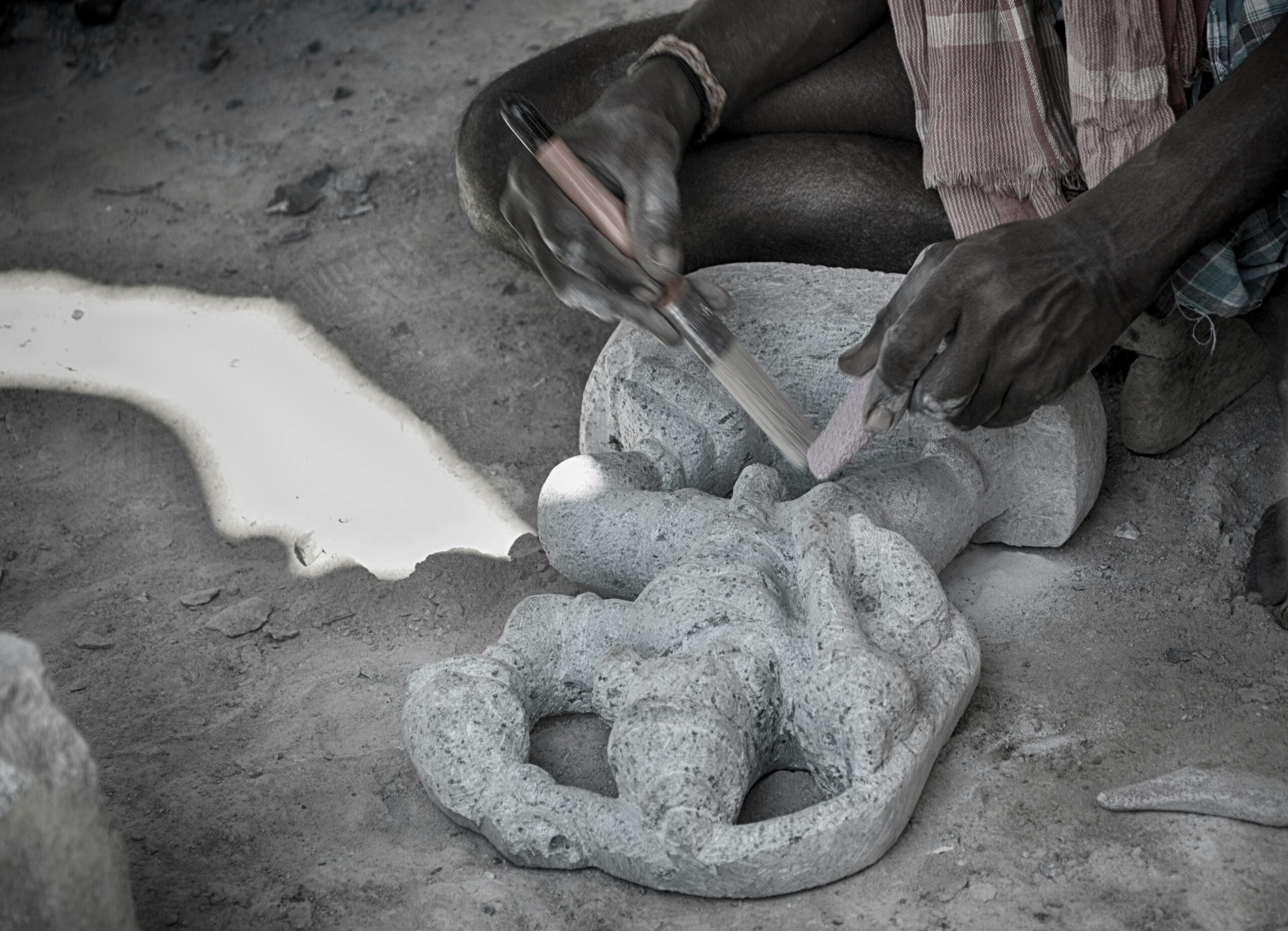
The creation of a primitive stone tool was a cornerstone of early human technological development, a practice that allowed our ancestors to hunt, process food, build shelter, and defend themselves. This intricate process, honed over millennia, involved a deep understanding of stone properties, keen observation, and remarkable manual dexterity. Far from being a simple act of smashing rocks together, it was a sophisticated craft demanding patience, precision, and a clear vision of the desired outcome. To truly grasp the essence of this ancient art, one must delve into the systematic, step-by-step methodology employed by our distant relatives.
The Foundation: Selecting the Right Stone
The success of any stone tool hinges on the initial choice of raw material. Early hominins were not indiscriminately picking up any rock; they possessed an intuitive, and later learned, knowledge of which stone types possessed the ideal characteristics for flaking and shaping. This selection process was crucial, as the wrong material could lead to unpredictable breakage, an inability to achieve a sharp edge, or a tool that would quickly degrade. The understanding of lithic properties was a fundamental aspect of survival and innovation.
Identifying Suitable Lithologies
The primary characteristic sought in a stone for toolmaking was its conchoidal fracture. This is the property by which a stone breaks in a curved, shell-like manner, producing sharp, predictable edges. Rocks that fracture irregularly or shatter into angular fragments were generally unsuitable. Among the most favored materials were:
- Flint and Chert: These are microcrystalline varieties of quartz, known for their uniform grain structure and excellent conchoidal fracture. They can be flaked into incredibly sharp edges, making them ideal for cutting and scraping tools. Their prevalence in certain geographical areas made them a highly sought-after resource for prehistoric toolmakers. The predictable nature of their fracture allowed for greater control during the knapping process.
- Obsidian: This volcanic glass, while beautiful and capable of producing the sharpest edges known, is also brittle and can be difficult to control during flaking. Its use was often more specialized, perhaps for fine cutting tasks where extreme sharpness was paramount. Its availability was geographically restricted to volcanic regions.
- Quartzite: This metamorphic rock is a harder, more durable form of sandstone. While not as uniformly fractured as flint, it could still be used to produce effective tools, particularly for heavier-duty tasks where resistance to wear was important. Its toughness made it suitable for tools that required significant force.
- Basalt: Another volcanic rock, basalt offered a balance of durability and flaking potential. It was often used for tools that required a robust edge, such as axes or hammers. Its tendency to be more granular than flint meant that the edges might not be as uniformly sharp, but they would be more resistant to chipping.
Assessing Stone Quality
Beyond the type of rock, the quality of the individual stone nodule or cobble was also critical. Toolmakers looked for:
- Homogeneity: A uniform internal structure was preferred, free from internal cracks, fissures, or inclusions that could cause the stone to break unpredictably during the flaking process.
- Absence of Weathering: Surface weathering could weaken the stone and make it more prone to shattering rather than controlled flaking. Freshly quarried or naturally broken pieces were generally better.
- Size and Shape: The size and general shape of the raw material influenced the potential types of tools that could be made. Larger pieces could be used for larger tools, while smaller pieces might be reserved for smaller blades or scrapers. A somewhat rounded or elongated shape often provided a good starting point for striking.
The selection phase was an active observation, a mental mapping of the potential held within a piece of rock. It was a foundational step that dictated the entire subsequent process and the eventual utility of the finished tool.
The study of primitive stone tool making processes provides valuable insights into the cognitive and motor skills of early humans. Understanding how these tools were crafted not only sheds light on the technological advancements of our ancestors but also on their survival strategies. For a deeper exploration of ancient technologies and their implications, you can read the article on ancient power sources, which discusses the broader context of early human innovation. Check it out here: Unraveling the Debate on Ancient Power Sources.
The Art of Percussion: Shaping the Stone

Once a suitable stone was selected, the process of shaping began, primarily through percussion. This involved striking the core stone with another object, a hammerstone, to remove flakes. This technique, known as knapping, is the heart of primitive stone tool manufacture. The skill lay in the controlled application of force and the precise angle of impact to detach flakes of the desired size, shape, and thickness.
Direct Percussion: The Primary Method
Direct percussion was the most common and fundamental technique. It involved holding the core stone (the piece being shaped) in one hand and striking it directly with a hammerstone held in the other. The effectiveness of direct percussion depended on several factors:
- Hammerstone Selection: Hammerstones themselves needed to be carefully chosen. They were typically rounded river cobbles or dense pieces of stone that were durable and provided a good weight and surface for striking. The hardness of the hammerstone relative to the core stone was also a consideration; a hammerstone that was too soft would be damaged, while one that was too hard could lead to overly aggressive flaking and loss of control.
- Striking Angle and Force: The angle at which the hammerstone struck the core was paramount. A shallow angle (around 30-45 degrees) would tend to remove thin, broad flakes, suitable for creating sharp edges. A steeper angle might detach smaller, more irregular pieces. The force of the strike also needed to be calibrated; too little force would not detach a flake, while too much could shatter the core or remove a flake that was too large and uncontrolled.
- Platform Preparation: A critical element of controlled flaking was the preparation of the platform – the surface on the core where the hammerstone would strike. This often involved striking the edge of the core to create a more robust and angled surface. Sometimes, a small piece of bone or antler might be used to abrade or grind the platform, making it more resistant to crushing and facilitating a cleaner detachment of the flake. This preparation allowed the force to be more effectively transmitted to the stone, promoting predictable fracture.
- Following the Lithic “Grain”: Experienced knappers learned to “read” the stone, understanding its internal structure and the direction in which it was most likely to fracture. They would strike in a way that followed this natural tendency, allowing for more predictable and controlled flake removal. This was an intuitive understanding developed through extensive practice and observation.
Indirect Percussion: For Finer Control
For more delicate work or when greater precision was required, indirect percussion was employed. This method involved placing a punch, typically made of antler or bone, between the hammerstone and the core. The hammerstone would then strike the punch, which in turn transmitted a focused force to the core.
- The Role of the Punch: The punch acted as an intermediary, concentrating the force of the hammerstone onto a smaller area of the core. This allowed for much finer control over flake removal, enabling the creation of thinner flakes, more precise shaping, and sharper edges than could be achieved with direct percussion alone.
- Precision in Placement: The knapper had to carefully position the punch on the core to ensure the force was applied at the exact point desired. This required a high degree of hand-eye coordination and an intimate understanding of how the stone would react.
- Applications: Indirect percussion was particularly useful for finishing tools, thinning down large flakes into bifacial tools (tools worked on both sides), and creating very fine serrations or retouching edges. It represented a more advanced stage of lithic technology.
The act of percussion was a dynamic conversation between the toolmaker and the stone. Each strike was a calculated risk, an attempt to coax the desired form from the raw material. It was a process of trial and error, of learning from each successful and unsuccessful flake.
The Refinement: Retouching and Finishing

Once the basic shape of the tool was achieved through percussion, a crucial stage of refinement followed: retouching. This involved carefully removing small flakes from the edge of the tool to sharpen it, strengthen it, or give it a specific form. This process was as vital as the initial shaping, as it determined the tool’s efficacy and durability.
Edge Sharpening and Shaping
Retouching was a more controlled and delicate process than the initial flaking. It was about fine-tuning the cutting or working edge.
- Pressure Flaking: The most common retouching technique was pressure flaking. This involved using a pointed tool, often made of antler, bone, or even a hard wood, to press against the edge of the tool and detach small, precise flakes. The pressure was applied with controlled force, allowing for remarkable accuracy in shaping the edge. This method was ideal for creating very fine, sharp edges suitable for cutting and scraping.
- Nibbling: In some instances, a “nibbling” technique might be used, where very small, repeated pressures were applied along the edge to create a serrated or saw-like effect. This was particularly useful for tools designed to cut fibrous materials or process hides.
- Bilateral Retouching: For tools designed for cutting from multiple directions, like knives or scrapers, retouching was often applied to both sides of the edge, creating a symmetrical and highly effective cutting surface. This involved carefully alternating pressure flaking on opposing sides to maintain balance and a keen edge.
Strengthening and Durability
Beyond sharpening, retouching also played a role in strengthening the tool’s edge.
- Angle Adjustment: By removing small flakes at specific angles, the toolmaker could create a more robust edge that was less prone to chipping or breaking during use. This involved creating a slightly steeper angle on the edge for greater durability.
- Platform Preparation for Retouch: Similar to core preparation, the edge itself might be slightly abraded or prepared before pressure flaking to ensure clean, predictable flake removal. This ensured that the retouching process itself did not weaken the overall structure of the tool.
Creating Specialized Edges
The retouching process allowed for the creation of specialized edges tailored to specific tasks.
- Scrapers: For scrapers, the edge would be blunted and often made broader and more robust, suitable for scraping hides or wood.
- Saws and Knives: For cutting tasks, extremely sharp and often finely serrated edges would be meticulously worked.
- Drills and Awls: The very tip of a tool could be sharpened to a fine point for piercing or drilling.
The retouching phase transformed a functional object into a finely tuned instrument. It was a testament to the toolmaker’s patience and their ability to visualize the tool’s ultimate purpose and then meticulously craft it to meet those demands.
From Core to Tool: Diverse Forms Emerge
The process of stone toolmaking was not monolithic; it produced a remarkable diversity of forms, each designed for a specific function. The initial core stone, through careful flaking and retouching, could be transformed into a range of implements that significantly expanded the capabilities of early humans. The distinction between a “core tool” (where the core itself is the tool) and a “flake tool” (where the detached flake is the tool) is fundamental to understanding this diversity.
Core Tools: The Original Form
Core tools are those where the main mass of the original stone is shaped into the implement.
- Handaxes and Cleavers: These are perhaps the most iconic of early stone tools, characterized by their bifacial working (shaped on both sides). Handaxes are typically teardrop or oval shaped, with a pointed tip and a wider butt. Cleavers have a broad, straight cutting edge across the width of the tool. These were multi-purpose tools, used for butchering carcasses, digging, chopping wood, and even as defensive weapons. Their creation involved extensive bifacial flaking, gradually reducing the core to the desired shape and creating a sharp, durable edge.
- Pebble Tools (Choppers): Simpler in form, pebble tools are made by removing a few flakes from a single side or edge of a natural cobble or pebble. This creates a rudimentary cutting or chopping edge. These were among the earliest forms of stone tools, requiring minimal skill to produce but still providing a significant advantage over using unworked stones. They were effective for tasks like smashing bones to access marrow or breaking open nuts.
Flake Tools: Harnessing the Waste
Often, the detached flakes themselves, rather than the core, were the desired products. These flakes, possessing a naturally sharp edge, could be used directly or further modified.
- Scrapers: Flakes with a somewhat blunted or convex edge were ideal for scraping. These could be used to remove flesh from hides, clean wood, or process plant materials. Retouching was often applied to create a more robust and effective scraping edge.
- Knives and Blades: Thin, sharp flakes, particularly those with straight edges, could be used as knives for cutting meat, plants, or other materials. Further retouching could create more refined cutting edges or even serrations. Some very long and thin flakes were considered “blades” and represented a significant advancement in cutting technology.
- Drills and Awls: Flakes with a pointed projection or those that could be retouched to create a sharp point were used for piercing and drilling. These were invaluable for tasks such as making holes in leather for clothing or shelter construction, or for working with bone and wood.
The Interplay Between Core and Flake
It is important to note that the creation of flake tools was intrinsically linked to the production of core tools. The process of shaping a handaxe, for instance, generated numerous flakes. Early toolmakers likely used both the core and the resulting flakes, maximizing the utility of every piece of raw material. This efficiency was a hallmark of their ingenuity. The development of specialized tools, from rough choppers to finely crafted blades, reflects a growing understanding of the diverse needs of early human life and the sophisticated application of lithic technology to meet those needs.
The study of primitive stone tool making processes reveals fascinating insights into early human ingenuity and survival strategies. Researchers have documented various techniques used by our ancestors, highlighting the importance of these tools in daily life. For a deeper understanding of how ancient technologies can influence modern innovations, you might find it interesting to explore this related article on lunar power grid development. This connection between past and future technologies underscores the continuous evolution of human creativity. You can read more about it here.
The Enduring Legacy: A Window into the Past
| Step | Description | Tools Used | Time Required | Materials | Outcome |
|---|---|---|---|---|---|
| 1. Selecting Raw Material | Choosing suitable stones like flint, chert, or obsidian for tool making | Hands, simple digging sticks | 30 minutes to several hours | Raw stone nodules | Quality stone suitable for knapping |
| 2. Core Preparation | Shaping the stone core to prepare for flake removal | Hammerstones | 1-2 hours | Selected stone core | Prepared core with striking platform |
| 3. Flake Removal (Knapping) | Striking the core to remove flakes that can be used as tools | Hammerstones, antler billets | 2-4 hours | Prepared core | Sharp flakes and shaped core tools |
| 4. Retouching | Refining edges of flakes or tools for specific functions | Pressure flakers (bone, antler) | 1-3 hours | Flakes or core tools | Sharpened and shaped tools |
| 5. Usage and Maintenance | Using tools and periodically resharpening or reshaping | Various depending on task | Varies | Finished stone tools | Functional cutting, scraping, or piercing tools |
The meticulous process of primitive stone tool making, from the careful selection of stone to the nuanced art of retouching, offers an invaluable glimpse into the cognitive abilities, problem-solving skills, and technological prowess of our early ancestors. These seemingly simple objects are far more than just ancient artifacts; they are tangible evidence of innovation, adaptation, and the fundamental drive to shape the world for survival and progress. The study of these tools continues to provide profound insights into the lives and minds of those who came before us.
Cognitive and Behavioral Insights
The creation of stone tools demanded a level of foresight, planning, and understanding of cause and effect that is distinctly human.
- Abstract Thought and Planning: Selecting the right stone, envisioning the final tool, and executing a series of controlled strikes to achieve that vision required abstract thought and long-term planning. Hominins had to anticipate the outcome of each flake removal and understand the properties of the stone to achieve their desired result. This was not merely instinctual behavior; it involved a deliberate and sequential approach to problem-solving.
- Learning and Transmission of Knowledge: The knowledge and skills required for stone toolmaking were not innate. They were learned through observation, practice, and direct instruction. The widespread distribution and evolution of tool technologies across different hominin species and geographical locations indicate the successful transmission of this knowledge across generations, a crucial step in cultural evolution. The standardized forms of many tool types suggest a shared understanding of best practices.
- Manual Dexterity and Hand-Eye Coordination: The precise movements required for knapping, particularly for indirect percussion and retouching, highlight the development of advanced manual dexterity and hand-eye coordination. These skills were not only essential for toolmaking but likely contributed to other areas of survival, such as hunting and foraging.
Technological Evolution and Adaptation
The evolution of stone tool technologies mirrors the evolutionary journey of hominins, demonstrating a continuous process of adaptation and innovation.
- The Oldowan Revolution: The earliest stone tool industries, like the Oldowan (dating back over 2.5 million years), characterized by simple choppers and flakes, represent a fundamental leap in hominin capabilities. These tools allowed for access to new food sources, such as bone marrow and processed meat, which likely played a significant role in brain development and further evolutionary changes.
- The Acheulean Advancement: The emergence of bifacial tools like handaxes and cleavers in the Acheulean period (around 1.7 million years ago) signifies a more complex manufacturing process and a greater degree of standardization. These tools were more versatile and efficient, reflecting a growing understanding of design and functionality.
- Specialization and Diversity: Later industries, such as the Mousterian and Upper Paleolithic technologies, show increasing specialization, with a wider array of tool types designed for specific tasks, including projectile points for hunting and finely crafted blades for various uses. This specialization indicates a deeper understanding of environmental challenges and the development of more sophisticated solutions.
The Enduring Significance of Lithic Technology
The study of stone tools remains a cornerstone of paleoanthropology and archaeology.
- Dating and Chronology: The presence and types of stone tools found at archaeological sites are crucial for dating those sites and establishing chronological sequences of human occupation and technological development. Different tool industries are associated with different time periods and hominin species.
- Reconstructing Past Lifestyles: By analyzing the form, function, and wear patterns on stone tools, researchers can reconstruct the diet, hunting strategies, subsistence patterns, and daily activities of ancient populations. The evidence of butchery marks on animal bones, for example, directly links specific tools to specific food processing activities.
- Understanding Human Ingenuity: Ultimately, primitive stone tool making stands as a powerful testament to human ingenuity and our innate drive to innovate and adapt. It is a story of how our ancestors, with limited resources, harnessed their intelligence and skills to transform the natural world, laying the groundwork for all subsequent technological advancements. The legacy of these ancient craftspeople is etched in stone, a durable reminder of our evolutionary journey.