The archaeological record is a testament to the ingenuity of early humans, preserved in the form of artifacts that speak of their daily lives, their challenges, and their triumphs. Among the most fundamental of these artifacts are the tools that allowed our ancestors to shape their world. For millennia, two primary material sources dominated the toolkit: stone and bone. While both served the crucial purpose of extending human capabilities, stone flake tools and bone tools represent distinct technological traditions, each with its own strengths, weaknesses, and the stories they tell about the past. Understanding the key differences between these tool types is paramount to accurately interpreting hominin behavior, cognitive abilities, and environmental interactions.
The Genesis of Stone Flake Technology
The advent of stone tool manufacture, particularly the systematic creation of flakes, marks a pivotal moment in human evolution. This technology, often referred to as the Oldowan and later the Acheulean and Mousterian industries, demonstrates a sophisticated understanding of material properties and a foresight in envisioning a desired outcome. The process of creating a stone flake tool is one of deliberate fracture. A suitable stone, known as a core, is subjected to controlled impacts from another stone (a hammerstone) or, in later periods, antler or bone. This impact causes the stone to fracture, detaching pieces known as flakes. These flakes, often possessing sharp edges, could then be used directly or further modified.
The Uniqueness of Lithic Raw Materials
The choice of stone was not arbitrary. Early toolmakers sought materials that exhibit conchoidal fracture – a property where the stone breaks in a predictable, shell-like manner, producing sharp, predictable edges. Volcanic rocks like chert, flint, obsidian, and quartzite were highly prized for their predictable fracture patterns. The glassy nature of obsidian, for instance, allows for the creation of incredibly thin and sharp edges, superior to steel in some respects. The availability and distribution of these lithic raw materials profoundly influenced settlement patterns and trade networks, as communities would often establish themselves near sources of suitable stone.
The Art of Percussion and Pressure Flaking
The creation of stone flake tools involved two primary techniques: percussion flaking and pressure flaking. Percussion flaking, the more ancient method, involves striking the core or flake with a hammerstone. This could be direct percussion, where the hammerstone directly contacts the core, or indirect percussion, where an intermediary element (like a punch) is used. Pressure flaking, a more refined technique that emerged later, involves using a pointed tool to carefully push off small sliver-like flakes from the edge of a tool. This allowed for much greater control over the shape and edge characteristics, enabling the production of more specialized tools like points and scrapers with finer retouching. The skill required for both techniques signifies a developed motor control and a growing understanding of fracture mechanics.
In the ongoing debate within archaeology regarding the efficiency and utility of stone flake tools versus bone tools, it is fascinating to explore how different materials influenced ancient manufacturing techniques. A related article discusses the logistical advantages of manufacturing in Mexico, shedding light on how resource availability can shape tool production methods. For more insights on the strategic aspects of material use in tool-making, you can read the article here: Maximizing Efficiency: Logistical Advantages of Manufacturing in Mexico.
The Versatility of Bone as a Tool Material
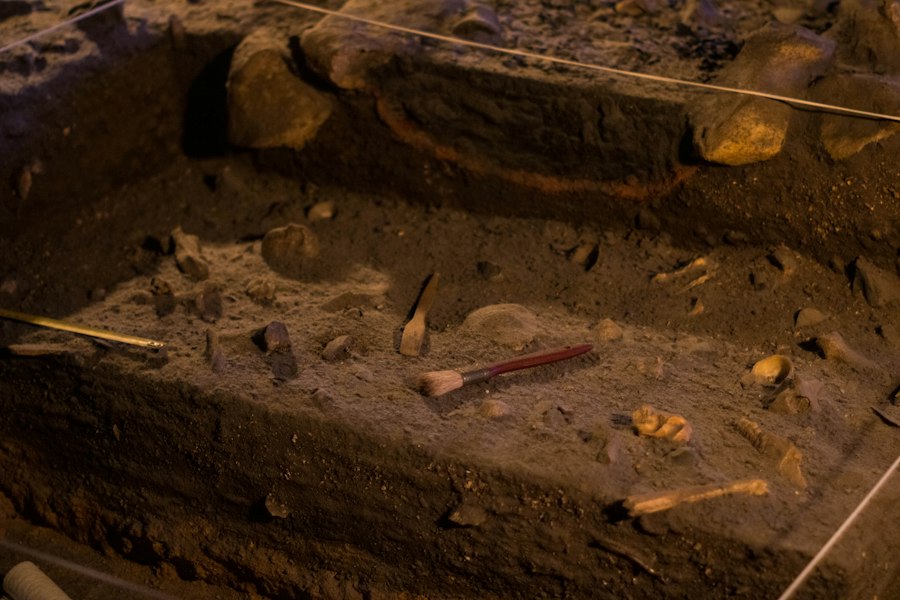
Bone, in contrast to stone, offers a different set of material properties and manufacturing possibilities. While stone tools are the product of fracture, bone tools are often the product of modification, shaping, and sometimes even the utilization of naturally occurring forms. The inherent toughness and resilience of bone, particularly long bones from large mammals, made it a valuable resource for a variety of tools.
Harnessing the Properties of Bone
Bone possesses a layered structure and a degree of flexibility that stone lacks. This makes it less prone to catastrophic breakage under certain stresses. Furthermore, bone can be carved, ground, polished, and drilled with relative ease, allowing for the creation of more intricate and specialized implements. The organic nature of bone also means it can degrade more readily than stone, making its preservation in the archaeological record more sensitive to environmental conditions. However, in anaerobic or arid environments, remarkably well-preserved bone tools have been unearthed, offering invaluable insights.
Techniques for Bone Tool Manufacture
The manufacture of bone tools involved a range of techniques. Simple tools might involve breaking a bone to access marrow or to create a rough cutting edge. More complex tools required deliberate shaping. This could involve scraping and grinding with abrasive materials like sand and grit to refine the shape and smooth the surface. Drilling holes, for instance, to create awls or projectile points with sockets for hafting, was another significant technique. The use of fire was also sometimes employed to harden bone tools. The ability to work bone suggests a nuanced understanding of its malleality when subjected to different treatments.
Functional Distinctions and Applications
The inherent differences in material properties between stone and bone led to distinct functional applications and advantages for each type of tool. While there was overlap in their uses, certain tasks were better suited to one material over the other.
Stone: The Domain of Cutting and Scraping
Stone flake tools, with their sharp edges, excelled at tasks requiring cutting, scraping, and chopping. These included butchering carcasses, skinning animals, woodworking, and processing plant materials. The ability to resharpen or replace a damaged flake was a significant advantage in the harsh environments faced by early hominins. A dull stone edge could be quickly rejuvenated or a new flake detached from a core, ensuring a continuous supply of cutting tools. The sheer variety of flake forms – from heavy duty chopping tools to fine retouching flakes – highlights the adaptability of lithic technology.
Bone: The Realm of Puncturing, Piercing, and Polishing
Bone tools, on the other hand, often found their niche in tasks requiring puncturing, piercing, and finer manipulation. Awls made from sharpened bone were essential for piercing hides to create clothing or shelters. Needles, also crafted from bone, allowed for more sophisticated sewing. Hooks, made from curved bone fragments, were used for fishing. Polished bone tools, such as spatulas or smoothers, likely served in tasks related to processing materials or as personal adornments. The ability to create smooth, non-abrasive surfaces with bone made it ideal for certain delicate operations where stone might be too coarse.
Preservation and Interpretation in the Archaeological Record
The contrasting properties of stone and bone also profoundly influence their preservation and, consequently, their interpretation by archaeologists. The very durability that makes stone so valuable as a medium for early human expression also presents challenges in understanding its precise use and manufacture. Conversely, the more ephemeral nature of bone requires careful archaeological excavation and interpretation to extract its full story.
The Enduring Legacy of Stone
Stone tools, due to their inherent durability, are the most common type of artifact found at early human sites. They are incredibly resilient to the ravages of time and environmental degradation. However, this very resilience can sometimes obscure the subtle details of their manufacture and use. Microscopic analysis of wear patterns is often required to determine the specific tasks a stone flake was used for. Furthermore, the identification of heat alteration or the presence of specific minerals can provide clues about the environment or geological sources from which the stone was obtained.
The Delicate Story of Bone Artifacts
Bone tools are far more susceptible to decomposition, especially in acidic or wet soils. Their preservation is often contingent on specific environmental conditions, such as rapid burial in anaerobic sediments or arid desert environments. When bone tools are found, they offer a unique window into the immediate post-mortem processing of animals and the nuanced ways in which organic materials were utilized. The patina and wear on bone tools can be indicative of different manufacturing techniques and use-wear, but often require specialized expertise for accurate interpretation. The presence of cut marks on animal bones often precedes the discovery of bone tools themselves, signaling the possibility of their use.
In the study of early human technology, the debate between the use of stone flake tools and bone tools has garnered significant attention among archaeologists. While stone tools are often celebrated for their sharpness and durability, bone tools offer unique advantages in terms of flexibility and the ability to create intricate designs. For a deeper understanding of how these tools reflect the evolution of human ingenuity, you might find it interesting to explore this related article on space management, which discusses the innovative approaches humans take in various fields. You can read more about it here.
Cognitive and Technological Evolution Reflected in Tool Choice
| Aspect | Stone Flake Tools | Bone Tools |
|---|---|---|
| Material Composition | Silicate minerals (flint, chert, obsidian) | Animal bones (long bones, ribs, antlers) |
| Manufacturing Technique | Knapping to produce sharp flakes | Carving, grinding, and polishing |
| Typical Uses | Cutting, scraping, piercing, hunting | Awls, needles, fishhooks, harpoons |
| Durability | High resistance to wear and breakage | Less durable, prone to breakage and decay |
| Preservation in Archaeological Record | Frequently preserved due to hardness | Less frequently preserved; depends on burial conditions |
| Chronological Range | From Lower Paleolithic (~2.5 million years ago) to recent | More common in Upper Paleolithic and later periods |
| Technological Complexity | Varies from simple flakes to complex blades | Often specialized and finely crafted |
| Associated Cultures | Many prehistoric cultures worldwide | Often linked to hunter-gatherer and fishing communities |
The shift in emphasis or the coexistence of stone flake and bone tools at different archaeological sites and time periods offers a profound insight into the evolving cognitive abilities and technological sophistication of hominins. The choice of material and the methods employed in tool manufacture are not merely practical decisions; they reflect a developing understanding of the world and the capacity for abstract thought and planning.
The Emergence of Lithic Planning
The creation of well-formed stone flakes, particularly those from later periods like the Acheulean and Mousterian, demonstrates a significant degree of planning and foresight. The knapper had to conceptualize a desired form and then execute a series of actions to achieve it, anticipating the fracture patterns of the stone. This suggests an ability to hold a mental template and to implement a multi-step process. The standardization of certain tool types within these industries further points to shared knowledge and cultural transmission of technological traditions. The development of bifacial tools, where both sides of a stone are shaped, is a testament to this advanced cognitive capacity.
The Nuances of Bone Working and Material Integration
The working of bone, while perhaps appearing less dramatic than the fracturing of stone, reveals a different dimension of cognitive development. The ability to shape, polish, and create intricate forms like needles or hooks requires a fine motor control and an understanding of how to manipulate an organic material. It also speaks to a more integrated approach to resource utilization, where different parts of an animal carcass were exploited for their unique properties. The selection of specific bone types – long bones for sturdiness, ribs for curvature, vertebrae for potential use as beads – indicates a sophisticated knowledge of animal anatomy and the suitability of different skeletal elements for various purposes. The development of composite tools, where bone elements were hafted onto stone or wood shafts, further highlights this increasing complexity in technological integration and problem-solving. The ability to fashion tools for specialized tasks, such as sewing, suggests the development of more complex social structures and the need for finer manipulation of materials to improve comfort and survival.
