
Throughout history, humanity has made remarkable strides in technology, yet there remain enigmas that challenge our understanding of ancient civilizations.
These unexplained ancient technologies not only spark curiosity but also raise questions about the knowledge and skills possessed by our ancestors.
As you delve into these mysteries, you will discover that they often blur the lines between myth and reality, leaving you to ponder the true extent of human ingenuity. The allure of these ancient technologies lies in their ability to inspire wonder and speculation. You might be intrigued by how these artifacts have survived the ravages of time, often remaining intact despite the passage of centuries.
Each discovery invites you to explore the possibilities of what ancient civilizations could achieve, challenging the conventional narrative of technological evolution. As you embark on this journey through time, you will encounter a range of fascinating artifacts that continue to baffle historians, archaeologists, and scientists alike.
Key Takeaways
- Ancient civilizations created advanced technologies that remain unexplained today.
- The Antikythera Mechanism is an ancient analog computer used to predict astronomical events.
- The Baghdad Battery suggests early knowledge of electrical principles.
- The Nazca Lines and Stone Spheres of Costa Rica showcase mysterious large-scale geometric and sculptural works.
- Artifacts like the Voynich Manuscript and the Piri Reis Map challenge our understanding of ancient knowledge and cartography.
The Antikythera Mechanism: A Mysterious Ancient Computer
One of the most astonishing examples of ancient technology is the Antikythera Mechanism, often referred to as the world’s first analog computer. Discovered in a shipwreck off the coast of Greece in 1901, this intricate device dates back to around 150-100 BCE. As you examine its complex gears and dials, you may find yourself questioning how such advanced engineering was possible in an era often thought to be primitive.
The mechanism was designed to predict astronomical positions and eclipses for calendrical and astrological purposes, showcasing a level of sophistication that was not believed to exist at that time. The craftsmanship involved in creating the Antikythera Mechanism is nothing short of extraordinary. You might be amazed to learn that it contains over 30 gears, all meticulously crafted from bronze and housed in a wooden frame.
The precision with which these gears interlock demonstrates a deep understanding of mechanical principles that would not be seen again until the Middle Ages. As you explore this ancient artifact further, you may wonder about the knowledge lost to time—what other technologies did the ancients possess that have yet to be uncovered?
The Baghdad Battery: An Ancient Electrical Device
Another intriguing artifact that has captured your imagination is the Baghdad Battery, also known as the Parthian Battery. Discovered in Iraq and dating back to around 250 BCE, this ancient device consists of a clay jar containing a copper cylinder and an iron rod. When filled with an acidic substance, such as vinegar or lemon juice, it is believed that this device could generate a small electric current.
You may find it fascinating that this simple construction could potentially represent one of the earliest forms of electrochemical cells. The implications of the Baghdad Battery are profound. If it indeed functioned as a source of electricity, it raises questions about the extent of electrical knowledge in ancient times.
You might ponder whether this technology was used for practical purposes, such as electroplating or healing, or if it was merely a curiosity. The mystery surrounding its true function continues to fuel debates among historians and scientists alike, leaving you to wonder about the potential applications of electricity in ancient civilizations.
The Nazca Lines: Mysterious Geometric Designs in Peru
As you journey further into the realm of unexplained ancient technology, you cannot overlook the Nazca Lines in Peru. These enormous geoglyphs etched into the desert floor depict various shapes, including animals, plants, and geometric patterns. Spanning over 1,000 square kilometers, these designs are best viewed from the air, leading you to question how the Nazca people managed to create such vast artworks without modern aerial technology.
Dating back to between 500 BCE and 500 CE, these lines have puzzled researchers for decades. The purpose behind the Nazca Lines remains a topic of speculation.
As you contemplate these possibilities, you may find yourself drawn to the idea that these ancient people possessed knowledge of geometry and astronomy far beyond what was previously assumed. The sheer scale and precision of these designs invite you to consider how they were constructed and what significance they held for those who created them.
The Stone Spheres of Costa Rica: Perfectly Carved Spheres of Unknown Purpose
| Ancient Technology | Location | Estimated Age | Material/Method | Unexplained Aspect | Possible Theories |
|---|---|---|---|---|---|
| Puma Punku | Bolivia | ~1,500 years | Andesite stone blocks | Precision stone cutting and fitting | Advanced ancient tools, lost technology, extraterrestrial influence |
| Great Pyramid of Giza | Egypt | ~4,500 years | Limestone and granite blocks | Exact alignment with cardinal points and complex internal chambers | Advanced engineering, lost knowledge, alien assistance |
| Antikythera Mechanism | Greece | ~2,100 years | Bronze gears and dials | Complex astronomical calculator predating similar tech by centuries | Ancient Greek engineering genius, unknown scientific knowledge |
| Baigong Pipes | China | Unknown (possibly thousands of years) | Metallic pipes embedded in rock | Corroded pipes with unclear purpose and origin | Ancient plumbing, natural formations, alien artifacts |
| Moai Statues | Easter Island | ~1,000 years | Volcanic tuff | Transportation and erection of massive statues | Advanced ancient engineering, lost techniques, communal effort |
In your exploration of ancient technologies, you may come across the enigmatic stone spheres of Costa Rica. Discovered in various locations throughout the country, these perfectly round stones range in size from a few centimeters to over two meters in diameter. Crafted from granite and basalt, their origins date back to between 500 CE and 1500 CE.
You might be struck by their uniformity and precision—how could such perfect spheres be created without modern tools? The purpose of these stone spheres remains a mystery. Some theories suggest they were used as markers for territorial boundaries or as symbols of power among ancient leaders.
Others propose they may have had astronomical significance or served as ceremonial objects. As you ponder their potential uses, you may feel a sense of wonder about the skills and techniques employed by the artisans who crafted them. The stone spheres stand as a testament to the creativity and craftsmanship of ancient Costa Rican cultures.
The Saqqara Bird: A Possible Ancient Model Aircraft
Among the many artifacts that pique your interest is the Saqqara Bird, an intriguing object discovered in Egypt’s Saqqara necropolis. This small wooden figure resembles a bird with outstretched wings and dates back to around 200 BCE. What makes this artifact particularly fascinating is its aerodynamic design, which has led some researchers to speculate that it may represent an early model aircraft or glider.
As you examine its features, you might find yourself captivated by the possibility that ancient Egyptians possessed knowledge of flight long before modern aviation. The Saqqara Bird raises questions about the understanding of aerodynamics in ancient times. You may wonder if this object was merely a toy or if it served a more significant purpose related to flight or spirituality.
Some enthusiasts even suggest that it could have been used as a prototype for early flying machines. Regardless of its intended use, the Saqqara Bird stands as a symbol of human curiosity and innovation—a reminder that our ancestors were not merely passive observers of nature but active participants in exploring its mysteries.
The Piri Reis Map: A Surprisingly Accurate Map of the World
As you delve deeper into unexplained ancient technology, you cannot ignore the Piri Reis Map—a remarkable cartographic artifact created in 1513 by Ottoman admiral Piri Reis. This map is notable for its astonishing accuracy in depicting parts of Europe, Africa, and South America at a time when such detailed geographical knowledge was rare. You may find it astonishing that this map includes features such as coastlines and mountain ranges that were not officially documented until centuries later.
The Piri Reis Map has sparked debates regarding its sources and accuracy. Some theorists suggest that it was based on earlier maps created by ancient civilizations with advanced navigational skills. As you consider this possibility, you might be intrigued by the idea that lost knowledge from previous cultures could have influenced Piri Reis’s work.
The map serves as a reminder that our understanding of history is often incomplete and that there may be hidden connections between civilizations that we have yet to uncover.
The Voynich Manuscript: An Untranslatable Ancient Text
Your journey through unexplained ancient technology would be incomplete without mentioning the Voynich Manuscript—a mysterious book filled with illustrations and text written in an unknown language or code. Discovered in 1912 by rare book dealer Wilfrid Voynich, this manuscript has baffled cryptographers and linguists for over a century. As you examine its pages adorned with bizarre illustrations of plants, astronomical diagrams, and naked figures bathing in strange pools, you may feel a sense of intrigue mixed with frustration at its untranslatable nature.
The Voynich Manuscript raises questions about its origin and purpose. Some scholars speculate that it could be an elaborate hoax or an encoded text containing lost knowledge from an ancient civilization. Others believe it may have been created as a work of art rather than a practical guide.
As you ponder its significance, you might find yourself drawn into the world of cryptography and linguistics—wondering what secrets lie within its pages and whether they will ever be revealed.
The Shroud of Turin: A Controversial Relic of Jesus Christ
Among the most debated artifacts in history is the Shroud of Turin—a linen cloth believed by some to bear the image of Jesus Christ after his crucifixion. This relic has been subjected to extensive scientific analysis and scrutiny over the years, leading to conflicting conclusions about its authenticity and origins. As you explore its history, you may find yourself grappling with questions about faith, science, and historical evidence.
The Shroud’s intricate details have led many to believe it is a genuine relic from biblical times, while others argue that it is a medieval forgery. You might be fascinated by the various scientific techniques employed to study it—ranging from carbon dating to image analysis—each revealing new insights while also raising further questions. Regardless of its authenticity, the Shroud of Turin remains a powerful symbol of belief and mystery, inviting contemplation on the intersection between faith and empirical evidence.
The Sacsayhuaman Walls: Enormous Stone Blocks Fit Together Perfectly
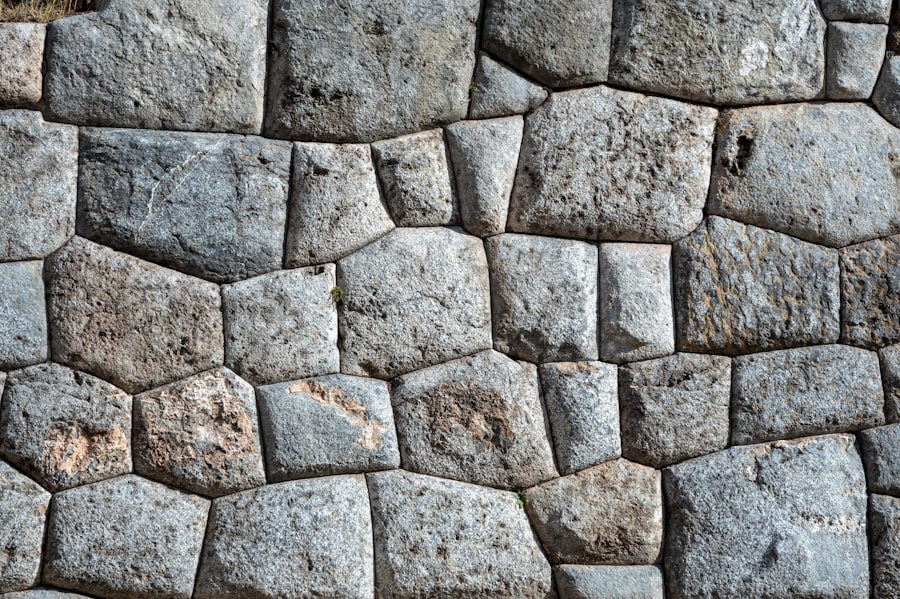
As your exploration continues, you cannot overlook the Sacsayhuaman walls located near Cusco, Peru. These massive stone structures are renowned for their impressive construction techniques—enormous blocks weighing several tons fit together with remarkable precision without any mortar. As you stand before these walls, you may marvel at how such monumental architecture was achieved by the Inca civilization using only rudimentary tools.
The construction methods employed at Sacsayhuaman remain a topic of fascination among archaeologists and engineers alike. You might wonder how the Incas transported these colossal stones from quarries located miles away and how they managed to fit them together so seamlessly. Some theories suggest advanced knowledge of geology and engineering principles; others propose that they utilized simple yet effective techniques involving levers and ramps.
Regardless of how it was accomplished, Sacsayhuaman stands as a testament to human ingenuity—a reminder that even without modern technology, remarkable achievements are possible.
The Mysteries of Unexplained Ancient Technology
As your journey through unexplained ancient technology comes to an end, you are left with more questions than answers. Each artifact you’ve encountered serves as a reminder that our understanding of history is often incomplete and filled with mysteries waiting to be unraveled. From the Antikythera Mechanism’s intricate gears to the enigmatic Voynich Manuscript’s untranslatable text, these remnants of past civilizations challenge your perceptions of what was possible in antiquity.
You may find yourself inspired by the ingenuity displayed by our ancestors—individuals who dared to explore their world and push boundaries despite limited resources. The mysteries surrounding these artifacts invite further exploration and research; they remind us that history is not merely a record of events but also a tapestry woven from human creativity and curiosity. As you reflect on these unexplained technologies, consider how they connect us across time—reminding us that innovation knows no bounds when fueled by imagination and determination.
One fascinating aspect of ancient technology that continues to baffle researchers is the construction of the Great Pyramids of Giza, which showcases advanced engineering techniques that seem to defy the capabilities of the time. For a deeper exploration of such enigmatic technologies, you can read more in this related article on ancient mysteries at Real Lore and Order.
WATCH THIS! 🔍 Archaeologists REFUSE to Explain This Ancient Machine
FAQs
What is meant by “ancient technology that defies explanation”?
Ancient technology that defies explanation refers to tools, structures, or engineering feats created by ancient civilizations that modern science and archaeology find difficult to fully understand or replicate with the technology available at the time.
Can you give examples of ancient technology that puzzles researchers?
Examples include the construction of the Great Pyramids of Giza, the precision-cut stones of Machu Picchu, the Antikythera mechanism (an ancient Greek analog computer), and the advanced water management systems of the Indus Valley Civilization.
How do researchers study these ancient technologies?
Researchers use a combination of archaeological excavation, material analysis, historical records, experimental archaeology, and modern technology such as 3D scanning and computer modeling to study and attempt to understand ancient technologies.
Are there any theories explaining how ancient people achieved these technological feats?
Yes, theories range from advanced knowledge of mathematics and engineering, use of simple but effective tools and techniques, to the possibility of lost or undocumented technologies. Some fringe theories suggest extraterrestrial assistance, but these lack credible evidence.
Do these ancient technologies have any influence on modern technology?
Many ancient technologies laid the groundwork for modern engineering, architecture, and science. For example, ancient water management techniques inform modern irrigation, and early mechanical devices like the Antikythera mechanism influenced the development of clocks and computers.
Is it possible that some ancient technologies have been lost over time?
Yes, it is widely accepted that some ancient technologies and knowledge have been lost due to factors like natural disasters, wars, cultural changes, and the decay of materials over time.
Why is it important to study ancient technologies?
Studying ancient technologies helps us understand human history, cultural development, and the evolution of science and engineering. It can also inspire modern innovation by revealing forgotten techniques and approaches.