
The instinctive act of a child reaching for a parent’s hand in moments of perceived danger is a universal tableau, etched into the collective human experience. It is a silent plea for safety, a primal instinct that bypasses reasoned thought and speaks directly to the core of our being. But what lies beneath this simple gesture? What profound psychological and physiological processes are at play when a child, faced with uncertainty or fear, seeks the tangible anchor of a parent’s grasp? This article delves into the multifaceted significance of a parent pressing a child’s hand as a powerful tool of reassurance in moments of danger, exploring its origins, its impact, and the subtle yet potent language it conveys.
The Primal Bond: Evolutionary Roots of Physical Touch
The impulse to connect physically, particularly through touch, is deeply embedded in our evolutionary history. For early humans, proximity and physical contact were not merely gestures of affection; they were critical for survival. Young infants, entirely dependent on their caregivers for protection and sustenance, relied on constant physical reassurance. The warmth of a parent’s body, the rhythm of their breathing, and the secure embrace were all signals of safety in a world fraught with predators and environmental hazards. This innate need for contact has been passed down through generations, shaping our biological and psychological responses to touch.
The Infant’s Insecure Attachment and the Need for Containment
From birth, infants are equipped with a finely tuned system for seeking proximity to their primary caregivers. This attachment system, as described by John Bowlby, is activated by distress signals – crying, fussing, or any indication of perceived threat. The caregiver’s response, crucially involving physical comfort, acts as a “safe haven.” When a child is in distress, their limbic system, the brain’s emotional processing center, is highly activated. They experience a surge of stress hormones like cortisol. The physical act of being held, rocked, or simply having their hand held provides a crucial external regulator. This containment helps to calm the agitated nervous system, slowing heart rate, reducing breathing rate, and ultimately decreasing the levels of stress hormones. It’s a physiological mirroring, where the parent’s calm presence and touch transmit a message of stability that the child’s overwhelmed system can absorb. This isn’t just about feeling better; it’s about the developing brain learning that distress can be managed and that safety is attainable. The handhold, in this context, becomes a conduit for this essential regulatory process, preventing the child from becoming completely consumed by their fear. The parent’s steady grip communicates a sense of control and capability that the child lacks, offering a much-needed sense of security in the face of overwhelming emotions.
The Social Mammal: Touch as a Universal Language of Connection
Beyond the infant stage, the importance of touch persists throughout childhood and even into adulthood. As social mammals, humans rely on physical interaction to build and maintain relationships, to communicate emotions, and to navigate social hierarchies. In the context of a parent-child relationship, touch serves as a primary mode of communication, especially when verbal language is insufficient or the emotional intensity is too high. A gentle squeeze of the hand can convey more than a thousand words, communicating empathy, encouragement, and unwavering support. This non-verbal language transcends cultural barriers and developmental stages, resonating deeply with our innate social needs. The power of touch lies in its immediacy and its ability to bypass cognitive defenses. While words can be misinterpreted or dismissed, a warm, firm handhold often bypasses rational thought and directly impacts the emotional state. It’s a universal signal that says, “I am here, and you are not alone.” This is particularly vital during moments of danger, where the child’s capacity for rational thought is often compromised by fear.
In moments of danger, pressing a child’s hand can serve as a powerful gesture of reassurance, helping to alleviate their fears and provide a sense of security. This simple act can strengthen the bond between caregiver and child, fostering trust and comfort in unsettling situations. For more insights into the importance of emotional connections and innovative approaches in various fields, you might find this article on revolutionary Roman concrete and its self-healing properties intriguing: Revolutionary Roman Concrete: Self-Healing Wonders.
The Neurobiology of Comfort: How Touch Calms the Frightened Child
The seemingly simple act of pressing a child’s hand triggers a complex cascade of neurobiological responses that work to mitigate fear and restore a sense of calm. This is not just a psychological phenomenon; it has tangible physiological underpinnings. Understanding these mechanisms sheds light on the profound impact of this gesture.
The Oxytocin Effect: The “Love Hormone” and Its Calming Influence
When a parent holds a child’s hand, especially during moments of stress, the release of oxytocin is significantly stimulated. Often referred to as the “love hormone,” oxytocin plays a crucial role in social bonding, trust, and feelings of well-being. In the context of touch, it acts as a natural anxiolytic, reducing feelings of fear and anxiety. The gentle pressure and warmth of the parent’s hand activate mechanoreceptors in the skin, sending signals to the brain that promote oxytocin release. This neurochemical surge helps to counteract the effects of stress hormones like cortisol, creating a physiological state of calm and security. The oxytocin release doesn’t just affect the child; it can also be experienced by the parent, fostering a deeper sense of connection and shared emotional regulation. This reciprocal release can create a positive feedback loop, where the parent’s calm presence further soothes the child, and the child’s response reinforces the parent’s sense of efficacy. This biological mechanism underscores why physical touch is so effective in de-escalating distress.
Vagal Nerve Stimulation: The Direct Pathway to Calmness
The vagus nerve, the longest cranial nerve in the body, acts as a crucial communication highway between the brain and various organs, including the heart. Gentle touch, such as holding a hand, can stimulate the vagal nerve, promoting a parasympathetic nervous system response. This is the body’s “rest and digest” mode, which counteracts the “fight or flight” response triggered by fear. Vagal nerve stimulation leads to a decrease in heart rate, blood pressure, and respiratory rate, all of which are elevated during states of anxiety or fear. The rhythmic nature of a gentle squeeze or pat can further enhance this calming effect, mimicking the soothing rhythms of a heartbeat or a gentle rocking motion. This direct pathway to physiological regulation explains why touch can provide almost immediate relief from acute stress. It’s a biological reset button, initiated by the simple act of physical connection.
In moments of danger, pressing a child’s hand can serve as a powerful gesture of reassurance, helping to calm their fears and provide a sense of safety. This simple act of connection can be crucial in guiding them through stressful situations, as it reinforces trust and emotional support. For further insights into how human connections have evolved over time, you might find it interesting to explore this article on uncovering ancient famine and the ways in which our ancestors navigated challenges together.
Mirror Neuron Activation: Empathy and Shared Experience
Mirror neurons are a fascinating class of neurons that fire both when an individual performs an action and when they observe the same action performed by another. In the context of touch and reassurance, mirror neurons are thought to play a role in empathy and the shared experience of emotions. When a parent holds a child’s hand, the child’s brain may activate mirror neurons that are also active in the parent’s brain as they offer comfort. This can lead to a vicarious sense of calm and security, as the child’s brain essentially “mirrors” the parent’s intention and emotional state. This neural connection helps the child to internalize the parent’s sense of control and safety, even if they cannot fully articulate it. It’s a powerful mechanism that allows for a deep, almost unconscious, transfer of emotional regulation from caregiver to child.
Navigating Peril: The Handhold as a Compass in Times of Crisis
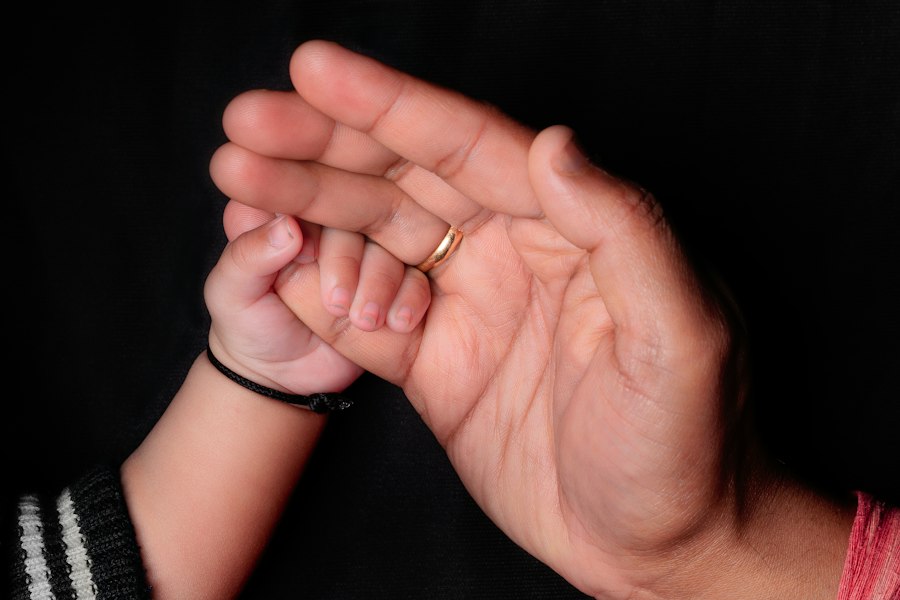
In the face of immediate danger, a child’s world can shrink to a terrifying point of focus. Their cognitive abilities become overwhelmed, and their primary instinct is to seek proximity to their protector. The handhold, in these critical moments, transforms from a gesture of affection to a lifeline, a tangible anchor in a chaotic reality.
The Unspoken Promise: “I Will Protect You”
When a child is confronted with a frightening situation – a loud noise, an unfamiliar and menacing environment, or a potential threat – their primary need is for immediate reassurance of safety. A parent’s firm, steady handhold communicates an unspoken promise: “I am here, I see the danger, and I will protect you.” This tangible connection offers an immediate sense of security, grounding the child and preventing them from feeling utterly alone and vulnerable. The physical contact acts as a barrier, both real and symbolic, between the child and the source of their fear. It’s a primal signal that overrides panic and provides a foundation upon which the child can begin to regain their composure. The grip itself conveys a sense of strength and control that the child currently lacks, offering a much-needed sense of external regulation. The parent’s presence, made manifest through their hand, becomes a shield against the overwhelming tide of fear.
Grounding the Overwhelmed: A Tactile Anchor in Disorientation
Fear and panic can be profoundly disorienting. A child’s sense of reality can become distorted, making it difficult to process information or make reasoned decisions. The physical sensation of a parent’s hand holding theirs serves as a crucial grounding mechanism. It provides a concrete, undeniable reality amidst the swirling chaos of their emotions. The texture of the skin, the warmth of the hand, and the steady pressure all combine to bring the child back to the present moment, reminding them of their connection to a safe and stable source of support. This tactile anchor is particularly important when the danger is auditory or visual, as it provides a counterpoint of physical reality. It’s a reminder that even when the world feels like it’s spinning out of control, there is something solid and unwavering to hold onto. This physical anchor allows the child’s overwhelmed nervous system to begin to re-establish equilibrium, facilitating a gradual return to a state of greater control.
Facilitating Escape and Action: The Handhold as a Guide
In situations requiring immediate action, such as evacuating a dangerous area or moving away from a threat, the parent’s handhold becomes a directive force. It guides the child, ensuring they stay close and follow instructions. The physical connection allows the parent to pull, steer, or simply maintain contact, preventing the child from freezing in fear or running in the wrong direction. This is a critical aspect of safety, as a panicked child can be dangerously unpredictable. The handhold ensures coordinated movement and allows the parent to maintain control over the child’s trajectory, thus enhancing their collective safety. It’s a seamless integration of guidance and reassurance, enabling effective action in the face of peril. The physical connection provides a constant, non-verbal cue for movement and direction, reducing the cognitive load on the frightened child and allowing them to focus their limited energy on following the parent’s lead.
Beyond the Immediate: The Lasting Impact of Reassuring Touch
The effects of reassuring touch in moments of danger extend far beyond the immediate resolution of the crisis. These experiences, ingrained in a child’s memory, shape their understanding of safety, their trust in caregivers, and their capacity for emotional resilience.
Building Trust and Security: A Foundation for Future Resilience
The consistent experience of a parent providing comfort and security through physical touch, especially during times of fear, builds a strong foundation of trust. Children who learn that their distress will be met with a reassuring hand are more likely to develop a secure attachment style. This secure base allows them to explore the world with greater confidence, knowing they have a reliable source of support to return to. This trust translates into increased resilience, enabling them to cope better with future challenges and setbacks. They learn that their vulnerability is not a weakness, but an invitation for connection and support. This early experience of feeling safe and cared for during frightening moments is a powerful predictor of positive psychological outcomes throughout life. It instills a deep-seated belief in their own worthiness of care and protection.
Internalizing Coping Mechanisms: Learning to Manage Fear
When a parent consistently uses reassuring touch to help a child navigate fear, the child is not just being comforted in the moment; they are also learning valuable coping mechanisms. They begin to associate the physical sensation of a parent’s hand with a return to calm. Over time, they may internalize this association, and even the memory of such touch, or the anticipation of it, can begin to trigger a calming response. This process helps children develop their own internal resources for managing fear and anxiety, which is crucial for their long-term emotional well-being. They learn that fear is a manageable emotion, not an insurmountable obstacle. This internalized capacity for self-soothing is a precious gift, nurtured through the consistent and loving actions of a caregiver. The physical act of being held becomes a learned association with safety and regulation, paving the way for greater emotional autonomy.
The Language of Love: Touch as a Timeless Expression of Care
Ultimately, pressing a child’s hand in moments of danger is a profound expression of love. It is a primal, instinctual response that transcends words and communicates a deep, unwavering commitment to the child’s well-being. This simple gesture, rooted in our evolutionary past and supported by complex neurobiological mechanisms, serves as a powerful reminder that even in the face of fear and uncertainty, connection, comfort, and reassurance are always within reach. The enduring power of this touch lies in its ability to foster a sense of belonging, build resilience, and lay the groundwork for a lifetime of secure and loving relationships. It is a silent, yet potent, testament to the enduring strength of the parent-child bond, a bond forged in moments of vulnerability and solidified through the simple, profound act of holding a hand. This intimate physical connection speaks to the child’s fundamental need to be seen, validated, and protected, fostering a sense of worth and security that can carry them through life’s inevitable challenges.