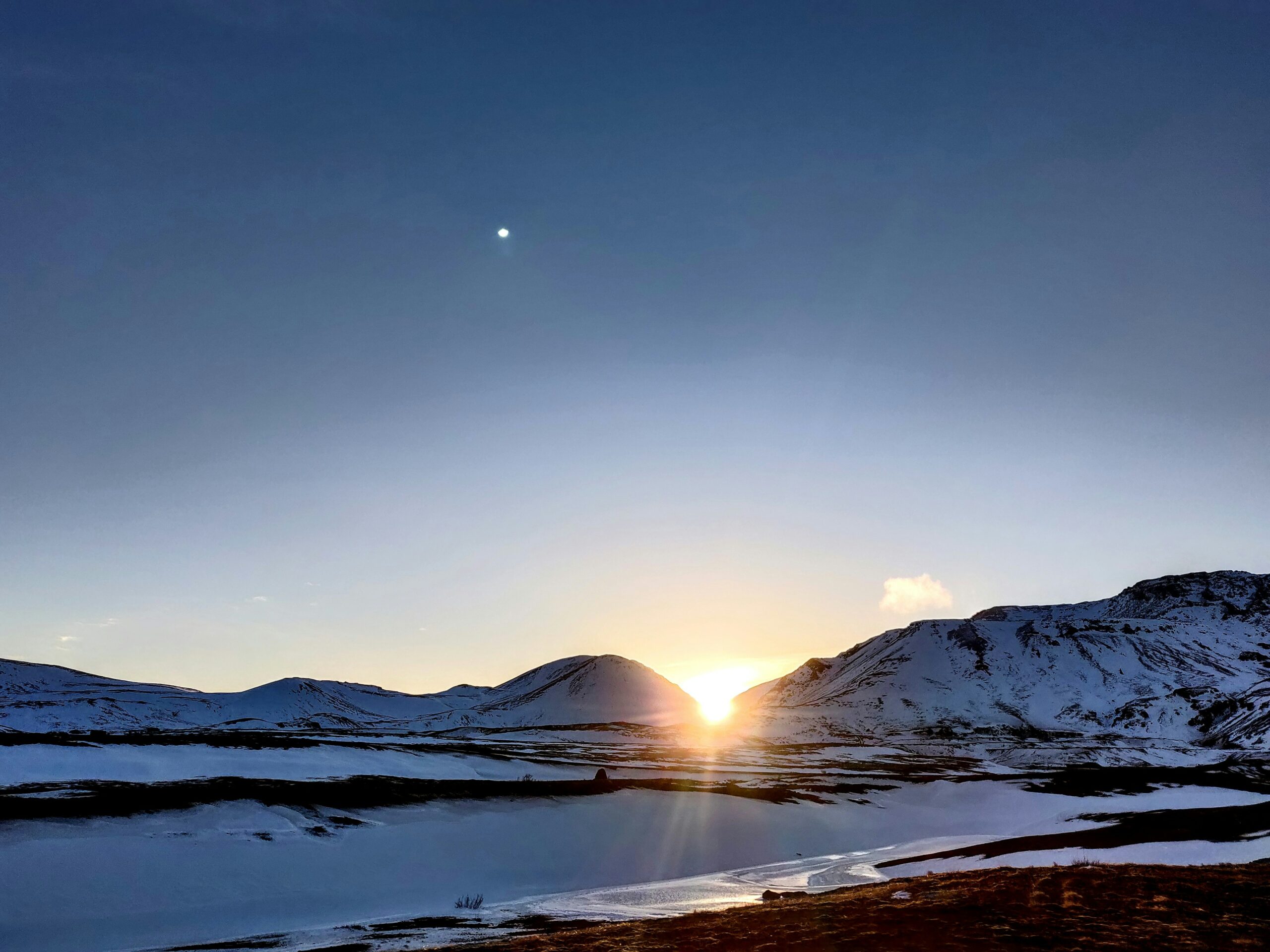
The world held its breath. A colossal, monochrome canvas stretched across the horizon, painted in hues of bruised purple and icy blue. This was the Ice Age, a time of stark beauty and unforgiving extremes, and the setting sun, a distant, diminished orb, was enacting its daily ritual of surrender behind a jagged chain of glaciers. The light, weakened by a thicker, colder atmosphere, diffused into an ethereal glow, casting long, distorted shadows that crept across the frozen plains like spectral tendrils.
Whispers of the Ancient Sun’s Descent
The sun’s descent in this frigid epoch was not the warm, inviting spectacle of modern times. It was a slow, deliberate retreat, a promise of an even deeper, more profound cold. The sky, a vast expanse of frozen breath, seemed to absorb what little warmth remained, turning the zenith into a pale imitation of its daytime glory. The glaciers, titans of ice that dominated the landscape, gleamed with a phosphorescent intensity, reflecting the dying light in a million facets. These behemoths, sculpted by millennia of crushing snow and glacial movement, were not inert masses; they were living entities, groaning and shifting, their icy surfaces catching the last rays and turning them into fleeting rainbows of unimaginable fragility. The air itself was a tangible presence, biting and sharp, carrying the faint scent of distant pine and the primal musk of unseen megafauna. Every breath was a conscious act, a testament to the resilience of life in a world where survival was a constant negotiation with the elements.
The Atmosphere’s Icy Veil
During the Pleistocene, the Earth’s atmosphere was characterized by significantly lower concentrations of greenhouse gases, particularly carbon dioxide. This had a profound impact on solar radiation reaching the surface. While the sun’s intrinsic luminosity was similar, its energy was less effectively trapped. This created a dimmer, cooler experience of daylight, and consequently, the twilight hours were even more subdued. The increased presence of airborne ice crystals and dust, remnants of violent glacial storms and volcanic activity, further contributed to the diffusion and scattering of sunlight. This atmospheric haze acted like a perpetual, frosted lens, softening the edges of the world and imbuing the fading light with a diffused, almost spiritual quality. The sun, no longer a sharp disc of brilliant fire, became a diffused glow, a celestial ember struggling against the encroaching darkness.
Glacial Albedo and Light Reflection
The sheer scale of glacial ice during the Ice Age played a crucial role in shaping the appearance of the landscape, especially during twilight. Ice possesses a high albedo, meaning it reflects a significant portion of incoming solar radiation. As the sun dipped lower, its rays, already weakened, struck these vast ice sheets at oblique angles, maximizing the reflective effect. This resulted in a phenomenon where the glaciers themselves appeared to emanate a pale, internal light, a ghostly luminescence that counteracted the deepening shadows. This wasn’t the warm glow of reflected firelight, but a cold, sterile radiance, a mirror to the frigid heavens. The ice reflected not only the sun’s weakening light but also the subtle colors of the atmosphere, creating an otherworldly panorama of pale blues, ethereal purples, and muted greys. The stark contrast between the illuminated ice and the encroaching gloom intensified the sense of an ancient, frozen twilight.
As the sun lowers behind the hills during the Ice Age, it casts a dramatic glow over the frozen landscape, evoking a sense of both beauty and desolation. This striking imagery is reminiscent of the mysteries of ancient cartography, such as those explored in the article about the Piri Reis map. This intriguing piece of history raises questions about the knowledge and navigational skills of civilizations long past. To learn more about this fascinating topic, you can read the article here: US Military Confirms Authenticity of Piri Reis Map.
The Palette of a Frozen Sunset

The colors of this Ice Age sunset were not the vibrant oranges, reds, and golds of temperate climes. They were muted, spectral, and deeply evocative. The sky, a vast dome of ever-changing hues, offered a visual narrative of the planet’s struggle against the encroaching cold. The dominant tones were cool: icy blues, deep violets, and the stark white of newly fallen snow. Yet, within this frigid spectrum, fleeting moments of warmth could be perceived, subtle shifts in color that hinted at the sun’s waning power. These were not the fiery bursts of a summer’s eve, but delicate washes of pale rose or the faintest hint of ochre, quickly swallowed by the deepening twilight. The landscape itself, a tapestry of snow, ice, and exposed rock, absorbed and reflected these colors, creating a living canvas of desolation and profound beauty.
Subdued Hues of the Polar Sky
The Pleistocene sky, frequently laden with fine ice crystals and atmospheric dust, diffused sunlight more readily than in warmer periods. This meant that the brilliant spectrum of colors typically associated with sunsets was significantly muted. Instead of vibrant reds and oranges, the dominant colors were softer, more ethereal. Deep, bruised purples would bleed into the pale, almost white expanse overhead. The transition from the sun’s direct light to the encroaching shadows was a gradual, subtle affair, marked by washes of lavender and a ghostly grey. This subdued palette created an atmosphere of profound stillness, a quietude that was both beautiful and unsettling. The visual cues of a typical sunset were present, but their intensity was dialed down, as if the sky itself was conserving energy, mirroring the planet’s own struggle for warmth.
The Gleam of Illuminated Ice and Rock
As the sun lowered, its light, even in its diminished state, found purchase on the myriad surfaces of the Ice Age landscape. The vast ice sheets, stretching to the horizon, became colossal mirrors, reflecting the fading sky in a dazzling display. This reflection was not uniform; depending on the texture and clarity of the ice, different shades and intensities of light would emerge. Smooth, crystalline surfaces would gleam with an almost internal luminescence, while rougher, more crevassed ice would absorb more light, appearing darker and more somber. Exposed rock faces, often dusted with snow, would catch the oblique rays, their grey and brown hues taking on a subtle, almost metallic sheen. This interplay of light on ice and rock created a dynamic visual contrast, a stark reminder of the raw, unyielding nature of the frozen world.
Echoes of Life in the Frozen Gloaming

The fading light of an Ice Age sunset was not a signal for complete stillness. Life, in its myriad forms, continued its ancient rhythms, adapting to the encroaching chill. The shadows, lengthening and deepening, offered both concealment and a new set of challenges. The sounds of the twilight were different too – the rustle of fur, the snap of a twig, the distant howl of a predator, all amplified in the hushed atmosphere. The creatures of this era, masters of survival, moved with a newfound caution, their senses heightened, their bodies attuned to the subtle shifts in light and temperature. Their existence was a testament to the enduring spirit of life, even in the face of overwhelming environmental pressures.
Mammoth and Mastodon in the Lingering Light
The colossal forms of mammoths and mastodons, their thick fur a testament to their adaptation to the cold, moved across the landscape with a measured grace. As the sun lowered, their massive silhouettes would become starkly defined against the horizon. The last rays of light would catch the texture of their shaggy coats, highlighting the intricate patterns of their pelts, turning them into living monuments against the encroaching darkness. These gentle giants, often moving in family groups, would continue their slow foraging, their massive tusks occasionally catching the faintest gleam of the sun, like ancient scepters held aloft. The sounds of their low rumbling calls, their deliberate footsteps crunching on the frozen ground, were the deep bass notes of the Ice Age twilight, a comforting assurance of their continued presence in this harsh world.
Predators and Prey in the Deepening Shadows
The twilight hours were a critical period for both predator and prey. For the large carnivores – saber-toothed cats, dire wolves, and cave lions – the deepening shadows offered ideal cover for their hunts. Their eyes, adapted for low-light conditions, would gleam with a primal intensity as they stalked through the frosted vegetation or across the open plains. The rustle of a hidden snowshoe hare, the sudden movement of a herd of reindeer, the faint scent of prey carried on the frigid air – all these would be keenly perceived. For the prey animals, the twilight brought increased vulnerability. They would huddle together for warmth and protection, their senses on high alert, listening for the tell-tale sounds of an approaching predator. The faint, high-pitched calls of smaller animals, the quick dash of a fox across the snow, the nervous stamping of hooves – these were the sharp, staccato notes of the Ice Age twilight, a constant reminder of the perpetual struggle for survival.
The Enduring Silence of the Frozen Night
As the last sliver of the sun vanished below the glacial horizon, a profound silence would descend. This was not an empty silence, but a pregnant one, filled with the anticipation of the long, frigid night. The stars, sharper and more numerous in the unpolluted atmosphere, would begin to prick the darkening canvas, their icy brilliance a stark contrast to the dying embers of daylight. The moon, when it appeared, would cast an even colder, more ethereal light, transforming the landscape into a monochromatic wonderland of silver and shadow. The world would then settle into its nocturnal rhythm, a time of deep sleep for many, and for others, a continuation of the primal dance of survival under a canopy of celestial diamonds.
Celestial Witnesses to a World Transformed
With the absence of modern industrial light pollution, the Ice Age night sky was a breathtaking spectacle. The stars, unobstructed by atmospheric haze and artificial luminescence, burned with an unparalleled brilliance. Constellations that are familiar today would have appeared sharper, more defined, their patterns etched into the inky blackness with stark clarity. The Milky Way, a luminous river of stars, would have been a prominent feature, a celestial highway stretching across the heavens, a constant reminder of the vastness of the universe. The moon, too, would have been a more dominant presence, its phases casting dramatic shadows and illuminating the frozen landscape with a pale, otherworldly glow. These celestial bodies served as silent witnesses to a world transformed by ice, their unchanging presence a stark contrast to the dynamic, yet precarious, existence of the life that clung to its surface.
The Anticipation of a Deeper Cold
The fading of the sun, even in its diminished state, was a harbinger of the truly extreme cold that defined the Ice Age night. As darkness enveloped the land, temperatures would plummet further, pushing the limits of survival for all but the most specialized organisms. The frozen ground would contract with sharp, percussive cracks, the sound echoing in the vast emptiness. The wind, often a constant companion, would pick up, its icy breath sculpting the snow and ice into new, ephemeral forms. This was a time of immense vulnerability, where the slightest lapse in adaptation could mean the end. The deep stillness of the night was not a passive state, but an active period of endurance, where life held its breath, waiting for the return of the sun, a promise of a brief respite from the relentless grip of the cold.
As the sun lowered behind the hills, casting long shadows over the icy landscape, one couldn’t help but reflect on the profound changes that have shaped our planet throughout its history. This imagery evokes thoughts of the Ice Age, a time when vast glaciers sculpted the earth and altered ecosystems. For those interested in understanding the broader implications of historical transformations, a fascinating article on navigating geopolitical challenges can provide insights into how past events continue to influence our present. You can explore this connection further in the article found here.
The Ice Age Twilight: A Legacy of Stark Beauty
| Metric | Value | Unit | Description |
|---|---|---|---|
| Sun Elevation Angle at Sunset | 0 | Degrees | Sun is at the horizon line as it sets behind the hills |
| Time of Sunset | 16:30 | Local Time | Approximate time sun sets behind hills during Ice Age winter |
| Temperature | -10 | °C | Estimated ambient temperature during sunset in Ice Age conditions |
| Ice Coverage on Hills | 85 | Percent | Percentage of hill surface covered by ice and snow |
| Atmospheric CO2 Levels | 180 | ppm | Estimated CO2 concentration during Ice Age |
| Sunlight Intensity | 400 | W/m² | Approximate solar irradiance at sunset |
The lowering sun behind the hills of the Ice Age was more than just a meteorological event; it was a profound visual and sensory experience. It was a time when the familiar rhythms of day and night were amplified by the extreme conditions, when the landscape itself seemed to hold its breath. The muted colors, the ethereal light, the stark silhouettes of megafauna, and the profound silence all contributed to a scene of breathtaking, and often terrifying, beauty. This frozen twilight was a testament to the resilience of life, a fleeting moment of transition between the harsh realities of a sun-drenched day and the unforgiving embrace of an icy night. It was a reminder that even in the most extreme environments, beauty can be found in the starkest of contrasts, in the subtle shifts of light and shadow, and in the enduring spirit of a world sculpted by ice.
The Lingering Memory of a Frozen World
The image of an Ice Age sunset, though a conjecture based on scientific understanding, lingers in the human imagination. It evokes a sense of awe and wonder at the planet’s past, a time of colossal creatures and vast, frozen landscapes. This frozen twilight, with its muted colors and spectral light, represents a period of Earth’s history that shaped the very foundations of our modern world. It is a reminder of the dynamic nature of our planet, its capacity for both immense creation and profound destruction. The scientific evidence, from ice cores and fossil records to paleoclimatic reconstructions, allows us to paint a picture, albeit an interpretive one, of these ancient scenes. This painted picture, this frozen twilight, becomes a symbol of a lost world, a world that, in its starkness and extremity, holds a powerful and enduring appeal.
Lessons from the Cold Light
The study of Ice Age environments, including the nuances of its twilight periods, offers valuable lessons for our present and future. Understanding how life adapted to extreme cold, how atmospheric conditions influenced light and temperature, and how ecosystems responded to drastic climate shifts provides crucial insights into the resilience and fragility of our own planet. The Ice Age twilight, with its unique challenges and stark beauty, can serve as a metaphor for the environmental challenges we face today. It reminds us of the power of nature, the importance of adaptation, and the profound interconnectedness of all living things with their environment. By studying these ancient frozen scenes, we gain a deeper appreciation for the Earth’s history and a renewed sense of responsibility for its future.