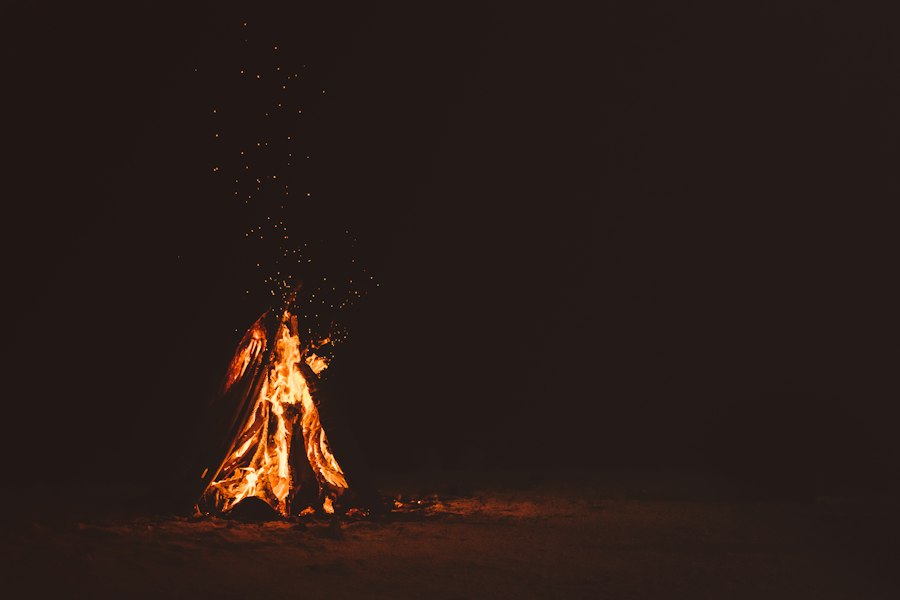
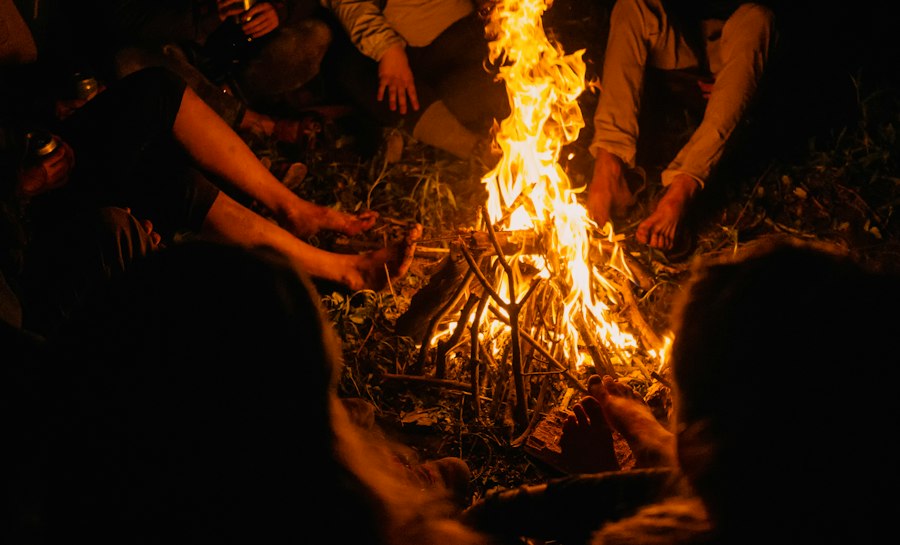
The flickering light of the campfire cast dancing shadows on the faces gathered around it. These were the faces of ancient humans, their eyes reflecting the primal glow of the flames, their bodies drawn together for warmth and companionship. In this intimate circle, as much as any cave or open savanna, the foundations of human culture were laid. More than just a source of heat and protection from the darkness, the campfire was the crucible of human intellect, the stage upon which the earliest dramas of existence were enacted. It was here, amidst the crackling wood and the vast expanse of the night sky, that stories were born, passed down, and woven into the very fabric of human consciousness.
The Hearth as the Heart of the Community
The central role of the campfire extended far beyond its practical utilities. It served as the primary social hub, a place where the fragmented experiences of the day could be coalesced into shared understanding. In a world where survival was a constant struggle, the collective experience was paramount. The dangers faced, the triumphs achieved, the mysteries encountered – all found their voice around the fire. This shared experience fostered a sense of belonging, a vital component of early human societies. The act of gathering itself was a ritual, a reaffirmation of group identity. The stories told reinforced these bonds, transmitting knowledge, values, and beliefs from one generation to the next.
Gathering for Survival and Connection
Before the advent of permanent settlements and formalized communication, the nomadic lifestyle dictated constant movement in search of sustenance. The campfire, therefore, was not static. It followed the hunts, the migrations, and the seasonal changes. Wherever the group settled, however temporarily, the fire was built, and the community coalesced around it. This physical proximity was essential for survival. Sharing resources, coordinating efforts, and providing mutual protection were all facilitated by this gathering. The stories told during these times often reflected the immediate concerns of the group: the best hunting grounds, the habits of dangerous predators, the signs of approaching weather.
Transmitting Essential Knowledge and Skills
The oral traditions that emerged from these gatherings were not mere entertainment. They were the primary educational system of ancient humanity. Through stories, elders passed down invaluable knowledge about the natural world: which plants were edible and which were poisonous, how to track animals, how to craft tools from stone and bone, and how to interpret the celestial bodies for navigation and the passage of time. These narratives were not delivered in dry lectures but were imbued with drama, emotion, and often, a touch of the mystical. The exploits of legendary hunters, the wisdom of ancient shamans, or the harrowing tales of survival against the odds all served to imprint these lessons onto the minds of the younger generation.
Building Social Cohesion and Identity
Beyond practical knowledge, storytelling played a crucial role in shaping the social and emotional landscape of early communities. Narratives often reinforced societal norms and values. Stories about bravery, cooperation, and respect for elders would have been paramount in ensuring the smooth functioning of the group. Conversely, tales of those who transgressed these norms and faced dire consequences served as cautionary examples. These shared narratives created a common mythology, a collective history that bound individuals together and gave them a sense of shared identity. This was particularly important in a world where individual achievements might have been overshadowed by the constant need for collective effort. The stories provided a framework for understanding their place in the world and their relationship to each other and to the forces of nature.
Ancient human storytelling, particularly through oral traditions around campfires, has played a crucial role in preserving cultural narratives and fostering community bonds. These gatherings not only served as a means of entertainment but also as a way to pass down knowledge and wisdom through generations. For a fascinating exploration of another aspect of ancient civilizations, you might find the article on the ancient Persian qanat system particularly interesting. This remarkable water management system highlights the ingenuity of early societies in adapting to their environments, much like the storytelling traditions that adapted to the needs of their communities. You can read more about it here: The Ancient Persian Qanat System: A Water Management Marvel.
The Content of Ancient Narratives
The themes and subject matter of these early oral traditions were deeply rooted in the lived experiences of prehistoric humans. Their world was one of immediate sensory input, of raw emotion, and of profound wonder and fear. The stories reflected this immediate and visceral connection to their environment. They spoke of the tangible and the intangible, of the seen and the unseen, of the rational and the magical.
Tales of the Natural World and its Wonders
The natural world was not just a backdrop for human existence; it was a central character in the stories. The sun, the moon, the stars, the animals, the rivers, the mountains – all were imbued with power and significance. Creation myths likely explained the origins of the world and its inhabitants, often attributing their formation to powerful, anthropomorphic deities or primal forces. Stories about the hunt were not just accounts of individual successes but often personified the spirit of the prey, detailing intricate relationships between hunter and hunted, and sometimes even attributing supernatural abilities to certain animals. The changing seasons, the cycles of life and death, the forces of flood and drought – all were subjects for narrative exploration, helping humans to understand and navigate the often unpredictable rhythms of their world.
Myths of Creation and the Origins of Things
Central to many oral traditions were myths that explained the fundamental questions of existence: how did the world begin? Where did humans come from? Why do things happen the way they do? These creation myths, though varied in their specifics across different groups, often provided a sense of order and meaning to a world that could otherwise seem chaotic and arbitrary. They may have involved cosmic battles, the sacrifice of primal beings, or the deliberate shaping of the world by divine hands. These stories were not only attempts to understand the past but also to legitimize the present social order and humanity’s place within the grand scheme of things. They instilled a sense of continuity and purpose, connecting the present generation to a timeless narrative of origin.
Ancestral Heroes and the Embodiment of Virtues
The figures who populated these stories were often larger than life. Ancestral heroes, the first humans, or legendary individuals who achieved extraordinary feats, served as archetypes for human behavior. These heroes might have been depicted as incredibly strong, cunning, or wise. Their actions, whether in overcoming formidable challenges, discovering new ways of living, or demonstrating profound empathy, provided models for the listeners. The stories of their triumphs and struggles served to inspire, to teach moral lessons, and to reinforce the ideals that the community aspired to. These heroes were often seen as intermediaries between the human and the divine, their deeds carrying a sacred weight.
The Spirits and the Supernatural Realm
In the absence of scientific explanation, the ancient world was populated by a rich tapestry of spirits, deities, and other supernatural entities. These beings influenced human lives, brought fortune or misfortune, and demanded respect and appeasement. Stories often detailed interactions between humans and these spiritual forces, explaining natural phenomena like lightning strikes or disease as the actions of unseen powers. Shamans, individuals who could purportedly communicate with the spirit world, often played a significant role in these narratives, acting as healers, diviners, and spiritual guides. The understanding of this supernatural realm was crucial for navigating the unknown and for maintaining a sense of control in a world where many forces were beyond human comprehension.
The Mechanics of Oral Transmission
The art of storytelling in ancient times was a highly developed skill, honed through generations of practice. Without written records, the fidelity of these stories depended entirely on the memory and communicative abilities of the individuals who held them. This reliance on human memory shaped the very structure and delivery of the narratives.
The Power of Memory and Repetition
Human memory, particularly in the context of oral tradition, is a remarkable faculty. To ensure the preservation and accurate transmission of stories, techniques of mnemonic devices were likely employed. This could have included rhyme, rhythm, alliteration, and the use of recurring motifs and phrases. Repetition was also a key element, not just within a single telling but across multiple tellings over time. The stories were told and retold, by different individuals, and at different occasions, reinforcing their memorization and allowing for subtle variations to emerge and be tested by the community. This constant retelling also served to keep the stories alive and relevant to the changing circumstances of the group.
Performance and the Art of Recitation
Storytelling was not a passive act of reading aloud. It was a dynamic performance. The storyteller, often an elder or a respected member of the community, would use vocal inflection, gestures, facial expressions, and dramatic pauses to bring the narrative to life. The firelight would have amplified these dramatic elements, adding to the immersive experience. The audience, in turn, would have been active participants, their reactions – laughter, gasps, murmurs of assent – influencing the storyteller and reinforcing the emotional impact of the tale. The setting around the campfire provided the perfect ambiance for this theatrical form of communication, fostering a shared emotional and intellectual engagement.
The Role of Music and Song
It is highly probable that music and song were integral components of ancient storytelling. Many cultures around the world have preserved traditions where narratives are sung or chanted, often accompanied by simple musical instruments. The rhythmic and melodic qualities of music can greatly aid memorization and enhance the emotional resonance of a story. Drumbeats, rhythmic chanting, or the plucking of stringed instruments could have been used to punctuate key moments, to build suspense, or to create a specific mood. These musical elements would have added another layer of sensory engagement, making the stories more captivating and memorable for the listeners.
Evolution and Adaptation of Narratives
While accuracy was important, oral traditions were not static. Stories could evolve and adapt over time, reflecting the changing experiences, beliefs, and knowledge of the community. New events, new discoveries, or shifts in social structure might have led to the incorporation of new elements into existing narratives or the creation of entirely new stories. This adaptability ensured that the traditions remained relevant and meaningful to each successive generation. The process of adaptation was not a sign of inaccuracy but a testament to the living nature of oral culture, a continuous dialogue between the past and the present.
The Significance Beyond Entertainment
The value of ancient storytelling transcended mere diversion. It was a fundamental aspect of human development and cultural survival, shaping not only individual minds but the very trajectory of human societies. The insights gleaned from these early narratives offer a profound understanding of our shared human heritage.
The Foundation of Human Cognition and Language
The act of storytelling itself is intrinsically linked to the development of human cognition and language. To construct a narrative requires the ability to order events, to understand cause and effect, to attribute motivations, and to communicate complex ideas. The very process of developing and sharing stories likely spurred the evolution of more sophisticated language skills, enabling humans to express abstract concepts and to engage in more complex social interactions. The shared narratives provided a common linguistic and conceptual framework upon which further intellectual and cultural development could be built.
Preserving Culture and Identity in a Challenging World
In a world fraught with uncertainty and danger, oral traditions served as a vital mechanism for cultural preservation. They were the repositories of collective memory, the carriers of unique traditions, and the glue that held societies together. Without written language, the stories were the only means of transmitting the accumulated wisdom, beliefs, and experiences of a people across generations. They provided a sense of continuity with the past and a shared identity that was essential for survival and for maintaining cultural distinctiveness in the face of external pressures.
The Roots of Human Spirituality and Philosophy
The questions that ancient humans grappled with – about life, death, purpose, and the nature of the universe – found expression in their stories. Creation myths, tales of the supernatural, and narratives about heroic deeds and moral dilemmas laid the groundwork for early forms of spirituality and philosophy. These stories provided frameworks for understanding the human condition, for grappling with existential anxieties, and for developing ethical systems. They offered glimpses into the earliest attempts to make sense of the profound mysteries of existence, shaping the spiritual and intellectual development of humanity.
Enduring Echoes in Modern Storytelling
The impact of ancient campfire storytelling resonates even today. The fundamental elements of narrative – plot, character, theme, conflict, and resolution – are timeless. The archetypes of heroes, villains, and wise mentors, first brought to life around ancient fires, continue to populate our modern stories in books, films, and other media. The human need for narrative, for meaning, and for connection through shared experience, which was so powerfully met around the ancient campfire, remains an enduring aspect of the human psyche, a testament to the enduring power of stories to shape our understanding of ourselves and the world.
Ancient human storytelling has long been a vital part of cultural heritage, often shared around the warmth of a campfire, where tales of adventure, morality, and the supernatural were passed down through generations. These oral traditions not only served to entertain but also to educate and preserve the history of communities. For a deeper understanding of how storytelling has evolved and its significance in shaping societies, you can explore this insightful article on the impact of narratives in various contexts by following this link.
The Legacy of the Flickering Flame
| Aspect | Description | Estimated Time Period | Purpose | Common Themes |
|---|---|---|---|---|
| Medium | Oral storytelling around campfires | From approximately 100,000 years ago to early historic periods | Entertainment, education, cultural transmission | Creation myths, survival stories, moral lessons |
| Audience Size | Small groups, typically family or tribe members | Prehistoric to early historic times | Community bonding and knowledge sharing | Social norms, tribal history |
| Story Length | Varied from short anecdotes to multi-night epics | Throughout oral tradition history | Adapted to audience attention and occasion | Heroic journeys, animal fables |
| Transmission Method | Memorization and repetition by storytellers | Pre-literate societies | Preservation of cultural knowledge | Genealogies, rituals |
| Role of Storyteller | Keeper of history and culture, often a respected elder | Ancient to early historic periods | Educate and entertain community | Legends, spiritual beliefs |
The campfire, a simple yet profound invention, was more than just a source of light and warmth for our ancient ancestors. It was the hearth of their social existence, the sanctuary of their collective consciousness, and the genesis of the stories that would define their humanity. In the glow of those ancient flames, tales were spun that carried the weight of survival, the wonder of creation, and the deep-seated human need to understand and connect. These oral traditions, passed down through countless generations, were not just stories; they were the very essence of their being, the threads that wove together their past, present, and future.
The Unseen Archive of Human Experience
The legacy of ancient storytelling is an unseen archive, a vast repository of human experience etched not into parchment or silicon, but into the collective memory of our species. While the specific words and details of many tales have been lost to time, the underlying themes and the profound impact of oral tradition on human development endure. The stories told around those ancient fires provided the framework for understanding the world, for building communities, and for fostering the very qualities that define us as human: our capacity for imagination, our drive for knowledge, and our deep-seated need for connection through shared narratives.
The Enduring Power of Shared Narrative
The fundamental human drive to share stories, to make sense of our lives through narrative, is a powerful and enduring force. From the earliest grunts and gestures around a crackling fire to the sophisticated narratives of the digital age, this impulse has remained constant. The campfire was the initial stage for this universal human activity, a testament to the power of shared experience to forge bonds, to transmit knowledge, and to illuminate the human condition. The echoes of those ancient voices, telling their tales of survival, wonder, and belonging, continue to reverberate through our modern world, reminding us of our shared origins and the timeless power of a well-told story. The legacy of the flickering flame is the enduring narrative of humanity itself.