The creation of tools by early humans was a pivotal moment in our evolutionary journey, a testament to ingenuity and the ability to manipulate the environment. Among the earliest and most crucial of these advancements was the mastery of shaping stone, particularly flint and obsidian, to produce sharp, functional implements. This article delves into the primitive techniques employed by our ancestors to sharpen these volcanic and sedimentary rocks, exploring the science, the artistry, and the profound impact of these skills on human development.
The Raw Materials: Flint and Obsidian
The selection of the right raw material was fundamental to successful toolmaking. Flint and obsidian, despite their distinct origins, share a critical characteristic: they are both amorphous or cryptocrystalline silicates that fracture conchoidally. This means they break in a predictable, curved, shell-like manner, allowing for the creation of sharp edges. Understanding the properties of each material is essential to appreciating the techniques involved in their shaping.
Flint: A Sedimentary Marvel
Flint, a form of chert, is a hard, fine-grained sedimentary rock composed primarily of silica (SiO2). It forms in chalk or limestone deposits, often as nodules or layers, typically from the fossilized remains of marine organisms like sponges and diatoms. Its appeal to early toolmakers lay in its relative abundance and its consistent, predictable fracture pattern. Different types of flint exist, varying in color (from pale grey and white to dark brown and black) and texture, which could influence the ease of working and the quality of the resulting edge. For instance, finer-grained flints tended to produce sharper, more delicate tools, while coarser varieties might have been used for more robust implements. The presence of inclusions or impurities could also affect its workability, sometimes making it more prone to unpredictable breaks.
Obsidian: The Volcanic Glass
Obsidian, on the other hand, is a naturally occurring volcanic glass formed when felsic lava extruded from a volcano cools rapidly with minimal crystal growth. Its chemical composition is similar to granite and rhyolite, but its glassy texture is its defining feature. Obsidian is renowned for its exceptionally sharp cutting edges, which can be finer than even the best surgical steel blades. This extreme sharpness, coupled with its conchoidal fracture, made it a highly prized material for projectile points, scrapers, and knives. However, obsidian is typically more brittle than flint and can be more challenging to work, requiring a different approach to knapping. Its color ranges from black and dark brown to green and even iridescent, depending on trace elements and the presence of inclusions. The rapid cooling process that forms obsidian prevents the formation of large crystals, which contributes to its glassy appearance and its propensity for producing extremely sharp edges when fractured.
In exploring the fascinating world of primitive tool making, the techniques for sharpening flint and obsidian are crucial for creating effective cutting tools. These ancient methods not only highlight the ingenuity of early humans but also provide insight into the evolution of tool technology. For a deeper understanding of how such foundational skills can impact modern innovations, you can read a related article on the development of sustainable energy solutions in the context of ancient practices at this link.
The Principles of Percussion Flaking
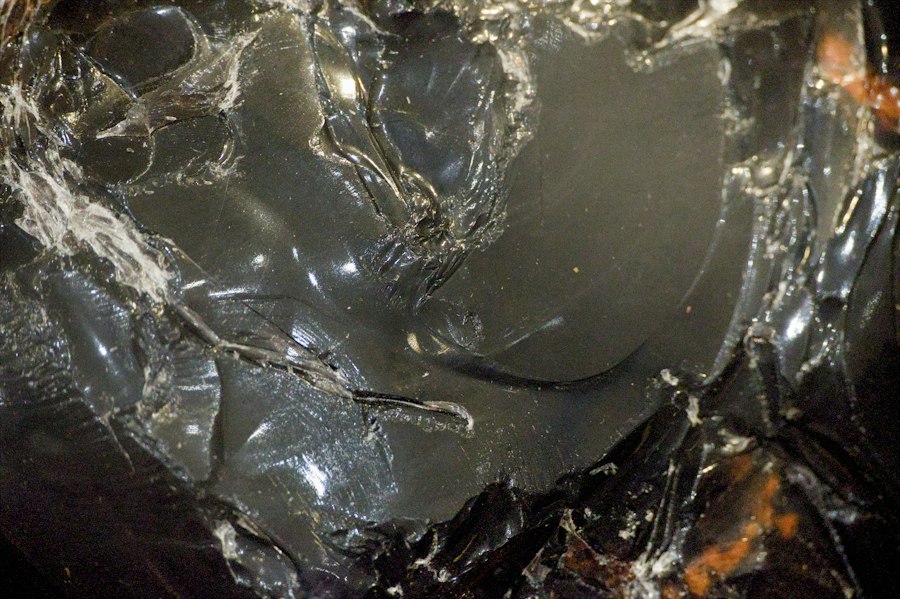
The core technique for shaping flint and obsidian was percussion flaking. This method involves striking a piece of raw stone, known as the core, with another object, called a hammerstone, to detach smaller pieces, called flakes. The success of this technique relies on understanding the physics of fracture mechanics and the inherent properties of the stone.
Understanding Conchoidal Fracture
Conchoidal fracture is the key to creating sharp edges from brittle materials like flint and obsidian. When a force is applied to these materials, stress concentrates at a point. As the stress exceeds the material’s tensile strength, a fracture initiates at this point and propagates outwards. In conchoidal fracture, the fracture surface forms a smooth, curved, shell-like shape. The point of impact, or the initiation point of the fracture, is usually at a slight angle to the surface. As the fracture propagates, it creates a characteristic ripple pattern radiating from the initiation point, similar to the ripples on the surface of water. The shape of the flake produced is directly related to the angle and force of the impact, as well as the shape of the core and the point of impact. A successful flake will have a sharp edge along its trailing edge where it detached from the core, and the bulb of percussion, a raised area on the flake’s surface near the point of impact, is a tell-tale sign of the flaking process.
The Hammerstone: The First Tool for Making Tools
The hammerstone was the primary tool used for percussion flaking. These were typically rounded, fist-sized stones, often made of quartzite, basalt, or granite, materials that were harder and more durable than the stone being worked. The choice of hammerstone could influence the type of flake produced.
Hard Hammer Percussion
The earliest and most basic form of percussion flaking involved the use of a hard hammerstone. This technique, known as hard hammer percussion, involved striking the core directly with another stone. This method generally produces less controlled flakes, often thicker and with a more pronounced bulb of percussion. It was well-suited for initial shaping and breaking down larger nodules of flint or obsidian into manageable pieces, as well as for producing robust tools like choppers and handaxes. The force applied with a hard hammerstone could be significant, allowing for the removal of larger flakes and the rapid reduction of the core. However, it offered less precision for creating fine details or delicate edges. The angle of impact was also critical; a direct, forceful strike at a low angle would tend to detach a longer, thinner flake, while a steeper angle could result in a more compact flake.
Soft Hammer Percussion
As toolmaking skills advanced, early humans discovered the advantage of using softer hammerstones, such as those made of antler, bone, or even hardened wood. This technique, known as soft hammer percussion, allowed for much finer control over flake removal. Soft hammers distribute the force over a slightly larger area, resulting in thinner, wider flakes with a less pronounced bulb of percussion. This precision was crucial for creating more refined tools, such as finely serrated blades, delicate projectile points, and scrapers. The elasticity of the antler or bone hammer also contributed to a more controlled fracture, minimizing the risk of shattering the core. This method enabled the creation of more intricate details and sharper, more uniform edges. The softer material absorbed some of the shock, preventing the rapid, uncontrolled fracturing that could occur with a hard hammer.
Pressure Flaking: The Art of Refinement

While percussion flaking was essential for initial shaping, pressure flaking represented a significant leap in toolmaking sophistication. This technique involved applying direct pressure to the edge of a worked piece to detach small, precise flakes. It was the method of choice for creating the fine retouching and intricate detailing that characterized many prehistoric tools, particularly projectile points and knives.
The Tools of Pressure
The tools used for pressure flaking were typically made of hard materials like antler tines, bone awls, or specialized stone tools with a point. The craftsman would brace the tip of the pressure tool against the edge of the stone being worked and apply steady, downward pressure.
Direct Pressure Flaking
In direct pressure flaking, the pressure tool is applied directly to the edge of the flake or core. The craftsman would hold the stone being worked in one hand, bracing it against a firm surface or their body, and apply pressure with the other hand using the pressure tool. The angle and force of the pressure, combined with the precise placement of the tool, determined the size and shape of the detached flake. This technique was used for creating serrations on blades, shaping the notches on projectile points, and thinning the edges of tools. The consistent application of pressure, combined with the inherent brittleness of the material, would cause a small flake to detach along the intended line. The repetition of this process allowed for the gradual refinement of the tool’s form and the creation of very sharp, durable edges.
Indirect Percussion as a precursor to Pressure
It is theorized that indirect percussion, where a punch (often made of antler or bone) is placed on the core and then struck by a hammerstone, might have served as an intermediate step in the development of pressure flaking. This method offers more control than direct hard hammer percussion but less precision than direct pressure flaking. However, its prevalence in the archaeological record is debated, with some scholars suggesting it was less common than direct percussion or pressure techniques. If utilized, it would have provided a way to detach larger flakes with more controlled placement than direct percussion, bridging the gap towards the fine control offered by pressure flaking.
The Art of Sharpening and Retouching
The ultimate goal of toolmaking was to create implements that were effective for their intended purpose. Sharpening and retouching were ongoing processes, as stone tools would dull with use. The techniques employed for these tasks were essentially variations of the flaking methods discussed earlier, but with a focus on creating and maintaining a cutting edge.
Edge Maintenance: The Need for Resharpening
Stone tools, particularly those used for cutting, scraping, or piercing, would inevitably lose their sharpness through abrasion and impact. The brittle nature of the fractured edges meant that small chips and dull spots would develop over time. This necessitated regular resharpening to maintain their efficacy. The ability to resharpen tools in the field, using readily available materials, would have been a significant advantage for early humans. Imagine a hunter needing to prepare an animal carcass with a dull knife; the ability to quickly restore its sharpness would be crucial for survival.
Retouching for Specific Tasks
Retouching involved the careful removal of small flakes from the edge of a tool to create a specific type of cutting edge or to repair damage. For example, a scraping tool might have its edge retouched to create a slightly rounded or bevelled surface, ideal for scraping hides. A knife edge might be retouched to maintain its sharpness and create a fine, straight cutting surface. Projectile points often underwent extensive retouching to create symmetrical shapes, sharp tips, and notches for hafting. This process transformed a basic sharp edge into a finely tuned instrument, perfectly adapted for its intended function. The angle of the retouching flakes would determine the angle of the new edge. A steeper angle would create a more robust, though perhaps less sharp, edge, while a shallower angle would result in a finer, sharper edge, more prone to damage but more effective for delicate tasks.
Primitive tool making has fascinated archaeologists and enthusiasts alike, particularly the techniques used for sharpening materials such as flint and obsidian. These ancient methods not only highlight the ingenuity of early humans but also provide insight into their daily lives and survival strategies. For those interested in exploring this topic further, a related article discusses the evidence of ancient technologies and their implications for our understanding of human history. You can read more about it in this insightful piece on lost technologies.
The Legacy of Lithic Technology
| Metric | Flint | Obsidian |
|---|---|---|
| Hardness (Mohs scale) | 6.5 – 7 | 5 – 6 |
| Sharpness | Good, durable edge | Extremely sharp, finer edge |
| Edge Retention | High | Moderate |
| Ease of Sharpening | Moderate | Easy but brittle |
| Typical Tool Types | Arrowheads, scrapers, knives | Cutting blades, surgical tools, arrowheads |
| Fracture Type | Conchoidal | Conchoidal |
| Common Use Period | Paleolithic to Neolithic | Paleolithic to present (specialized use) |
| Material Source | Chert deposits | Volcanic glass |
The mastery of flint and obsidian knapping was not merely a technological achievement; it was a fundamental driver of human evolution and societal development. The ability to create effective tools opened up new possibilities for survival, resource acquisition, and cultural expression.
Expanding the Human Diet and Lifestyle
The development of sharp stone tools allowed early humans to process a wider range of food sources. They could butcher animals more efficiently, access marrow from bones, and process plant materials more effectively. This expanded dietary base provided the necessary nutrients for brain development and supported larger, more complex social groups. Furthermore, tools enabled the construction of more sophisticated shelters, the creation of clothing, and the development of other essential technologies that improved overall quality of life and allowed humans to inhabit diverse environments. The ability to fashion tools for hunting, gathering, and defense provided a significant selective advantage, contributing to the spread and diversification of Homo sapiens.
The Birth of Art and Symbolism
Beyond their practical applications, the creation of finely crafted stone tools also laid the groundwork for aesthetic appreciation and symbolic expression. The symmetry, balance, and skill evident in many prehistoric lithic artifacts suggest an emerging sense of artistry. While the primary function was utilitarian, the careful shaping and finishing of some tools may have held symbolic meaning or indicated status within a group. The consistent patterns and styles found in the lithic assemblages of different prehistoric cultures also suggest the transmission of knowledge and the development of distinct cultural traditions, the precursors to more complex forms of art and communication. The very act of creating a beautiful and functional object, whether for practical use or for display, hints at a burgeoning sense of creativity and an appreciation for form that extends beyond mere utility.