The muffled silence that descends with a heavy snowfall is both serene and deceptive. For those venturing into the winter wilderness, this blanket of white, while beautiful, can quickly erase the familiar landmarks and transform a known trail into an alien landscape. In such conditions, the ability to track footsteps, both one’s own and those of others, becomes a critical survival skill. This article delves into the essential tips and tools necessary for navigating and leaving a discernible trail in the deep snowstorm wilderness, ensuring safety and the potential for rescue if needed.
Understanding Snow and Its Track-Preserving Qualities
The nature of snow is not uniform. Its ability to hold a track, or conversely, to obscure it, is dependent on a complex interplay of temperature, moisture content, and wind. Understanding these variables is the first step in effective snow tracking. Different types of snow will behave differently underfoot, impacting how easily a track is made and how long it persists.
Crystal Structure and Its Impact
Snow crystals form in the atmosphere and their structure is dictated by the temperature and humidity at the time of formation. When these crystals land on the ground, their individual shapes and the way they bond together significantly influence track quality. Light, fluffy powder, formed at very cold temperatures, has individual, distinct crystals with little cohesion. Stepping into deep powder will create a broad, often indistinct impression where the snow is displaced rather than compacted. While this can be difficult to follow, it does leave a void. Conversely, snow formed at temperatures closer to freezing point, or when there is higher humidity, will often have rounded, granular crystals, sometimes referred to as “graupel” if they are larger and rimed. This type of snow tends to bond more readily, creating a more consolidated base. Stepping into this can result in a firmer, more defined print, especially if the underlying surface is packed or frozen.
Temperature and Moisture Content
The ambient temperature plays a crucial role in how snow behaves. At extremely low temperatures (well below freezing), snow remains dry and brittle. This makes it harder to pack and can lead to tracks that are easily blown away by wind. As temperatures approach freezing, snow becomes “wetter,” meaning the individual ice crystals gain a thin film of liquid water. This film acts as a lubricant and also allows the crystals to adhere to each other more effectively. Stepping into wet snow often results in well-defined, sometimes even muddy-looking, footprints. This wetness also means the snow is more prone to melting and refreezing, which can create an icy crust that both preserves tracks and makes them harder to break. High humidity, especially during a snowfall event, contributes to this “wetter” snow. Conversely, if snow has recently melted and refrozen, it might form a hard crust that is difficult to penetrate, leading to shallow, less visible tracks.
Wind: The Great Eraser
Wind is perhaps the most significant factor in the ephemeral nature of snow tracks. Even in the most ideal snow conditions, a strong wind can quickly obliterate footprints. In light, powdery snow, wind can simply blow the loose crystals away, smoothing out impressions within minutes. In more consolidated snow, wind can sculpt drifts and scour areas, smoothing over tracks. However, wind can also sometimes reveal tracks. If wind blows snow from one area to another, it can create patterns that highlight subtle depressions left by footsteps, especially if the wind direction is consistent. Understanding the prevailing wind patterns in an area can therefore be a critical part of interpreting the snowscape. Experienced trackers learn to look for subtle evidence, such as snow piled up on one side of a depression, indicating the direction of the wind at the time the track was made.
In the wilderness, tracking footsteps in a deep snowstorm can be a challenging yet fascinating endeavor, as it allows adventurers to connect with nature and understand animal behaviors. For those interested in exploring the intricacies of tracking in such conditions, a related article discusses the importance of understanding environmental factors and the techniques used by seasoned trackers. To learn more about this topic, you can read the article here: Comparing Manufacturing Wages: Mexico vs. China.
Essential Tools for Visibility and Navigation

When venturing into snow-laden wilderness, visibility is paramount. Beyond personal navigation skills, certain tools can significantly enhance one’s ability to see and be seen, and to leave a clear mark for those who might need to follow. These tools range from simple personal gear to more advanced technological aids.
High-Visibility Clothing and Markers
The most fundamental aspect of ensuring your footsteps are trackable and that you are visible is through the strategic use of high-visibility gear. Brightly colored clothing, such as neon orange or yellow, is standard for hunters and backcountry enthusiasts for a reason. In a monochrome world of white, these colors offer stark contrast, making it easier for others (and yourself, if you need to backtrack) to spot you or your trail. Consider a bright colored pack cover, hat, or even gaiters. Beyond personal clothing, consider carrying small, brightly colored flags or streamers. These can be tied to branches along your route, especially if you are breaking trail or venturing off-path. While these are not directly related to tracking footsteps, they create a visual breadcrumb trail that complements your footprints and can be a lifesaver if visibility drops to near zero. Some emergency kits also include brightly colored signaling panels that can be unfurled.
Navigation Devices and Their Role
While not directly used for marking footsteps in the snow, reliable navigation devices are indispensable when deep snow can obscure terrain. A GPS unit, either a dedicated handheld device or a smartphone with reliable offline mapping capabilities, is crucial. Pre-loading maps of the area is essential, as cell service is often nonexistent in remote wilderness. Your GPS will help you maintain your bearings and verify your path, even if your physical tracks are indistinct. A compass and a physical map should always accompany your GPS as a backup. Learn to use them in conjunction with your GPS. For leaving tracks, think about how your device might be used. Some GPS devices allow you to record your track as you go, creating a digital breadcrumb trail. This can be invaluable for backtracking or for rescue teams attempting to locate you. Consider attaching a brightly colored cord or ribbon to your backpack that can trail behind you, offering a visual cue.
Signaling Devices for Emergencies
In a severe snowstorm, your primary concern may shift from simply navigating to ensuring you can signal for help if needed. Whistles are incredibly effective for their range and are less taxing than yelling. A loud, piercing whistle can carry a considerable distance, even through wind. Consider carrying multiple whistles, perhaps one on your person and one in your pack. Mirror signaling devices are also excellent for daytime use, reflecting sunlight to catch the attention of aircraft or distant observers. For nighttime or low-visibility conditions, a powerful LED flashlight or headlamp is essential. Consider carrying spare batteries and keeping them in a warm, dry place. Some individuals also carry personal locator beacons (PLBs) or satellite messengers. These devices can transmit your location to rescue services via satellite, providing a critical lifeline in remote areas. While these don’t directly help track your footsteps, they are part of a comprehensive safety strategy when venturing into challenging winter conditions.
Techniques for Leaving Clear and Discernible Tracks
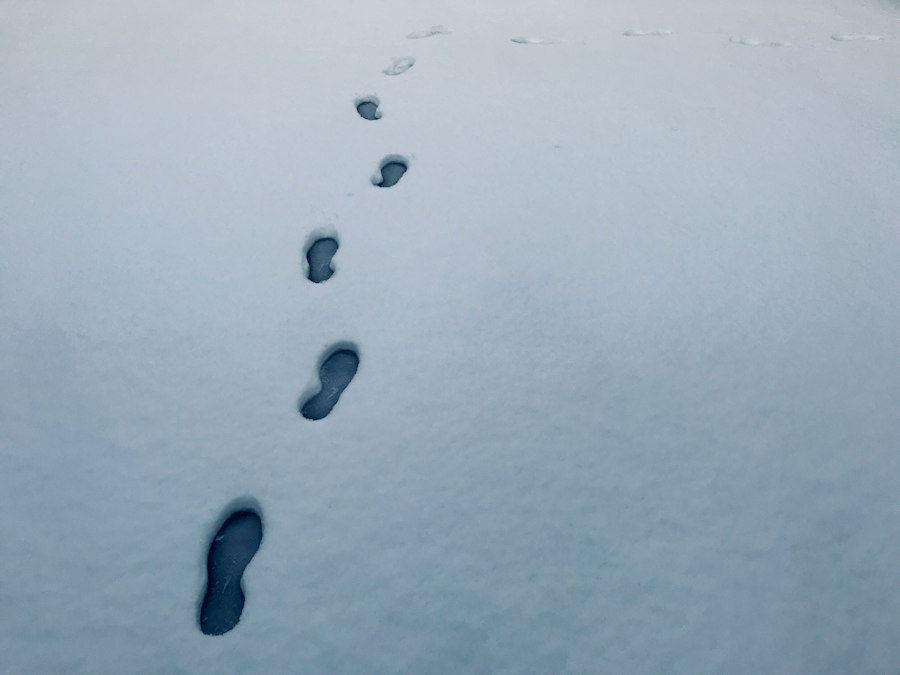
The act of walking in deep snow can be challenging, and the resulting footprints may not always be clear. However, employing specific techniques can make your passage more easily followed, both by yourself if you need to backtrack and by potential rescuers.
The Art of the Deliberate Step
In deep, soft snow, simply walking as you normally would can result in shallow, widely spaced footprints that disappear quickly. The key to leaving discernible tracks is to be deliberate with each step. When breaking trail, aim for consistent stride length and depth. Instead of a quick, light step, consciously press your foot down with more weight. This will create a deeper impression, pushing more snow aside. If you are wearing snowshoes, ensure they are the correct size for the snow conditions and your weight. Properly fitted snowshoes will distribute your weight more effectively, preventing you from sinking too deeply and creating more defined prints. When walking without snowshoes in very deep powder, it might be necessary to take shorter, more forceful steps, ensuring your boot sinks sufficiently to create a visible void. Think about the angle of your foot as you land; a more perpendicular landing will create a deeper print than a glancing one.
Utilizing Snowshoes and Their Impact
Snowshoes are designed to distribute a person’s weight over a larger surface area, preventing them from sinking into deep snow. This fundamental principle also makes them excellent tools for leaving trackable impressions. The larger surface area of a snowshoe creates a broader, more consistent footprint than a boot alone. When snow is deep and soft, the impression left by a snowshoe will be a clear, often deep, indentation. The pattern of the snowshoe itself, often with cleats or bindings, can also be imprinted into the snow, providing a unique signature to your tracks. For optimal track clarity, ensure your snowshoes are properly adjusted and that you walk with a steady gait. Avoid lifting your feet too high, as this can cause snow to fall back into your prints. Aim for a smooth, gliding motion. In crusty snow, the metal edges of some snowshoes can also break through the crust, leaving a more defined track.
Marking Your Trail with Natural and Artificial Aids
While your footsteps are the primary form of trail marking, supplementing them with other aids can significantly improve their visibility and continuity. When breaking trail, be mindful of your surroundings. If you encounter a sturdy tree or a prominent rock, consider leaving a subtle marker. This could be as simple as a small pile of snow placed on one side of the trunk, or a small branch broken and placed pointing in your direction of travel. These natural markers are easily overlooked by casual observers but can be critical when you need to retrace your steps or for searchers. In addition to your high-visibility markers mentioned earlier, consider carrying a brightly colored flagging tape. This can be tied to branches at regular intervals, especially when visibility is poor or the terrain is complex. When using flagging tape, be sure to tie it securely and at eye level, ensuring it is visible but also not so obtrusive that it permanently alters the environment. Remember to remove any flagging tape you use upon your departure, leaving no trace.
Interpreting Snow Tracks: Reading the Story of the Snow
Tracking in snow is not just about leaving a mark; it’s also about reading the marks left by others and by nature. Understanding how snow preserves and distorts impressions allows for a much deeper understanding of the environment and its inhabitants.
Identifying Different Types of Impressions
When you encounter an impression in the snow, the first step is to identify what made it. Is it a boot print, a snowshoe imprint, an animal track, or a natural phenomenon like wind-blown snow? The shape and size are key. Boot prints will typically have a distinct sole pattern, if visible, and will vary in size depending on the footwear. Snowshoe tracks are generally larger and broader, often with a more uniform or textured pattern from the snowshoe itself. Animal tracks are highly variable depending on the species, but they will usually exhibit characteristic patterns of paw prints or hoof prints, often with a distinct gait. Pay attention to the depth of the impression. Deep impressions indicate significant weight and often softer snow conditions, while shallow impressions might suggest lighter individuals, lighter snow, or a hardened surface. Look for any repeating patterns that suggest a gait or a series of steps.
Assessing Direction and Speed
The way snow is displaced around an impression can tell you a great deal about the direction of travel and the speed at which it was made. In soft snow, snow will often be pushed forward in front of a moving foot or object, creating a slight mound or drift. The absence of this forward displacement, and the presence of snow piled up behind the impression, suggests the direction of travel. For instance, if you see a boot print where snow is packed down in front and loosely piled up behind, the person was moving away from you. The spacing between successive tracks is another indicator of speed. Closer, more frequent steps often suggest a slower pace, while longer, more spaced-out strides can indicate a quicker pace or a person trying to cover ground efficiently. If you find a series of deep, widely spaced tracks, it might suggest someone was moving quickly or even running.
Recognizing Weather-Influenced Distortions
As mentioned previously, wind and temperature changes can significantly alter the appearance of snow tracks. Wind can sculpt and smooth impressions, sometimes erasing them completely or creating drifts that distort their original shape. If you see tracks that appear softened or partially filled in, it is a strong indicator that wind has been active since they were made. The direction of the wind can often be inferred by the way the snow is piled up. For example, if snow is consistently blown from the west, you might see tracks with snow accumulated on the eastern edge of the impression. Temperature fluctuations can lead to melting and refreezing. If you see a track that appears to have a thin, icy crust forming within it, it suggests the snow has melted and refrozen. This can preserve the track for longer but also make it harder to break through if you are trying to follow it. Understanding these distortions is crucial for accurately interpreting what you are seeing and for determining the age of the track. A fresh track in pristine snow will look very different from an old track that has been subjected to wind and temperature cycles.
In the midst of a deep snowstorm, tracking footsteps in the wilderness can be a challenging yet exhilarating experience for adventurers and researchers alike. Understanding how to navigate and interpret these tracks is crucial for safety and wildlife observation. For those interested in the historical context of tracking and its applications, a fascinating article explores the ingenuity of ancient technologies, such as Archimedes’ death ray, which highlights the innovative spirit of human beings in overcoming natural obstacles. You can read more about this intriguing topic in the article found here.
Safety and Preparedness: The Foundation of Winter Tracking
| Metric | Description | Typical Value / Range | Measurement Method | Impact on Tracking |
|---|---|---|---|---|
| Snow Depth | Depth of snow covering the ground | 30 cm to 150 cm | Snow probe or ruler | Deeper snow can obscure or distort footprints |
| Footprint Size | Length and width of individual footprints | 10 cm to 30 cm length | Measuring tape or ruler | Helps identify species and size of tracked animal/person |
| Snowstorm Wind Speed | Wind speed during snowstorm | 20 km/h to 80 km/h | Anemometer or weather reports | High winds can quickly cover or distort tracks |
| Temperature | Ambient temperature during tracking | -30°C to 0°C | Thermometer | Colder temps preserve tracks longer; thawing can deform tracks |
| Track Age | Time elapsed since footprints were made | Minutes to several hours | Visual assessment and environmental conditions | Older tracks are more likely to be obscured or melted |
| Snow Type | Consistency of snow (powdery, crusted, wet) | Powdery to crusted | Visual and tactile inspection | Powdery snow holds prints well; crusted snow may break underfoot |
| Visibility | Visibility conditions during tracking | Low (near zero) to moderate (several hundred meters) | Visual observation | Low visibility complicates locating and following tracks |
| Tracking Speed | Speed at which tracker moves | 1 km/h to 4 km/h | GPS or pacing | Slower speeds improve accuracy in difficult conditions |
Before even considering the techniques of tracking or the tools that aid it, a fundamental understanding of safety and preparedness is paramount. Venturing into a winter wilderness, especially during a snowstorm, carries inherent risks that must be mitigated through careful planning and appropriate gear.
The Importance of Informing Others
The most critical safety measure before any backcountry excursion is to inform someone of your plans. This includes your intended route, your estimated time of departure and return, and who to contact if you do not check in. This information is vital for initiating search and rescue operations should the unthinkable happen. Ensure your contact person knows who to call (e.g., local search and rescue, park rangers) and has all the necessary details. For more serious expeditions, consider leaving a detailed itinerary with a ranger station or a trusted individual who understands the severity of the conditions. Do not rely solely on cell phone service, as it is often unreliable in remote areas.
Essential Gear for Winter Conditions
A comprehensive winter survival kit is non-negotiable. This should include, but not be limited to: layers of insulating clothing (avoid cotton, opt for wool or synthetics), waterproof and windproof outer shells, warm gloves and mittens, a warm hat that covers the ears, waterproof and insulated boots, extra socks, a sleeping bag rated for sub-zero temperatures, a bivy sack or emergency shelter, a first-aid kit equipped for winter injuries, a reliable multi-tool or knife, waterproof matches or a reliable lighter, and high-energy, non-perishable food. Additionally, carry plenty of water or a method for melting snow, such as a stove and fuel. Headlamps with extra batteries are essential for navigating in low light conditions. Pack sufficient quantities of all items; it is always better to have too much than too little.
Mental Preparedness and Decision-Making
Beyond physical gear, mental preparedness is a cornerstone of winter survival. This includes understanding your own limits and those of your group. Weather conditions can change rapidly, and the ability to make sound decisions under pressure is critical. Learn to recognize the signs of hypothermia and frostbite in yourself and others. Be prepared to turn back if conditions deteriorate or if you are not adequately equipped or experienced for the situation. Overconfidence can be a dangerous enemy in the wilderness. Cultivate a mindset of respect for the environment and its power. Practice your navigation skills and your ability to use your gear in controlled environments before relying on them in a true emergency. When tracking, remember that your primary goal is safety, not necessarily documenting every single print you make. If you are in doubt, err on the side of caution and prioritize your well-being and the ability for others to find you.
In conclusion, tracking footsteps in a deep snowstorm wilderness is a multifaceted skill that combines environmental understanding, essential tools, effective techniques, and, most importantly, a robust foundation of safety and preparedness. By embracing these principles, adventurers can navigate the challenges of winter, leaving a clear trail and increasing their chances of a safe return.