The biting wind whipped across the tundra, carrying the scent of pine and the distant, guttural roar of something truly immense. For the early humans who eked out an existence during the Pleistocene epoch, often referred to as the Ice Age, this was not a scene from a nature documentary; it was the stark reality of their daily lives. Survival was a constant, precarious dance with a landscape dominated by colossal creatures, many of whom viewed humans not as fellow inhabitants, but as a potential meal or a territorial nuisance. These encounters, while often fatal for our ancestors, also played a crucial role in shaping human evolution, honing their instincts, and driving the development of tools and strategies that allowed them to persist. The Ice Age was a world of giants, and to live within it was to constantly confront the raw power of prehistoric beasts.
The Mammoth and the Mastodon: Gentle Giants or Terrifying Torrents?
Among the most iconic inhabitants of the Ice Age were the mammoth and the mastodon, both members of the order Proboscidea, distant relatives of modern elephants. While often grouped together, they were distinct species with different evolutionary paths and ecological niches. Their sheer size alone commanded respect, and any encounter, accidental or intentional, held significant peril.
The Woolly Mammoth: A Shaggy Colossus
The woolly mammoth (Mammuthus primigenius) is perhaps the most recognizable Ice Age megafauna. Covered in a thick, shaggy coat of reddish-brown fur, interspersed with longer guard hairs, they were perfectly adapted to the frigid environments of the Northern Hemisphere. Bulls could reach heights of over three meters at the shoulder and weigh up to six tons. Their immense tusks, which could grow over five meters long and curve in a formidable spiral, were not just for defense but also for digging through snow to find vegetation and for sparring with rivals.
For early humans, the woolly mammoth represented a monumental challenge and an unparalleled resource. A successful hunt could provide enough meat to feed a community for weeks, its hide offered warmth and shelter, and its bones and tusks were invaluable for toolmaking and art. However, bringing down such a beast was a dangerous undertaking. Small bands of hunters, armed with rudimentary spears tipped with sharpened stone or bone, would have to employ cunning and cooperation. They might drive mammoths off cliffs, trap them in bogs, or exploit their eyesight limitations by approaching from downwind. A stampeding herd, or even a single enraged individual, could easily crush a human with its immense weight and powerful tusks. The stories whispered around ancient campfires were undoubtedly filled with tales of both heroic hunts and tragic encounters where the mammoth’s raw power prevailed.
The Mastodon: A More Robust Dweller
The American mastodon (Mammut americanum) was a larger and more powerfully built relative of the mammoth. While not as tall, they were stockier, with a more massive build and a distinctively domed skull. Their teeth were adapted for stripping bark and leaves from trees, suggesting a more arboreal or woodland habitat compared to the open tundra favored by woolly mammoths. This dietary difference also meant they were likely more solitary or lived in smaller family groups than the large herds of mammoths.
Encountering a mastodon would have been an equally daunting prospect. While their tusks might not have been as dramatically curved as the mammoth’s, their sheer mass and strength were formidable. Their more robust build suggested a creature capable of immense power and aggression when threatened. Hunters would have faced similar challenges in bringing them down, requiring coordinated efforts and careful planning. The danger lay not only in direct confrontation but also in being caught unawares by a creature that could easily overturn trees or charge with surprising speed. The thick hide and bone structure of a mastodon would have presented a significant challenge to even the most effective Ice Age weaponry.
Ice Age wildlife was not only fascinating but also posed significant dangers to early humans. Encounters with massive creatures like saber-toothed cats and woolly mammoths could turn deadly in an instant, shaping the survival strategies of our ancestors. For those interested in exploring more about ancient times and the challenges faced by early civilizations, a related article can be found at Uncovering Lost Ancient Technology: A Documentary, which delves into the technological advancements that emerged in response to such perilous environments.
The Saber-Toothed Cat: A Ghostly Predator

Of all the predators that roamed the Ice Age landscape, the saber-toothed cat, most famously the Smilodon, instilled a primal fear. These magnificent and terrifying felines were not direct ancestors of modern lions or tigers but belonged to a distinct lineage of extinct felids. Their most striking feature, and the source of their name, were their extraordinary canine teeth.
Smilodon Fatalis: The King of the Pleistocene Predators
Smilodon fatalis, a species found primarily in North America, is perhaps the most iconic saber-toothed cat. These animals were powerfully built, with stocky bodies, short tails, and incredibly strong forelimbs. Their canine teeth could grow up to 28 centimeters long, slender and serrated, designed not for shearing bone but for delivering a swift, precise killing bite to the throat or belly of their prey. Their average weight was comparable to that of a modern lion, but their muscular build and predatory adaptations made them exceptionally dangerous.
For humans, a confrontation with a Smilodon was a terrifying prospect. While it’s unlikely that Smilodon actively hunted humans as a primary food source – our ancestors were relatively small and lacked the thick hides of larger prey – they were opportunistic predators. A lone hunter, or even a small group, might have been ambushed by a Smilodon defending its kill or mistaking a human for an easier meal. The suddenness of an attack, combined with the lethal precision of those massive fangs, would have made survival incredibly unlikely. Imagine the chilling silence before a blur of muscle and gleaming daggers descended. Early humans would have developed an acute awareness of their surroundings, listening for the faintest rustle in the undergrowth, hyper-vigilant for the ghostly presence of this apex predator. Their ability to evade or deter such a formidable hunter would have been a testament to their developing intelligence and social cooperation.
Hunting Habits and Human Avoidance
Understanding the hunting strategies of saber-toothed cats is crucial to understanding their danger to humans. Smilodon likely preyed on large herbivores like bison, camels, and young mammoths or mastodons. They were ambush predators, relying on stealth and a powerful pounce to bring down their quarry. This predatory style meant they were incredibly effective in their natural environment.
For humans, avoiding such a predator would have been paramount. Living in groups, maintaining lookouts, and using fire to deter nocturnal animals would have been essential survival tactics. The discovery of Smilodon fossils in association with human artifacts, particularly in tar pits like La Brea, suggests a complex relationship. While some evidence points to Smilodon scavenging on carcasses left by other predators, including humans, it also indicates that these cats may have been attracted to areas where humans were present, perhaps due to the presence of prey that humans also hunted. This proximity, while potentially leading to scavenging opportunities for Smilodon, also increased the risk of direct confrontation for humans. The knowledge of Smilodon’s territory, hunting times, and preferred ambush spots would have been crucial lore passed down through generations, a silent curriculum of survival.
The Dire Wolf and Other Carnivorous Threats

Beyond the formidable saber-toothed cats, the Ice Age was home to a menagerie of other carnivores, many of whom posed a significant threat to early humans. These included large canids, ursids, and even formidable felines that, while perhaps not as specialized as Smilodon, were still apex predators in their own right.
The Dire Wolf: A Pack Hunter of Terrifying Scale
The dire wolf (Canis dirus) was a larger and more robust relative of the modern gray wolf. These powerful canids were roughly 20% heavier than modern wolves and possessed a more massive skull and dentition, indicating a diet of larger prey. They hunted in packs, a social structure that amplified their predatory prowess and made them a formidable force on the Pleistocene plains.
For early humans, the dire wolf represented a different kind of danger than the solitary Smilodon. While a single dire wolf might have been manageable with the right weaponry and a group, a coordinated pack could be overwhelming. Imagine facing a dozen or more of these powerful hunters, their eyes gleaming in the twilight, working together to isolate and bring down prey. Humans, even in small groups, would have been vulnerable to being ambushed from multiple directions. The dire wolf’s pack mentality meant they could potentially overwhelm even well-armed human groups, especially if the humans were foraging or caught in vulnerable positions. Stories of heroic defenses against wolf packs, of circling fires and brandished spears, likely echo the reality of human interactions with these apex canids. The psychological impact of hearing the chilling howl of a dire wolf pack in the distance would have been enough to send shivers down the spine and reinforce the need for vigilance and community.
Bears of the Ice Age: Ursus Spelaeus and Beyond
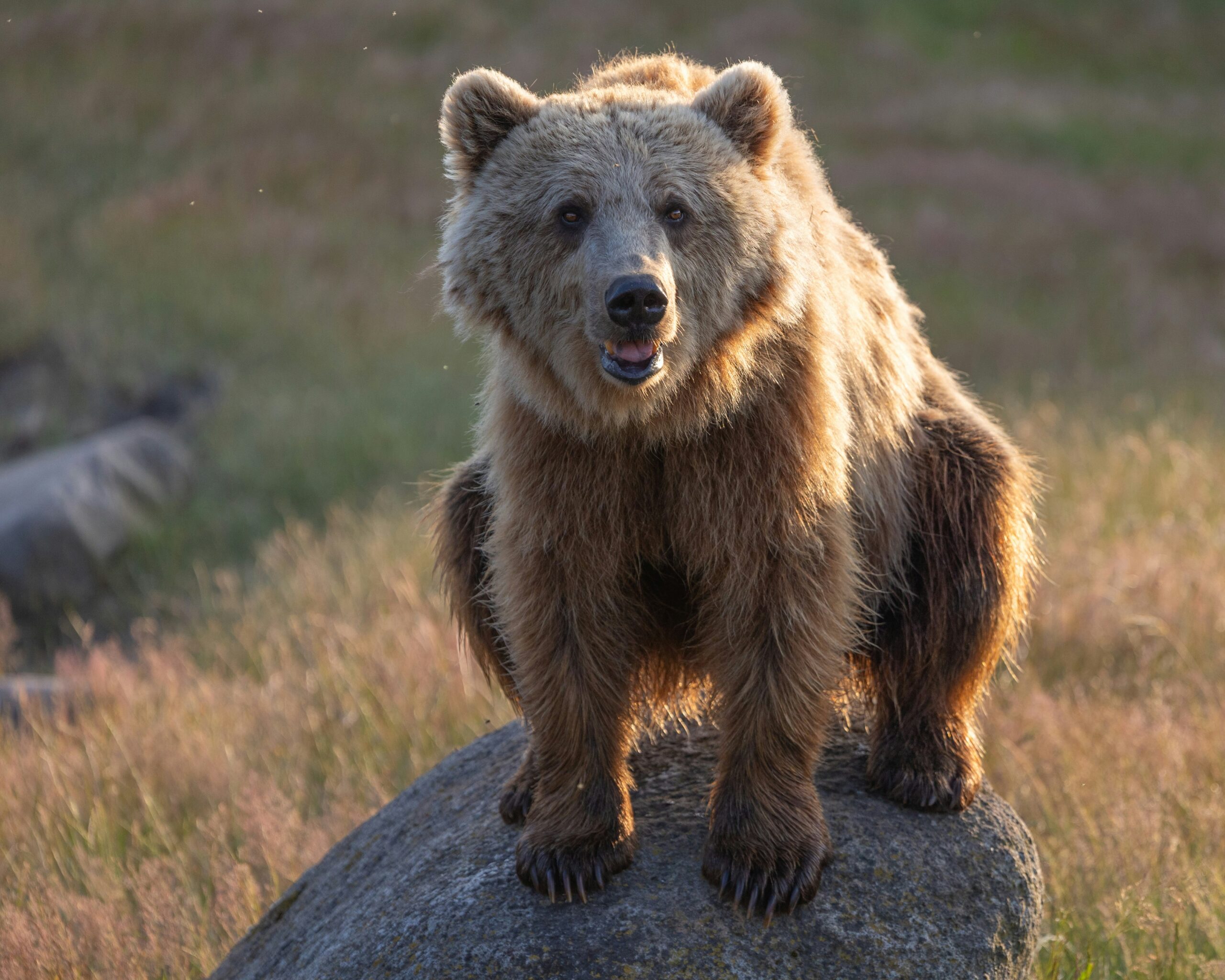
The Ice Age also saw the reign of formidable bears. The cave bear (Ursus spelaeus), for instance, was significantly larger than modern brown bears, with adult males reaching weights of over 500 kilograms. While primarily herbivorous, cave bears were known to be aggressive, and their sheer size and strength would have made them a terrifying encounter, especially if their den was disturbed or they felt threatened.
Other bear species, like the American lion (Panthera atrox) – which, despite its name, was actually a large felid, more closely related to the tiger than the lion – and various species of prehistoric cats, added to the predatory landscape. While the American lion, a massive cat capable of taking down large prey, was more of a direct competitor for the same large herbivores that humans hunted, it also posed a direct threat. The presence of such a diverse array of powerful carnivores meant that no corner of the Ice Age environment was entirely safe for early humans. The development of sophisticated hunting strategies, the use of fire, and the establishment of defensible settlements were not merely conveniences; they were absolute necessities born from the constant threat posed by these prehistoric beasts.
The Great Herbivores: Collateral Damage from Gentle Giants
While the focus often falls on the predators, the massive herbivores of the Ice Age, despite their often placid nature, also presented significant dangers to early humans. Their sheer size, their unpredictable movements, and the sheer power of their bodies could turn an otherwise peaceful encounter into a deadly one.
The Cave Lion and Other Large Felines
The cave lion (Panthera spelaea), an ancestor of the modern lion, was a powerful predator that inhabited Eurasia during the Pleistocene. It was larger than modern lions and was a formidable hunter of the large herbivores that roamed the Ice Age landscapes. While its primary prey were not humans, encounters could still be deadly. A territorial dispute, or a lion defending its kill, could easily escalate into a dangerous confrontation for any humans who stumbled upon the scene. The awe-inspiring power and speed of such a creature, combined with its sharp claws and teeth, made it a creature to be respected and avoided at all costs.
Megafaunal Stampedes and Accidental Encounters
Even herbivores like mammoths, mastodons, and giant ground sloths, despite not being predatory in intent, posed immense risks. A startled herd of mammoths, panicked by a predator or by human activity, could become a devastating force of nature. Their thundering hooves could churn the earth, and a single brush with their massive bodies could result in serious injury or death. Imagine being caught in the path of a stampeding herd, a torrent of fur, tusks, and immense muscle that cared nothing for the tiny humans in its wake.
Giant ground sloths, like the Mylodon, while often depicted as slow-moving creatures, were still enormous animals that could weigh several tons. An accidental collision, or a startled sloth defending itself, could be lethal. The sheer scale of these animals meant that even a defensive shrug or a clumsy step could be catastrophic for a human. Early humans had to develop an acute sense of awareness, not just of where the predators were, but also of the behavior and potential dangers posed by the colossal herbivores that shared their world. Understanding migratory patterns, herd dynamics, and the signs of an agitated animal would have been as crucial for survival as knowing how to wield a spear.
In exploring the fascinating world of ice age wildlife, one cannot overlook the dangerous encounters that early humans faced with formidable creatures such as mammoths and saber-toothed cats. These interactions not only shaped the survival strategies of our ancestors but also influenced the evolution of human behavior. For a deeper understanding of how environmental factors can impact human development, you might find it interesting to read about economic shifts in different regions, as discussed in this article on Mexico’s foreign direct investment. The parallels between adapting to changing circumstances in both ancient and modern contexts are truly compelling.
Learning to Coexist and Conquer: The Human Factor
| Species | Type of Encounter | Danger Level | Frequency of Encounters | Common Defensive Behavior |
|---|---|---|---|---|
| Saber-toothed Cat (Smilodon) | Predatory attack | High | Rare | Flight or aggressive posturing |
| Mammoth | Territorial charge | Moderate | Occasional | Trumpeting and charging |
| Woolly Rhinoceros | Defensive gore | High | Uncommon | Stomping and horn thrusts |
| Dire Wolf | Pack hunting | Moderate | Frequent | Howling and coordinated attacks |
| Giant Ground Sloth | Defensive swipe | Moderate | Rare | Powerful claw swipes |
The story of Ice Age wildlife is not solely about the ferocity of the beasts; it is also about the remarkable adaptability and ingenuity of early humans. Faced with these colossal challenges, our ancestors developed strategies and technologies that allowed them not only to survive but to thrive, ultimately becoming the dominant species on the planet.
The Evolution of Tools and Tactics
The need to hunt large game and defend against predators drove innovation. The development of sophisticated stone tools, such as finely crafted spear points, scrapers, and knives, provided humans with the means to effectively hunt and process large animals. The creation of projectiles, like the spear-thrower (atlatl), increased hunting range and safety, allowing hunters to wound large animals from a greater distance. The coordinated hunting strategies employed by human groups, drawing on communication and teamwork, were crucial for bringing down prey and warding off predators. The use of fire, a fundamental human innovation, provided protection from nocturnal carnivores and a means to cook food, making it more digestible and safer.
The Social Advantage: Community and Knowledge
Perhaps the most significant advantage early humans possessed was their social structure. Living in cooperative groups provided a collective defense against predators, allowing for shared vigilance and coordinated responses to threats. The transmission of knowledge and experience across generations was vital. Elders would have passed down invaluable information about animal behavior, hunting grounds, dangerous territories, and effective defense strategies. These stories, warnings, and lessons formed a vital part of the human curriculum for survival in a world dominated by prehistoric beasts. The very act of surviving these dangerous encounters fostered a sense of community and resilience, shaping the development of human culture and our place in the natural world. The Ice Age was a crucible, forging not just humans, but a deep and enduring relationship with the wild, a testament to both the power of nature and the indomitable spirit of humanity.
