The Whispers of the Forest Floor
The chill of winter settled deep into the bones of the earth. For ancient humans, survival hinged on their ability to harness the elements, and chief among these was fire. Fire meant warmth, protection from predators, the ability to cook food, and the crafting of tools. Yet, in the sodden embrace of a wet winter, finding dry fuel was a constant, pressing challenge. The ground, saturated by rain and snowmelt, seemed determined to suffocate any spark. How did our ancestors, without the convenience of modern igniters or readily available dry tinder, manage to coax life-giving flames from the damp, cold world around them? The answer lay not in magic, but in keen observation, intimate knowledge of their environment, and a deep understanding of the subtle language of wood.
Ancient humans developed various strategies to locate drier wood above the wet winter ground, often relying on their understanding of the environment and seasonal changes. This topic is closely related to the broader themes of resource management and adaptation in challenging conditions, which can be explored in the article “Securing the Final Frontier: Militarization of Deep Space Logistics.” This piece discusses how humans have historically navigated and secured resources in extreme environments, drawing parallels to the survival techniques of our ancestors. For more insights, you can read the article here: Securing the Final Frontier: Militarization of Deep Space Logistics.
Seeking Sanctuary: Where Dryness Lingers
The primary strategy for ancient humans was not to conquer the wet, but to find the places where dryness still held dominion. The forest, though seemingly uniform in its winter dampness, harbored hidden pockets of respite. These weren’t random discoveries; they were the result of generations of accumulated knowledge, passed down through stories, demonstrations, and the hard lessons of trial and error.
The Advantage of Elevation
One of the most intuitive places to seek dry wood was on higher ground. Rain and snowmelt naturally drain downwards, leaving elevated areas – ridges, hillsides, and the upper slopes of valleys – less saturated than the low-lying ground. Ancient peoples understood this fundamental principle. They would venture to these elevated zones, knowing that the soil there would hold less moisture, and consequently, the fallen branches and deadwood resting upon it would be drier. This simple act of seeking higher ground significantly increased their chances of finding usable fuel.
The Embrace of the Canopy
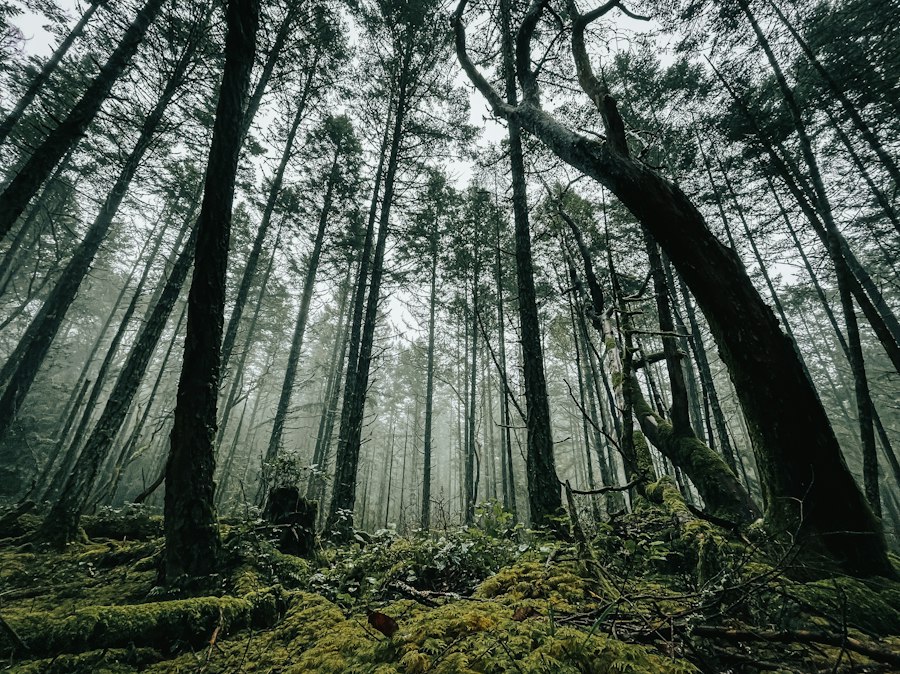
Another critical observation was the relationship between trees and the dryness of the wood they shed. The dense canopy of evergreen trees, particularly conifers like pines and firs, offered a significant advantage. Their needles and branches created a natural umbrella, shielding the forest floor beneath from the full force of precipitation. Fallen branches that landed within the protective embrace of these evergreens were far more likely to remain dry than those exposed to the elements. Ancient humans learned to identify these “dry pockets” beneath the thickest boughs, often finding accumulations of pine needles, cones, and small branches that were excellent tinder. The thicker the stand of evergreens, the greater the likelihood of finding dry fuel.
The Sheltering Presence of Rocks and Structures
Natural shelters also played a vital role. Large rock overhangs, shallow caves, and even the lee side of massive boulders offered protection from rain and wind. Wood that had fallen and come to rest in these sheltered locations had a much higher probability of staying dry. Furthermore, if ancient humans had established semi-permanent shelters, such as those made of wood and earth, the areas immediately surrounding these structures, particularly on the leeward side, could become microclimates where drier wood might accumulate. The very act of building and inhabiting a space altered the local environment in subtle ways that benefited fuel collection.
The Art of Standing Deadwood
Perhaps the most valuable source of dry wood was what the ancients referred to as “standing deadwood” – trees or large branches that had died but remained upright, supported by other trees or their own strong roots. These dead elements were naturally elevated above the saturated ground, allowing air to circulate around them, promoting drying. This was a treasure trove for experienced foragers. Not only was the wood drier, but it was often less decayed than wood lying on the ground, meaning it was more likely to burn efficiently. The challenge with standing deadwood was safely accessing it. This required knowledge of tree stability, an understanding of how to break off branches without causing a dangerous collapse, and often, the use of tools or coordinated efforts.
The Secrets of Decomposition: Recognizing the Signs

Even when wood was found, its condition was paramount. Ancient humans were adept at reading the signs of decomposition, understanding which wood was too far gone to be useful and which held the promise of a good burn. This wasn’t just about visual cues; it involved touch, smell, and even sound.
The Feel of Dryness: Brittle and Light
The most fundamental test was tactile. Dry wood, even when slightly damp on the surface from ambient moisture, would feel lighter and more brittle than waterlogged wood. Waterlogged wood would feel heavy, dense, and often slick to the touch. Ancient individuals would pick up potential fuel, testing its weight and flexibility. A branch that snapped cleanly with a sharp crack was a good sign, indicating a lack of internal moisture. A branch that bent or felt spongy was likely too wet to be of immediate use. This sensitivity to touch was honed through constant interaction with wood in all its states.
The Sound of Dryness: A Sharp Snap
The auditory experience of wood was also a significant indicator. When dry wood was broken or struck, it produced a distinct, sharp cracking sound. Wet wood, on the other hand, would often emit a dull thud or a soft, muffled sound, due to the water absorbing and dampening the vibrations. Experienced foragers could, by listening to the sound of a branch snapping, quickly differentiate between usable fuel and wood that was too saturated. This auditory perception was a crucial, often subconscious, element of their fuel-gathering strategy.
The Aroma of Decay: Fungal Signatures
While not always the primary indicator, the smell of wood could also provide clues. Overly wet wood, especially if it was beginning to rot, might emit a musty, earthy, or even slightly sour odor associated with fungal activity. Dry, sound wood, even if it had been dead for some time, would typically have a cleaner, more neutral scent, or perhaps the faint aroma of resin if it was from a coniferous tree. While less reliable than touch or sound, a strong, unpleasant odor could signal a wood that was past its prime for efficient burning.
The Visual Cues: Bark, Color, and Insect Activity
Visual inspection played a role, though it had to be combined with other senses. The color of the wood could sometimes be an indicator; very wet wood might appear darker or more saturated. However, color could also be misleading, as some woods naturally have darker hues. The presence of certain types of fungi on the surface could suggest moisture, but again, this was not a definitive sign. Perhaps more telling visually was the absence of decay. Wood that was starting to disintegrate, crumble easily, or show extensive signs of insect infestation (especially those that thrive in damp conditions) was usually avoided. The goal was sound, relatively intact wood.
The Art of Preparation: Turning Damp into Dance
Even with the best sources, wood found in a wet winter might still possess a surface dampness that could hinder ignition. Ancient humans were masters of preparing their fuel to ensure it would burn. This involved a multi-stage process, akin to a carefully orchestrated dance between wood and the elements.
The Power of Airflow: Drying Racks and Suspensions
The simplest and most effective method of drying damp wood was exposure to air. Ancient peoples would create simple drying racks by propping branches and logs against trees or building elevated platforms. In some cases, they might suspend bundles of smaller fuel items from branches, allowing wind and ambient temperature to work their magic. The key was to keep the wood off the wet ground and allow for maximum air circulation. This could be a slow process, requiring foresight and storage space, but it was essential for ensuring a reliable supply of dry fuel throughout the winter.
The Sun’s Gentle Touch: Strategic Placement
While sunlight might be weak in winter, its warmth could still be harnessed. Ancient individuals would strategically place their collected wood in areas that received the most direct sunlight during the day, even if it was only for a few hours. Southern-facing slopes or clearings within the forest could become temporary drying grounds. The sun’s radiation, combined with airflow, would help to evaporate surface moisture, making the wood more receptive to ignition.
The Shield of the Hearth: Pre-Drying Near the Fire
Once inside their shelters, a clever technique involved pre-drying wood very close to the hearth, but not so close as to be consumed immediately. This proximity to the radiant heat of the fire would help to drive off any remaining surface moisture from the collected fuel. Logs and branches would be placed around the perimeter of the fire pit, acting as a natural drying system. This also served a practical purpose, ensuring that fuel was readily available for replenishing the fire without needing to venture out into the cold and damp.
The Process of Splitting: Exposing the Core
For larger pieces of wood, splitting them was a crucial step. When wood is wet, the moisture is often concentrated on the outer layers. Splitting a log or a thick branch exposed the drier interior wood, allowing it to dry much more rapidly. This technique also created smaller, more manageable pieces that were easier to ignite. The act of splitting itself was a skill, requiring knowledge of wood grain and the use of tools like stone axes or wedges. The resulting smaller pieces, with their freshly exposed, drier surfaces, were far more conducive to catching a spark.
Ancient humans faced the challenge of finding drier wood during the wet winter months, often relying on their keen observation of the environment. They learned to identify trees that were less likely to retain moisture, such as those growing in well-drained areas or elevated spots. This knowledge was crucial for building fires and crafting tools. For a deeper understanding of how ancient practices can inform modern economic strategies, you might find it interesting to explore this article on Mexico’s economy and its potential to surpass the US. You can read more about it here.
The Art of Ignition: The Spark of Life
| Method | Description | Effectiveness | Challenges |
|---|---|---|---|
| Collecting Wood from Elevated Branches | Gathering dead wood caught on tree branches above the wet ground. | High – wood is naturally drier and less prone to rot. | Requires climbing skills and tools; risk of falls. |
| Using Driftwood or Wood from Higher Ground | Searching for wood washed ashore or found on hills and slopes. | Moderate – wood may be drier but sometimes waterlogged. | Limited availability depending on location and season. |
| Breaking Dead Branches Off Trees | Removing dead branches still attached to trees above wet ground. | High – wood is dry and less decomposed. | Requires tools or strength; may disturb habitat. |
| Using Fire-Hardened Wood | Reusing partially burnt wood that is drier and easier to ignite. | Moderate – wood is dry but may be brittle. | Limited supply; may not be structurally strong. |
| Storing Wood in Sheltered Areas | Keeping collected wood in caves or under rock overhangs to stay dry. | High – prevents moisture absorption after collection. | Requires suitable natural shelters; risk of theft or animal disturbance. |
Finding and preparing dry wood was only half the battle. The true test of ancient ingenuity lay in their ability to ignite that fuel, to coax a spark into a flame, especially in challenging conditions. Their methods, while seemingly primitive to modern eyes, were remarkably effective and relied on a deep understanding of friction and ember creation.
The Bow Drill: A Symphony of Friction
The bow drill was one of the most sophisticated fire-starting methods developed by ancient peoples. This technique utilized a bow, a spindle, a fireboard, and a handhold to create rapid friction. The spindle, a straight stick, was placed vertically on a notch in the fireboard. The bowstring was wrapped around the spindle, and with a back-and-forth motion of the bow, the spindle would spin rapidly against the fireboard. This intense friction generated fine wood dust, which accumulated in the notch. As the friction continued, the dust would heat up to the point of incandescence, forming a glowing ember. This ember was then carefully transferred to a tinder bundle and gently blown upon until it ignited into a flame. The key to success with a bow drill was selecting the right woods for the spindle and fireboard – typically a harder wood for the spindle and a softer wood for the fireboard – and maintaining consistent, controlled pressure.
The Hand Drill: A More Primitive Pulse
A simpler, though often more physically demanding, method was the hand drill. This involved simply spinning a straight spindle between the palms of the hands, pressing it down onto a fireboard. Similar to the bow drill, the friction generated fine dust that would eventually form an ember. While less efficient than the bow drill, it required fewer components and was still a viable method for fire ignition. Success with the hand drill relied heavily on the user’s dexterity, stamina, and the quality of the wood used.
The Fire Plow: A Steady Scratch
Another friction-based method was the fire plow. This involved rubbing a pointed stick vigorously back and forth along a grooved channel in a piece of wood. The repeated motion would grind wood dust into the groove, and with sufficient effort and the right types of wood, the dust would heat up and form an ember at the end of the groove. The fire plow required a sustained, steady motion and was particularly effective with softer woods.
Flint and Steel (and Pyrite): The Percussive Spark
While true steel was a later development, ancient peoples discovered the principle of creating sparks through percussion. Certain types of rocks, particularly flint, when struck against other hard materials like pyrite (an iron sulfide mineral), would produce hot sparks. These sparks were then directed onto a highly flammable tinder bundle, such as dried moss, fungus, or finely shredded bark. The sparks, though small, contained enough heat to ignite the tinder, which would then be coaxed into a flame. The discovery and use of these spark-producing materials represented a significant leap in fire-starting technology.
The Importance of Tinder: The First Breath of Fire
Regardless of the ignition method, the quality of the tinder was absolutely critical. Tinder is a material that ignites very easily from a spark or a small ember. Ancient humans were experts at preparing tinder from a variety of sources. This included dried grass, fluffy seed heads, the inner bark of certain trees (shredded into fine fibers), dried mosses, certain types of fungus (like punkwood or amadou), and bird nests. They would often meticulously prepare and store these tinder bundles, ensuring they were dry and ready for immediate use. Without perfectly prepared tinder, even the most skilled fire-maker would struggle to get a flame.
The Ongoing Cycle: Resilience and Adaptation
The ability of ancient humans to find and use dry wood during wet winters was not a single, isolated skill; it was a testament to their deep understanding of the natural world and their remarkable adaptability. This knowledge was not static; it evolved over millennia as they learned, experimented, and passed down their wisdom.
The Role of Seasonal Knowledge
Understanding the nuances of each season was paramount. They knew that even in the wettest winter, there would be periods of relative dryness, perhaps brief thaws or sunny spells that could be exploited. They also understood how different types of precipitation (rain vs. snow) affected the environment and the availability of fuel. This deep, ingrained seasonal knowledge allowed them to anticipate challenges and plan accordingly.
The Importance of Tool Development
The evolution of tools, from simple sharpened stones to more refined stone axes and wedges, significantly enhanced their ability to process wood. The ability to split larger, potentially damper logs exposed drier interiors, making them far more usable. Tools also enabled them to safely fell deadwood or break off branches that might otherwise be out of reach.
The Social Transmission of Knowledge
Perhaps the most vital aspect of their success was the social transmission of this knowledge. Fire-making and fuel procurement were not solitary pursuits. Elders would teach younger generations, demonstrating techniques, sharing insights, and correcting mistakes. Stories and myths would often embed practical advice about finding dry wood and starting fires, ensuring the survival of crucial information across generations. This collective learning and sharing fostered a resilience that was essential for human survival in challenging environments. The humble act of finding dry wood was, in essence, an embodiment of human ingenuity, observation, and a profound connection to the living world. It was the quiet victory of warmth and light over the encroaching cold and damp, a perpetual cycle of seeking, preparing, and igniting that sustained humanity through the darkest of winters.

Life 20,000 Years Ago | When an Ice Age Wildfire Traps Your Primitive Family
FAQs
What methods did ancient humans use to locate drier wood in wet conditions?
Ancient humans likely employed a combination of observational skills and environmental knowledge to locate drier wood. They would look for trees that were elevated or growing on slopes, as these areas typically had better drainage. Additionally, they may have observed the types of vegetation surrounding the wood, as certain plants thrive in drier conditions.
Why is finding drier wood important for ancient humans?
Finding drier wood was crucial for ancient humans as it was essential for making fires. Dry wood burns more efficiently and produces less smoke, which was important for cooking, warmth, and protection from predators. Access to reliable fire sources also played a significant role in social and cultural activities.
What types of trees were preferred for finding drier wood?
Ancient humans often preferred hardwood trees, such as oak, hickory, and maple, for finding drier wood. These types of wood not only burned longer and hotter but also tended to be more resilient in wet conditions, making them more likely to be found in drier states even during winter.
How did seasonal changes affect the availability of drier wood?
Seasonal changes significantly impacted the availability of drier wood. During winter, snow and rain could saturate the ground, making it difficult to find dry wood. However, as temperatures fluctuated, certain areas might dry out faster, allowing ancient humans to scout for wood that had been elevated above the wet ground or sheltered from moisture.
What role did fire play in the survival of ancient humans?
Fire was a critical element for the survival of ancient humans, providing warmth, protection, and a means to cook food. The ability to find and use drier wood directly influenced their capacity to maintain fire, which was essential for their daily activities and overall survival in harsh environments.